Smoke Damage Cleanup in Phoenix
Published October 8, 2026 · Last reviewed October 8, 2026 · Water Fighters Restoration
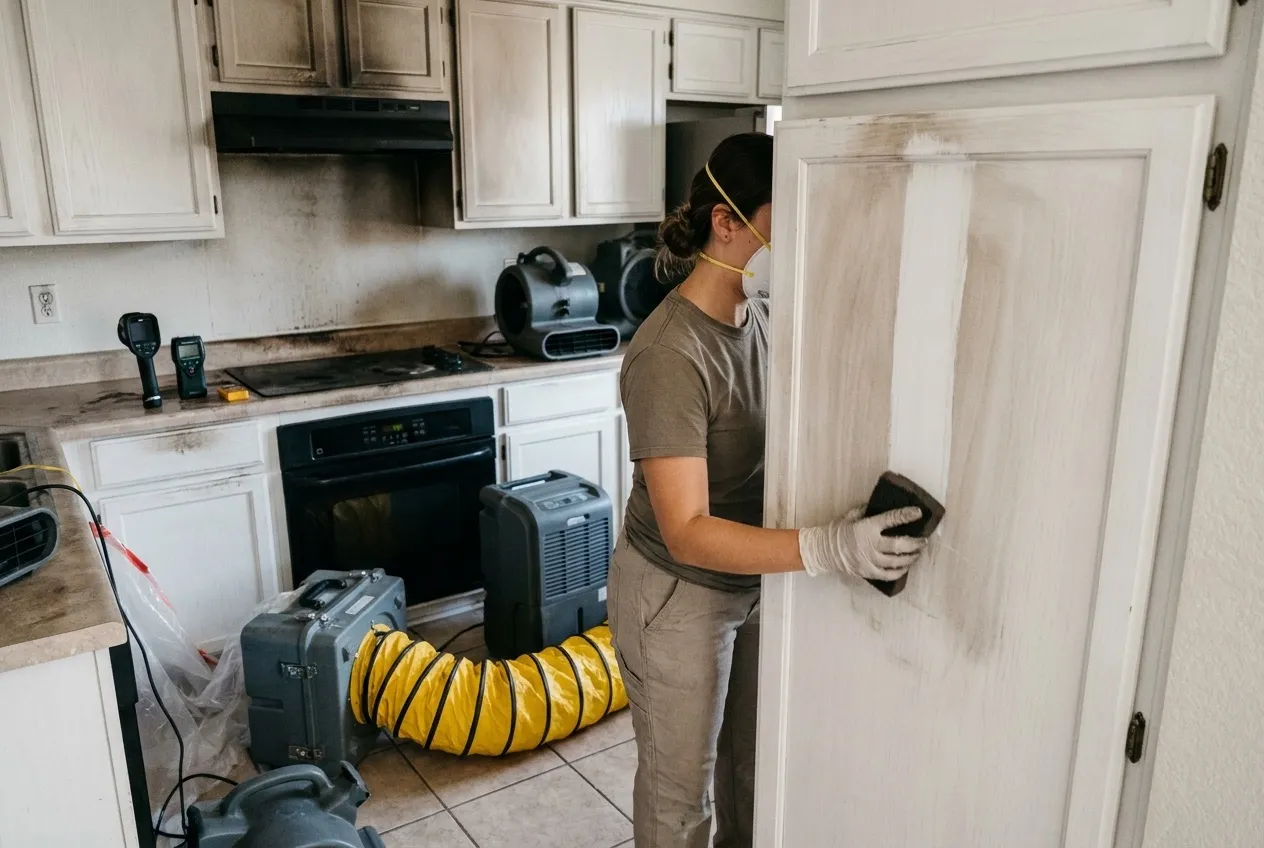
The fire is out. It may never have left the kitchen, or it may have been in the garage. Days later the house still smells like a campfire, the closets most of all, and the white cabinets that looked clean turn out to carry a film.
Smoke cleanup is chemistry first. What burned decides the residue, and the residue decides the method. Then there's the water the fire department left behind, which is often the bigger job. This page covers smoke, soot, odor, the ductwork, and that water. The fire and smoke damage restoration page covers board-up, the structure, and the full rebuild.
What burned decides the residue
A protein fire, from burned meat or other protein-rich food, often leaves a film you can barely see. Training material from NADCA, the air duct cleaners' trade association, says protein smoke produces "little visible smoke." Its film "penetrates many areas of a home" and may require hand cleaning.
Other fuels leave other residues. A 2025 R&R Magazine article citing the IICRC's fire standard says paper, cotton, and unfinished wood "burn dry and fast, creating fine particulates that travel deep into cavities." Plastics and laminates "release oily residues and sticky polymers that cling stubbornly to walls and ceilings." The trade shorthand calls the first kind dry smoke and the second wet smoke. NADCA's material adds that, depending on what burned, smoke film "may not come off with dry cleaning techniques," so the method gets chosen after the residue is identified.
One Phoenix detail: the classic puff-back residue comes from an oil burner, and almost no Phoenix home heats with oil. The Census Bureau's 2024 American Community Survey puts fuel oil and kerosene at about 0.15 percent of occupied Phoenix homes. A malfunctioning gas appliance can still produce soot.
Where the ducts come in
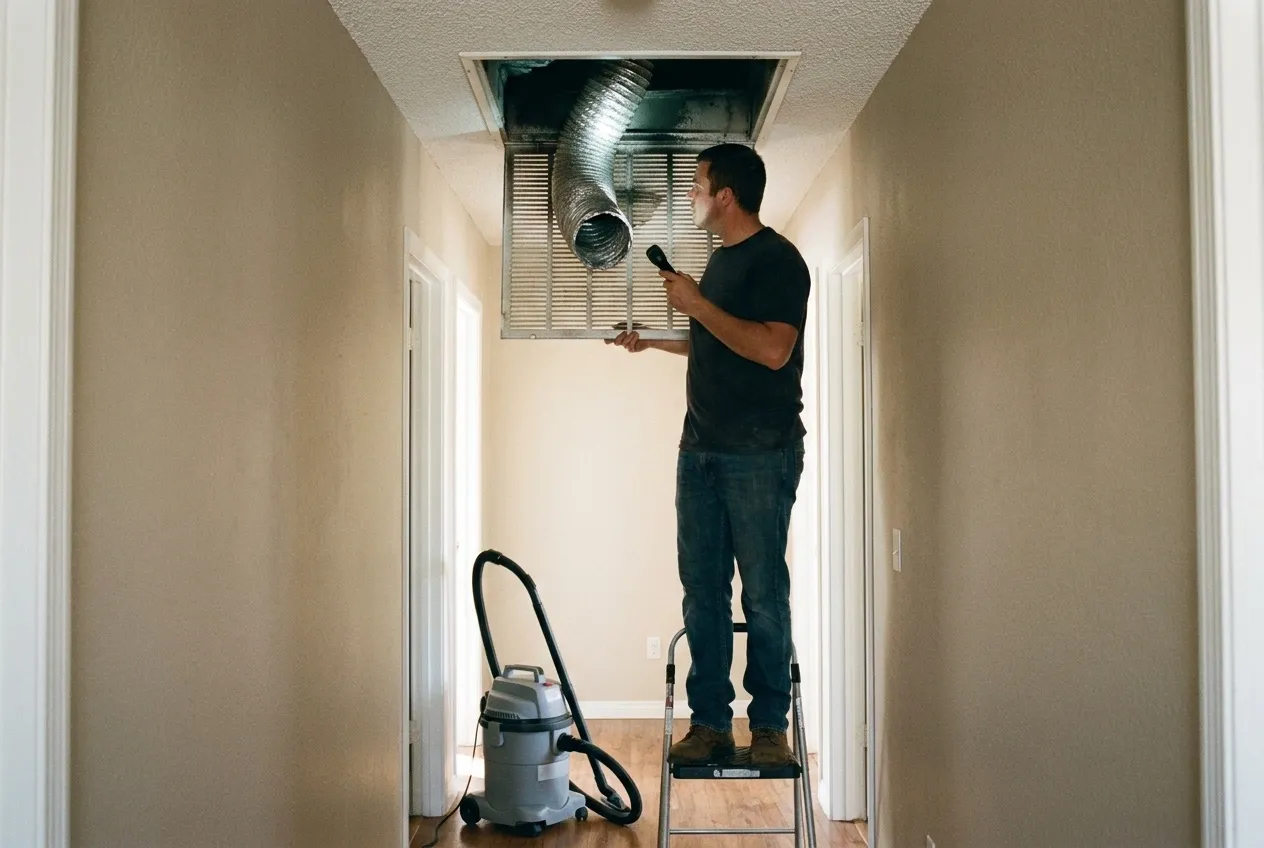
EIA's 2020 housing survey found 86 percent of Arizona homes use central air, against 67 percent nationally. So most Arizona homes have a duct system that moves the house's air, and smoke moves with it. NADCA's material names "the return or cold air duct" as the most common entry point for soot. A running system can draw soot from an outside source through the whole system.
The IICRC's S590 standard, published in 2023, sets out how an HVAC system gets assessed after a water, fire, or mold event. It sorts impacted surfaces from non-impacted ones and restorable parts from non-restorable ones, and ends in a written report and restoration work plan. NADCA's duct-cleaning standard puts fire and smoke plainly: "If it can't be cleaned replace." After a fire, have the system assessed before it runs hard.
The order of the work
The same 2025 article, written for fire restoration technicians, puts the sequence in four words: "Remove, clean, deodorize, then seal—always in that order." Sealing, with stain- and odor-blocking primers, comes last, and the article calls it "a final step, not a shortcut."
Odor lives where the smoke went, not only where the fire was. It settles in porous materials like insulation, drywall paper, carpet, and upholstery, and in voids. The article names attics, crawlspaces, and HVAC systems as common odor reservoirs. Where a house has an attic air handler or blown-in insulation, those count too. Thermal foggers are one way the trade carries counteractants into the same small spaces smoke reached. Cleaning the surfaces without treating that penetration is why odor comes back.
Smoke from outside the house
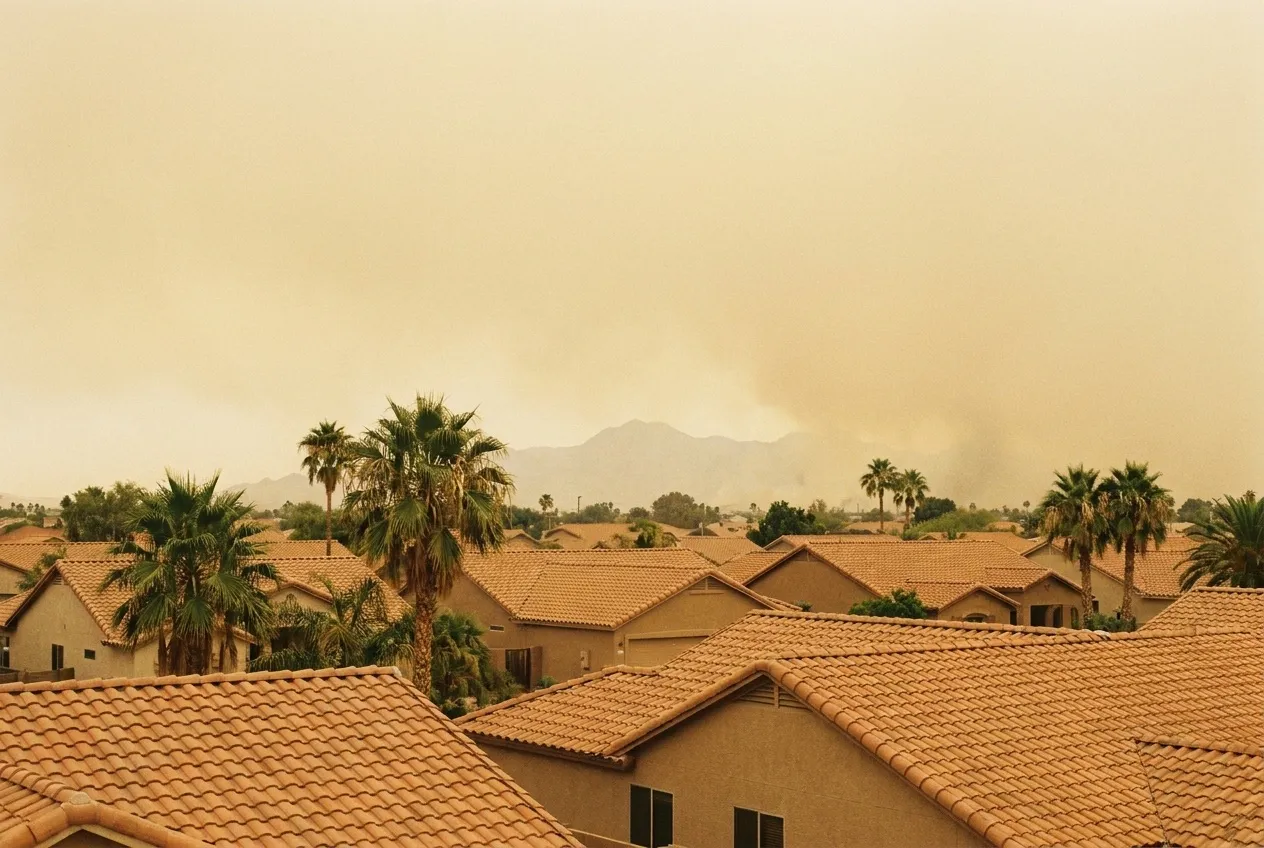
The IICRC's S700 standard for fire and smoke damage restoration, published in 2025, covers residues and odors in the building, its systems, and its contents. It leaves wildfires out of its scope. For wildfire smoke indoors, EPA's guidance is the reference, and that smoke does reach the Valley. In June 2012, KJZZ reported that the state Department of Environmental Quality issued a health watch for the Phoenix area because of smoke from the Poco Fire near Young.
The water is often the bigger job
Fire and water restoration go together for a reason. A 1993 Fire Engineering article put a typical interior attack line at roughly 120 to 150 gallons a minute. That water picks up soot and debris and carries them into whatever it soaks. No source assigns firefighting water a category, so it gets assessed on site. The IICRC water standard does say clean water that flows into a contaminated building can change category right away.
The drying is a water job like any other, measured the same way. Water extraction and the emergency flood cleanup page cover that side. Soaked framing that isn't measured and dried can turn into a mold problem later.
Insurance and the rebuild
Homeowner policies generally treat fire as a covered peril, including the water used to put it out. Carriers want photos, contents inventories, and receipts, so documentation comes before cleaning or disposal. The estimate is free, the estimate you receive is the same one the insurer receives, and Water Fighters bills the insurance company directly. The claim guide covers documentation, and contents restoration covers smoke-exposed belongings.
The rebuild has its own licensing line. Arizona's small-job exemption never covers hardwired or interconnected smoke alarms, fire sprinklers, or work that connects to a fuel-gas supply, and that work belongs to those licensed trades. Water Fighters does mitigation and rebuild with one team, the same setup described on the water damage restoration page, and the repair guide covers the rebuild half. Two staffed locations, Peoria (home base) and Phoenix (Deer Valley), make one licensed team, Valley-wide; fire and smoke damage in north Phoenix covers the Deer Valley side.
IICRC Certified 70192944 · AZ ROC 324471 · ROC 324468 · EPA Lead-Safe Certified Firm · Licensed, Bonded & Insured
Common Questions
The air conditioning was off during the fire. Can the ducts still be full of soot?
Yes. NADCA training material says that "due to building pressurization with the system off, the ducts can still become contaminated." The return is the most common way in. An HVAC assessment sorts out what the soot reached before the system goes back to carrying the house's air.
Is it safe to run an ozone machine while we're still living in the house?
No. EPA says ozone generators are sometimes used to help decontaminate an unoccupied space, with conditions controlled so that "no person or pet becomes exposed." EPA also says, "When inhaled, ozone can damage the lungs," and that ozone "does not remove particles" from the air.
Wildfire smoke drifted into the Valley and the house smells like it. Is that the same job as a house fire?
No. The IICRC's fire standard leaves wildfires out, and EPA's wildfire indoor air guidance is the reference instead. EPA warns that ash on indoor surfaces can be inhaled if it gets stirred up during cleanup. It says children, older adults, and people with heart or lung disease, such as asthma, should not take part in cleanup work. For the HVAC system, EPA says to change filters when they look dirty and to consider MERV 13 or higher if the system can take it.
The pan fire never left the stove. Why does the whole kitchen, or the house, need cleaning?
Because the residue travels farther than the flame. Nationally, cooking is the leading cause of reported home fires, 44 percent of them in NFPA's 2017–2021 figures, with ranges or cooktops involved in 53 percent of home cooking fires. A protein fire's film can reach well past the stove, and the return duct and the attic can hold odor. The order stays the same as for a bigger fire: remove, clean, deodorize, seal.
The fire was next door, not in our house. Can it still leave smoke damage that needs professional cleanup?
It can. The IICRC's 2025 fire standard expressly includes fires in "an adjoining building(s), or building(s) in the vicinity." Smoke outside can be pulled in through the HVAC return, and odor settles into insulation, carpet, and upholstery the same way it does after a fire inside. Photograph what smells or shows residue before anything is cleaned or thrown out.