
Slab Leak Water Damage in Phoenix
Published August 4, 2026 · Last reviewed August 21, 2026 · Water Fighters Restoration
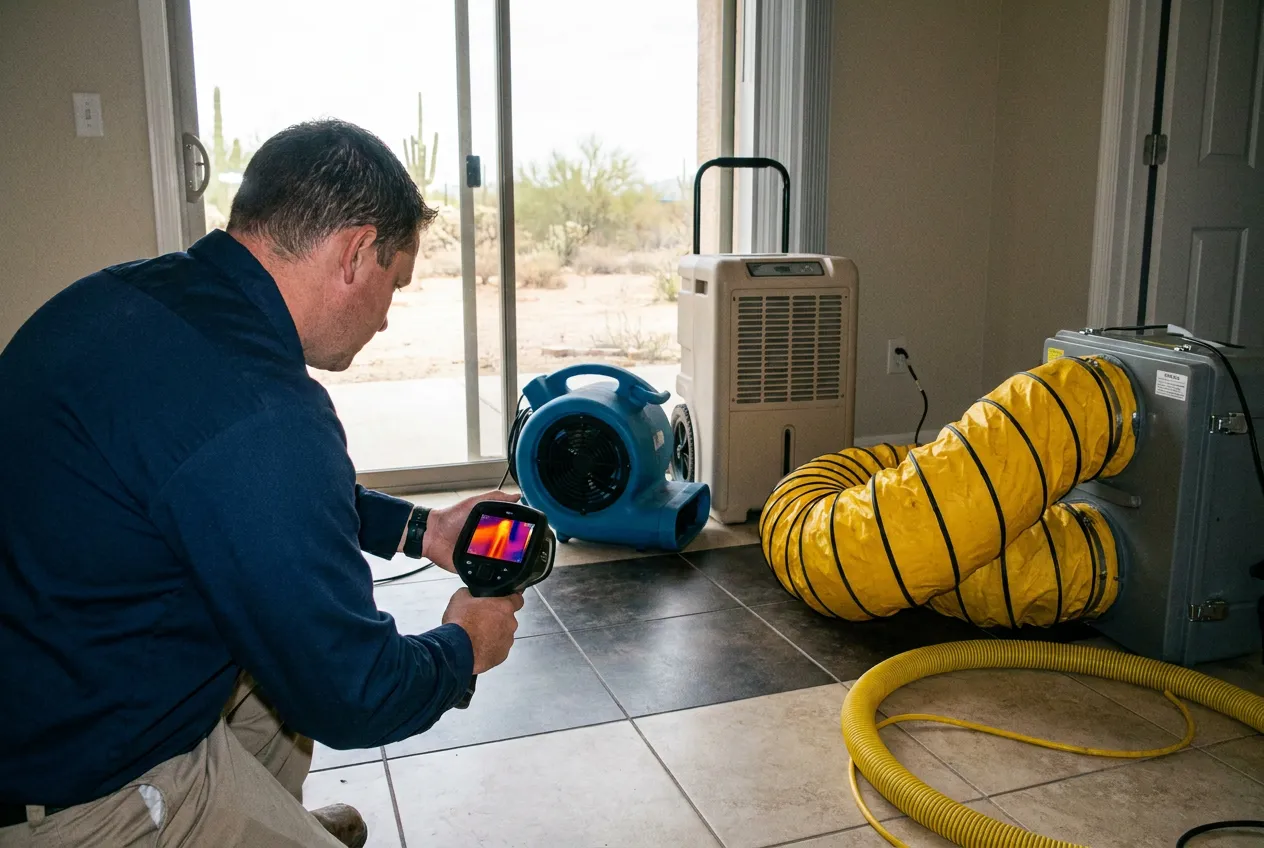
Most Valley homes run their water lines through or under the concrete they stand on — which means the most common hidden leak in Phoenix happens somewhere you will never see it. Slab leaks don't spray or puddle. They whisper, for weeks, while the water goes into the ground, the slab, and eventually the walls and floors above it.
The Five Tells
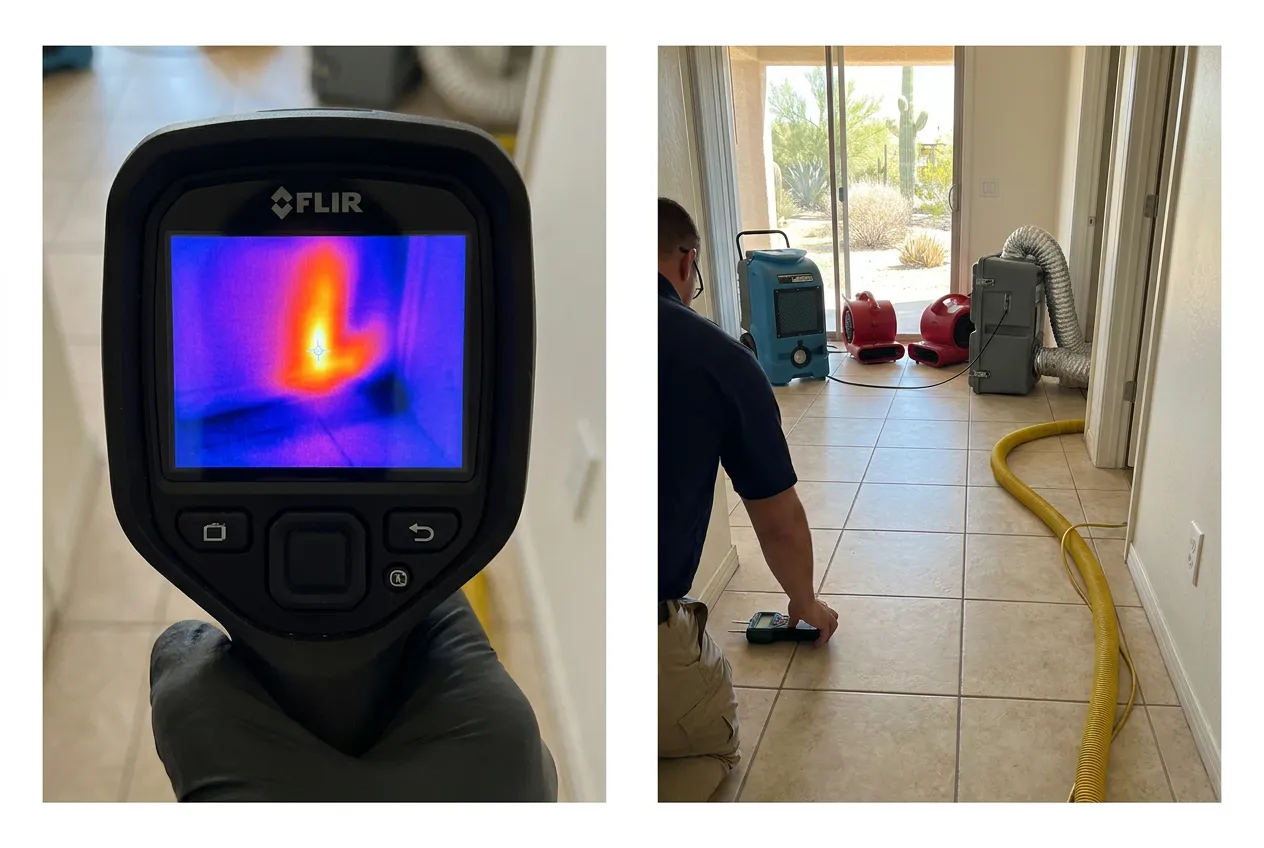
The warm spot. Hot-side leaks — the majority — heat the concrete above them. A patch of tile the dog suddenly loves, a stretch of hallway warm underfoot in January: that's the classic.
The bill. A water bill that climbed with no lifestyle change is a meter counting a leak. Compare the last three months against last year's.
The sound of running water in a silent house. All fixtures off, house quiet, and a faint hiss or rush behind a wall or under the floor.
The meter test. Everything off, then watch the meter's low-flow indicator. Movement with every fixture closed means water is going somewhere it shouldn't.
The late evidence. Cupping wood, hollow or cracked tile, damp carpet edges at interior walls, baseboards darkening, a musty smell with no visible source. By this stage the leak is old, and the job has grown — sometimes into a mold question as well.
Any two of those together is a call, not a curiosity.
Why Phoenix Slabs Leak
Post-war and mid-century Valley construction routed soft copper through and beneath the slab, and time has been working on it ever since: aggressive soil and water chemistry pitting the pipe from both sides, decades of thermal expansion rubbing lines against concrete and rebar at contact points, and occasional slab movement in our expansive soils adding stress the original plumber never budgeted. Hot lines fail first — heat accelerates all of it. Homes from the polybutylene era add their own under-slab liability, and even newer builds aren't exempt when a nail or a rock nicked a line at construction and corrosion spent fifteen years finishing the job. The pattern that matters: slab leaks are an age-and-material story, and one failure in an original system is rarely the last — a truth that shapes the repair conversation below.
Our Lane and the Plumber's Lane
Honesty about who does what, because slab leaks involve two trades and you deserve the map.
The plumber's lane: pinpoint leak location with acoustic and pressure equipment, then fix the line — a spot repair through the slab, a reroute overhead through walls and attic, or, when the system's age argues for it, a whole-home repipe. We don't do any of that, we don't sell any of that, and we're happy to work alongside the leak-detection or plumbing company you trust.
Our lane: everything the water touched. Mapping how far moisture traveled through the slab into walls, base plates, and flooring; drying it to verified readings — concrete gives up moisture slowly and pretending otherwise is how these losses come back; making the honest calls on flooring (tile over a dried slab often survives; cupped wood and saturated laminate usually don't); and the documentation your claim will lean on, because slab-leak coverage turns on details. Then the rebuild: flooring, drywall, baseboards, and any access openings the repair required, closed by the same licensed team that dried it.
The insurance reality, told straight: most Arizona policies cover the resulting water damage and often the cost of accessing the leak, while excluding the pipe repair itself — and long-duration leaks invite the "when did this start" conversation. Our moisture mapping and dated documentation is what answers that question with evidence instead of adjectives. The broader mechanics live in the cost guide.
What Drying a Slab Loss Involves
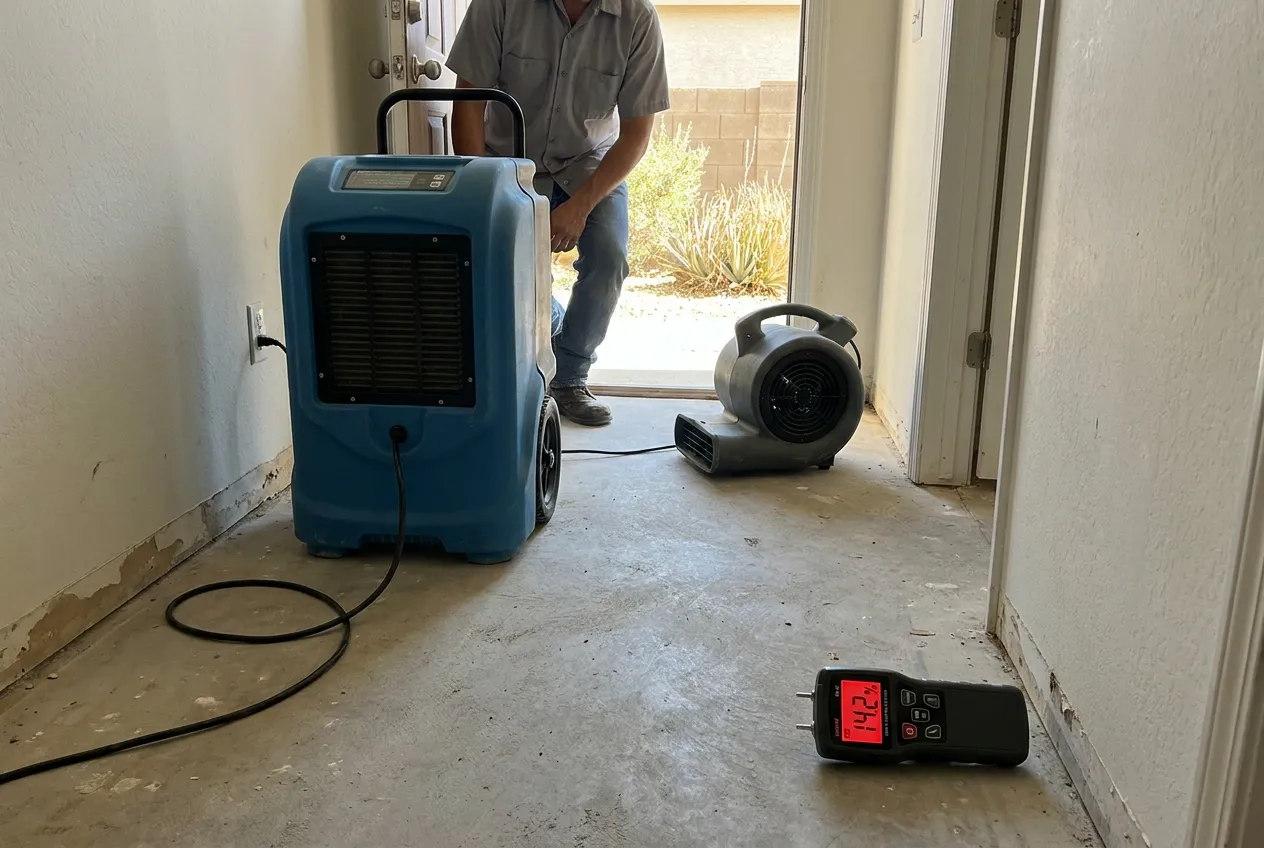
Slab losses dry from the top of the damage down: flooring assessed and, where it's already lost, removed to expose the concrete; walls metered at the base plates where slab moisture wicks upward; equipment placed for a longer, monitored cycle because concrete releases water on its own stubborn schedule. We verify with readings against dry-standard targets — the difference between a slab that's dry and a slab that's merely dry-looking is the difference between a finished job and a callback with a mold report attached. The handbook's drying chapter explains the measurement standard we hold every job to, slab losses most of all.
Common Questions
How do I check for a slab leak myself before calling anyone?
Two free tests: the silent-house listen with every fixture off, and the meter's low-flow indicator watched for movement with the house shut down. Add the warm-spot patrol barefoot on tile. Any positive result justifies professional detection.
Spot repair, reroute, or repipe — which should we choose?
That's genuinely your plumber's call and depends on the system's age and failure history; our only stake is that the repair be sound before we close anything up. What we'll contribute is the damage-side evidence — how far the water traveled and how long the readings say it ran — which often informs the repair decision more than the leak itself does.
Can tile floors survive a slab leak?
Often, if the slab beneath dries fully and the tile bond held — one of the few good defaults in this category. Wood and laminate over a slab leak rarely get the same happy ending, and we'll show you the readings behind whichever call we make.
How long does a slab-leak loss take to fully dry?
Longer than a burst-pipe loss of the same visible size — concrete surrenders moisture slowly, and base plates wick for days after the surface reads better. Plan on a monitored cycle measured in days-to-a-week-plus, verified by readings rather than the calendar.
The leak apparently ran for months. Are we out of luck with insurance?
Not automatically — but duration will be the conversation, and evidence wins it or loses it. Dated moisture mapping, photographs, and a precise cause narrative give the adjuster something better than assumptions; we build that file on every slab call for exactly this reason.
Why are slab leaks so common in Phoenix homes?
Because we buried soft copper in reactive ground and gave it fifty years. Valley soil shifts with moisture, the slab moves with it, and pipes rub at every penetration point until the wall thins through. Add install-era shortcuts and hard water working from the inside, and the leak is a schedule, not a surprise.
The mechanics stack. Our expansive soils swell and shrink with water content, so slabs move in small seasonal cycles — and a pipe cast against concrete abrades a little with every cycle, worst where it enters and exits the slab. Temperature does its share: hot lines expand and contract daily, which is why they fail first. The install era matters too — decades of Valley construction ran soft copper directly through or under slabs without sleeving, a shortcut that traded a plumber's afternoon for a homeowner's eventual jackhammer. Post-tension slabs, common in newer builds, add a wrinkle on the repair side: cutting into one is delicate, which is why rerouting lines overhead is often the smarter fix than chasing the leak through the concrete.
None of this is visible, which is why the tells are indirect — the warm spot, the climbing bill, the hiss in a silent house. The five-tells list on this page is the self-check; the meters are the confirmation.