
Burst Pipe & Slab Leak Water Damage in Peoria
Published October 8, 2026 · Last reviewed October 8, 2026 · Water Fighters Restoration
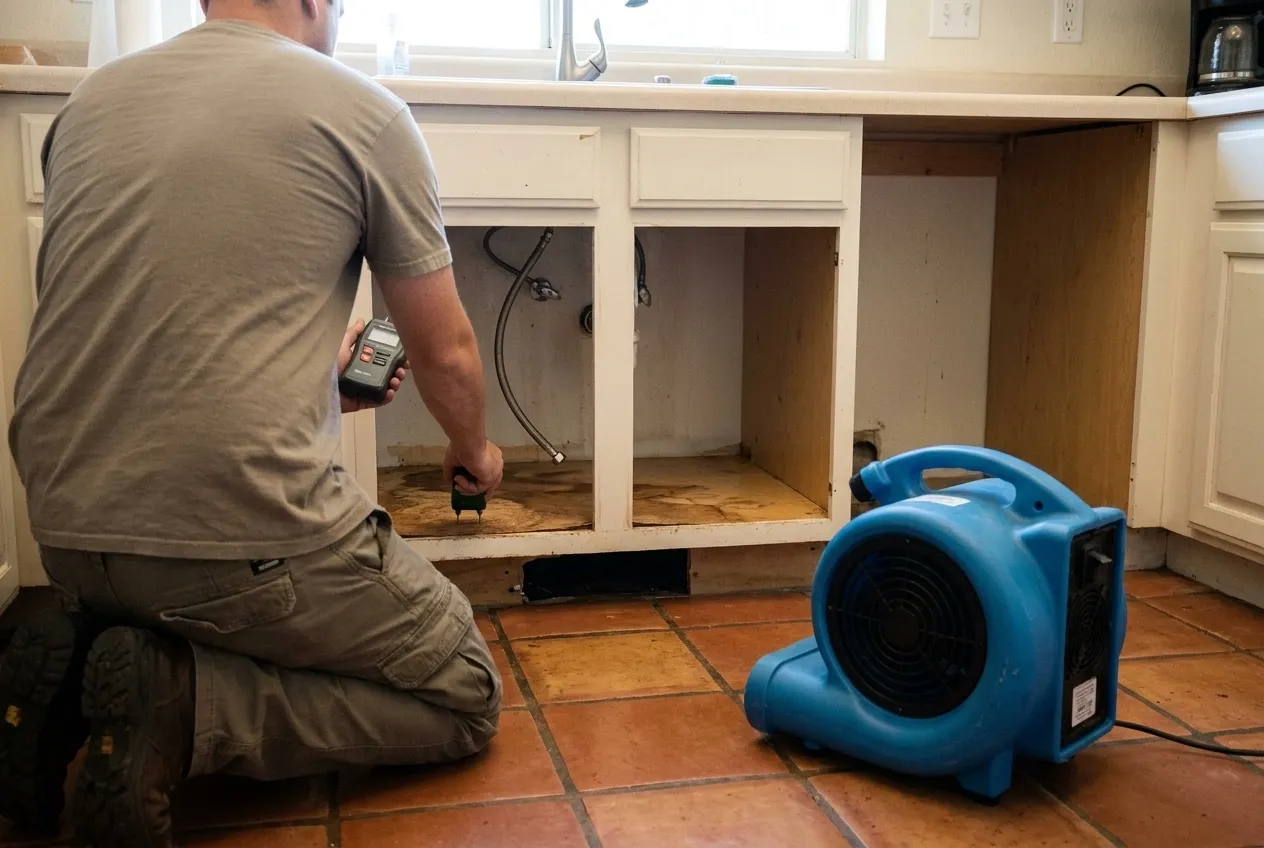
The cabinet floor under the kitchen sink has gone soft and swollen, and the supply line behind it is still spitting. Or one patch of living-room tile feels faintly warm underfoot, and the grout line beside it has turned dark.
Fixing the pipe is a plumber's work. Drying and rebuilding everything the water soaked on its way out is ours.
What to do right now
- Shut the house valve where the supply line comes into the house. The full burst pipe page shows where it usually sits.
- Leave the meter to the City or your water provider. If water is coming up at the meter or in the street, the Peoria extraction page lists the City's lines.
- Get rugs, boxes, and anything cardboard off the wet floor, and stay out of any room where water has reached an outlet or a cord.
- Call a plumber for the pipe and Water Fighters Restoration at (602) 884-5325 for the water. Open 24 hours, 7 days, and on-site within an hour.
What fails inside a Peoria house
House age is a rough guide to plumbing age. In 85345, about 31% of units went up in the 1980s and 18% in the 1970s. In 85381, about 59% were built from 1980 to 1999, and in 85382, about 44% date from the 1990s. In 85383, roughly 9 in 10 were built in 2000 or later. What sits behind a given wall is a plumber's question, not a ZIP code's.
Inside any house, a few places carry that risk. Supply lines and fittings under sinks and toilets sit where nobody looks until the cabinet floor swells. Water-heater connections are another, and the water heater flooding guide covers the shutdown order.
Slab leaks are the hidden ones, because the water is under the floor before it is anywhere you can see. It moves under tile and carpet and comes up at the edges. The slab leak page covers the warning signs, the detection lane, and how a slab dries.
What the City says about your water
The City's water FAQ starts with geography: "Where your water comes from in Peoria depends largely on where you are located and the time of year."
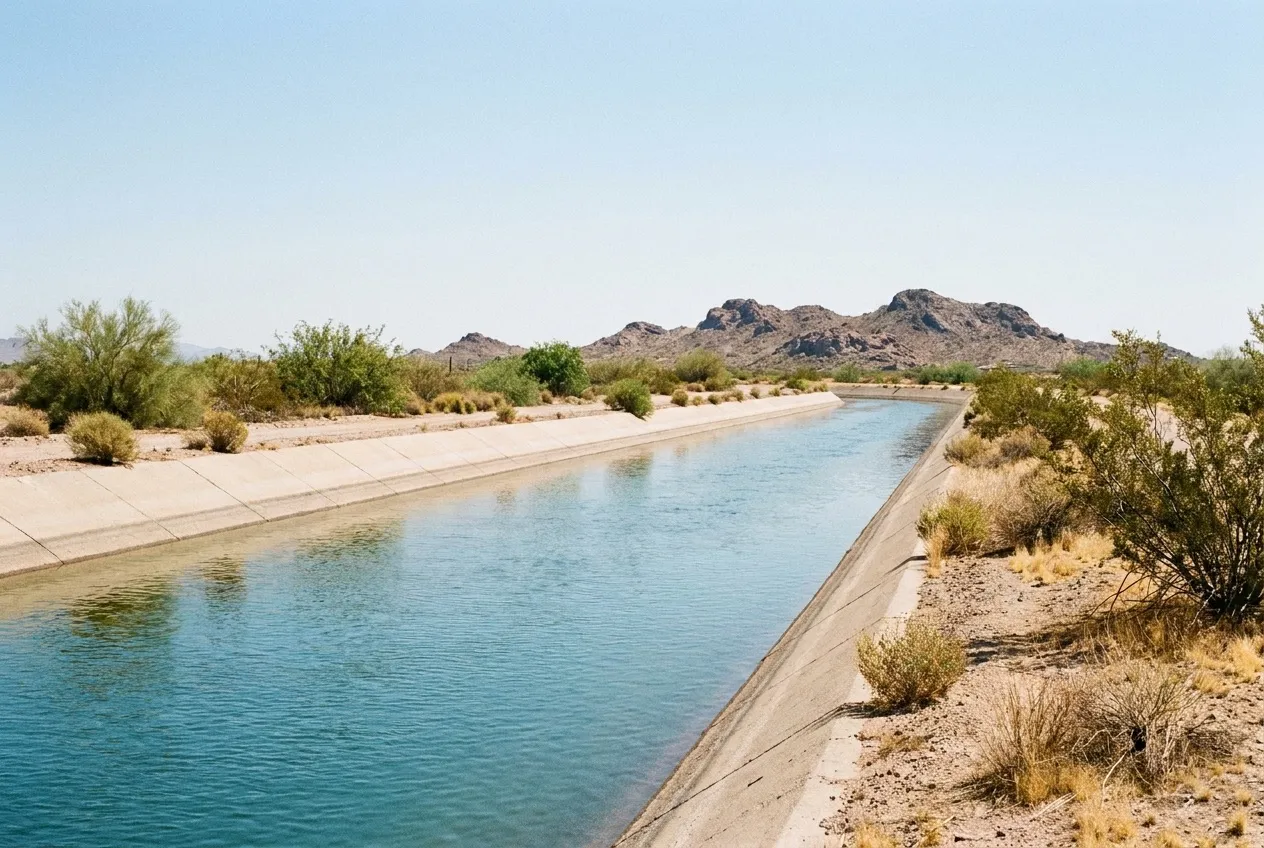
- North of Bell Road, water comes from groundwater wells and the Pyramid Peak Water Treatment Plant, which treats Colorado River water from the Central Arizona Project canal. The City owns that plant jointly with Glendale.
- South of Bell Road, water comes primarily from groundwater wells and the Greenway Water Treatment Plant, which treats Salt and Verde River water from the Arizona Canal.
The City says the mix "changes throughout the year and varies from neighborhood to neighborhood." In summer, more of the water at the tap comes from wells, and homes near an active well get a higher share of well water. The City disinfects with chlorine. All of this applies to City of Peoria customers; private water companies serve some areas inside the city.
Hardness shifts with the source, and the questions below cover what the City says about it. Over years, hard water can leave mineral scale on aerators and inside water heaters.
Once the plumber has the pipe
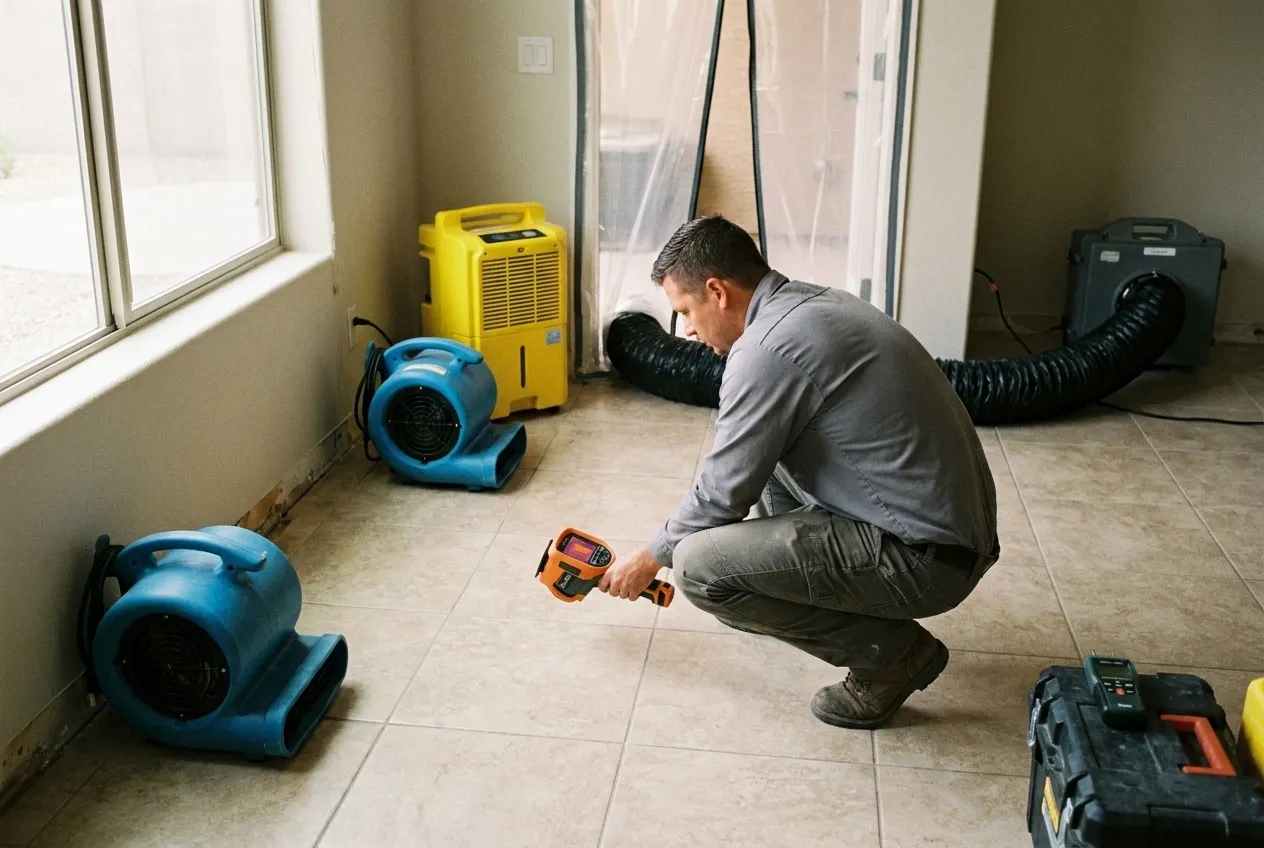
The plumber locates the leak, including under the slab, and repairs or reroutes the line. Our work starts at the wet material: mapping moisture, extracting, and drying to readings. The plumber's access cut and the drying layout have to work together, so they get planned at the same time.
Then the same team rebuilds the cabinet base, the drywall, the baseboard, and the tile or flooring, and closes up the plumber's access hole. Peoria is the company's home base, and the Peoria water damage page has the rest of the city's water story. Insurers often look at whether a leak was sudden or gradual, and the insurance coverage guide explains that line. Estimates are free, the estimate you receive is the same one the insurer receives, and we bill the insurance company directly.
Water Fighters Restoration is IICRC Certified 70192944 · AZ ROC 324471 · ROC 324468 · EPA Lead-Safe Certified Firm · Licensed, Bonded & Insured.
Common Questions
We live north of Bell Road. Is our water harder than our friends' south of Bell?
The City's two plants average differently, but well water changes the mix. The City says Pyramid Peak water averages 17 grains of hardness and Greenway water averages 13, while well water runs 2 to 8 grains. How much of each reaches a house depends on the season and how close it sits to an active well. Check the City's interactive hardness map before changing a softener setting.
What water pressure does the City of Peoria actually deliver?
The City says, "In most areas served by the City, water pressure is typically between 50 and 80 pounds per square inch (psi)." During peak demand, "system pressure may fall to as low as 40 psi, which is still sufficient for most uses." What reaches your own fixtures is a plumber's measurement, taken at the house.
Our cold tap runs warm all summer. Could that be a slab leak?
A warm tap by itself doesn't point either way. The City calls warm "cold" water "a very common problem in the summer months," because "water pipes acclimate to the temperature around them" and take on heat from the ground. In its words, "Tap water will never be truly cold in the summertime because of the high temperatures." Wet flooring with no visible source, a warm spot in the floor itself, or a meter that keeps moving with every fixture off are the signs to bring to a plumber.
Why does the City of Peoria ask us to run irrigation overnight?
Because its peak demand falls in the morning and evening. The City puts weekday peaks at about 7 to 9 a.m. and 6 to 11 p.m., when pressure can dip toward 40 psi. It asks residents to irrigate between 11 p.m. and 7 a.m. The tradeoff is that a broken line or a stuck valve on an overnight cycle can run for hours before anyone is up. The irrigation leak guide covers lines along a stem wall, and water that crosses the ground into the house is handled as Category 3.
Road work just finished on our street, and now we have a leak. Is that connected?
Only a plumber can tell you. The City lists "construction near pipes (vibration of machines or accidental impacts)" among the causes of breaks, along with older pipes, defective materials, and poor workmanship. That statement is about the City's own system, not the pipes on your side. Dated photos of the leak and the street help any later conversation, and the drying and rebuild go ahead either way.