
Sewage Cleanup in Peoria
Published October 8, 2026 · Last reviewed October 8, 2026 · Water Fighters Restoration
The hall toilet gurgles every time the washer drains. Then the water around its base turns gray, and the bath mat is soaked through. Something downstream is blocked, and the next question is whose pipe it is.
In Peoria, the City has a plain answer to that: its crew decides. Inside the house, the answer doesn't change the cleanup. Any backup from a sewer line, a drain, or a toilet past its trap is Category 3, whatever it looks like.
What to do right now
- Hold off on every drain in the house. No flushing, showering, laundry, or dishwasher until the line is clear.
- Close the bathroom door if you can, and keep people and pets on the dry side of it. Don't mop, plunge, or pour anything down the drain.
- Report it to the City. Its Water Services contact list includes a Wastewater line, (623) 773-7160, and the City's crews determine whether its main is the problem.
- Call Water Fighters Restoration at (602) 884-5325. Open 24 hours, 7 days, and on-site within an hour.
Inside the house, it is Category 3
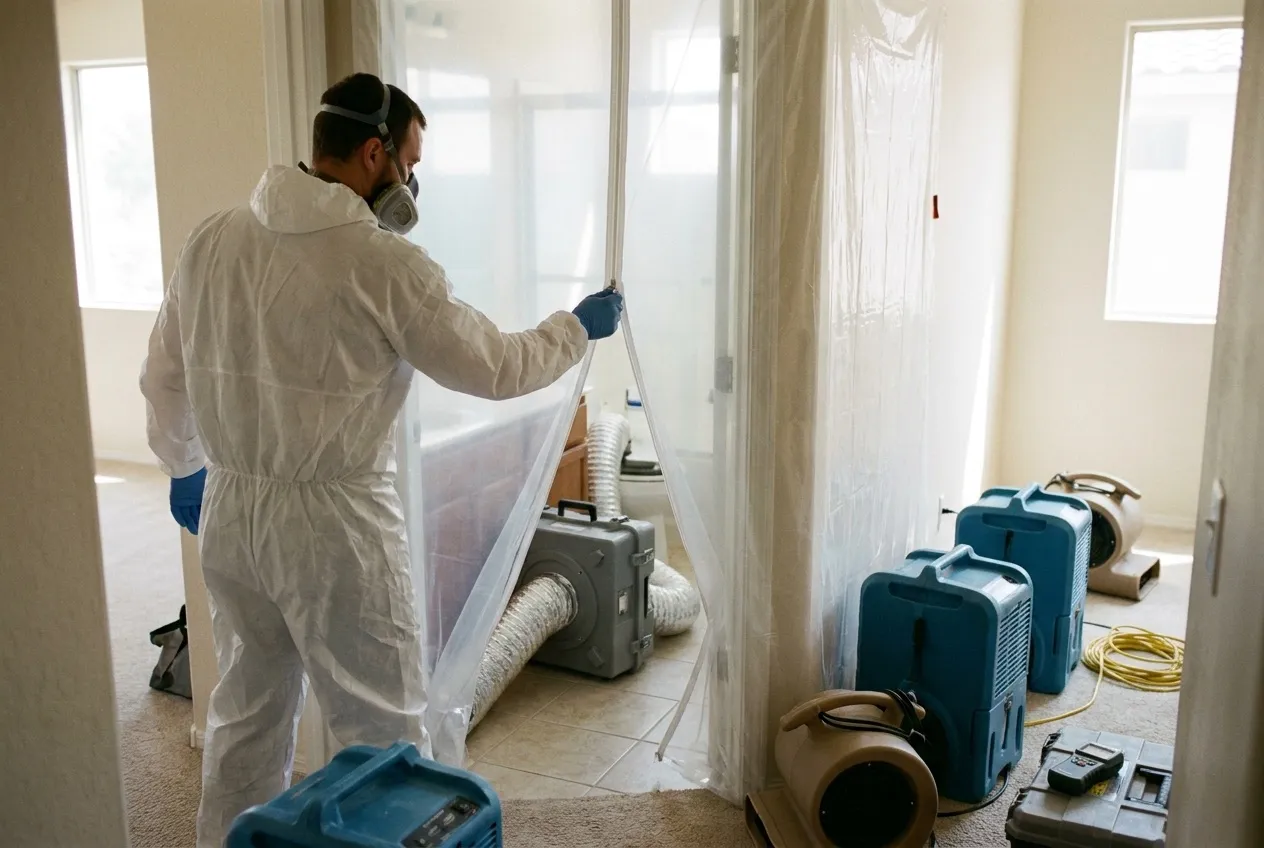
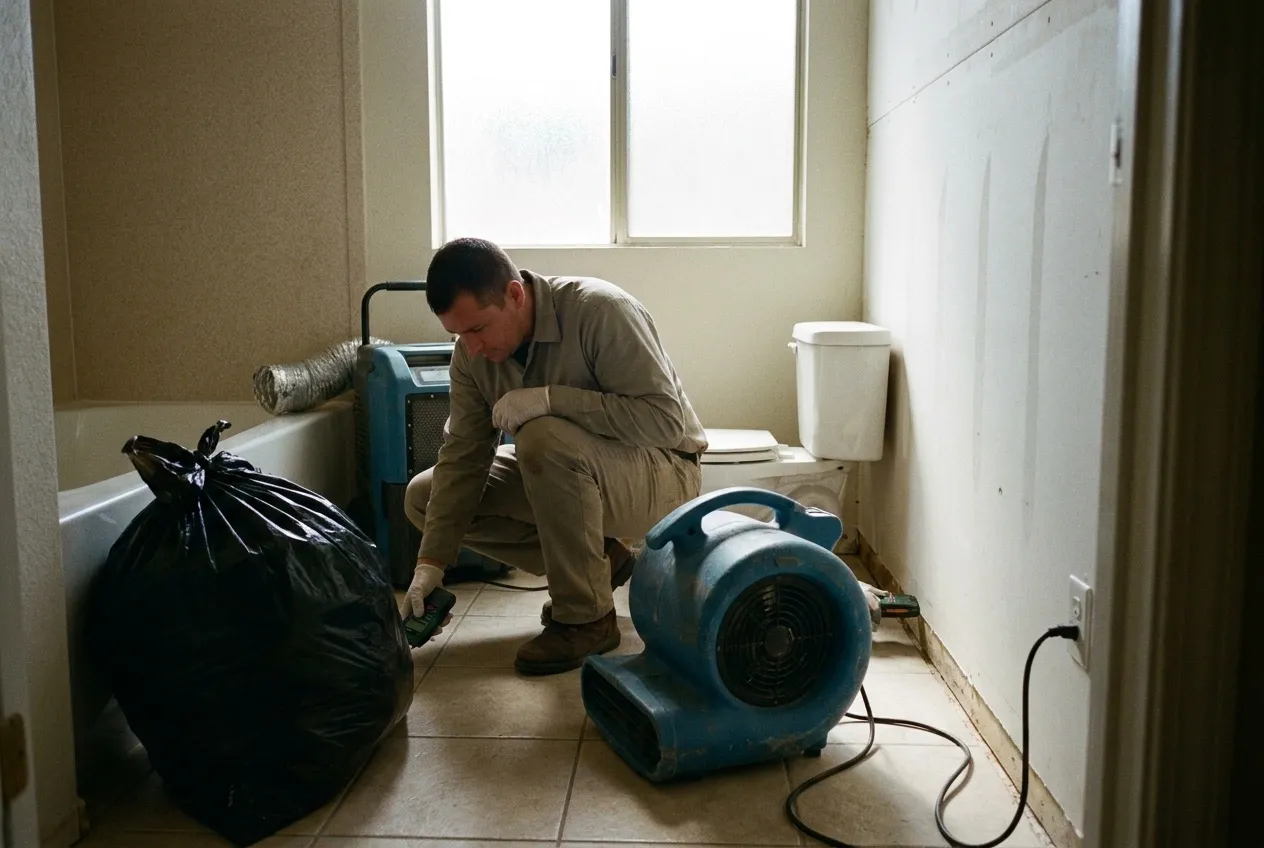
A sewer backup is Category 3 water from the first minute, clear or not. The cleanup follows a set order: containment around the affected rooms, removal of porous materials the water reached, cleaning, drying to moisture readings, and then the rebuild. Baseboards come off so the wall behind them can be read and dried, and wet drywall gets cut above the water line.
The full sewage cleanup page covers protective gear, containment, and what can be saved. The water damage categories guide explains why every backup lands in Category 3. If the trouble started at a toilet, the toilet overflow guide sorts a clean-tank leak from a bowl overflow from a true backup.
The insurance coverage guide covers how policies handle sewer and drain backups.
Main or lateral: the City's crew decides
The City's water FAQ answers "Who is responsible for sewer backups?" with "That depends on where the problem is occurring."
- If the problem is in the City's main sewer line, the City makes the repairs. Property-damage claims "will be referred to the Risk Management Division of the City Attorney's office."
- If the problem is in the sewer lateral, the crew advises the resident to call a plumber. The City says the lateral "is owned and maintained by the property owner and includes all piping extending from the house to the City sewer main."
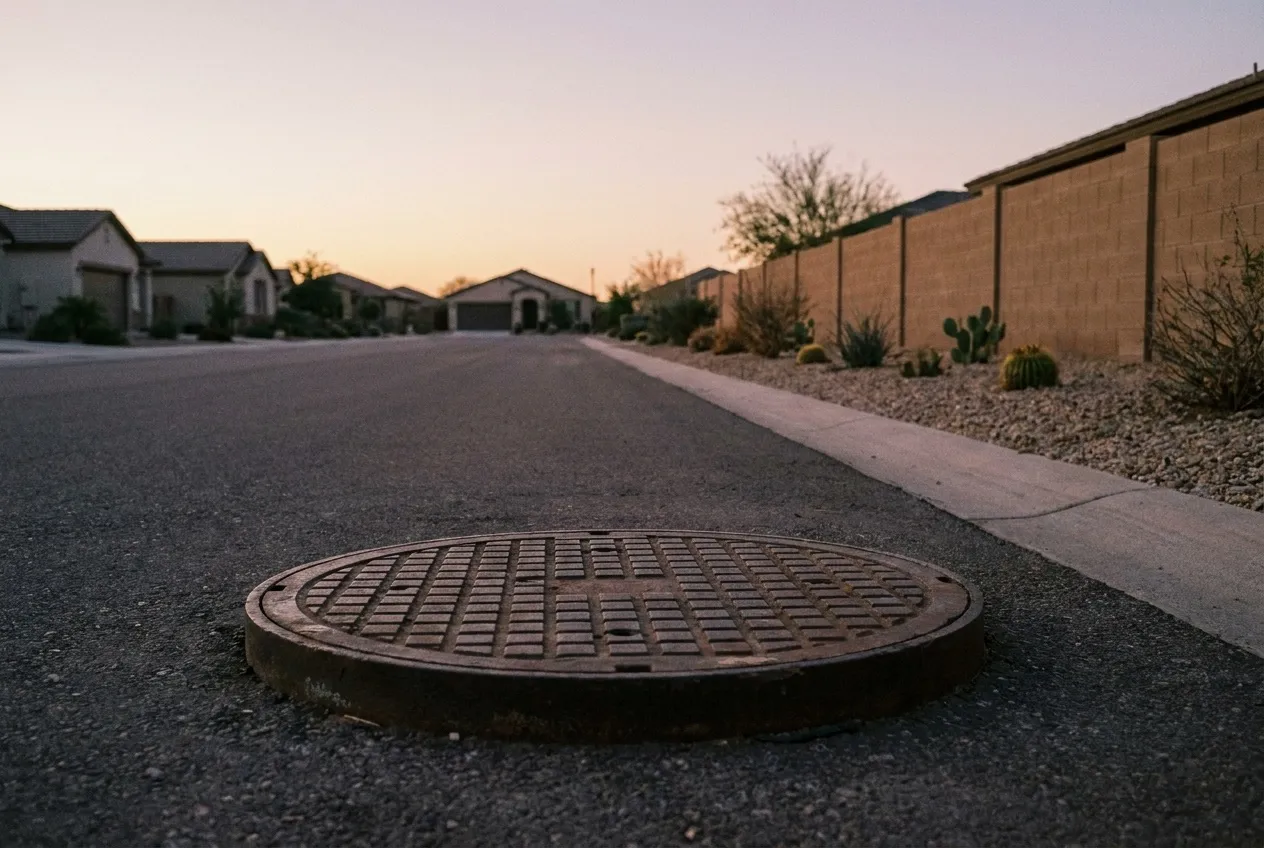
That lateral usually runs under the yard and into the street before it reaches the main, and all of it is the owner's pipe. A plumber's camera is what shows whether it is cracked, sagging, root-blocked, or greased shut. City manholes and the City main are City work, so leave them closed.
House age gives a rough age for the original lateral. Citywide, about 9.5% of Peoria's housing units were built before 1980 and about 47% in 2000 or later. In 85345, about 1 in 4 units predates 1980. In 85383, roughly 9 in 10 date from 2000 or later. Age alone doesn't diagnose a line, but it tells you how long the original has been in the ground.
What the City says to keep out of the line
The City's grease page goes past cooking oil. It counts "food scraps, meat fats, lard, shortening, butter/margarine, dairy products, batters, dressings, icing, and sauces" as fats, oils, and grease. It says they build up "in the sanitary sewer system constricting flow," which can cause "sewer back-ups into homes and overflow discharges onto streets."
The City's habits are short. "Can the Grease": pour it into a can, freeze it, and throw it out. "Scrape the Plate." "Catch the Scraps," which says, "Eliminate using the garbage disposal. Use a strainer." Those are prevention steps. Clearing a blocked line is a plumber's job.
Home base, and the rebuild
Water Fighters Restoration calls Peoria home base, and the Peoria water damage page covers the city beyond the sewer line. Mitigation and rebuild come from one team, so the rebuild picks up from the removal list the cleanup left behind. Peoria businesses and multi-tenant buildings have their own commercial sewage cleanup page.
Estimates are free, the estimate you receive is the same one the insurer receives, and we bill the insurance company directly. Water Fighters Restoration is IICRC Certified 70192944 · AZ ROC 324471 · ROC 324468 · EPA Lead-Safe Certified Firm · Licensed, Bonded & Insured.
Common Questions
If Peoria's crew finds the blockage in the City's main, what happens with the damage inside our house?
The City repairs its main, and per its FAQ, property-damage claims are referred to the Risk Management Division of the City Attorney's office. What that office decides is the City's process, and nobody can promise its outcome. The cleanup inside is still Category 3 and still starts now. Photograph everything before it is removed, and keep the moisture readings and the removal list with that file.
The City's crew said the problem is in our line and to call a plumber. Can cleanup start before the plumber clears it?
Yes. Extraction, containment, and removal of soaked materials can begin while the line waits for the plumber. Until the plumber clears it, don't run water or flush anywhere in the house, because the next load has nowhere to go but back up. The plumber fixes the line, and we handle the rooms it flooded.
Are "flushable" wipes really a problem for Peoria's sewer?
Yes, per the City. Its grease page says, "Disposable does not always mean flushable. Cleaning wipes and baby wipes do not break apart like toilet tissue. They get stuck in sewer pipes and sewer pumping equipment." The same page lists sauces, dairy, and food scraps among the things to keep out of the drain. The City also offers a "Safe Items to Flush" poster.
Roaches started coming up the drains around the time of our backup. Is that the City's to handle?
Partly. The City contracts a local pest-control business that treats 5,000 of the City's manholes a year, and each treatment is good for two years. A resident's complaint gets a maintenance crew sent out, and if the manholes nearby need treating, the City's contractor treats every manhole in that quarter section. The City's Roach Control line is (623) 773-7160. Inside the house, the cleanup is ours, and the City suggests residents keep their own pest control too.
Are Peoria's sewer pipes and storm drains connected?
No, per the City. "There are two separate drainage systems in Peoria," one for wastewater and one for stormwater. Sewer lines carry household wastewater to a treatment plant, while storm drains run to outfalls in washes, basins, and parks without formal treatment. A backup during a storm is still Category 3, and storm water that comes in at a door is a flood job, covered on flood cleanup in Peoria.