
Water Damage Restoration in Surprise
Published August 4, 2026 · Last reviewed September 1, 2026 · Water Fighters Restoration
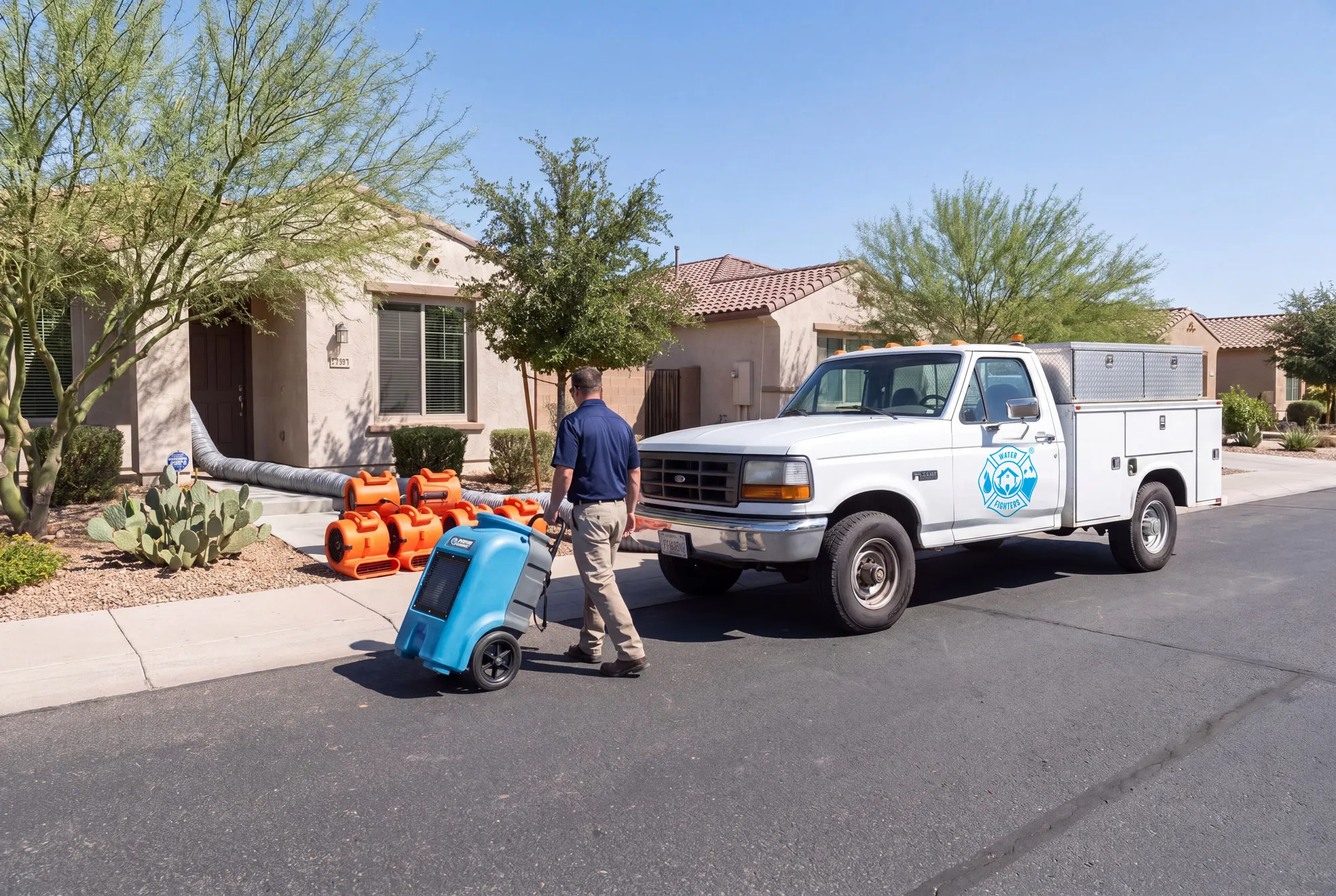
Surprise built itself in about one decade. Outside the Original Town Site and the older blocks near the stadium, most of the city's housing went up in the great 2000s run — Surprise Farms, Marley Park, Ashton Ranch, Greer Ranch, then the newer wave along the Loop 303. That growth story is now a maintenance story, because a city built on one schedule ages on one schedule too.
Water still coming in or rising outside? Use Flood Cleanup in Surprise for the first-hour protocol and local drainage read.
The Boom Clock
A home built in 2005 is crossing the age where original equipment retires all at once: water heaters past their tenth year, builder-grade supply lines and angle stops under every sink, washing machine hoses that have never been changed, and AC condensate lines with fifteen summers of scale in them. In Marley Park — where the median home dates to about 2006 — practically every house on a block hits those birthdays together. That's why Surprise water calls cluster: the same failure, street after street, season after season.
None of this is builder-bashing; it's just what twenty years does to first-generation components. The practical takeaway for a Surprise homeowner is simple: your home's most likely flood isn't a monsoon — it's a part that was installed the year the streetlights went in, letting go on an ordinary Tuesday. When it does, emergency extraction speed decides whether it's a dry-out or a demolition.
The Empty-House Problem
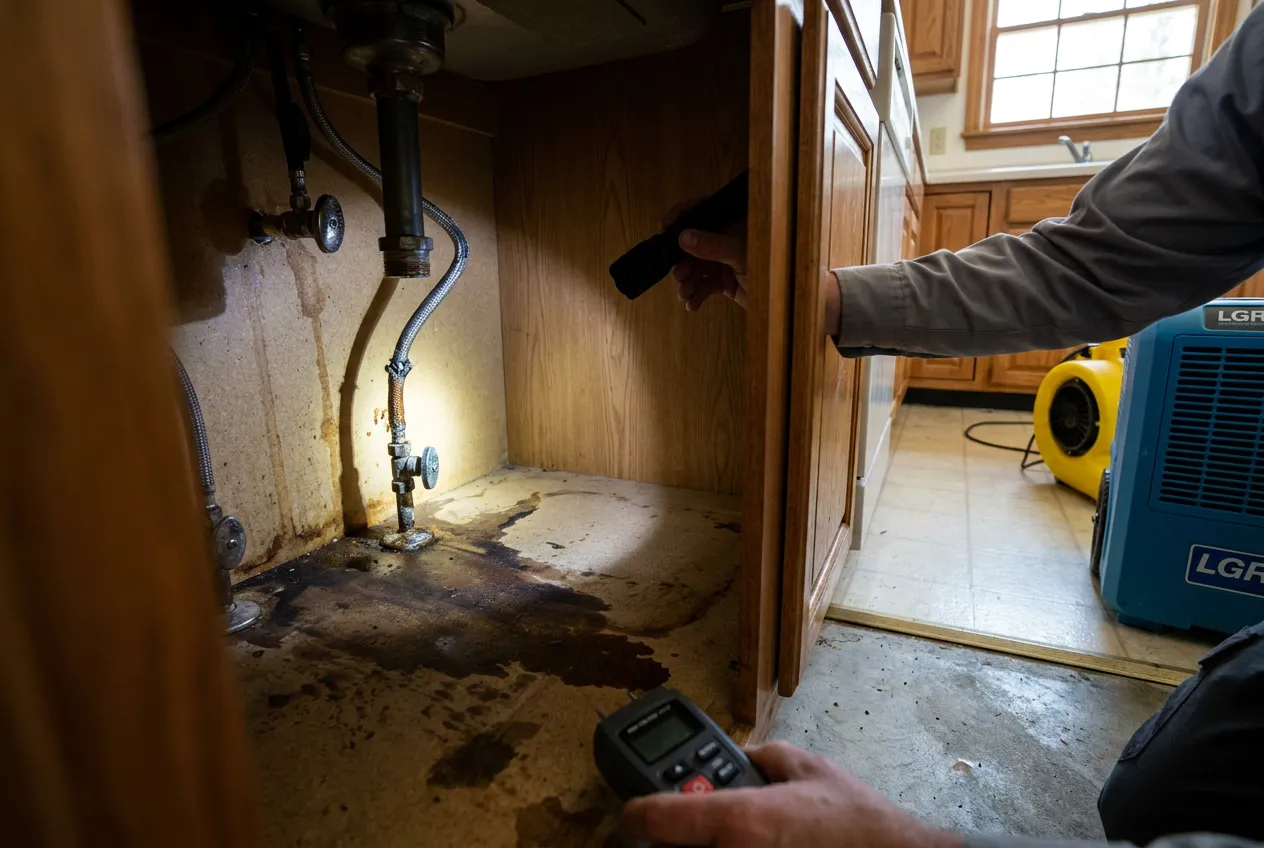
Surprise has one of the Valley's biggest seasonal populations — The Grand, Happy Trails, Coyote Lakes, and thousands of winter residents across the master plans. The cruelest version of a water loss is the one nobody's home for: a supply line fails in May, the house sits closed through a Phoenix summer, and the owner returns in October to a home that's been growing mold in the dark for five months.
If you summer elsewhere, three things genuinely change your risk: shut the main water valve when you leave, have someone walk the house monthly (inside, not just the mail), and leave a local contact who can authorize emergency work. We regularly work vacant-home losses with out-of-state owners — video walkthroughs at the assessment, written scopes the owner and adjuster read from the same document, and coordination with the neighbor, house watcher, or HOA who found it.
West-Edge Water
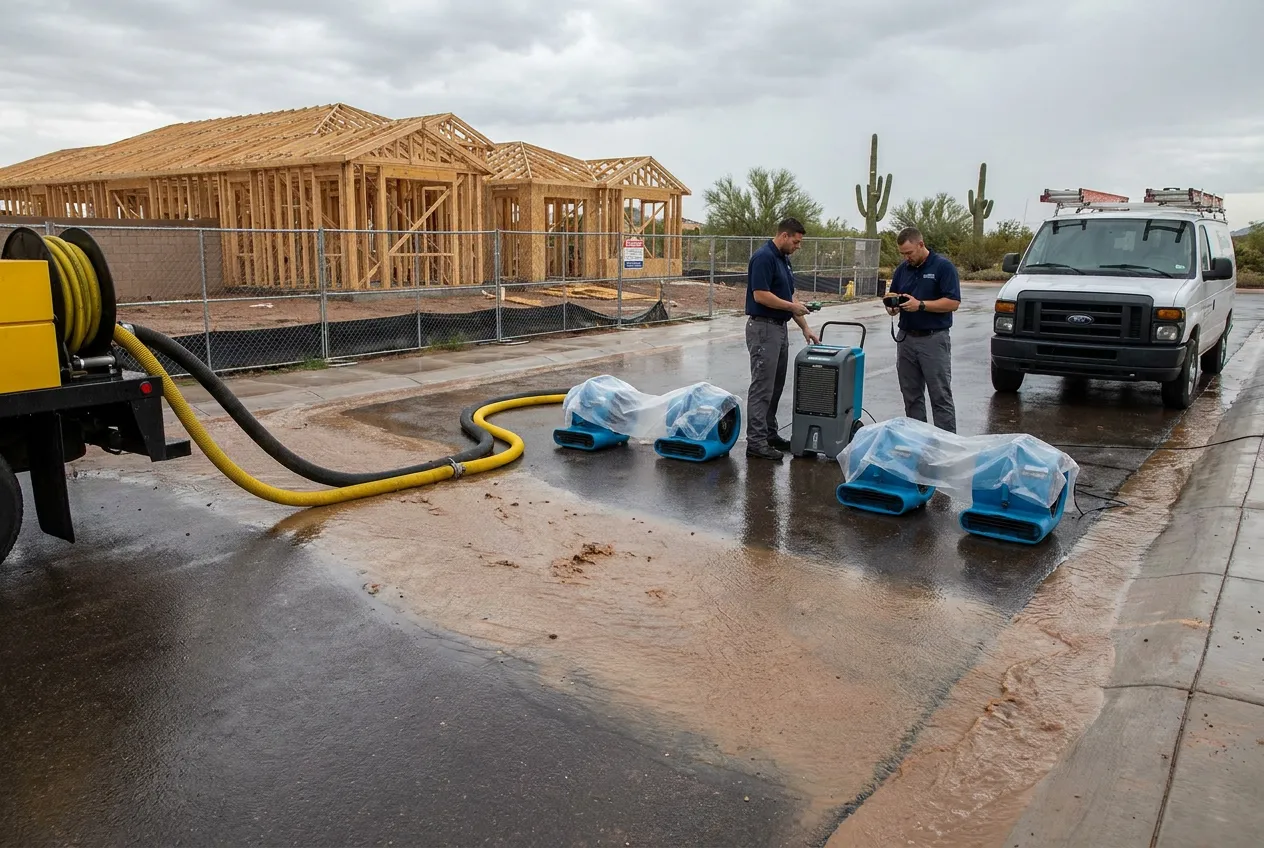
Surprise runs up against the White Tank Mountains, and monsoon behavior here has a particular shape: storms build over the range, then send sheet flow and short-lived wash surges east across the flats. The engineered drainage in the master plans handles most of it — retention basins are why your neighborhood park sits low — but the edges are where it gets interesting. Homes on the western fringes and along the Loop 303 corridor, where desert is still being converted to rooftops, see the classic construction-era problem: grading in transition, dust that becomes sludge, and street drainage that hasn't caught up to the newest phase. Storm water that enters a home is contaminated by definition, and it doesn't wait politely in the garage.
The HOA Layer
Almost everything in Surprise sits inside a master-planned association, and water losses here come with a coordination layer that older cities don't have: gate access, architectural rules on exterior repairs, common-wall questions in the paired-home communities, and boards that want documentation when a loss might touch association property. We work inside that structure rather than around it — notice to the management company when it's warranted, scopes written so a board member can follow them, and repairs that clear architectural review the first time. In the 45-plus communities, add unhurried walkthroughs and a family member on speakerphone whenever the homeowner wants one.
Common Questions
How fast can you reach Surprise?
We stage on the west side — Surprise is inside the same response geography as our Peoria base, at the standard within-an-hour promise, any hour.
Our home was built in 2005 and nothing has ever failed. Are we overdue?
You're on the curve, not past it — but the original water heater, supply lines, and appliance hoses from that build are all in their retirement window now. Replacing the cheap parts proactively costs less than any restoration job ever will.
We're winter residents. What should we do before leaving for the summer?
Shut the main valve, drain what your plumber recommends, arrange a monthly interior walk-through, and leave us or a local contact authorized to act. A leak found in week one is a repair; found in month four, it's a rebuild.
Do you coordinate with our HOA or management company?
Yes — gate access, required notices, and architectural-compliant repairs are routine here. We'll also document whether a loss originated in your unit or association property, which matters for who pays.
Does new construction nearby increase our flood risk during monsoons?
It can, temporarily. Grading and drainage in active phases lag the finished streets, and the first big storm finds the gaps. If runoff entered your home during a storm, treat it as contaminated and call immediately — and our cost guide explains why the category changes the job.
A pipe burst in our Marley Park house — will you match the finishes?
That's the point of the one-team model: the crew that dries the home is the licensed team that rebuilds it, matching flooring, texture, and trim to the community's standard rather than leaving you to broker between contractors.