Water Extraction in Phoenix
Published October 8, 2026 · Last reviewed October 8, 2026 · Water Fighters Restoration
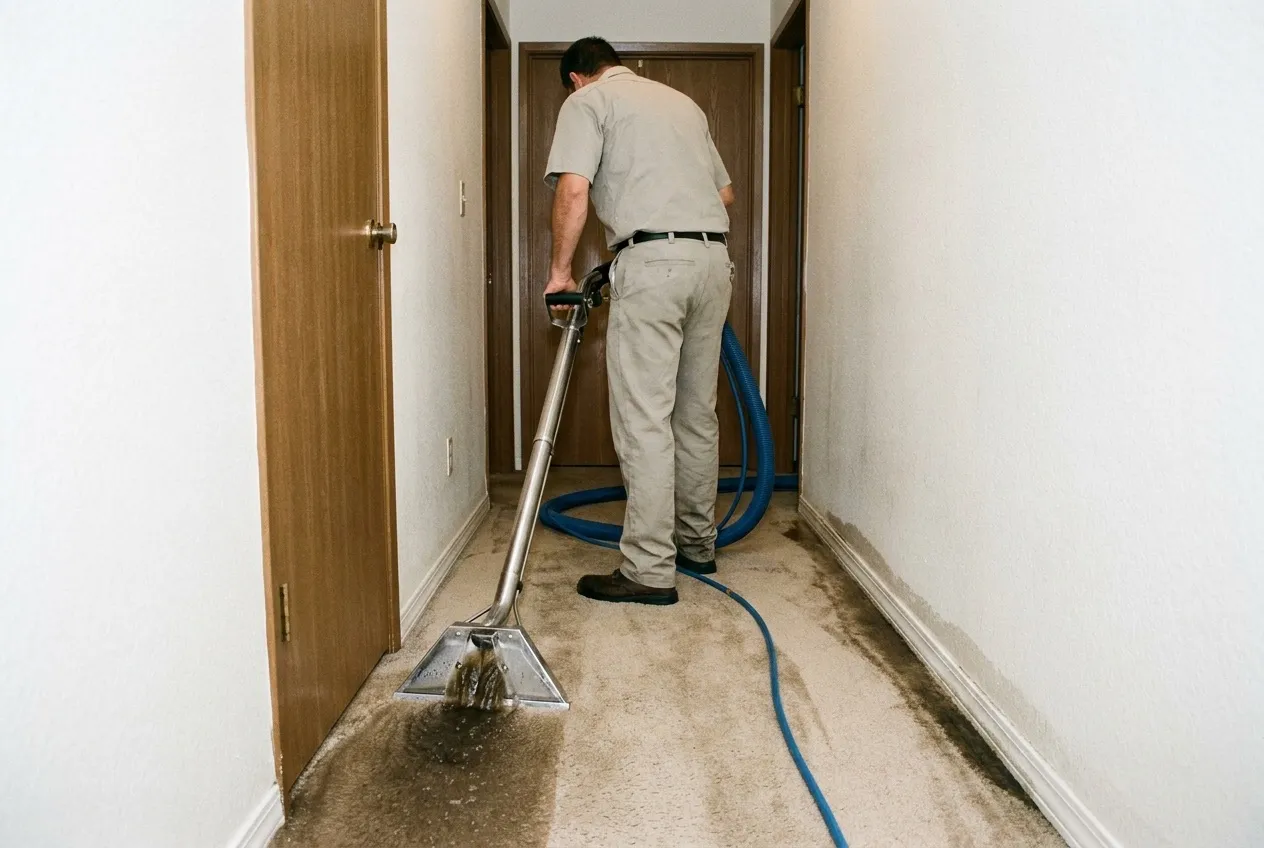
A supply line under the bathroom sink let go, or the washer, or the water heater in the garage. The water is off now. The hallway carpet still squishes under your sock three rooms from where it started.
Extraction is the first job after the water is shut off, and where the water came from has already set most of what follows. This page covers water from inside the house: supply lines, appliances, and water heaters. Water that came in from outside after touching the ground is a different job, and the emergency flood cleanup page covers it, along with what happens when a crew arrives.
What to do right now
- Close the house valve where the water line enters the home, and leave the curb meter box to your water provider. In Phoenix, if the house valve won't close, Phoenix Water's 24/7 line, 602-261-8000, is the City's number.
- Move valuables up and out of the water, and stay off wet carpet near outlets and cords.
- If water backed up out of a drain, keep people and pets out of it. That's Category 3.
- Call Water Fighters Restoration at (602) 884-5325. Open 24 hours, 7 days, and on-site within an hour.
The source sets the job
The IICRC water standard, S500, sorts water into three categories, and the source is the first clue. Its Category 1 examples include broken water supply lines, tub or sink overflows with no contaminants, appliance malfunctions involving water-supply lines, and broken toilet tanks. Its Category 2 examples include discharge from dishwashers or washing machines. Category 3 includes sewage and "waste line backflows that originate from beyond any trap regardless of visible content or color."
The path matters too. Clean water that flows into a contaminated building can change category right away. Clean water that flows into an uncontaminated building doesn't change on that account, though time and temperature can degrade it, and odor is one sign. The categories guide explains how the call gets made, and sewage cleanup covers anything from a drain.
Extraction first, then air
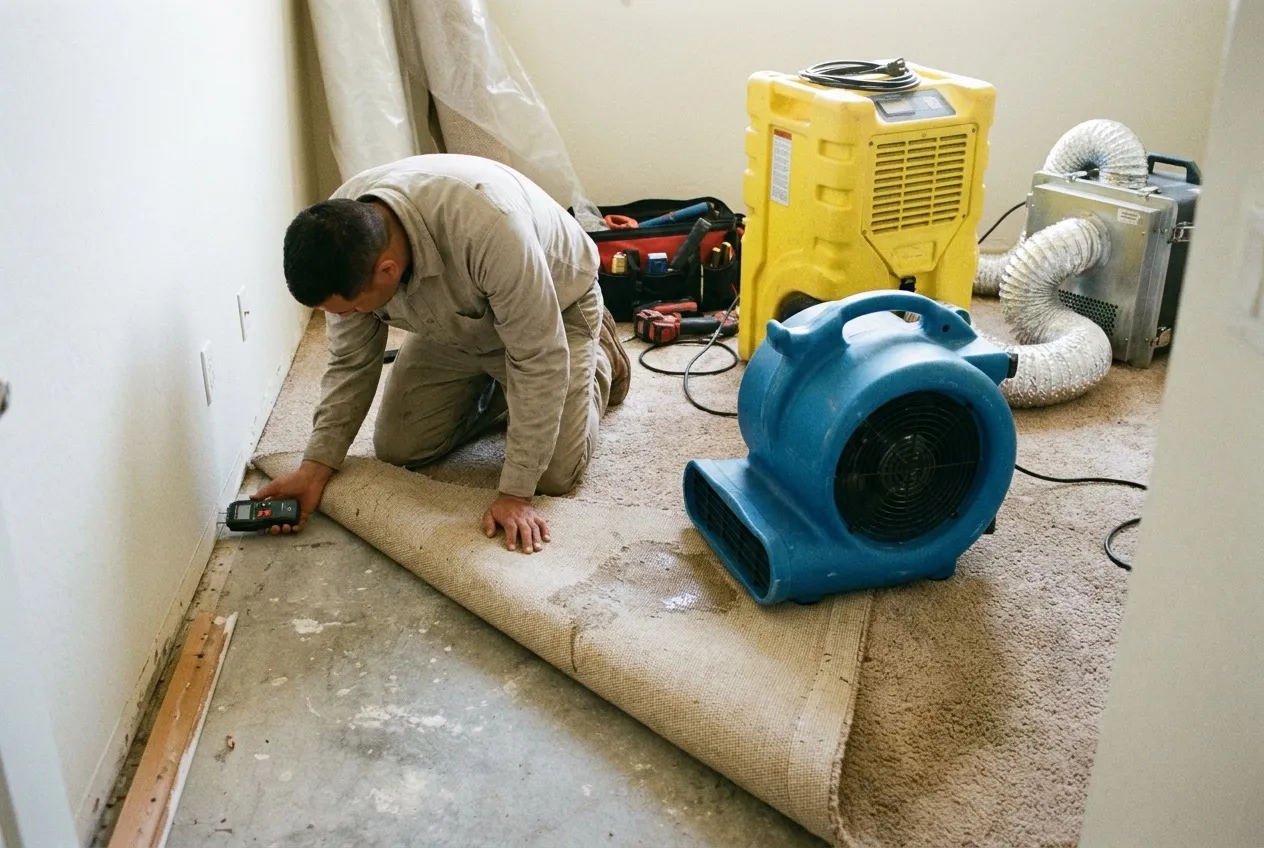
EPA's clean-water guidelines put extraction at the top. For wet carpet, the order is "Remove water with water extraction vacuum," then lower the humidity with a dehumidifier, then speed drying with fans. The subfloor under the carpet must be cleaned and dried too. Every gallon pulled out as liquid is a gallon the dehumidifiers never have to take out of the air.
The same EPA table says, "Do not use fans before determining that the water is clean or sanitary." So the category call comes before the first air mover goes down.
Where indoor water goes
Water spreads across a slab floor until a wall stops it. The baseboards and the bottom edge of the drywall take it next. Carpet pad pulls water in where tile meets carpet, and the pad can stay soaked after the carpet face looks fine.
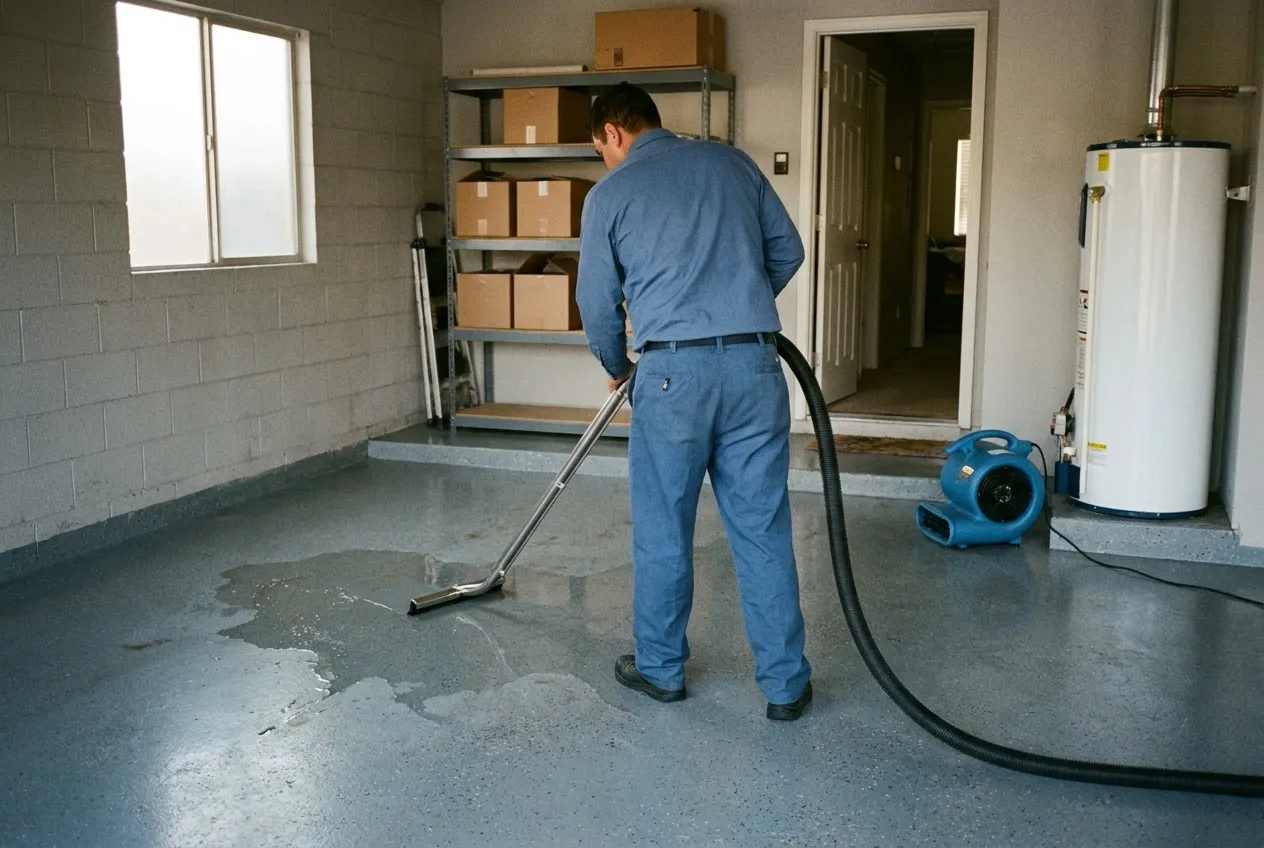
In a garage, the water heater often sits against the wall shared with the house. Water spreads first around its base and can reach that wall's bottom plate and anything stored on the floor. The water heater guide covers tank failures and the shutdown order, and the burst pipe guide covers pressurized line breaks.
The tool follows the surface
Carpet wands press into carpet and pad to bring water up through the fibers. Squeegee-style wands work on tile and concrete. Soft furniture, papers, and electronics are a contents question, and contents restoration covers them.
Carpet and pad decisions start with the category. Clean supply water caught fast often leaves the carpet in play, and the pad usually comes out. Category 2 narrows the options, and Category 3 carpet and pad come out. The wet carpet guide covers those calls in detail.
Phoenix water and appliance connections
Phoenix tap water is hard. The City's 2025 Water Quality Report lists total hardness of 172 to 302 ppm, or 10 to 17.6 grains per gallon. The City says hard water "can cause some types of scaling in pipes and water heaters, and on plumbing fixtures such as faucets and showerheads." The Insurance Institute for Business & Home Safety says poor water quality "can also accelerate the aging of gaskets, seals, and other plastic and rubber parts." It recommends braided stainless steel supply hoses.
Insurance, and the rest of the job
Extraction starts the mitigation file: photos, readings, and a record of what came out. The estimate is free, the estimate you receive is the same one the insurer receives, and Water Fighters bills the insurance company directly. The coverage guide explains how policies treat different kinds of water damage.
After extraction comes drying, and water mitigation covers how it gets verified. Water Fighters does mitigation and rebuild with one team, so the readings from the first visit follow the job through the repair. The water damage restoration page covers the whole job.
Two staffed locations, Peoria (home base) and Phoenix (Deer Valley), make one licensed team, Valley-wide. The north Phoenix extraction page covers building types around Deer Valley, and Peoria extraction covers the home-base side.
IICRC Certified 70192944 · AZ ROC 324471 · ROC 324468 · EPA Lead-Safe Certified Firm · Licensed, Bonded & Insured
Common Questions
What's the difference between truck-mounted and portable extraction?
The difference is mostly access, not the result. A truck-mounted unit runs off the vehicle and sends hose lines into the house, and it generally pulls harder while keeping the noise and exhaust outside. A portable unit is carried in and goes where a hose run can't reach: upper floors, high-rise units, some condo buildings, or a long walk from parking. Either way, the moisture readings afterward show whether extraction did its job.
Does the extraction itself change when the water isn't clean?
Yes. For water known or suspected to be contaminated, EPA says protective equipment and containment are required by OSHA. Porous materials the water soaked are more likely to come out than be dried, and Category 3 carpet and pad come out. Anything that backed up from beyond a drain trap is Category 3 however clear it looks, because the source sets the category.
The water heater emptied onto the garage floor. Does bare concrete even need extraction?
Yes. EPA's guidance for concrete starts the same way carpet does: "Remove water with water extraction vacuum," then speed drying with dehumidifiers, fans, and/or heaters. The bigger question is where the water went next. The readings go to the bottom of the wall shared with the house, the boxes stored on the floor, and any finished room on the other side.
Our automatic leak shutoff closed the main. Do we still need extraction?
Often, yes. A whole-home leak system watches water flow and shuts the main valve when use looks abnormal, and some moisture sensors can close the valve when they detect water. Either way, the valve stops new water, not water already out. Pad, the bottoms of walls, and cabinet bases still hold what escaped before it closed.
Can extraction pull water out of the drywall, or only off the floor?
Only off the floor, the carpet, and the pad. Walls dry with airflow, dehumidification, and sometimes openings. EPA says wallboard "may be dried in place if there is no obvious swelling and the seams are intact," with the wall cavity ventilated if possible. If not, it comes out, and the rebuild replaces it.