
Pool Leak Water Damage in Phoenix
Published September 1, 2026 · Last reviewed September 1, 2026 · Water Fighters Restoration
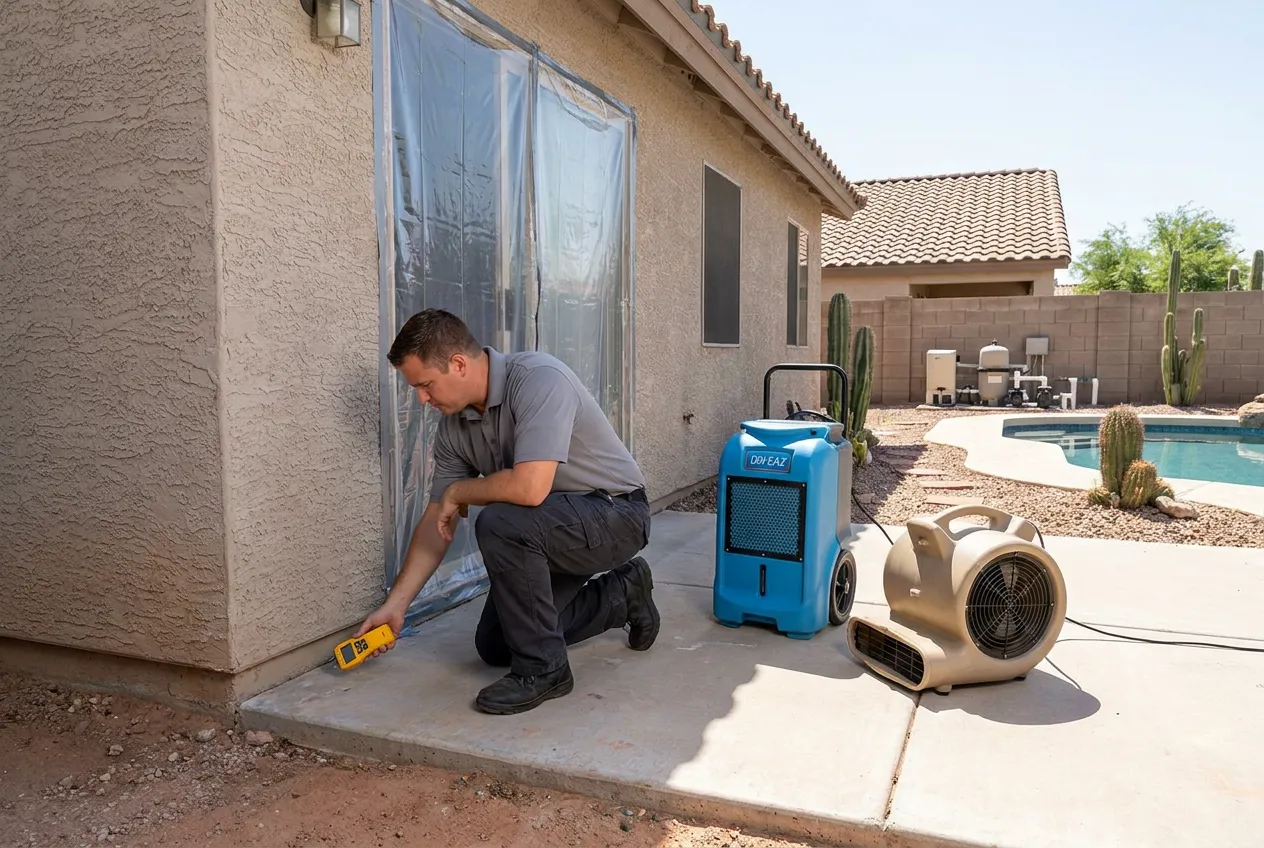
The pool looks normal. The water bill does not.
A damp strip keeps returning beside the deck. One group of pavers has settled. The autofill opens more often, but the pool level never seems low.
That is the quiet pool leak. The automatic fill valve replaces escaping water before the missing level becomes visible.
A leak can continue for months behind a normal-looking waterline. The useful clues appear outside the pool: water use, wet soil, deck movement, equipment behavior, and moisture near the house.
Pool leak detection and pool repair belong to a pool company. Water damage caused by the leak belongs to restoration. Keeping those lanes clear avoids pretending one trade does both.
Autofill can erase the most obvious symptom
An autofill valve works by replacing lost pool water. It cannot tell the difference between evaporation and a broken line.
When a leak develops, the valve may simply run longer or more often. The pool stays at its set level while water leaves through a crack, fitting, return line, supply line, equipment connection, or another opening.
That makes the autofill useful and misleading at the same time. It prevents a low-water condition, but it also removes the visible drop that would have prompted an earlier call.
The first step is not guessing where the leak sits. It is confirming whether the pool is losing more water than evaporation can explain.
Phoenix evaporation is real, but it has a range
Phoenix summer evaporation runs roughly a quarter inch per day. In extreme heat and wind, it can move toward half an inch per day.
Those are approximate conditions, not a promise for every pool. Daily loss varies with weather and pool conditions.
Loss meaningfully beyond the expected evaporation range points toward a leak. A single glance is not enough. Autofill operation and changing weather can blur the result.
A controlled comparison separates pool loss from evaporation more reliably. That is what the bucket test does.
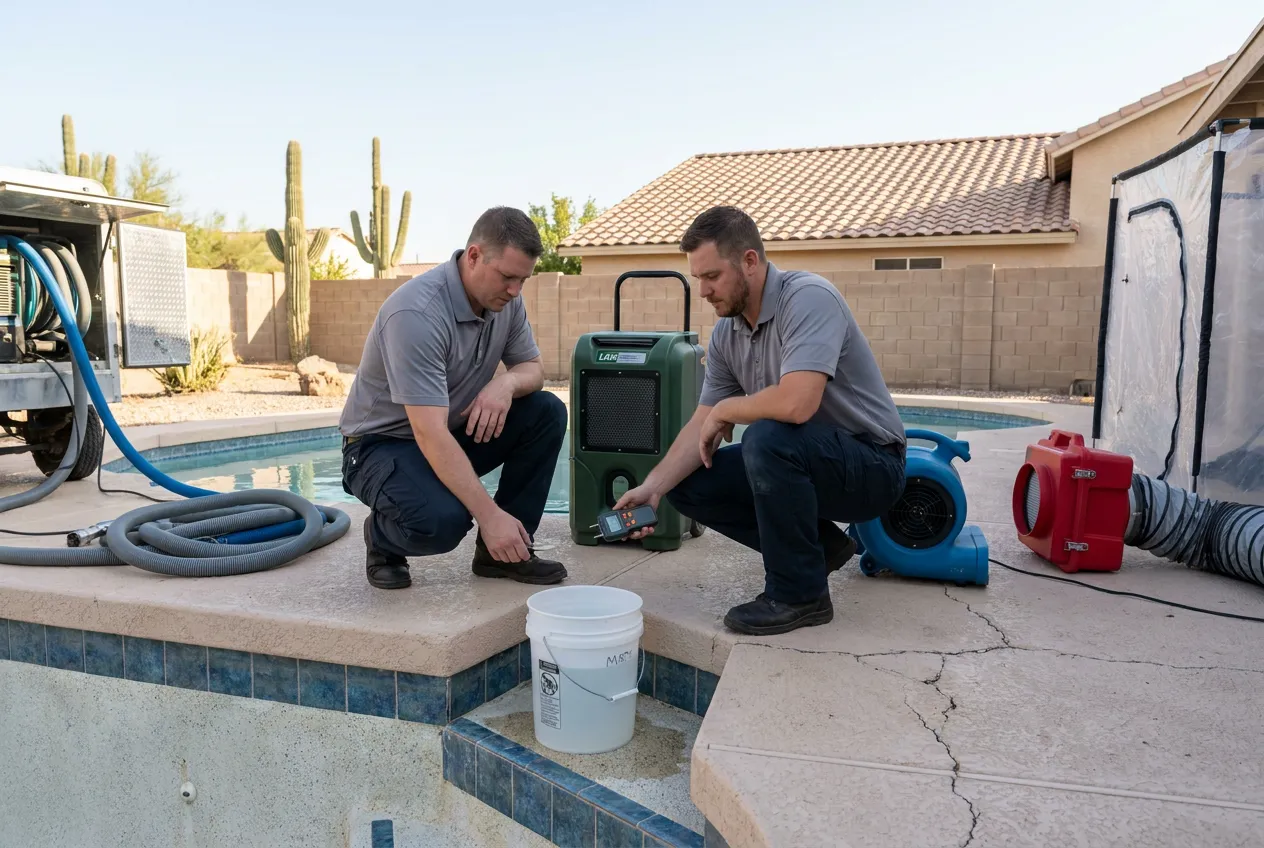
How to run the pool bucket test
- Turn off the autofill. Make sure it cannot replace water during the comparison.
- Place a bucket on a pool step. The bucket should sit securely with part of it below the pool surface.
- Fill the bucket to match the pool level. Mark the water level inside the bucket and the pool level outside it.
- Keep normal conditions steady. Avoid adding water or changing the setup during the test.
- Wait 24 to 48 hours. Compare the two marked levels after the same weather exposure.
- Read the difference. If the pool drops more than the bucket, the pool is losing water beyond evaporation.
The test confirms that a leak likely exists. It does not locate the leak.
A pool company may repeat or adapt the test as part of a larger detection process. The purpose here is to give the homeowner a controlled first check, not a map of buried plumbing.
Pump-on and pump-off results are only clues
Comparing loss while the pump runs with loss while it is off can suggest where a pool professional should investigate.
A different loss rate may hint at operating plumbing versus the pool structure. It does not identify a line or crack.
Those are hints, not diagnoses. The pool company's inspection still has to locate the source.
Do not use a pump comparison to justify digging beside a return line. Leak detection and repair remain the pool company's trade.
Buried pool plumbing can move water toward the house
Supply and return lines run between the pool and equipment pad. Some routes pass near the house.
A pressurized leak can saturate soil and carry fine material away from its original position. The deck may settle. Pavers may lift or sink. A joint may open where the supporting soil changed.
Where plumbing passes near the house, moisture can migrate toward the slab. That is a common path, not an automatic one. Soil, slope, route, duration, and the size of the leak all affect movement.
A dark damp strip beside the deck may be the first surface clue. The more important question is whether moisture has reached the wall base, foundation edge, garage, or an interior finish.
The slab leak water damage guide covers the indoor version of concealed water moving beside or beneath a foundation.
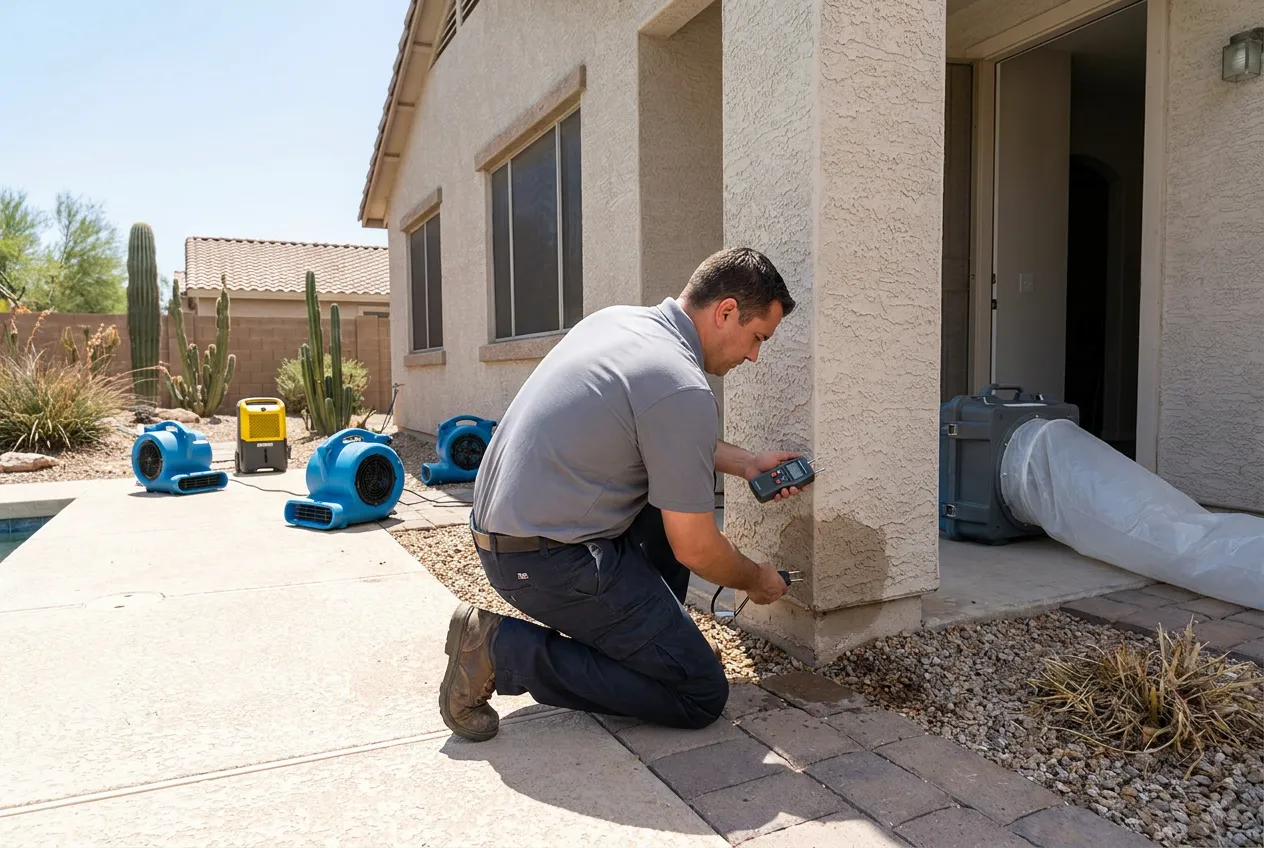
The pool company finds and repairs the leak
Pool professionals handle pressure testing, line isolation, structural pool inspection, leak location, and repair of pool equipment or plumbing.
Water Fighters Restoration handles the water damage the leak caused. That may include moisture at the deck edge, wall base, garage, interior flooring, cabinets, or slab-adjacent assembly.
The two scopes may overlap in timing. The leak source must be stopped before drying can hold. Restoration assessment can begin while the pool company narrows the source.
Honesty matters here. A restoration technician should not claim to locate a hidden return-line break. A pool company should not assume the wall is dry because the pool repair is complete.
Water that migrates from outside is Category 3
Pool water moving through soil, a deck joint, an exterior wall, or another outside path becomes outside water entering the structure. It is Category 3.
That classification affects access, material removal, cleaning, and containment. Clear-looking moisture at a baseboard is not treated as a clean supply-line loss after traveling through soil.
Professionals define the affected boundary, remove porous materials when conditions require it, clean remaining surfaces, and dry the assembly under measured conditions.
The water damage restoration service explains mitigation and rebuild. The restoration cost guide explains which scope details shape an estimate without guessing from a stain alone.
Restoration follows the building, not the pool shell
The first building inspection starts where the pool route approaches the structure. Technicians check exterior wall bases, interior finishes, flooring transitions, cabinets, and adjoining rooms.
Moisture readings are mapped against the suspected plumbing route and the site's slope. A dry surface does not rule out damp material behind a finish.
If soil movement has affected deck support or another structural element, the proper trade may need to evaluate that condition. Restoration work still documents the moisture and addresses affected building materials.
One team does mitigation and rebuild. When drywall, trim, flooring, or cabinets must be removed, the repair remains connected to the drying record.
Sustained moisture can become a mold condition
A masked pool leak is often a duration problem. The autofill may keep feeding the loss while the wall or slab edge stays damp.
Mold remediation without fixing the pool leak would be a repeat job. The pool source and the building condition have to be handled as connected work by the right trades.
The Phoenix Mold Guide explains testing, containment, HEPA filtration, and clearance. Pool-heavy housing areas such as Scottsdale and Chandler can see the same hidden-autofill pattern, though every property route is different.
Water Fighters Restoration is Open 24 hours, 7 days. The response promise is on-site within an hour. Water Fighters Restoration is IICRC Certified 70192944 · AZ ROC 324471 · ROC 324468 · EPA Lead-Safe Certified Firm · Licensed, Bonded & Insured.
Common Questions
Can a pool autofill hide a leak when the water level looks normal?
Yes. The autofill replaces escaping water and can hold the normal level for months. The first clues may be higher water use, damp soil, deck movement, or moisture near the house.
How much pool water can Phoenix summer evaporation remove?
Roughly a quarter inch per day is common, with loss moving toward half an inch during extreme heat and wind. Conditions vary, so the bucket test is more useful than comparing the pool with a remembered level.
Can the bucket test locate the broken pool line?
No. It can show that the pool is dropping faster than the water in the bucket, which supports the presence of a leak. A pool company still has to locate and repair the source.
Do sunken pavers prove a pool pipe is leaking underneath them?
No. Settlement can have more than one cause, but a pressurized leak can saturate and erode supporting soil. Deck movement paired with unexplained water loss gives a pool professional a useful investigation area.
Where does pool repair end and water restoration begin?
The pool company locates and repairs the leak. Restoration begins where escaping water affects soil support, the deck edge, a wall, the slab area, a garage, or interior materials; both trades may coordinate with water-damage restoration.