
Water Damage Restoration in Chandler
Published August 4, 2026 · Last reviewed September 1, 2026 · Water Fighters Restoration
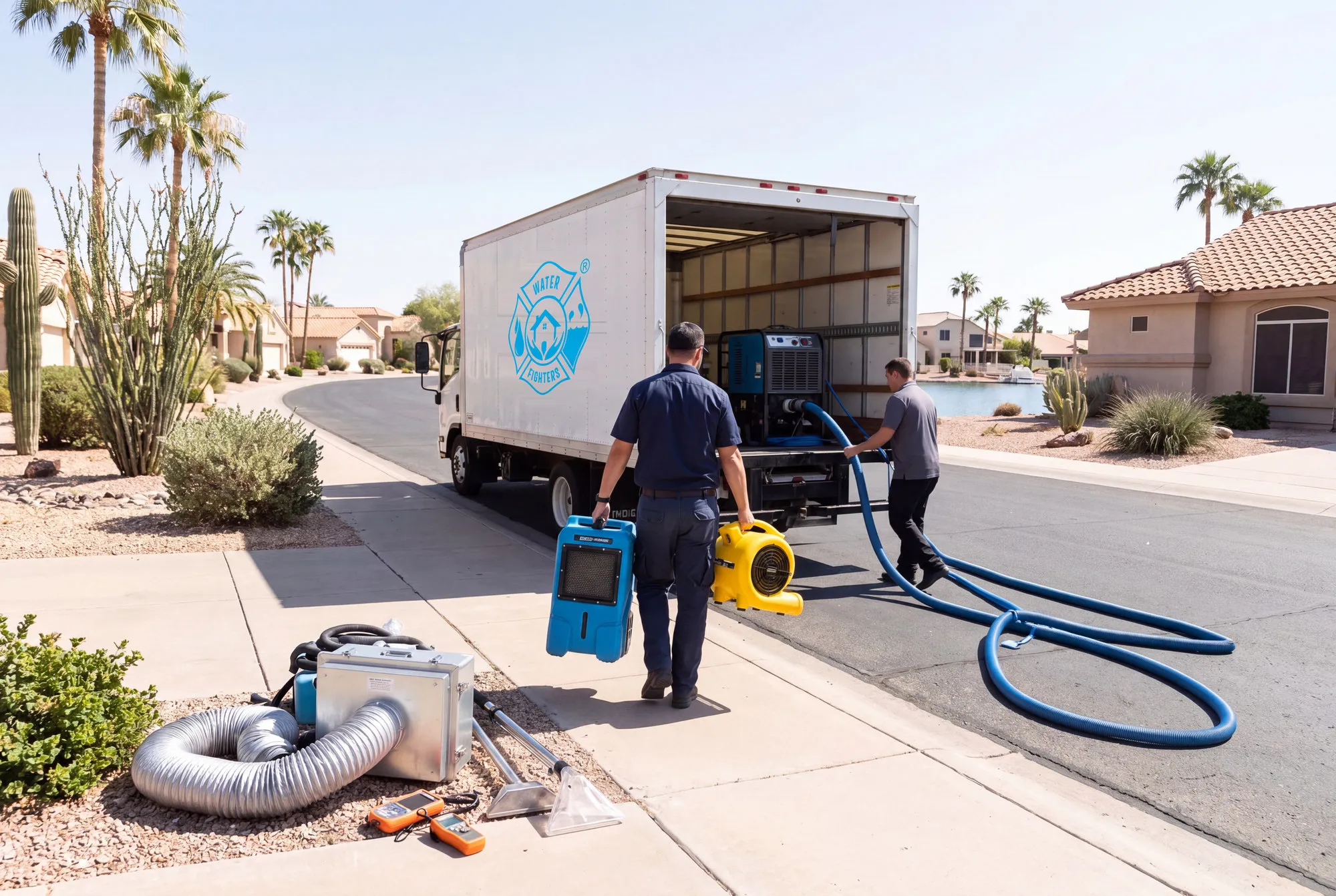
Chandler moves more water on purpose than almost any suburb in Arizona — and cities that run water by design have water accidents with local signatures. Knowing them is most of the diagnosis.
Water still coming in or rising outside? Use Flood Cleanup in Chandler for the first-hour protocol and local drainage read.
A City That Runs on Water
Start with Ocotillo, because nothing else in the Valley looks like it: 167 acres of interconnected man-made lakes threading through the neighborhoods, seventeen miles of shoreline, kept moving by a network of pumping stations and fed by reclaimed water — the community association is the largest reclaimed-water user in the Southwest, running roughly two million gallons a day through the landscape even in winter. It's beautiful, and it means the infrastructure carrying water past your foundation is measured in miles, not feet. The failures we see around the lake communities are rarely the lakes themselves — they're the supporting cast: irrigation mains and laterals letting go against a slab, valve boxes weeping into side yards for weeks, pool and water-feature plumbing on waterfront lots, and grading that sends an irrigation failure toward the house instead of the street. The water arrives quietly, from outside, at foundation level — the hardest kind to catch early and the easiest to misread as "the monsoon" when no storm came.
Sun Lakes, The Springs-style lake pockets, Fulton Ranch's water features, and fifty-odd golf courses' worth of HOA irrigation repeat the pattern at smaller scale across the city.
The Soil Problem
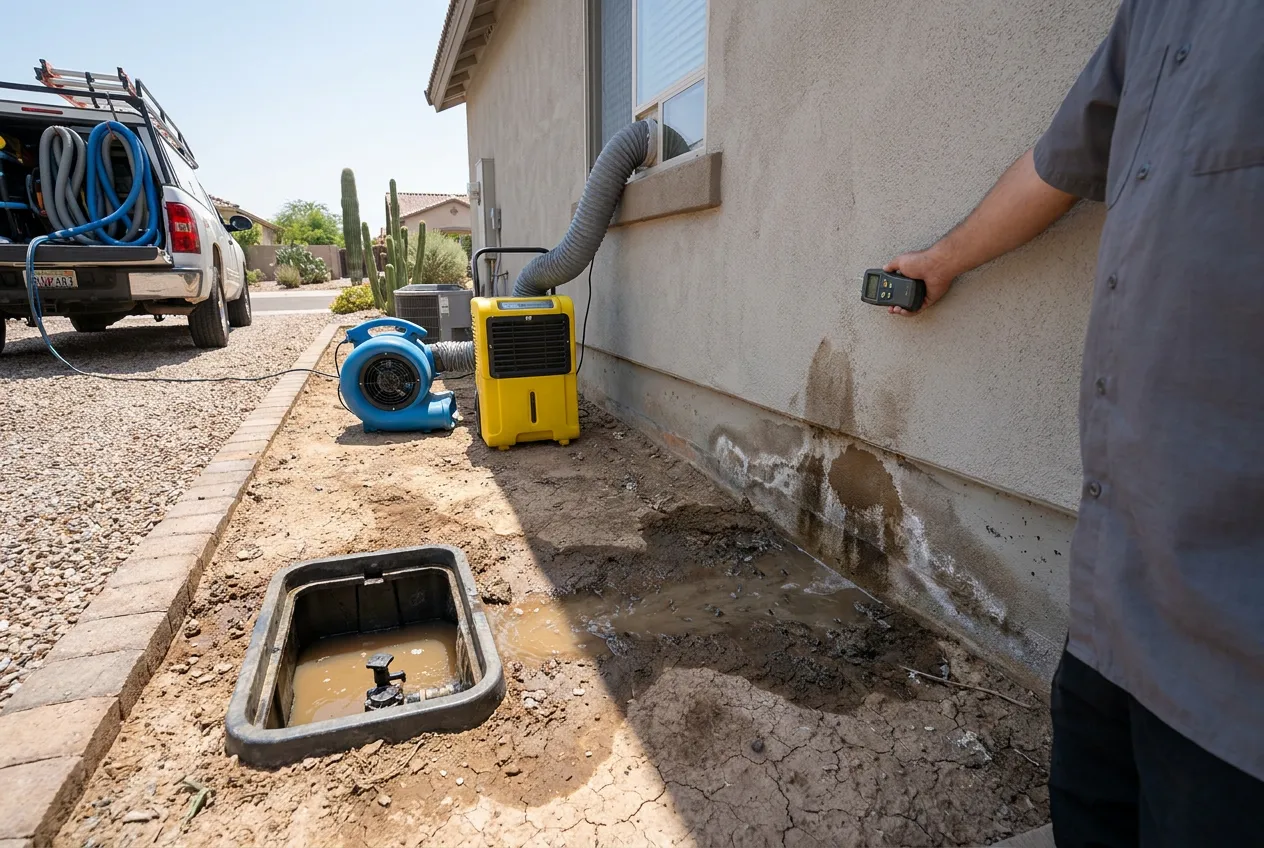
Chandler sits on some of the Valley's most stubborn caliche — the cemented subsoil layer that absorbs almost nothing. Water that would soak into sandier ground elsewhere just sits here, and the city's famously flat southern grades give it nowhere to run. The practical result: when an irrigation line breaks or an August cell stalls, water ponds against foundations and finds the weep screed, the door threshold, the one hairline crack in the stem wall. Homeowners discover it as a damp carpet edge along an exterior wall with no plumbing in it — the signature Chandler mystery call. The answer is almost always outside: metered from the interior, traced to the source, dried from both sides, and documented so the cause-of-loss is unambiguous for the claim.
The Townsite Core
Downtown Chandler around the original townsite carries the city's oldest housing — blocks dating from the forties through the seventies, in the orbit of the historic San Marcos. The failure modes match the age: galvanized supply lines rusting shut then through, first-generation copper pinholing in the slab, drains at end-of-life, and the Consolidated Canal corridor's older neighborhoods carrying occasional exposure history that newer Chandler never had. These homes reward fast response and surgical work — original materials worth saving, and a rebuild standard that has to respect character the big master plans don't have.
The Price Corridor
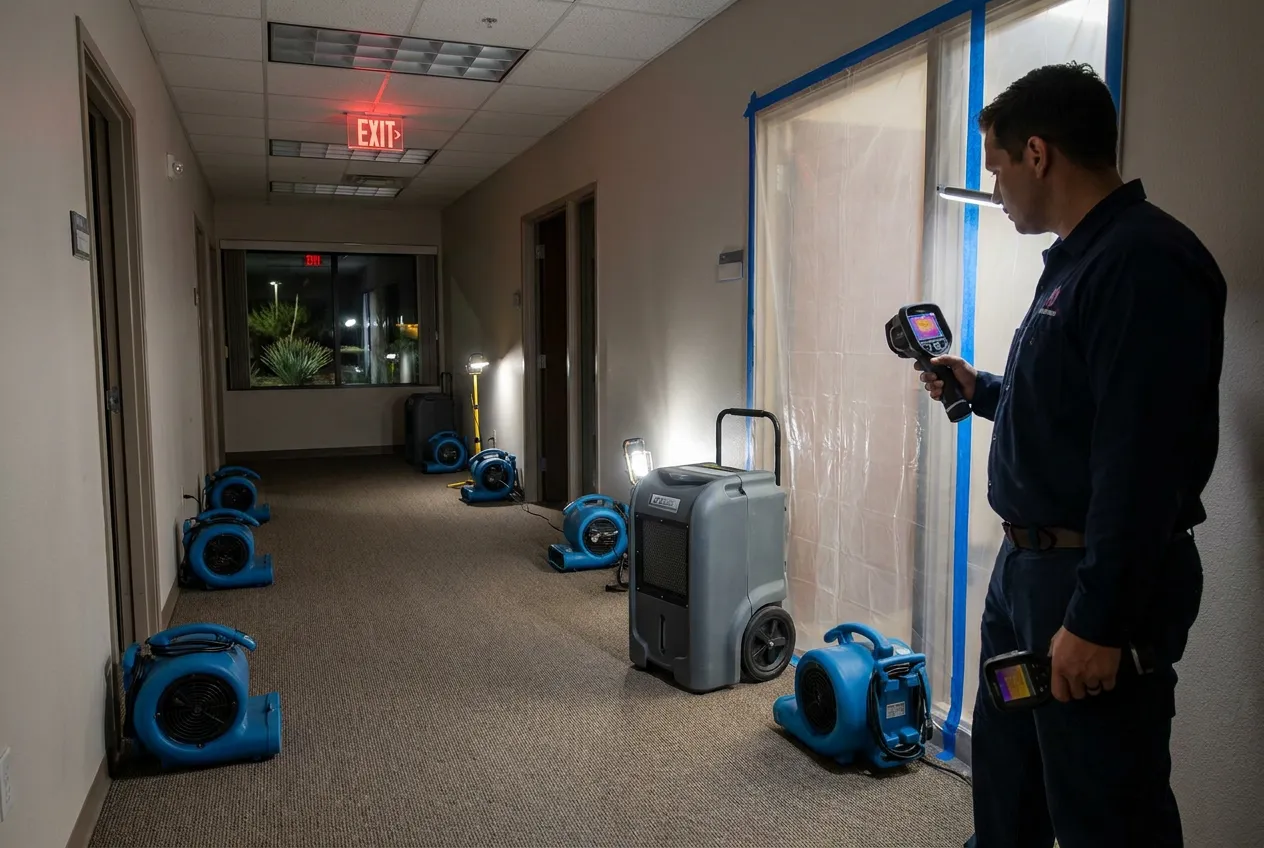
Chandler's tech spine — Intel's campuses, the fabs and suppliers along Price Road, the offices and flex buildings feeding them — makes this one of our most active commercial water damage cities. Corporate facilities here run on documentation and uptime: after-hours response as the default, containment that keeps the rest of a building working, COIs same-day, and moisture logs written for a facilities director, a carrier, and a corporate real-estate team to read without translation. A supply line above a server closet does not wait for morning, and neither do we.
Common Questions
How fast can you reach Chandler from the west side?
Within the hour, same as everywhere on the map — Chandler is part of the standing staging plan, 24/7, and if a monsoon night ever threatens the window you get a call with a real time instead of silence.
Water is coming in along an exterior wall with no plumbing in it. What is that?
In Chandler, usually irrigation or ponded runoff against the foundation — caliche keeps it from soaking away and flat grades keep it from running off. We meter inside, trace the source outside, and dry both sides; guessing "roof" or "slab leak" first is how these losses run for weeks.
We're on the water in Ocotillo. Does lakefront raise our risk?
The lakes are professionally managed; your lot's supporting plumbing is the real variable — irrigation laterals, water features, pool equipment, and grading. Waterfront homes mostly need what every Chandler home needs: drainage paths walked before monsoon season and fast calls when something's wet.
Our downtown Chandler house has original plumbing. Repair or repipe?
That's your plumber's call, not ours — we don't sell pipe. What we'll tell you honestly after drying a loss is whether what failed looks like a one-off or a system at end-of-life, with photos and readings you can hand to whoever quotes the repipe.
Can you handle facilities along the Price Corridor?
Regularly — after-hours and overnight as standard, containment for occupied buildings, and documentation packages written for corporate facilities and insurance teams. Certificates of insurance naming your entity are same-day routine.