
Water Damage Restoration in Tempe
Published August 4, 2026 · Last reviewed September 1, 2026 · Water Fighters Restoration
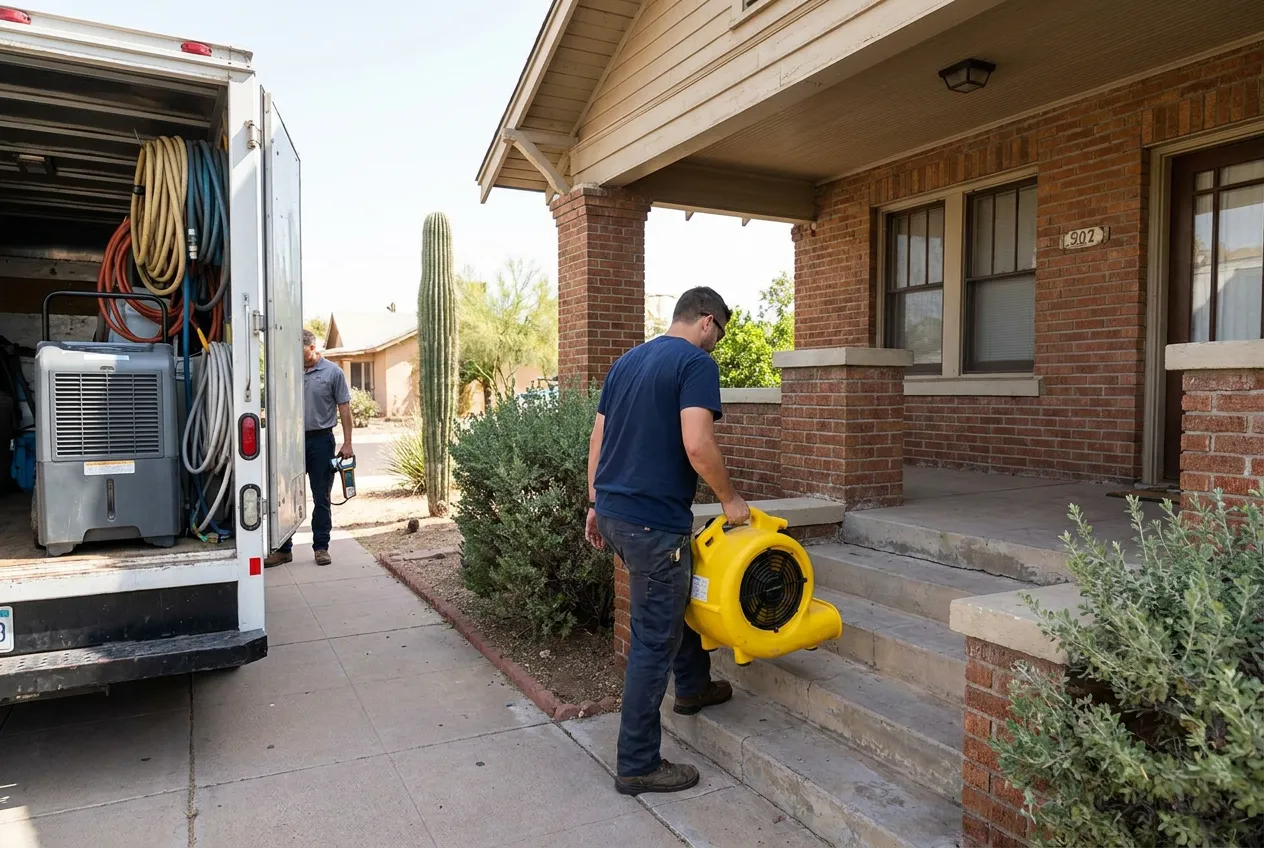
Tempe ran out of dirt decades ago. Landlocked on every side, it did its booming in the eighties and nineties and has grown inward ever since — which left it with a housing profile no other Valley city has: the metro's oldest continuous residential blocks, its densest rental economy, and brand-new infill towers standing a bike ride from bungalows built when Arizona was a territory's memory.
Water still coming in or rising outside? Use Flood Cleanup in Tempe for the first-hour protocol and local drainage read.
The City That Can't Grow Out
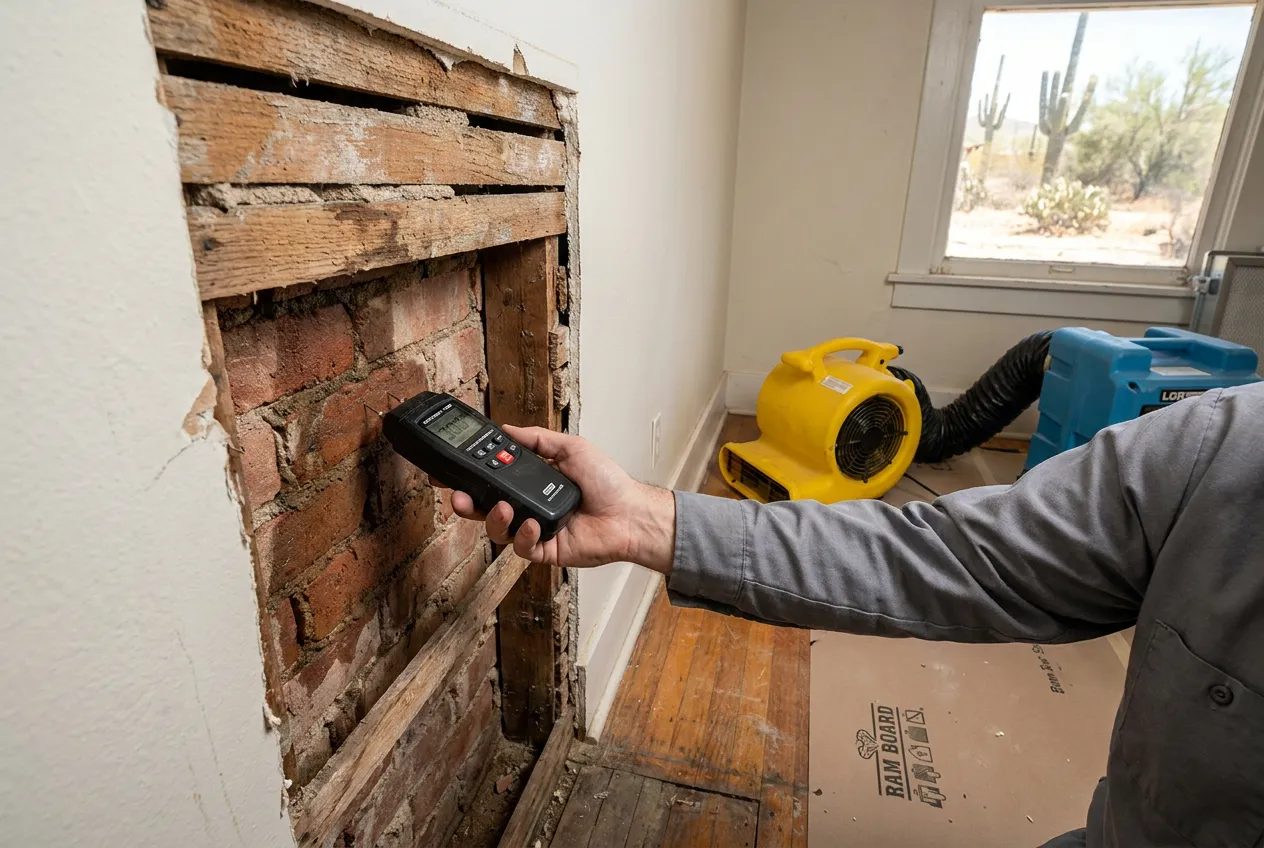
Maple-Ash, tucked between Mill Avenue and the railroad tracks, is Tempe's oldest intact residential neighborhood — the Gage Addition platted in 1909, Park Tract in 1924, College View in 1945, a few hundred households mostly built between the 1900s and the 1950s. Fan out from there through the historic districts and the post-war grid toward Date Palm Manor's mid-century ranches, and you're working through supply and drain systems older than most restoration technicians. Galvanized pipe, cast iron, brick and plaster that hold moisture invisibly, and hardwood floors genuinely worth saving. In these blocks we dry in place wherever the meters allow, open walls surgically, and treat the rebuild as preservation work — a bad patch in a 1920s bungalow announces itself forever.
The Flood-Irrigation Inheritance
Here's the Tempe detail almost nobody outside the old neighborhoods knows: some of these blocks still flood their yards on purpose. Maple-Ash and its neighbors inherited residential flood irrigation — the piped descendant of the farm ditches — and the practice is why the tree canopy there drops summer temperatures noticeably below the surrounding city. It's also a water-damage variable that exists almost nowhere else we work: scheduled water sheeting across lots a few feet from century-old foundations. When the grading is right, it's harmless and glorious. When a berm has eroded, a valve sticks, or a lot has settled toward the house, irrigation day puts water against a 1920s stem wall — and the damp closet wall gets blamed on everything except the lawn. We check irrigation exposure on every older-Tempe loss as a matter of routine, because misdiagnosing the source means drying the same wall twice.
The Landlord City
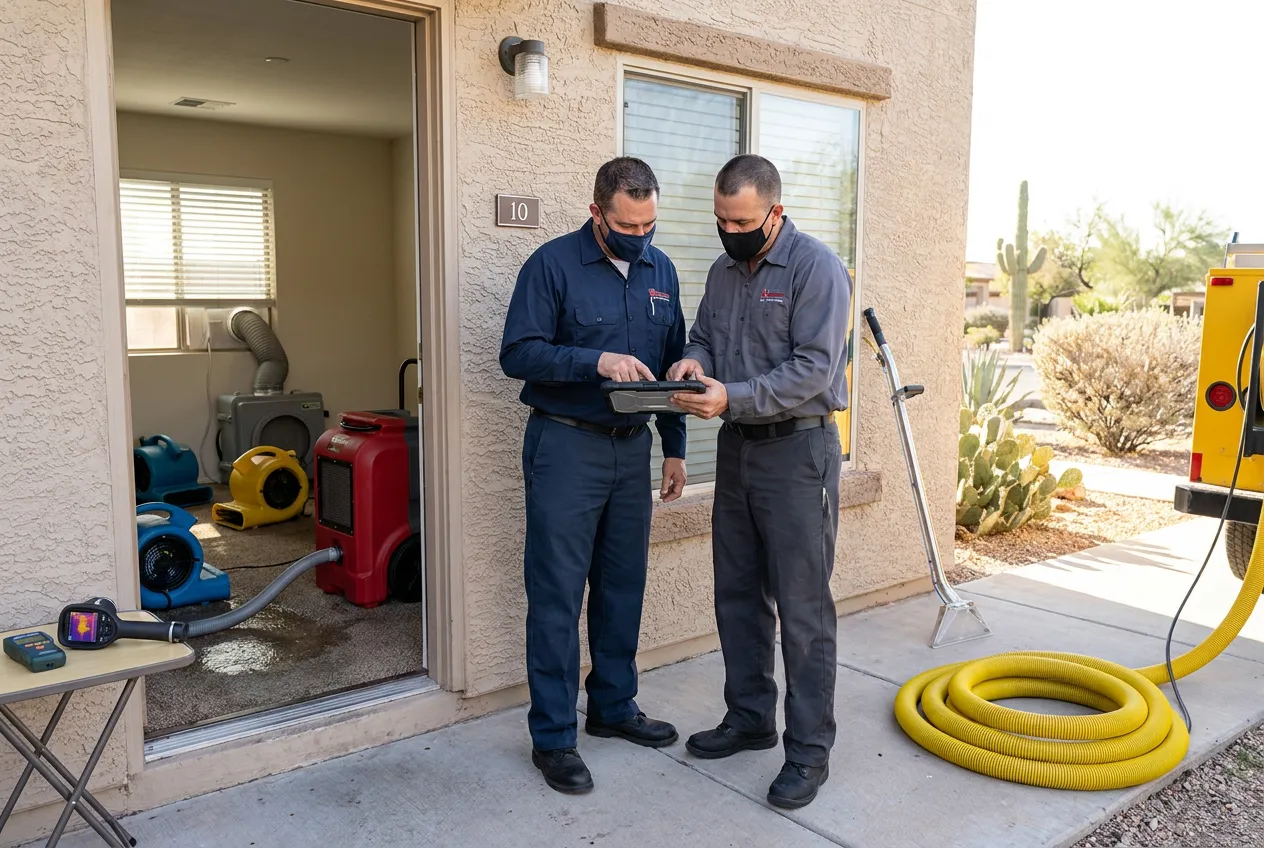
Tempe's rental share is the Valley's highest by a distance — ASU alone guarantees it — and a huge fraction of our Tempe work runs through landlords and property managers rather than occupants. That changes the job in ways we've built for. Tenants report late or not at all, so losses arrive older: the upstairs bathroom that's been seeping into the unit below for a month, the water heater in a rental that nobody looked at since move-in. Turn calendars are unforgiving — August move-ins do not wait for a leisurely dry-out. And the paperwork has more readers: owner, manager, tenant, and carrier all need the same facts.
So we work it accordingly: direct tenant coordination for access with the manager kept in the loop, documentation written so an owner in another state can approve scope from photographs and readings, drying schedules built around lease dates when there's any room to build them, and habitability questions answered straight rather than optimistically. Multifamily and student-housing operators get the same after-hours default as our commercial clients, because a 2 a.m. supply-line failure in a twelve-unit building is a commercial loss wearing a residential address.
Lakes and Infill
The rest of Tempe's map fills in fast: The Lakes' seventies-era private-lake community with its aging waterfront infrastructure, the eighties-nineties tract belt carrying the polybutylene window's tail end, condo and townhome stock around Town Lake where one riser failure becomes four units' problem, and constant infill construction threading new foundations beside old ones. Storm behavior here is flat-city behavior — drainage does its job until one scupper doesn't, and the water that gets in is an emergency measured in minutes, not category debates.
Common Questions
How fast can you reach Tempe?
Within the hour, any hour — Tempe sits inside the standing Valley staging plan like every city on the map, and the promise doesn't change with the address's age.
Can a century-old bungalow actually be dried without gutting it?
Usually, if the call comes fast. Brick, plaster, and old-growth hardwood tolerate careful drying better than people expect; what they don't tolerate is weeks of hidden moisture. We open only what the meters demand and match what we repair.
We're landlords with tenants in place. How does the process work?
You get one point of contact; the tenant gets clear scheduling directly from us; the manager and owner get the same documented scope the carrier gets. Habitability calls are made honestly and in writing — and the cost mechanics are broken out so owner and adjuster read identical numbers.
Our older neighborhood has flood irrigation. Is that a damage risk?
Done right, no — it's the reason for the canopy. The risk is grading drift and hardware age: walk the berms and valves each season, watch the wall nearest the irrigated lot line, and if a closet or baseboard turns damp on a schedule, tell us — the schedule is the clue.
A unit above ours leaked and the ceiling is stained. Who calls you?
Whoever acts first — tenant, owner, or manager. We document origin and path precisely, which is what lets two owners' carriers sort responsibility instead of arguing about it, and we can dry both units as one coordinated job.