Water Mitigation in Phoenix
Published October 8, 2026 · Last reviewed October 8, 2026 · Water Fighters Restoration
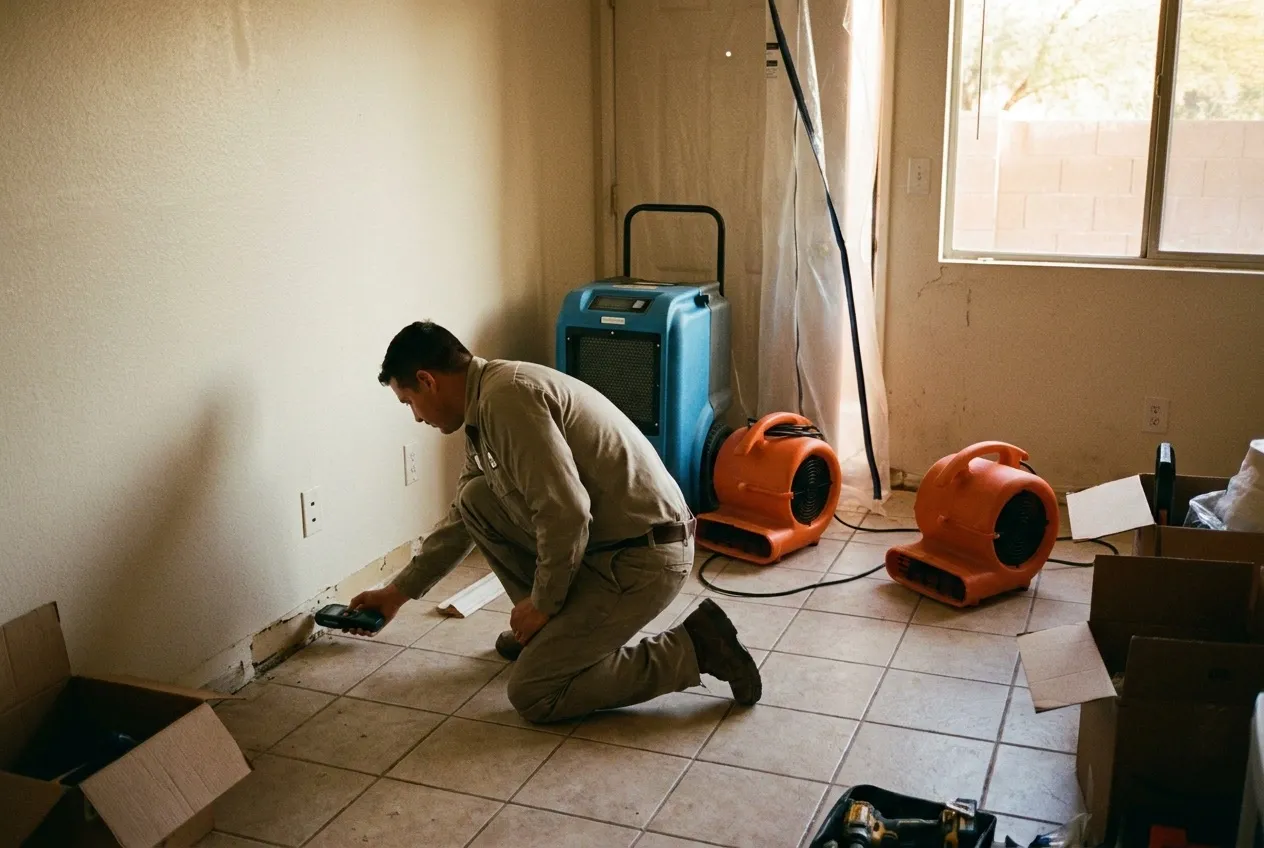
The supply line is off and the standing water is gone. The tile looks fine. Put the back of your hand against the bottom of the hallway wall, though, and it feels cooler than the wall a foot higher.
That cool strip is what mitigation is for. Mitigation is the half of a water loss that keeps it from getting bigger: stop the source, get the water out, dry what stayed wet, and document every step. It ends on a moisture reading, not a calendar date. The rebuild comes after.
What to do right now
- Close the house valve where the water line enters the home, and leave the curb meter box to your water provider. In Phoenix, if the house valve won't close, Phoenix Water's 24/7 line, 602-261-8000, is the City's number.
- Don't aim fans at the wet area yet. Until the water is extracted, moving air only pushes the moisture somewhere else.
- Keep people and pets out of water that crossed the ground outside or backed up from a drain. A drain backup is Category 3, and outside water that crossed the ground is handled as Category 3.
- Call Water Fighters Restoration at (602) 884-5325. Open 24 hours, 7 days, and on-site within an hour.
What a mitigation job includes
The emergency flood cleanup page walks through the first hour on site. Mitigation runs from that hour until the structure reads dry, and it usually includes:
- Stopping the source. The house valve stops the flow, and a plumber repairs the pipe.
- Extraction of standing water and the water held in carpet and pad.
- Moving and blocking contents so furniture isn't sitting in water.
- Removing what can't be saved, such as wet pad or swollen baseboard, as the readings and the water category decide.
- Air movers and dehumidifiers sized from room measurements: the length of wet wall, the closets and offsets, and the room's volume.
- Monitoring visits that take the same readings in the same spots.
- A moisture map and photo log that the adjuster and the rebuild both work from.
What "dry" means in Phoenix
The IICRC's water standard, S500, says in its 2021 edition that drying goals should "return structure, systems, or contents to an acceptable condition; and inhibit microbial growth." To set them, it recommends that restorers consider the dry standard, seasonal weather, historical data for the region, and published resources such as USDA Forest Products Laboratory data. The dry standard usually comes from unaffected materials in the same house.
Phoenix shows why the regional data matters. A 1998 Forest Products Laboratory note says "the EMC in Phoenix, Arizona, in June is only 4.6%." Eugene, Oregon, in December sits at 20.2%. EMC, or equilibrium moisture content, is the level wood settles at in the air around it. That 4.6 percent is for sheltered outdoor wood, not a target for anything inside a house. It shows how far a Phoenix "normal" sits from a generic chart.
Desert air helps exposed surfaces, but it does little for a soaked wall cavity, carpet pad, or slab edge. Summer changes the air, too: ASU ties the older Phoenix monsoon-onset rule to three or more days of dew points averaging 55°F or higher. When outside air is drier than the house, it can sometimes help. In monsoon humidity the house usually stays closed and dehumidifiers work, and readings make that call.
How drying gets verified
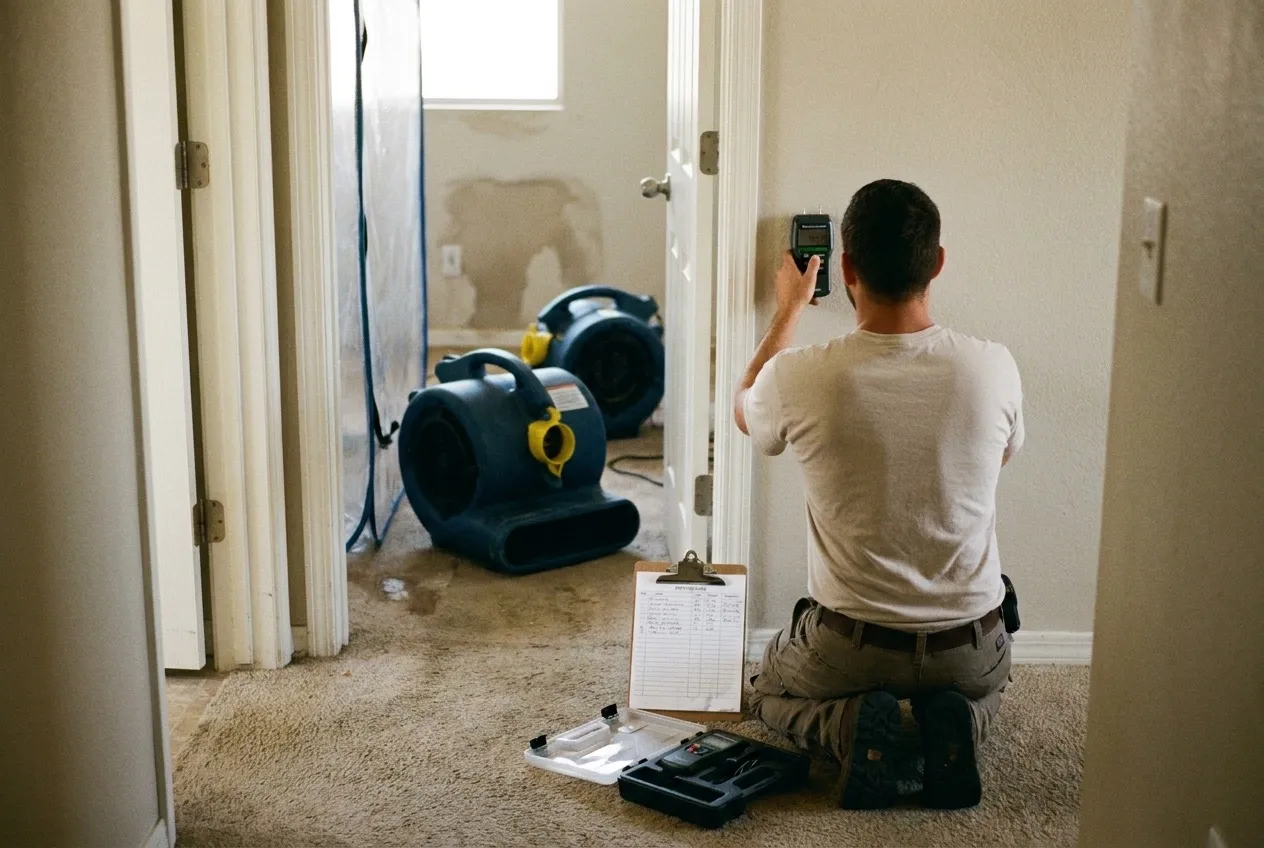
Readings are the method. A 2019 R&R Magazine article calls pin-type measurement "a generally more reliable and repeatable method" and says the best practice is to break the surface of the material. Pinless meters are generally less accurate, and metal under the surface can give them a false positive.
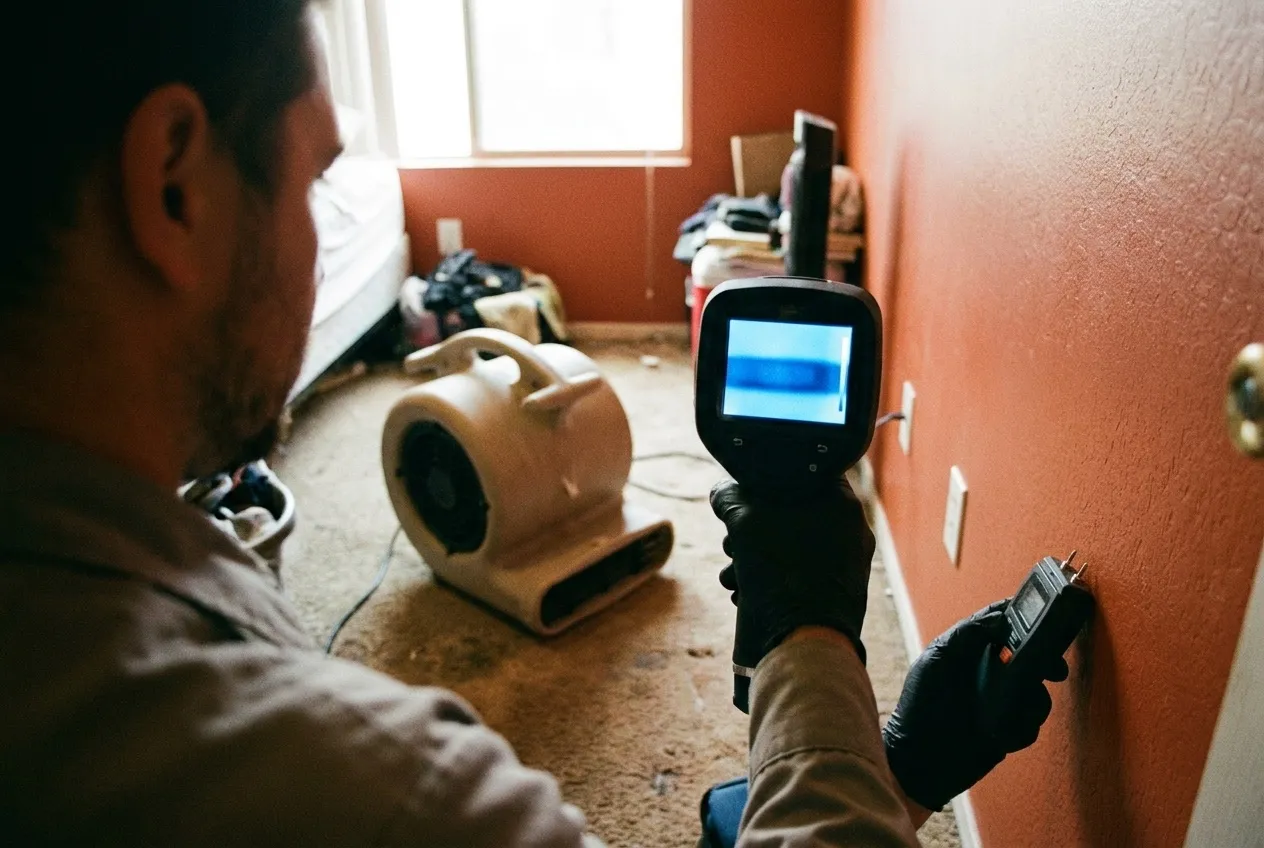
A thermal camera does a different job. It finds temperature differences, and a cool band at the bottom of a wall can point to moisture. As a 2026 R&R article puts it, "what they can't do is provide actual moisture content readings." A meter at the same spot confirms the camera or rules it out.
Daily monitoring is the standard practice. The handbook's drying chapter covers the general method, and the drying-time guide explains why some materials take longer.
When clean water stops being clean
EPA's clean-water guidelines call for response within 24 to 48 hours to prevent mold growth. They also note that growth may have started even when materials dry within 48 hours. S500 says Category 1 water itself "can deteriorate to Category 2 or 3," depending on how long things stay wet and the temperature, and odor can be a sign it has. Clean water that reaches an uncontaminated building doesn't change category on arrival.
Anything that backed up from a sewer or drain is Category 3 from the start, and outside water that touched the ground is handled as Category 3. For contaminated water, EPA says protective equipment and containment are required by OSHA. The categories guide explains how the call gets made, and sewage cleanup covers drain backups.
Insurance and the mitigation file
Homeowner policies generally expect the owner to take reasonable steps to protect the property from further damage. Emergency mitigation is that step, and permanent repairs are the later phase. Carriers generally want photos, receipts, and a chance to see the damage before permanent repairs or disposal.
So mitigation is its own documented phase, with readings, photos, equipment days, and every removal on record, and carriers often process it as its own part of the claim. The estimate you receive is the same one the insurer receives, and Water Fighters bills the insurance company directly. The claim guide covers work authorizations and supplements.
One team from dry to rebuilt
When the readings reach the drying goal, the rebuild starts. Water Fighters does mitigation and rebuild with one team, so the repairs start from the record that ended the drying. The water damage restoration page covers the whole job, and water damage repair covers the rebuild half. Two staffed locations, Peoria (home base) and Phoenix (Deer Valley), make one licensed team, Valley-wide; the Peoria page covers the home-base side.
IICRC Certified 70192944 · AZ ROC 324471 · ROC 324468 · EPA Lead-Safe Certified Firm · Licensed, Bonded & Insured
Common Questions
Is water mitigation the same thing as water remediation?
Not in the industry's own terms. The IICRC titles its water standard "Water Damage Restoration" (S500) and its mold standard "Mold Remediation" (S520). "Water remediation" is a search phrase, not the name of an IICRC standard. Mitigation is the stop-and-dry half of a water loss. Mold remediation is its own scope if growth turns up.
Does running the air conditioning help dry the house out?
Some, but it isn't built for the job. An air conditioner removes some moisture as it cools, but it isn't sized to dry a soaked house. EIA's 2020 survey found 86 percent of Arizona homes use central air, against 67 percent nationally, while only about 3 percent use a dehumidifier. Mitigation brings dehumidifiers sized to the wet rooms.
What gets recorded at each drying check, and why the same spots?
Moisture readings, plus temperature and relative humidity in the affected and unaffected areas. Trade guidance says to take readings in the same location each day, at about the same time of day. Then a falling number means drying, not a different spot or a hotter afternoon. Photos of nearby materials that stayed dry go in the file too. That record ends the job, and the adjuster reads it.
Does water mitigation include fixing the pipe that broke?
No. Mitigation stops the water at the valve, extracts it, dries the structure, and documents the work. The pipe repair is a plumber's job. The rebuild comes after the readings say dry.
When mitigation is finished, what does the house look like?
Dry, and unfinished. Depending on the readings and the water category, baseboards may be off, the lower drywall cut out, and the pad gone. Furniture may still be on blocks in another room. The drying log and photos show the house reached its goal. The rebuild starts from that record, and with Water Fighters it's the same team.