
Water Damage Restoration in Deer Valley — Our Phoenix Office
Published August 21, 2026 · Last reviewed October 8, 2026 · Water Fighters Restoration
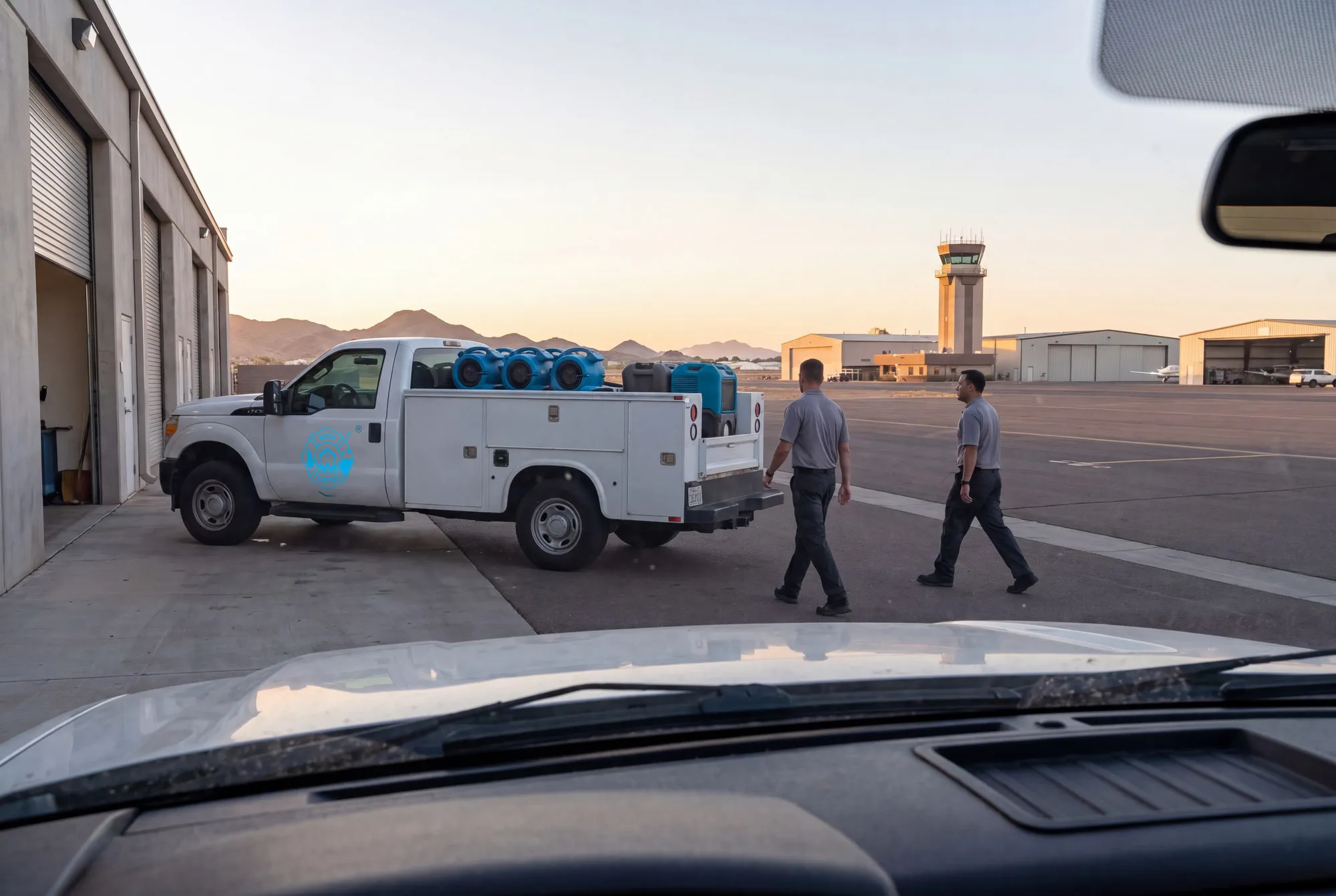
Most of the pages on this site describe a place we drive to. This one describes the place we drive from. Our Phoenix office is in Deer Valley, which means the trucks that answer a call here are staged in the neighborhood instead of across the Valley.
Our Phoenix Office
Water Fighters runs two staffed locations: Peoria, our home base, and this one in Deer Valley. The Phoenix office is where north-side crews and equipment stage. The promise is on-site within an hour. Open 24 hours, 7 days.
Both offices, with phone numbers and review links, are listed here:
Being nearby matters most after the first day, not on it. A drying job that needs another dehumidifier on day three gets one that morning. A meter check or a forgotten piece of equipment is a short trip instead of a lost afternoon. A house dries on the schedule the equipment allows. The drying standard does not care where the equipment was parked.
What the Housing Stock Does
Deer Valley is not one era, and that is the useful thing to know about it. In the core around the airport and the I-17 corridor (ZIP 85027), the median home was built in 1988. About 22% of units went up before 1980, 34% in the 1980s and 28% in the 1990s. A little more than half are single-family detached houses, 18% sit in buildings of ten or more units, and the split is 56% owners to 44% renters. North of that, the master-planned communities belong to a different generation. In ZIP 85083, which includes Stetson Valley, the median build year is 2005, and about nine in ten homes are owner-occupied. In ZIP 85085, which includes Norterra and the north I-17 corridor, the median is 2009, with about nine in ten units built in 2000 or later.
Three eras mean three failure profiles, sometimes on the same street. In the 1970s and 1980s homes, a water heater or supply line that came with the house is running on borrowed time. The 1990s homes are hitting the years when builder-grade angle stops and braided supply lines start to matter: cheap parts, installed by the pallet, failing on the same curve. The 2000s homes are the ones people assume are safe, which is how a 2004 house floods a hallway because nobody thought a twenty-year-old water heater counted as old.
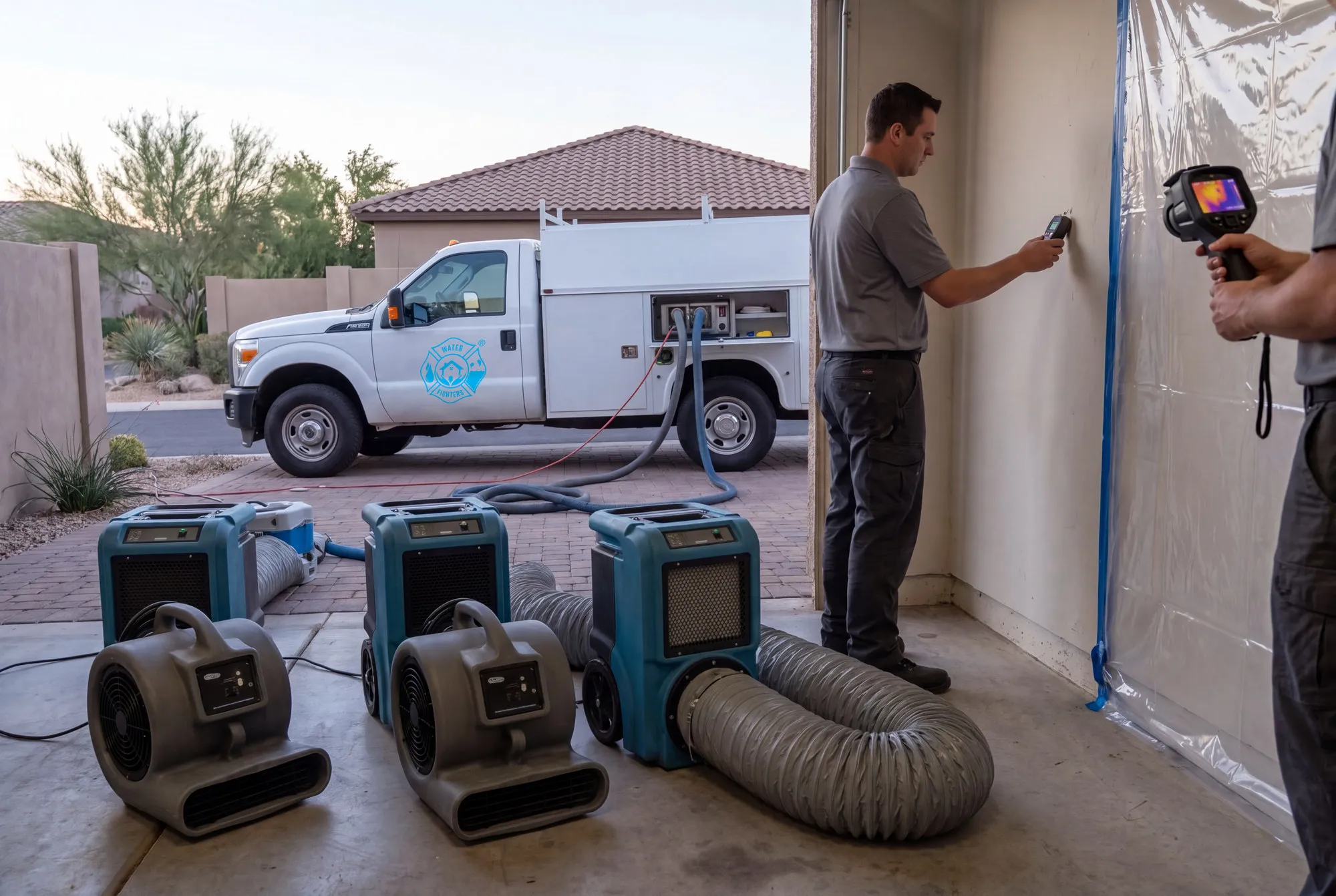
The thread that runs through all three is the garage. A garage water heater is the classic way this happens here. The tank lets go, water runs under the wall into the adjoining bedroom or hallway, and someone notices when the carpet goes dark. If your heater is in the garage and you have never looked at the pan or the drain line, that is the ten-minute inspection worth doing this week. The water heater flooding guide covers what happens when one fails.
Services From This Office
Five north Phoenix service pages run out of this office, and each one covers something the Valley-wide pages do not. Emergency water extraction in north Phoenix follows where water actually sits in this area's buildings. In a tract home that can mean tile over slab and carpet pad; in the apartment and condo buildings near the freeway, it can be the ceiling of the unit below. Sewage cleanup in north Phoenix starts with whose pipe failed, since the City of Phoenix says the owner's line runs all the way to the city main in the street or alley. Burst pipe and slab leak damage walks the owner's side of the meter: the buried yard line, the pressure regulator the city says it requires, and the runs under the slab.
Mold remediation in north Phoenix explains why moisture behind a mold job in this young housing usually comes from the house's own water systems. It also covers what it means that Arizona has no state licensing program specific to mold inspectors or remediators. Flood cleanup in north Phoenix and Deer Valley follows the two ways this area floods: Skunk Creek from upstream and short, heavy cells overhead. Then it covers the last mile through wash crossings, HOA retention basins and dry wells. The hangars, business parks and light-industrial buildings around the airport go through commercial water damage, staged from the same office.
The Wash and the Airport
Two pieces of local geography shape this part of Phoenix. The first is Skunk Creek, the area's own wash, which Adobe Dam holds back in a big storm. That is regional flood control. What it does not manage is the last hundred feet between the street and your door: a low threshold, a side yard that grades the wrong way, a scupper that overflowed. The creek's measured flood record is on the north Phoenix flood cleanup page.
When storm water gets inside, treat it as contaminated from the first minute, regardless of how clean it looks coming off a roof. Water from outside the house is Category 3, the restoration industry's name for grossly contaminated water. That rule does not bend, and the monsoon guide explains why.
The second feature is the airport. Phoenix Deer Valley Airport logged nearly 500,000 takeoffs and landings in 2025, which Phoenix Sky Harbor reports made it the busiest general-aviation airport in North America. The hangars and business parks around it are commercial structures with commercial water problems: rooftop units, long horizontal runs above finished ceilings, and after-hours failures nobody finds until Monday. Those run on commercial protocols, not residential ones.
Neighborhoods We Cover From Here
From Deer Valley, the north-side work runs up the I-17 corridor through Norterra and Stetson Valley, the newer streets toward Pinnacle Peak and beyond. South of Bell, the North Phoenix page covers Moon Valley and the North Mountain side, where copper- and poly-era homes guide the first inspection. Sunnyslope sits on a grade below North Mountain, with housing from the 1920s to today. To the east, Desert Ridge is a 2000s master plan where PEX and builder-grade fittings set the failure pattern.
Farther up the freeway, Anthem homes age together on one developer's clock, and elevation adds a freeze factor the rest of the Valley rarely sees. New River is the page for seasonal wash flooding, wells, hauled-water tanks and septic. Desert Hills covers split water service, sheet flow across a drainage divide, and custom homes with no tract shortcut. Cave Creek sits upstream of the dams, where hillside homes, long service runs and freeze breaks shape the work.
Common Questions
Your Phoenix office is in Deer Valley. Does that actually change anything for me?
On day one, it means the crew and equipment start from your part of town. On day three it matters more: extra equipment, a meter check, or a crew swing-by is a short trip instead of a scheduling problem. Long drying jobs are where nearby equipment quietly earns its keep.
Half the houses on my street were built in 1994. Should I expect the same failures?
Often, yes. Homes built in the same year by the same builder got the same parts from the same suppliers, so the cheap components tend to fail within a few years of each other. When a neighbor's angle stop goes, treat it as a notice on yours.
Is Adobe Dam going to keep my street from flooding?
It manages regional flow, not your lot. The dam and the wash system handle what Skunk Creek carries down from the north. What reaches your door is usually local, such as grading, a blocked scupper or a low threshold, and that is a different problem with a different fix.
We're in a business-park building near the airport, not a house. Same company?
Same company, with crews staged from the same Deer Valley office. Commercial work runs on its own protocols: after-hours access, tenant coordination, and documentation an ownership group can file. The commercial page covers how that runs.
The water heater in my garage is original to a 2003 house. Is that a problem?
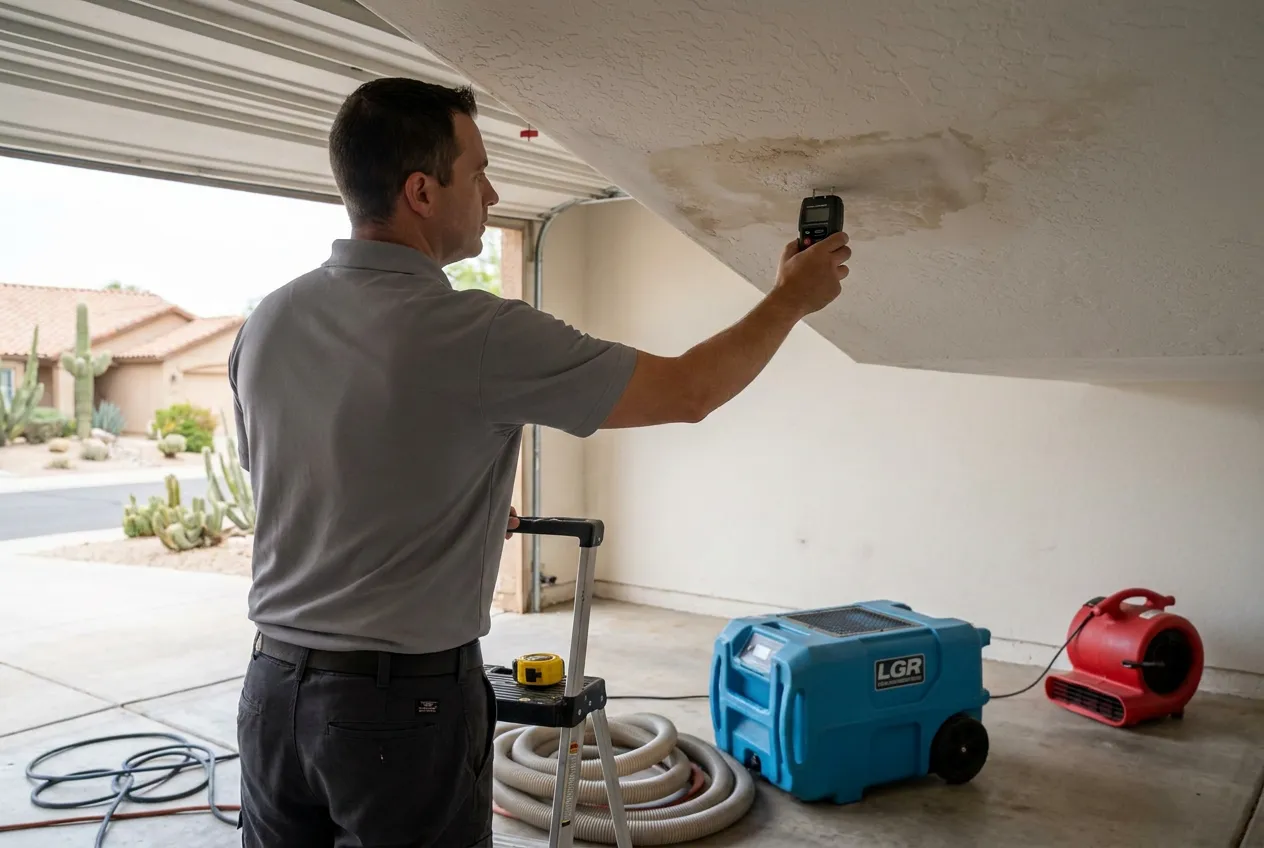
It is past the age where most tanks are replaced on purpose rather than on failure. In a garage, the failure mode is predictable: the tank lets go, water runs under the wall into the nearest finished room, and the first symptom is dark carpet in a bedroom.