
Commercial Water Damage in North Phoenix
Published October 8, 2026 · Last reviewed October 8, 2026 · Water Fighters Restoration
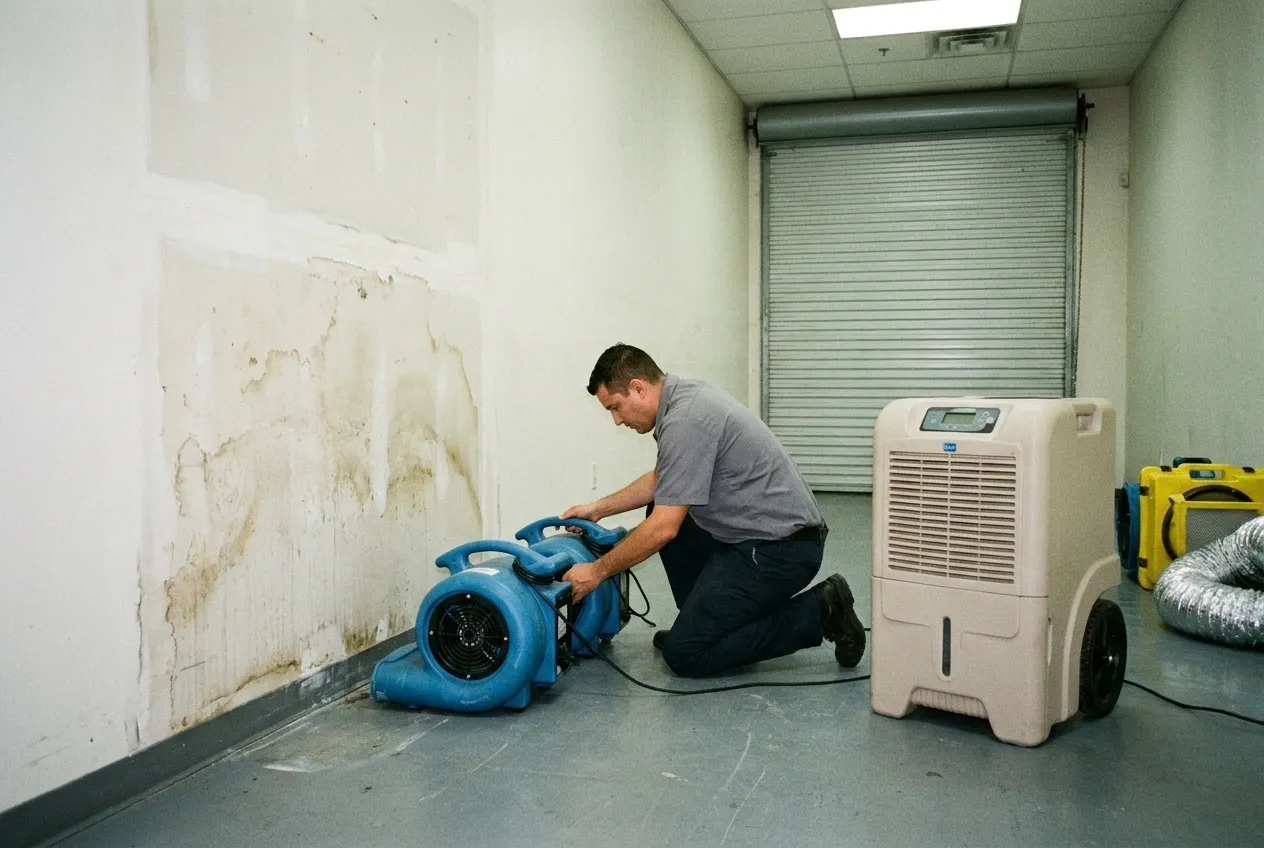
The call comes from the tenant next door. Water is creeping out from under the wall between the suites, and the suite it's coming from has been empty since spring. Or the water is in a hangar office behind a security gate, on airport property run by the City's Aviation Department, and the carpet squishes under every step.
Around Phoenix Deer Valley Airport, the drying works the way it does anywhere. What changes is who approves the repairs, who can get through the gate, and who notices the leak at all. Water Fighters Restoration keeps a staffed location in Deer Valley, and the Deer Valley page covers the area around it.
Land planned for business
The City's planning page describes this part of Phoenix by its "large employment centers" and its "considerable commerce and industrial land." As the airport's 2015 master plan describes it, the land immediately around the airport is designated industrial.
In November 2006, the City Council created the Deer Valley Airport Overlay District, running generally from Happy Valley Road south to Rose Garden Lane. In Area 1, it "seeks to encourage industrial and commercial uses while prohibiting residential uses in A-1 Zoning," caretaker housing excepted. Areas 2 and 3 bar uses such as private and nursery schools, churches, hospitals, and nursing homes.
The airport itself covers about 914 acres and is home to nearly 1,100 aircraft. Around it stand three kinds of buildings, and each puts its own rules on a water loss: office suites, hangars, and flex buildings.
The vacant suite
Market data quoted in the airport's June 2023 land-use plan put the Deer Valley office submarket at 20.1% vacant, with vacancies "trending higher." Industrial space ran the other way, at 2.9%, which the plan called a historic low.
In an empty suite, nobody sees a ceiling tile darken or hears a supply line hiss. A slow leak can surface through the tenant next door, a walkthrough, or the water bill. By then the water may have crossed under the wall into an occupied suite.
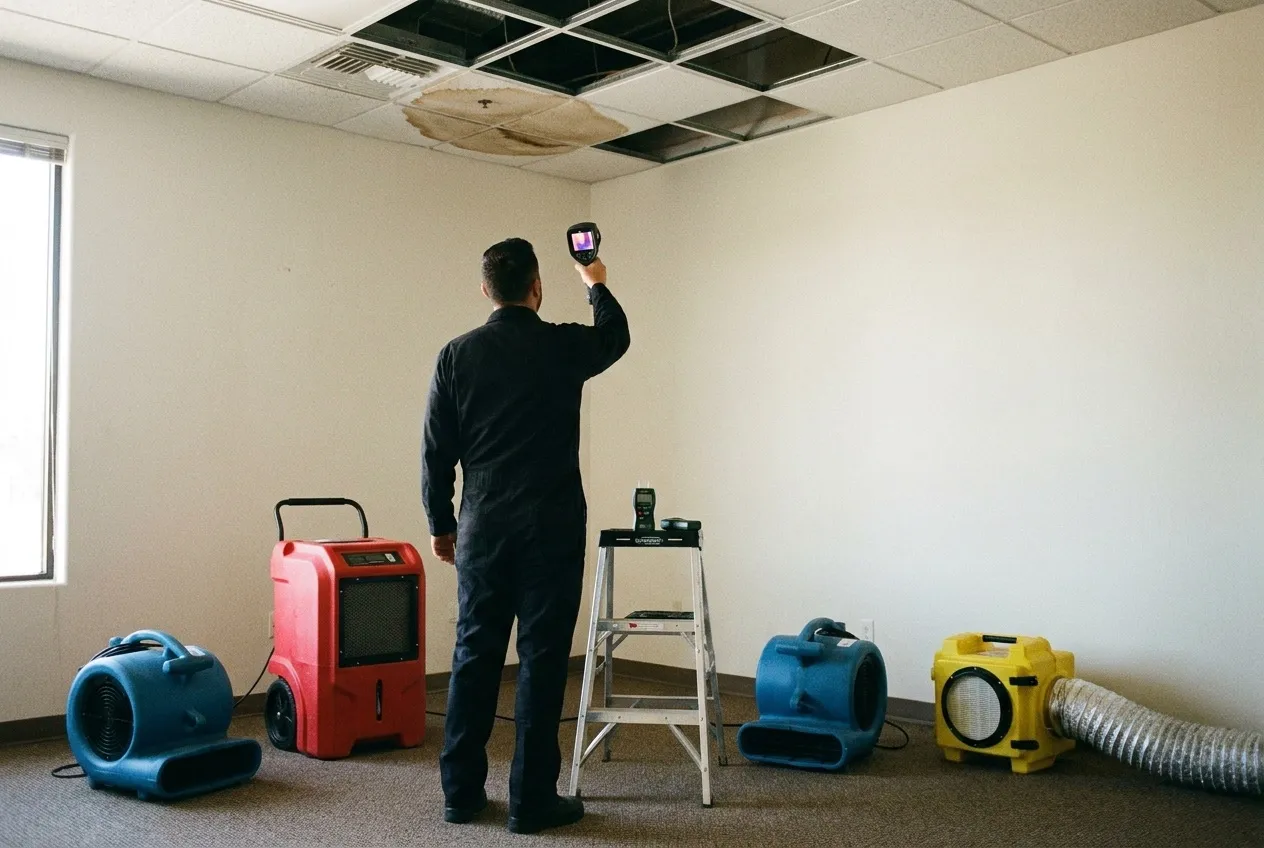
A room-by-room moisture map, with dated readings and photos, marks the edge of the wet area in each suite. That is the record the owner, the tenants, and any carrier can all work from. The office water damage page covers ceiling grids, raised floors, and electronics, and commercial mold remediation picks up a slow leak that has become an air-quality complaint.
Hangars on airport property
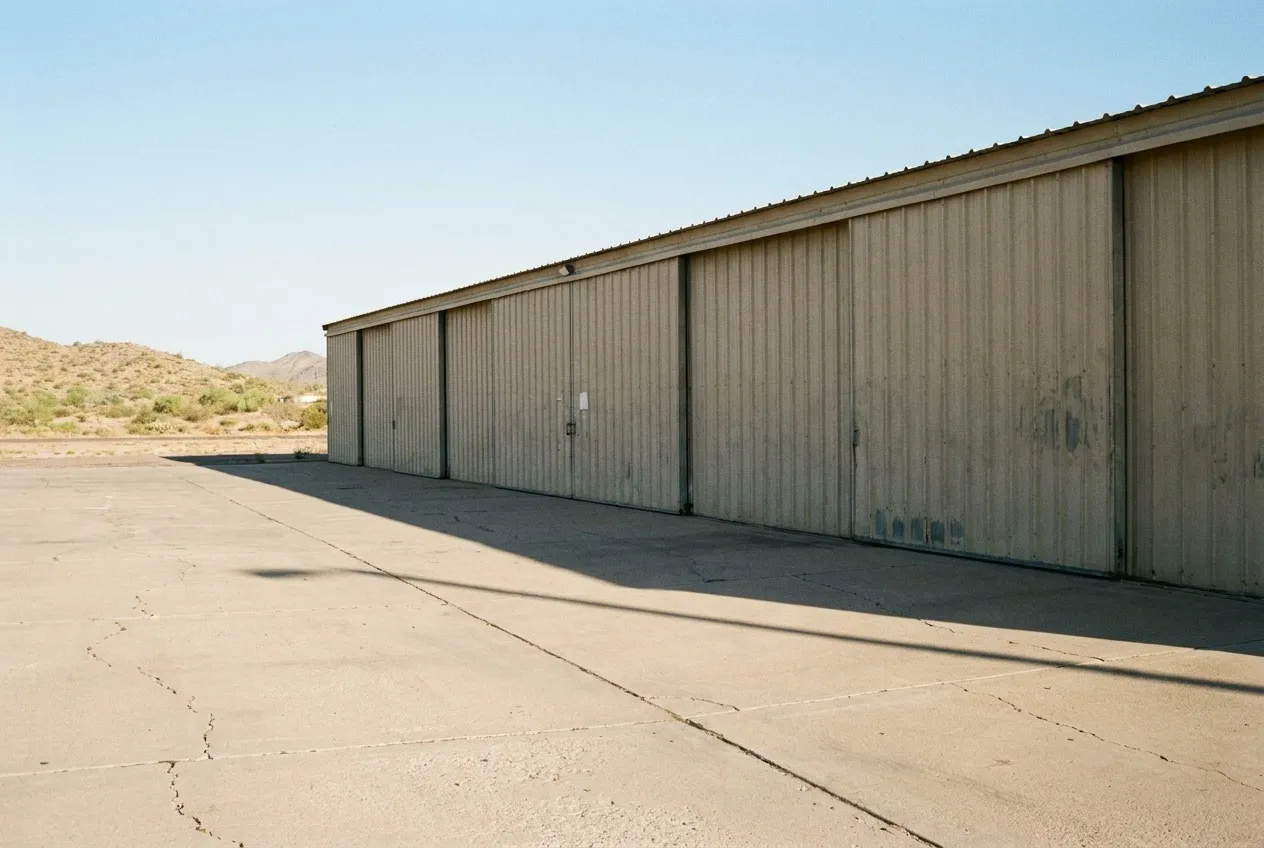
Hangar work runs on the airport's rules. Its tenant improvement handbook, dated 2020, says Aviation Department written approval "is required for all Tenant Improvement Projects, before construction begins, regardless of the scope of the project." Its examples of smaller projects include "painting interior office walls" and "replacing or changing existing non-rated finishes," which is what a flooded hangar office needs. Work done without approval may be removed at the Aviation Director's discretion.
Roof work runs on a longer clock. The handbook requires an FAA Form 7460-1 for building rooftop work and construction cranes, filed at least 40 days ahead, and FAA review takes about 8 to 10 weeks. If a hangar repair touches the roof or needs a crane, ask the airport whether that filing applies, since it can set the rebuild schedule.
Airport stakeholders "expressed need for additional aircraft storage," and the 2023 plan listed a waitlist of 479 for T-hangars and covered tie-downs, as of November 2022.
Flex buildings and the sprinkler line
A flex building pairs an office front with an open shop or warehouse behind a roll-up door. As the City's page states it, new ones fall under Phoenix's sprinkler ordinance, with a few listed exceptions. The ordinance is named for Firefighter Bret Tarver, who died in 2001 fighting a fire in a building with no sprinklers.
A sprinkler head is a water outlet that waits for heat. When heads open, the water can reach office drywall or the shop floor, and the fire sprinkler water damage guide covers what happens next. Repairing or resetting the system is the sprinkler contractor's work. Ours is the water: extraction off the sealed concrete, drying the walls, and the rebuild.
One team, one file
The full commercial water damage page covers after-hours work, losses that cross tenants, and documentation. Water Fighters Restoration does mitigation and rebuild with one team. Estimates are free, the estimate you receive is the same one the insurer receives, and we bill the insurance company directly. For a house, condo, or townhome, see the north Phoenix extraction page.
Water Fighters Restoration is IICRC Certified 70192944 · AZ ROC 324471 · ROC 324468 · EPA Lead-Safe Certified Firm · Licensed, Bonded & Insured.
Common Questions
Does Phoenix require fire sprinklers in a newer warehouse or flex building near the airport?
For buildings built new under the ordinance, yes. As the City's page states it (labeled 2012 Phoenix Fire Code), Phoenix's sprinkler ordinance calls for sprinklers in new business, factory, mercantile and storage buildings of any size, installed to NFPA 13. There are a few listed exceptions, such as small detached buildings. The rule can also apply when an existing building is expanded or changes use.
Several suites in our business park are empty. How does a leak in a vacant suite get found?
With nobody inside, it can surface through the tenant next door, a walkthrough, or the water bill. That matters here: the airport's June 2023 land-use plan quoted market data putting the Deer Valley office submarket at 20.1% vacant. Once the leak is found, a moisture map shows how far the water went in each suite, including any occupied one next door. Those dated readings are the backbone of a water damage claim file.
Our hangar office flooded. Does the airport have to approve the rebuild?
Yes. The rebuild goes through the Aviation Department's written tenant-improvement approval, which the airport's handbook requires "regardless of the scope of the project." Interior painting and replacing finishes appear among its own examples. For emergency drying, call the airport's T.I. Coordinator right away and ask what notice or approval applies. The water damage repair guide covers the rebuild half of a job.
Can a restoration crew get to a hangar from the airfield side?
Only through the airport's own system. Its rule reads, "All access card applications must be coordinated through Deer Valley Airport Operations." Vehicles on the airfield follow the airport's airside access and vehicle procedures. So the tenant arranges airside access through Airport Operations, and the work follows whatever the airport sets up.
Who tells Phoenix Fire after the sprinkler system is repaired?
Not the restoration company. Since December 1, 2019, the Phoenix Fire Department has received third-party inspection, testing and maintenance reports for fire protection systems through an online tool. Repairs to a deficient system may need a Fire Inspection Testing and Maintenance (FITM) permit. Per the City, the building's responsible party must tell the contractor making the repairs when that permit is required. Our part is the water and the rebuild.