
Water Damage Restoration in Cave Creek, AZ
Published September 1, 2026 · Last reviewed September 2, 2026 · Water Fighters Restoration
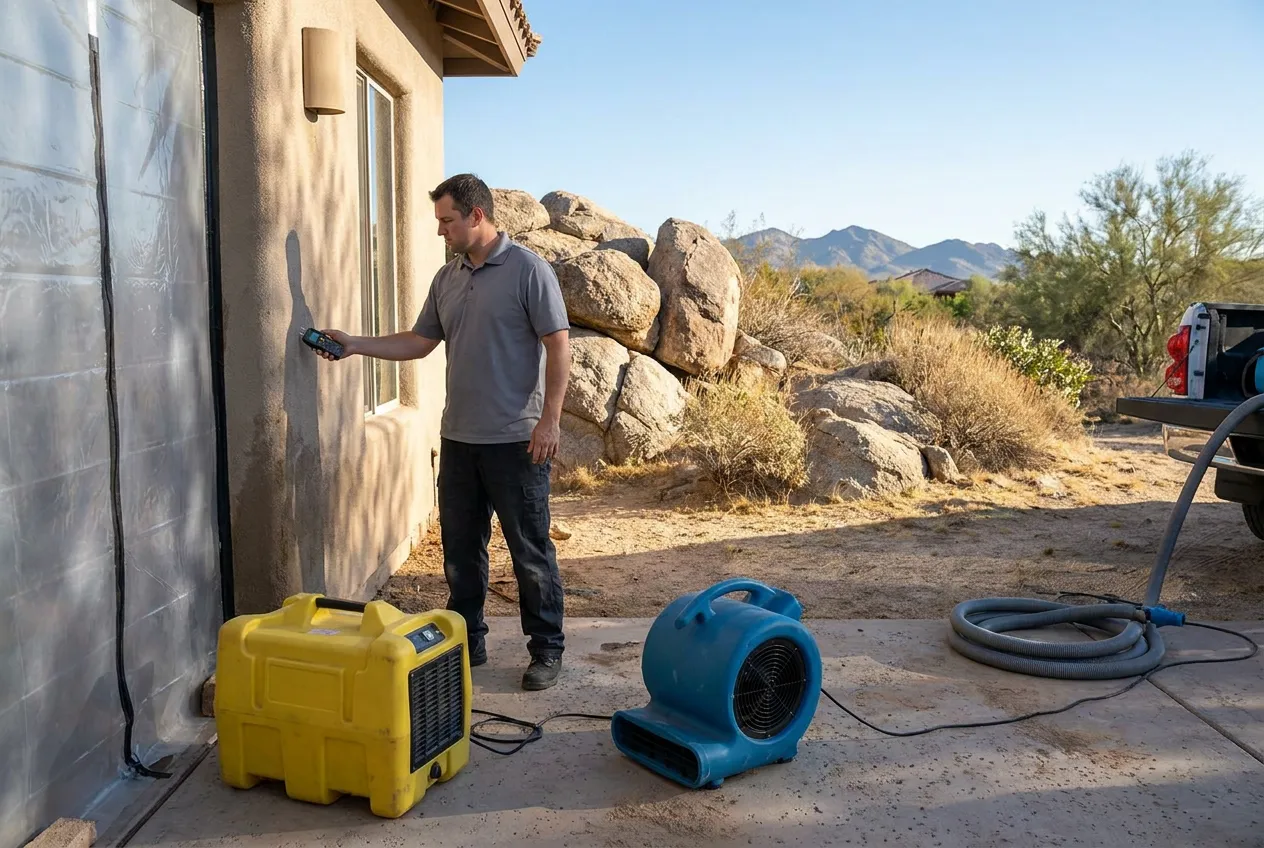
Cave Creek sits around 2,100 feet above sea level. Carefree is higher, at roughly 2,400 feet.
Water still coming in or rising outside? Use Flood Cleanup in Cave Creek for the first-hour protocol and local drainage read.
That elevation changes the water-damage list. Winter nights are meaningfully colder than the Valley floor. The town also sits upstream of the dams that protect north Phoenix, not behind them.
The housing pattern changes too. Low-density zoning creates long service runs, larger lots, and homes that may sit well beyond a neighbor's view. Hillside customs occupy slopes and granite-boulder settings. Tatum Ranch is the major tract-built exception.
Water Fighters Restoration is Open 24 hours, 7 days. Crews stage as one licensed team, Valley-wide. The response promise is on-site within an hour.
Elevation adds a real, limited freeze risk
Cave Creek is not a mountain town with a season of frozen plumbing. It does get a handful of below-freezing nights in a typical winter.
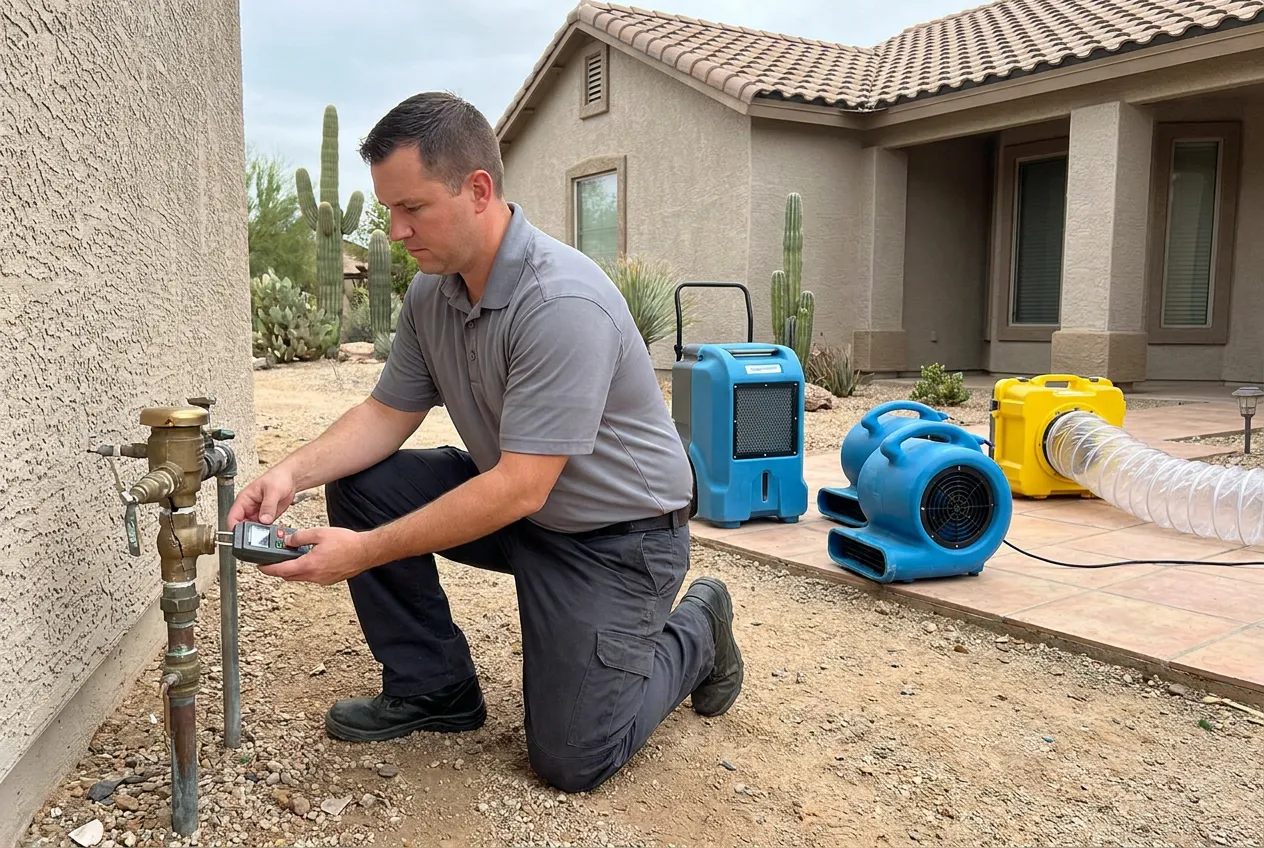
That is enough to expose weak points. Hose bibbs, backflow preventers, and uninsulated exterior runs can split when trapped water freezes. A break may not become obvious until temperatures rise and water begins moving again.
The honest scale matters. Freeze exposure is greater than on the Valley floor. It is less central than it is in Anthem's building story, where freeze protection is part of the spec.
The Anthem restoration page covers that nearby comparison. The burst-pipe guide explains what happens after a pressurized line opens inside or beside a wall.
A frosted backflow assembly can look harmless before sunrise. The wet stucco below it tells the rest of the story after thaw.
Cave Creek is upstream of the dams
The actual Cave Creek runs through town. During the August 2014 storm, more than 26,000 cubic feet per second moved down the channel, and swift-water rescues followed.
Cave Creek Dam and Cave Buttes Dam sit downstream. They protect north Phoenix. They do not protect the town of Cave Creek.
That is a useful correction because a dam on the map can create false comfort. Water entering a structure from the creek, runoff, or any other outside route is Category 3.
Professional response starts with access control, contaminated-water containment, removal of affected porous materials when needed, cleaning, and measured drying. It does not treat floodwater as clean rain.
The storm-damage restoration service covers that work. The nearby Scottsdale restoration page describes a different foothill and urban housing mix.
Town water travels uphill
Cave Creek's town water is CAP water drawn near Deer Valley Road in Phoenix and pumped about 12 miles uphill. That creates a single-pipeline dependency for the municipal system.
Carefree has its own water company. Utility facts should not be blurred across the two towns.
At the property level, large lots can mean long private service runs between the meter and structures on the property. A leak on a long buried run may reveal itself as pressure loss, unexplained wet soil, or water surfacing away from the building.
Where moisture approaches the slab or a hillside foundation, the route depends on soil, slope, and construction. The slab-leak guide explains the indoor sibling of that concealed-water problem.
The housing story is mostly post-1980
Cave Creek was settled around 1870 and incorporated in 1986. Its early date does not make old pipe the main local story. Housing is overwhelmingly post-1980 outside rare original structures.
Tatum Ranch contains roughly 3,400 homes built from 1989 onward. It is the only meaningful local pocket within the polybutylene-era window. Even there, pipe material is phase-dependent and must be confirmed at the home.
Elsewhere, the local pattern is low density. One-acre minimums are common, and much of the Desert Rural zoning runs from two to five acres with horse rights.
Distance changes discovery. A leak can continue without a nearby resident hearing water or seeing runoff at the property edge.
Carefree has its own page
Carefree shares this foothill terrain, but it runs on its own town-owned water company and its own seasonal, custom-home pattern. The Carefree restoration page covers that story in full.
A vacant custom home in either town needs a broad first inspection. Water may move through cabinets and wall cavities before anyone enters.
Wells and septic remain part of the outskirts
Wells and septic systems are still fairly common on the outskirts; the Desert Hills area, for example, largely runs on wells.
A private water-line break and a septic backup are not the same loss. Source identification comes first. Anything from a septic system, sewer, or drain backup is Category 3.
Contaminated-water work is handled with containment, controlled removal, cleaning, and verification. Residents are not coached through hazardous cleanup.
Foothill restoration starts with access and the water path
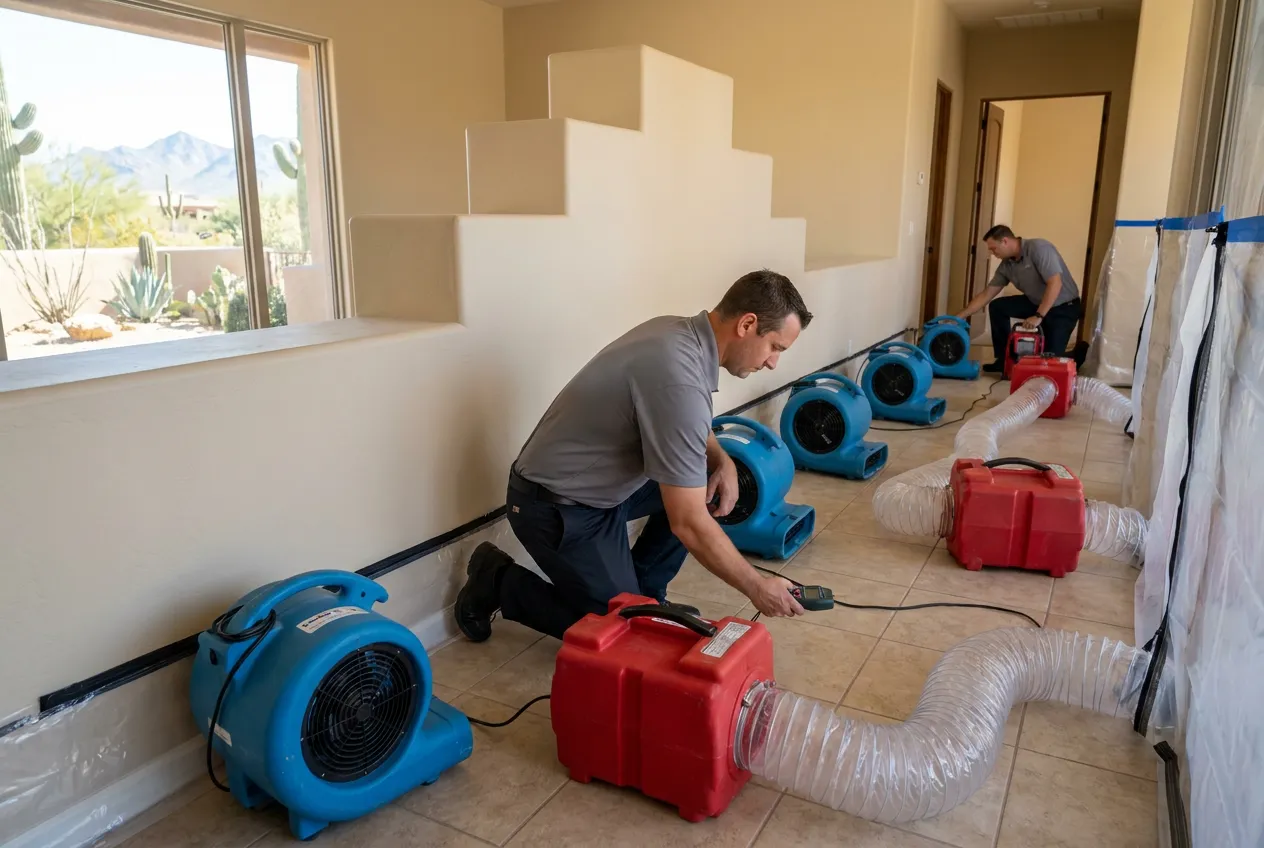
The first call should establish gate or driveway conditions and whether water is still moving. It should also identify the source area and any slope or access issue affecting equipment placement.
Technicians then map the wet assembly. A hillside wall may need readings at more than one elevation. A long service-line loss may require coordination with the appropriate repair trade before building materials can dry.
One team does mitigation and rebuild. That keeps necessary removal and finish repair within one documented project.
Water Fighters Restoration is IICRC Certified 70192944 · AZ ROC 324471 · ROC 324468 · EPA Lead-Safe Certified Firm · Licensed, Bonded & Insured.
Common Questions
Do Cave Creek Dam and Cave Buttes Dam protect homes in Cave Creek?
No. Both dams sit downstream and protect north Phoenix. The town itself is upstream, so local creek and runoff exposure still requires a storm-damage assessment.
Does Cave Creek have enough freezing weather to burst pipes?
Yes, exposed weak points can freeze during a handful of below-freezing nights in a typical winter. Hose bibbs, backflow preventers, and uninsulated runs deserve attention, as outlined in the burst-pipe guide.
Where is polybutylene most plausible around Cave Creek?
Tatum Ranch is the main meaningful pocket because its roughly 3,400 homes began in 1989. The risk remains phase-dependent, and visible or concealed pipe material must be confirmed at each property.
Does this Cave Creek page also cover Carefree?
No. Carefree now has its own restoration page covering its town-owned water system, seasonal vacancy, and boulder-set custom homes. The two towns remain distinct, with separate utilities.
Is a well-line break handled the same way as a septic backup?
No. The source and contamination conditions are different and must be identified at the property. Anything from a septic system, sewer, or drain backup is Category 3 and requires a contaminated-water plan.