
Flood Cleanup in Cave Creek
Published September 1, 2026 · Last reviewed September 1, 2026 · Water Fighters Restoration
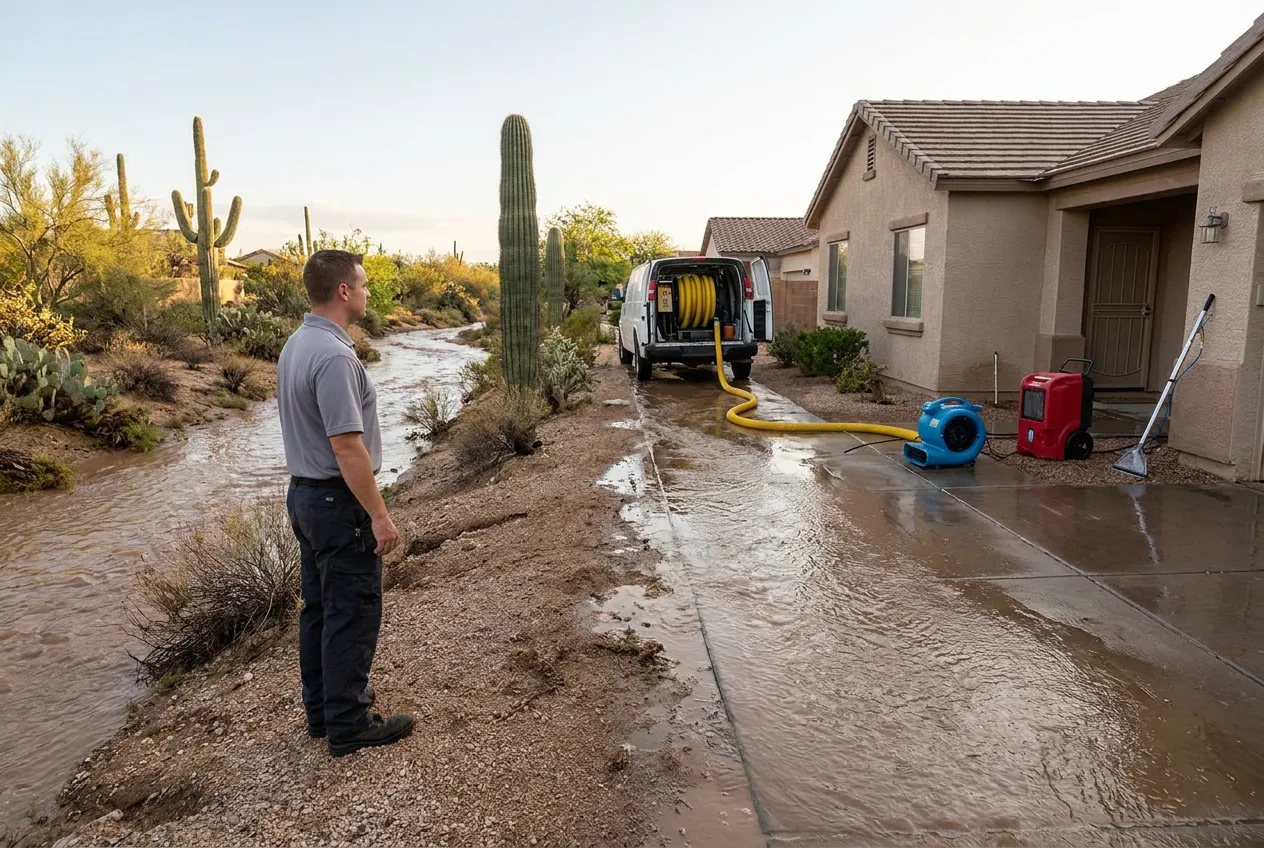
The road crossing is gone beneath brown water, and the creek sounds closer than it did ten minutes ago. In Cave Creek, a dry wash is not a harmless space once runoff reaches it.
After active flow has ended, the Cave Creek water damage restoration page covers the damage and repair phase. This page is for standing water and the first cleanup decisions.
The safety order during a Cave Creek flood
- Do not cross running water. A wash, road dip, or driveway flow can hide erosion, debris, and missing pavement. Turn around and use a dry route.
- Stay clear of electrical exposure. Do not enter water touching outlets, pumps, appliances, cords, or the service panel. Shut off power only from dry access.
- Close a broken supply line only when safely reachable. A valve can stop a pipe loss. It will not stop wash flow or hillside runoff.
- Keep people and animals out of outside water. Water that crossed the desert, a road, a wash, or a drain is Category 3.
- Call and document from high ground. Photograph the wash direction, entry point, sediment line, and affected rooms. Water Fighters Restoration is Open 24 hours, 7 days at (602) 884-5325, with the promise on-site within an hour.
The actual Cave Creek runs through town
Cave Creek is not only a town name. The creek itself crosses the community and collects runoff from a large foothill watershed.
During the August 2014 storm, flow through town exceeded 26,000 cubic feet per second. Swift-water rescues followed across the north Valley. That event is an honest measure of what a normally quiet channel can become.
The useful lesson is not that every storm repeats 2014. It is that rainfall upstream can reach the channel after local rain eases. A road dip that looked passable on the first trip may be underwater on the return.
Do not approach a channel edge to estimate speed. Saturated banks can fail under body weight, and moving debris can arrive before the water level visibly changes.
The monsoon flood guide explains delayed wash response. The emergency flood cleanup hub covers the Valley-wide extraction process.
Cave Creek Dam and Cave Buttes Dam are downstream
The dams south of town protect north Phoenix. Cave Creek lies upstream of them, so they do not shield the town from creek flow passing through the community.
That direction matters because the dam names can create a false sense of protection. Water moving through Cave Creek has not yet reached those downstream structures.
Local drainage therefore depends on natural washes, road crossings, culverts, lot grades, and the route around each home. A blocked crossing can redirect water. A hillside driveway can collect runoff and deliver it to a garage.
Hillside lots add erosion to the water problem
On sloped land, moving water carries rock, soil, and desert debris. It can cut beside a retaining wall, expose a slab edge, or leave sediment against a door.
Photograph the erosion before backfilling or washing the area. The changed grade may explain how water reached the building and whether the route remains open for another storm.
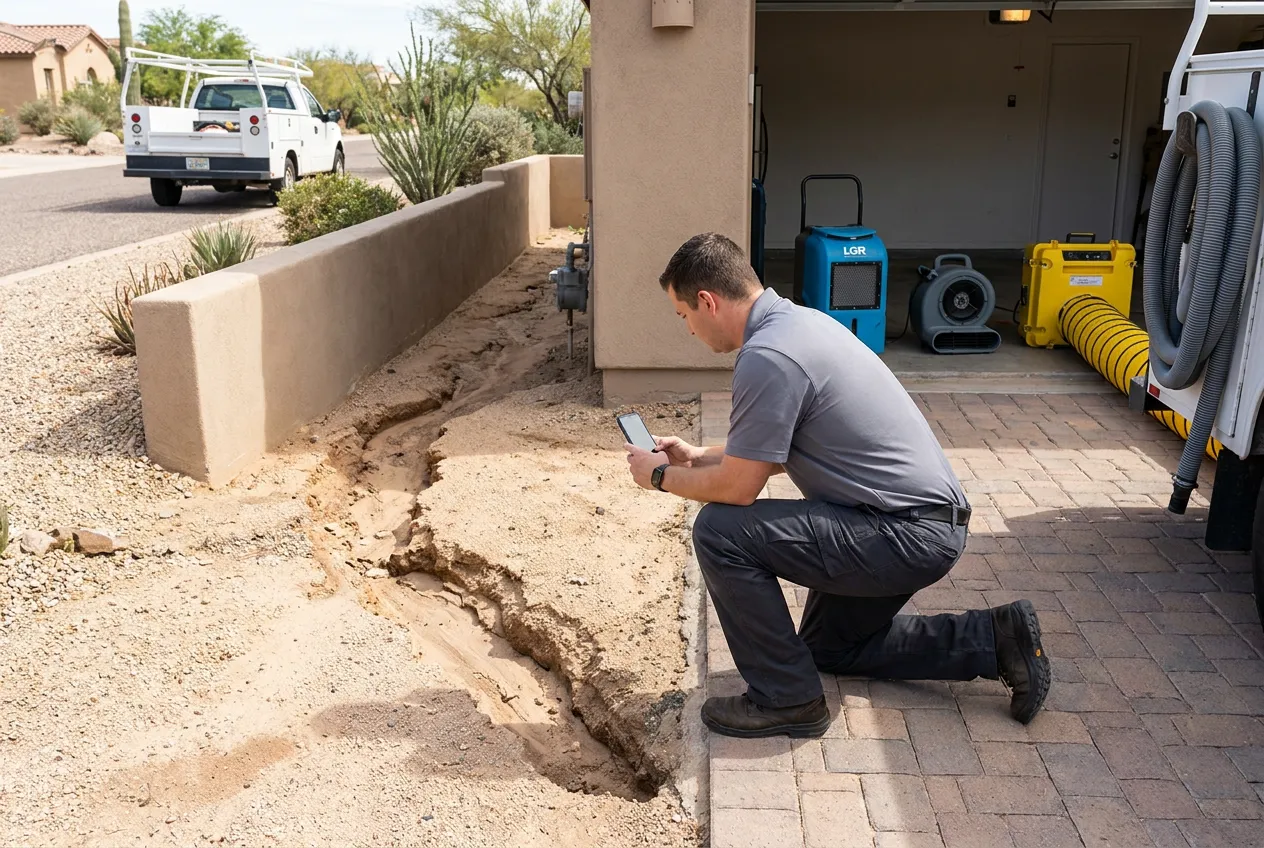
Sediment removal and structural drying are separate jobs
Outside runoff is Category 3. Cleanup begins with controlled access, extraction, and removal of sediment and affected porous material that cannot be safely restored.
Technicians then map moisture beyond the visible mud. Water can enter behind wall finishes, below cabinets, under flooring, and along the slab edge where soil washed away.
Cleaning addresses retained surfaces. Air movement and dehumidification address moisture remaining in the structure. Readings, not a dry appearance, determine when the retained assembly reaches the target.
Water Fighters Restoration handles mitigation and rebuild with one team. The water damage restoration service page explains that full sequence.
Water Fighters Restoration is IICRC Certified 70192944 · AZ ROC 324471 · ROC 324468 · EPA Lead-Safe Certified Firm · Licensed, Bonded & Insured.
The claim should preserve the wash route and the building opening
Rain entering through storm-created damage can be evaluated differently from surface water crossing the ground. Most homeowners policies exclude flood, so save the wash condition, erosion, entry point, and water line with the insurance claim guide.
Common Questions
What does a Cave Creek road closure tell me about wash conditions?
It confirms that a public crossing is unsafe, but it does not define the flood level at every property. Use the closure as a warning to stay out while documenting the separate route at the home.
Can Cave Creek rise after the rain at my property has stopped?
Yes. Runoff from the upstream watershed can continue reaching the creek after the local cell moves away. Stay out of crossings until officials reopen them.
Why should sediment be photographed before it is removed?
A silt line, debris row, or erosion channel can show flow direction and height. That evidence may disappear during safe cleanup but still matters to the loss record.
Why can a Cave Creek hillside flood leave damage beyond the indoor water line?
Runoff can erode the exterior grade, expose the slab edge, and open a continuing path at wall penetrations. The Cave Creek restoration page covers that repair phase.