Sewage Cleanup in Phoenix
Published August 4, 2026 · Last reviewed October 8, 2026 · Water Fighters Restoration
A toilet overflows and keeps going. A floor drain in the laundry room starts pushing water up instead of taking it down. A main line backs up and the lowest bathroom in the house takes the overflow.
This isn't a water problem with a bad smell. Sewage is Category 3 water — the industry's term for grossly contaminated water carrying bacteria, viruses, and parasites. It requires protective equipment, containment, regulated disposal, and sanitizing that a mop and a bottle of cleaner cannot accomplish.
Before We Get There
Stay out of the affected area. Keep children and pets away entirely. Contaminated water doesn't need to be touched to be a problem — aerosolized bacteria travels.
Don't run water anywhere in the house. No sinks, no laundry, no flushing. Every gallon that goes down adds to what's coming up.
Don't turn on fans or the AC. Air movement over Category 3 water spreads contamination into rooms that are still clean.
Don't try to clean it up. This is the one we mean most. Shop vacs push contaminated aerosols into the air and then hold them; household cleaners don't sanitize porous materials; and every step through the area tracks it further into the house.
Call (602) 884-5325. Any hour. A crew is on-site within an hour with the right equipment.
Why This Is Different From a Flood
Clean water from a burst supply line is an extraction and drying job. Sewage is a decontamination job that happens to involve water — and the difference shows up in every step.
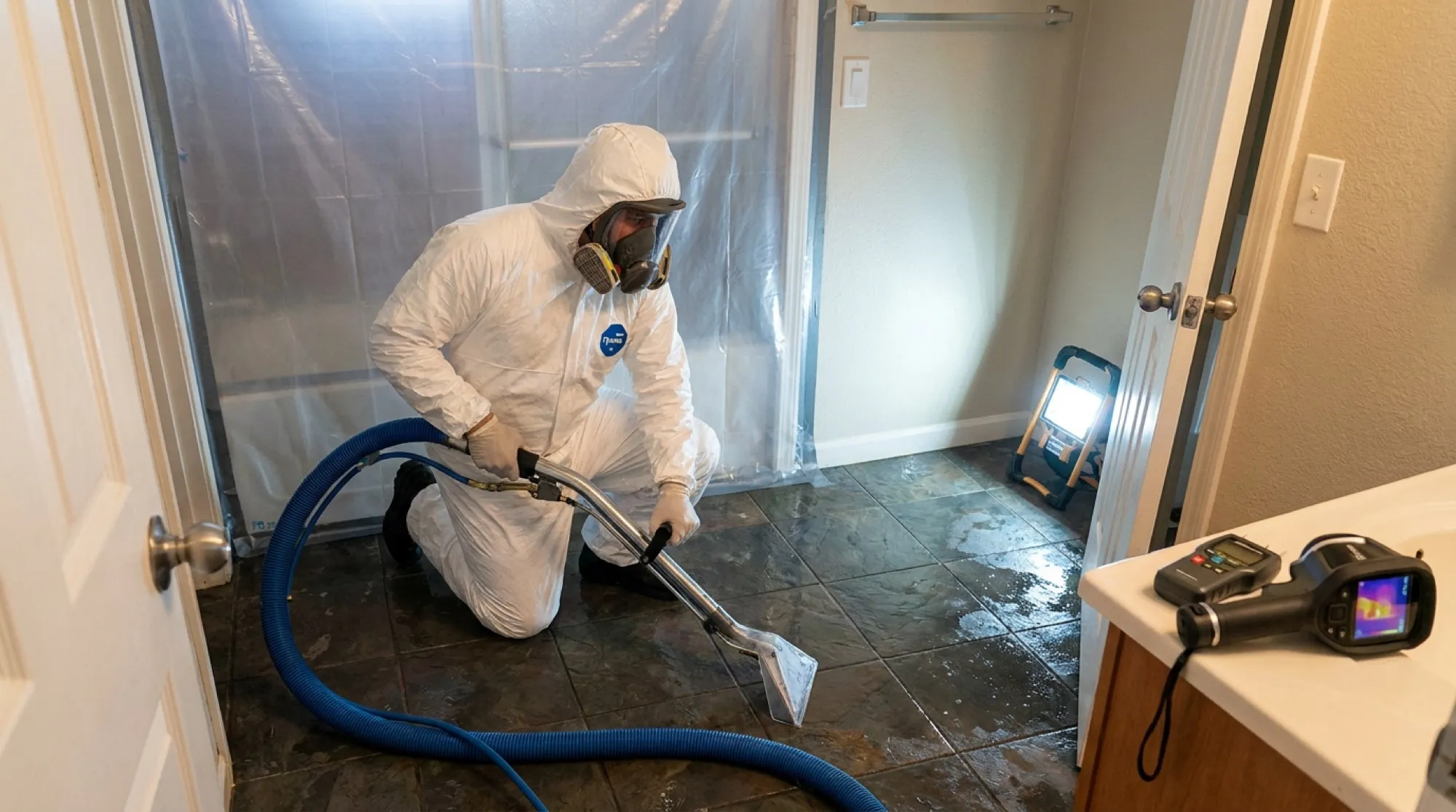
The crew works in full personal protective equipment. The work area is sealed off with containment barriers and put under negative air pressure so nothing migrates. Porous materials that absorbed contaminated water don't get dried and saved — carpet, pad, and wet drywall come out and get disposed of as regulated waste, not set at the curb. Everything remaining gets cleaned, sanitized with antimicrobial agents rated for the job, and verified before containment comes down.
That's the standard whether it's a single toilet that backed up or a main-line backup into every bathroom in the house. Category 3 doesn't have a light version.
What Causes Backups Here
Valley plumbing fails in patterns, and knowing them helps us find the cause fast.
Older Phoenix neighborhoods — Encanto, Coronado, parts of central Scottsdale and Mesa — still have original cast iron or clay sewer laterals. Cast iron corrodes from the inside and collapses; clay joints separate. Both invite the second cause: tree roots. Ficus, palm, and mesquite roots find a hairline joint crack and grow into the line looking for water, which in the desert is exactly where the water is.
Grease and wipes account for most of the rest. "Flushable" wipes don't break down; they collect at a root intrusion or a low spot and build a dam. Restaurants and multifamily properties see this constantly, which is why our commercial water damage work includes a lot of it.
Monsoon storms can add to it — heavy rain can raise flows in older sewer lines.
Our Process
Contain and protect. Barriers up, negative air running, HVAC vents in the zone sealed, pathways protected so nothing tracks through the house.
Extract. Contaminated water is removed with dedicated equipment — the same trucks, but the waste stream is handled and disposed of according to regulation, never dumped.
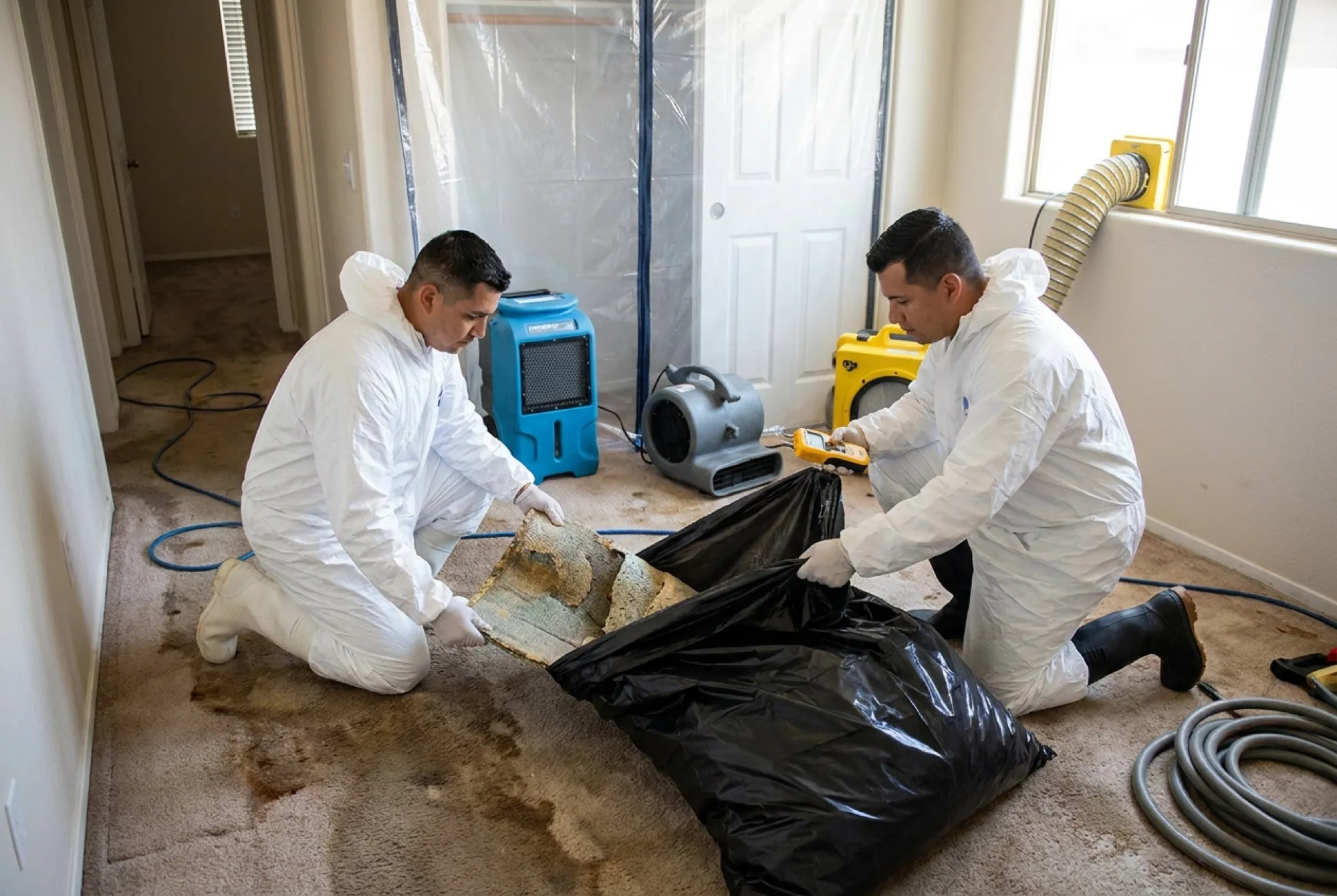
Remove. Anything porous that absorbed Category 3 water comes out: carpet and pad, affected drywall (typically cut above the contamination line), baseboards, insulation, and particleboard cabinet bases. Bagged inside containment, then hauled as regulated waste.
Clean and sanitize. Every remaining surface — subfloor, framing, tile, plumbing fixtures — gets cleaned and treated with EPA-registered antimicrobials. Framing gets HEPA-vacuumed before treatment.
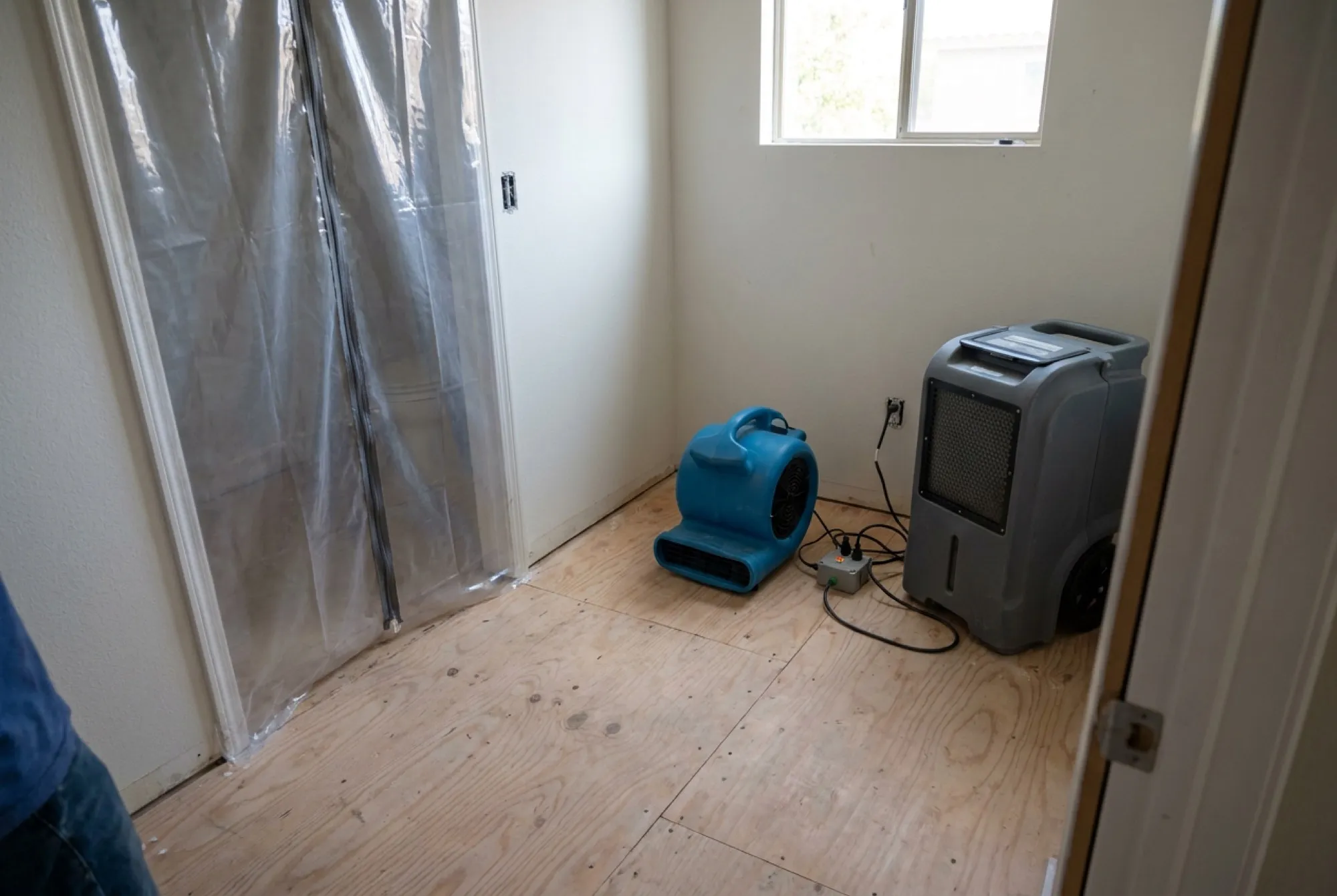
Dry and verify. Air movers and dehumidifiers run against moisture readings until the structure is genuinely dry, not just clean-looking. Documentation is photographed and logged throughout, which matters for your claim and for anyone who asks later what was done.
Rebuild. Because we handle restoration and rebuild in-house, the flooring, drywall, and cabinetry go back with the same crew — no second contractor, no gap.
What Gets Saved and What Doesn't
Straight answers, because people ask before we arrive.
Comes out, always: carpet and pad, wet drywall and insulation, particleboard or MDF cabinet bases, upholstered furniture that absorbed contaminated water, mattresses, and any food or personal care items in the affected area.
Usually saved: tile and grout, sealed concrete, solid wood framing, plumbing fixtures, glass, metal, and hard non-porous furniture — all cleaned and sanitized.
Depends: hardwood and luxury vinyl plank depend on how long the exposure lasted and whether contamination reached the subfloor. Solid-wood cabinet boxes are often salvageable when particleboard ones aren't. We'll show you the readings and explain the call rather than just hauling things away.
What It Costs & How Insurance Works
A single-bathroom backup with containment, removal, sanitizing, and drying is the smallest version of this job. Multi-room contamination, main-line backups reaching living space, and commercial jobs scale up from there, depending on square footage and how much material must be removed and replaced.
Sewage backup coverage is the detail that catches people. Standard Arizona homeowner policies often exclude sewer and drain backup unless you carry a specific endorsement — usually inexpensive, frequently declined at signup, and rarely thought about until the day it matters. Water that backs up from your own failed plumbing may be treated differently than water from the municipal main. We'll help you read the situation honestly, document everything the carrier needs either way, and offer financing when coverage falls short. The free estimate is the same document your adjuster receives.
Common Questions
Is sewage water actually dangerous, or is it just unpleasant?
Genuinely dangerous. Category 3 water can carry E. coli, hepatitis A, giardia, salmonella, and rotavirus. Health risk comes from contact and from aerosolized particles, which is why containment and PPE aren't theater.
Can I clean up a small toilet overflow myself?
Only one kind: clean supply water from the tank or its fill valve, on a hard floor, caught right away. The IICRC water standard counts that as clean water, Category 1. A bowl overflow depends on what was in the bowl. The standard lists bowl water with no waste or additives as clean, an overflow with urine but no feces as Category 2, and anything with feces, or anything that backed up from the drain line beyond the toilet's trap, as Category 3 sewage, no matter how clear it looks. Water that soaks into carpet or runs under a wall or cabinet can also get worse the longer it sits, so the category gets set on site, not guessed. For anything past the tank, keep people and pets out of it and call. Porous materials can't be surface-cleaned back to safe.
How long until it's safe for my family to be in the room?
The area stays contained until removal, sanitizing, and verification are complete — typically one to three days depending on scope. The rest of the house stays usable throughout in most jobs.
Does homeowners insurance cover sewage backup?
Only with a sewer/drain backup endorsement on most Arizona policies. It's worth checking your declarations page now rather than during an emergency. We document the loss fully regardless of coverage.
Do you handle the smell?
Yes. Odor is a symptom of contamination remaining somewhere. Once porous materials are removed and surfaces are properly sanitized, the smell goes with it. Persistent odor after cleanup means something was missed — usually saturated subfloor or a wall cavity.
What about my HVAC system?
If contaminated water reached ductwork or the air handler, that's part of the scope and we'll coordinate duct cleaning. Sealing a house while the AC redistributes contaminated air defeats the entire job.
Will mold grow after a sewage backup?
It can, quickly — Category 3 water combines moisture with an aggressive nutrient load. Complete drying and antimicrobial treatment is how we prevent it, and if growth has already started we handle mold remediation as a documented part of the same job.
Do you work with restaurants and commercial buildings?
Regularly. Grease-related main line backups are common in Valley restaurants, and multifamily properties see them across shared laterals. See commercial water damage.
How fast can you be here?
On-site within an hour, 24/7, anywhere in the greater Phoenix Valley.