
Toilet Overflow Water Damage in Phoenix
Published October 8, 2026 · Last reviewed October 8, 2026 · Water Fighters Restoration
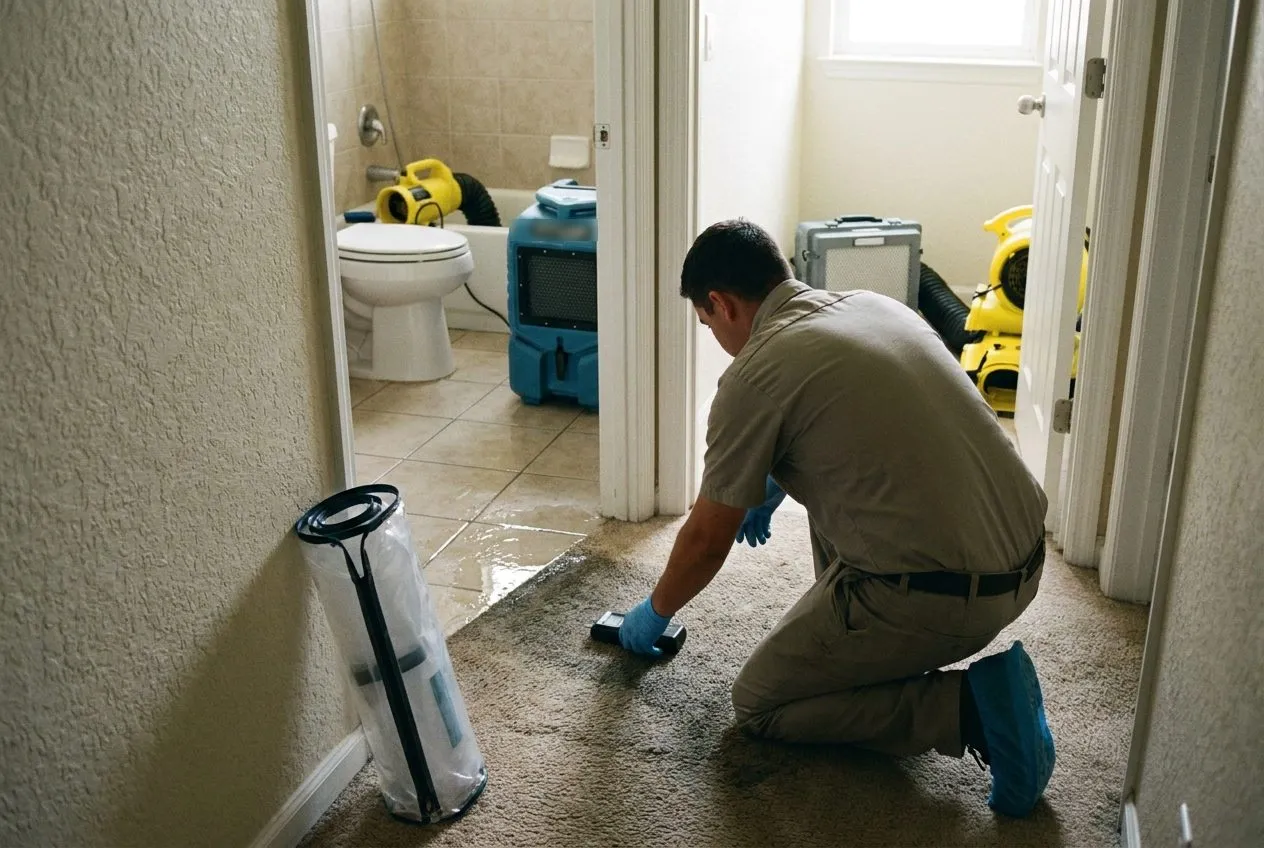
The bowl fills instead of emptying, reaches the rim, and spills across the tile toward the hallway carpet. Or there was never an overflow at all, just grout around the base that stays darker than the rest of the floor. One toilet can put three different kinds of water on your floor, and the difference decides what gets dried and what gets removed.
The Insurance Institute for Business & Home Safety (IBHS) found that "toilet failures are the second leading source of residential water losses, after plumbing supply line failures."
What to do right now
Close the valve on the wall behind the toilet. IBHS gives the same advice for an overflowing bowl or tank. If it won't close, close the house valve where the main line enters the home. If that one won't turn either, call the City: Phoenix Water's 24/7 line is 602-261-8000. Leave the curb meter to the water provider.
Don't flush again. If water is coming up from the drain, stop running water everywhere in the house, including sinks, showers, and laundry.
Keep people and pets out of anything past the tank. Don't mop bowl water or drain water yourself. Photograph it from the doorway.
Call. Water Fighters Restoration is Open 24 hours, 7 days, and on-site within an hour.
Three waters in one toilet
The IICRC water damage standard (S500) sorts toilet water three ways:
- Tank and supply line: Category 1. Water from a broken tank or the supply line is clean at the source, as long as no tank additives are present. Bowl water with no waste or additives is also clean.
- Bowl overflow with urine but no feces: Category 2. The standard's wording is an overflow "on the room side of the trap with some urine but no feces."
- Feces, or anything from beyond the trap: Category 3. A bowl overflow with feces is sewage. So is water that backed up from the drain line beyond the toilet's trap, "regardless of visible content or color."
Categories can also get worse. The standard says clean water can deteriorate to Category 2 or 3, and a university guideline written to it says Category 2 water not removed promptly "may be reclassified as category 3." Water that soaks into carpet or runs under a wall or cabinet can get worse the longer it sits. Nobody can see what was in the bowl from the doorway, so the category is set on site, not guessed.
The sewage cleanup page uses the same working rule. Clean tank water on a hard floor, caught right away, is a clean-water leak. For anything past the tank, keep people and pets out of it and call.
What fails
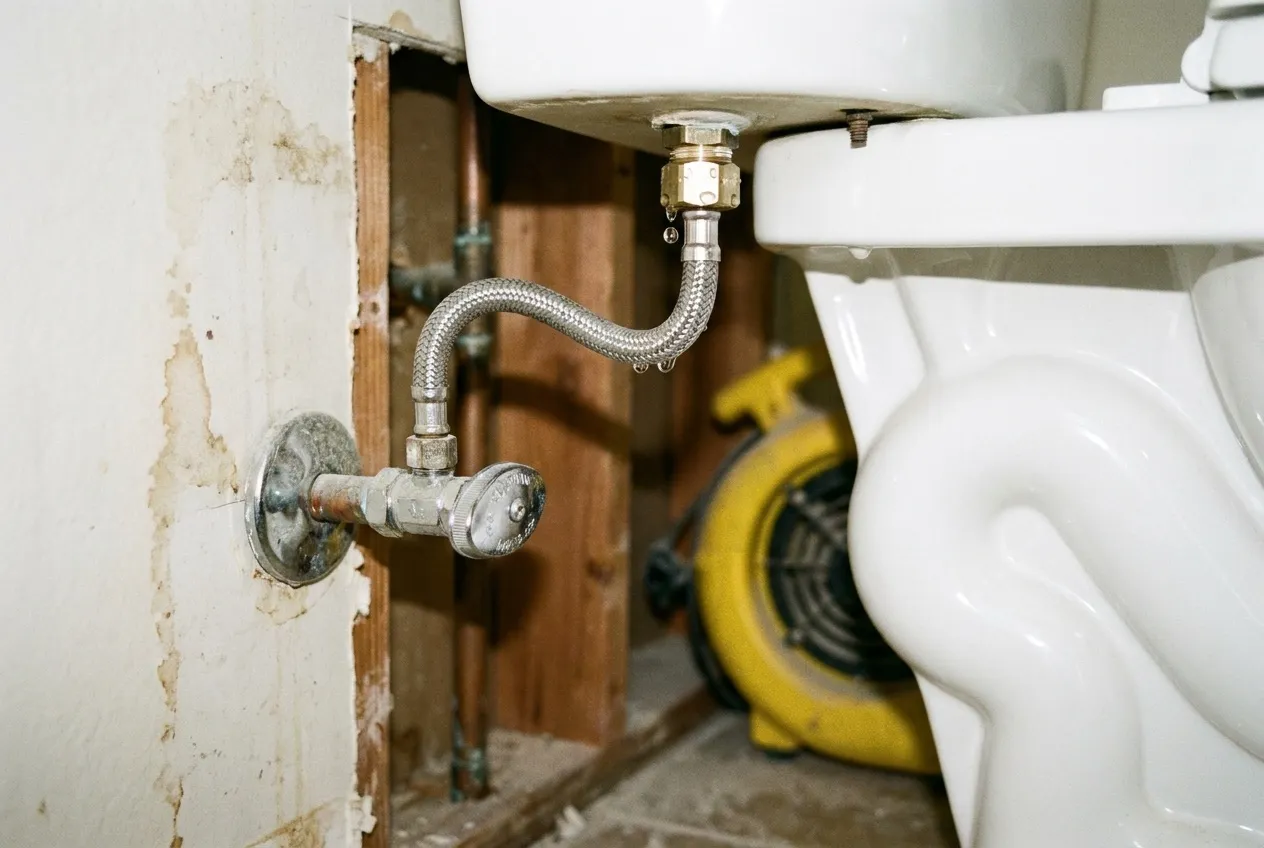
In IBHS's data, "78% of all toilet failures were caused by faulty supply lines, toilet flanges, fill valve assemblies or toilets that have backed up and overflowed." Slow leaks from drain lines and the wax seal at the floor flange generally led to less severe claims. Sudden failures of supply lines, fill valves, overflows, and cracked tanks or bowls led to more severe ones. About 14% of toilet failures happened in unoccupied homes, with nobody there to close the valve.
Leaks that never overflow
Not every toilet loss starts at the rim. A seep at the base can wet the subfloor or slab edge, the grout, and the baseboard before the surface shows much. IBHS found older homes more likely to have slow, seeping toilet failures. Much of Phoenix's housing is well past its first decade: the median housing unit in the city was built in 1986, and about 69% were built before 2000.
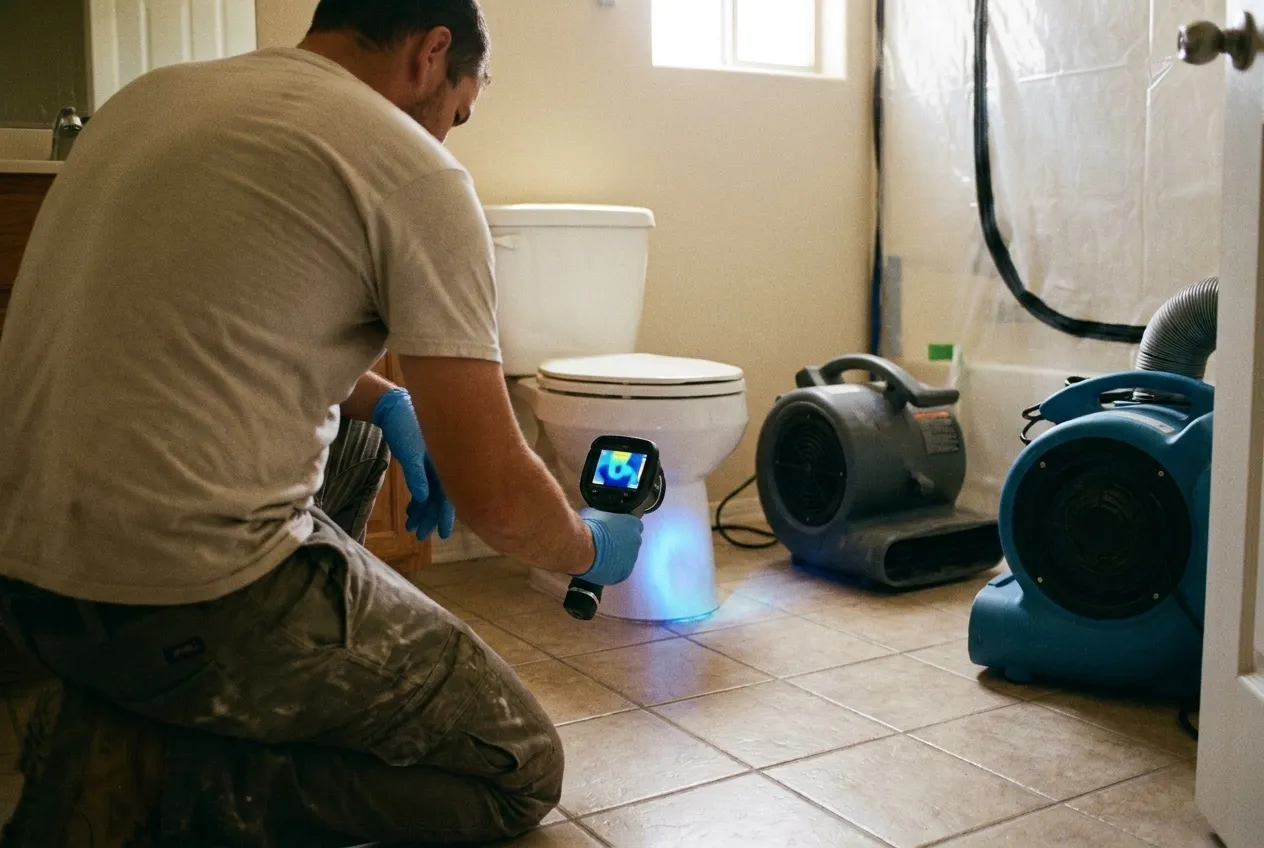
A thermal camera shows the cool halo of evaporating water spreading out from the base, and a pin meter confirms it. That map decides how much flooring and wall base gets opened.
What gets dried and what gets removed
Clean tank water caught quickly on tile is an extraction and drying job, run against moisture readings. Category 2 and 3 water changes the work. Category 3 means containment, protective equipment, and removal of porous materials such as carpet, pad, and the bottom of wet drywall. The wet carpet guide covers carpet and pad decisions by category.
Toilet water travels. It runs under the threshold into hallway carpet, under the vanity, and into the bottom plates of the walls. An upstairs toilet sends it into the ceiling below, which the ceiling water damage guide covers. In a condo, the unit below raises its own questions, answered in the HOA and condo guide. The EPA says it is important to dry water-damaged areas "within 24-48 hours to prevent mold growth."
Pulling and resetting the toilet is the plumber's job. One team does mitigation and rebuild, so the flooring, vanity, baseboard, and drywall go back under the same water damage restoration file.
What insurance usually looks at
Coverage depends on the policy and the cause. A sudden supply-line burst and a seal that seeped for months read differently, so the date, the failed part, readings, and photos all belong in the file. A backup from the drain line raises its own coverage question, and the North Phoenix sewage page explains how to tell a city-main backup from your own line. Your free estimate is the same document the insurer receives, with direct insurance billing.
Preventing the next one
IBHS suggests a few habits. Inspect the flushing mechanism inside the tank every six months. Replace the flapper or fill valve assembly if the tank refills on its own when nobody has used the toilet.
Common Questions
How often should a toilet supply line be replaced?
A major fill-valve maker's instructions say to inspect the supply connector and "replace it if it is worn or over 5 years old to prevent flooding and property damage." IBHS adds a six-month check of the supply line. It also suggests operating the valve to make sure it still shuts off.
Water is pooling around the base of the toilet, but it never overflowed. What is that?
Often it's the seal between the toilet and the floor flange, which IBHS lists among slow-leak failures. It can also be a supply connection dripping down behind the toilet. Seal water has already gone through the bowl toward the drain, so it's treated as contaminated.
Can in-tank cleaning tablets make a toilet leak?
A fill-valve maker warns they can. Its instructions say drop-in cleaners containing bleach or chlorine "result in damage to tank components and may cause flooding." The same instructions warn that over-tightened nuts can crack the tank or the fill valve.
The toilet keeps running. Can that turn into a flood?
Usually not by itself. The refill tube clips to the overflow pipe, so extra tank water normally runs into the bowl and down the drain, wasting water rather than flooding the floor. It becomes a floor problem when the bowl's drain is blocked. IBHS suggests staying near the bathroom after a flush until the fill valve finishes refilling, and closing the supply valve if the bowl starts to overflow.
Why can a toilet leak do more damage in a newer home?
IBHS found newer homes more likely to have a sudden toilet failure, such as a supply line, a fill valve, or a cracked tank. Sudden failures cause more severe losses. Older homes lean toward slow, seeping leaks, and IBHS found loss severity decreases as the home ages. A newer home doesn't remove the risk; it changes how the risk shows up.