
Washing Machine Leak Water Damage in Phoenix
Published October 8, 2026 · Last reviewed October 8, 2026 · Water Fighters Restoration
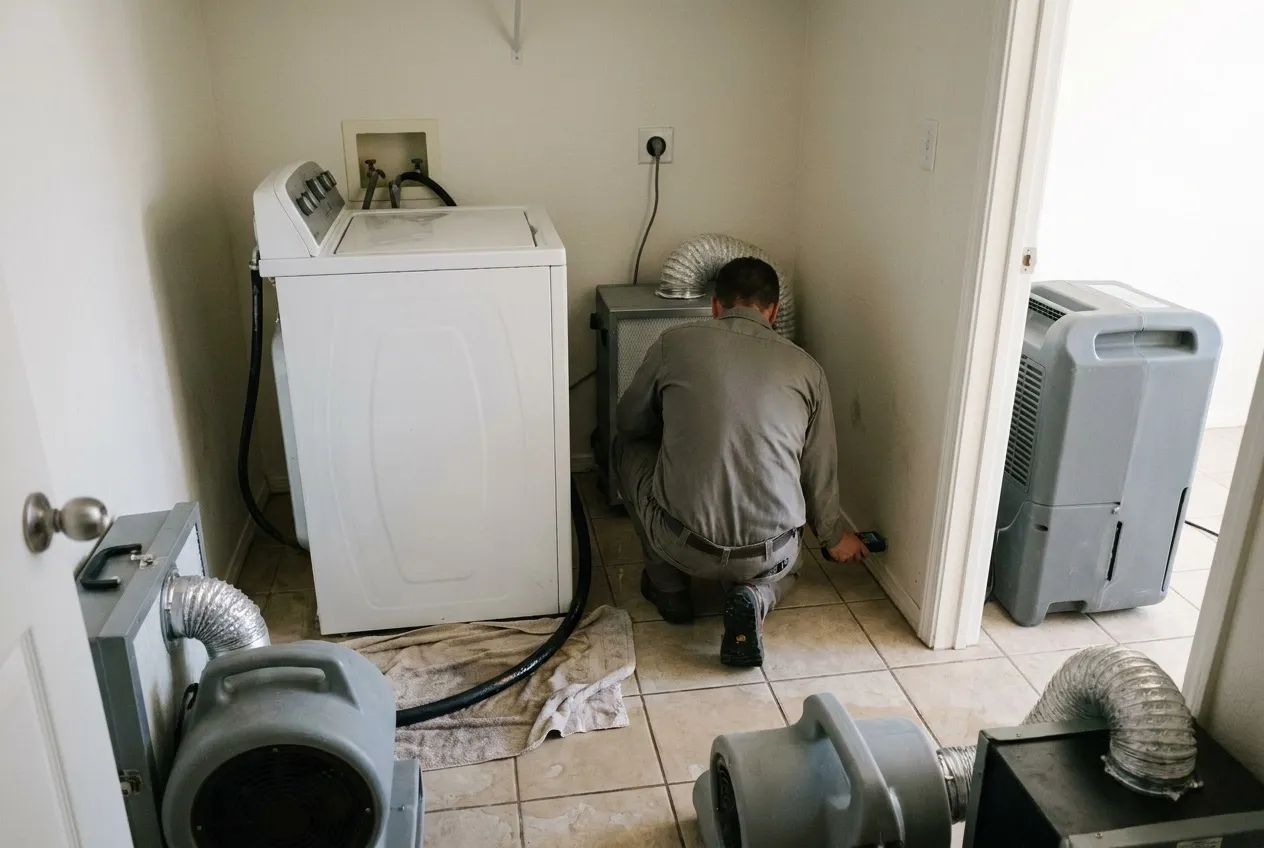
The tile is wet to the laundry room doorway, and there's a hiss behind the washer that doesn't stop when the cycle does. Or the floor stays dry until the machine drains, and then water spills over the top of the pipe in the wall. Those are two different leaks, and they leave two different kinds of water on your floor.
The fill hoses carry pressurized supply water from the wall valves to the machine, whether it is running or not. The drain side carries used wash water, and it moves only when the pump runs. The Insurance Institute for Business & Home Safety (IBHS) found that supply hose failures "accounted for more than half of all washing machine-related losses."
What to do right now
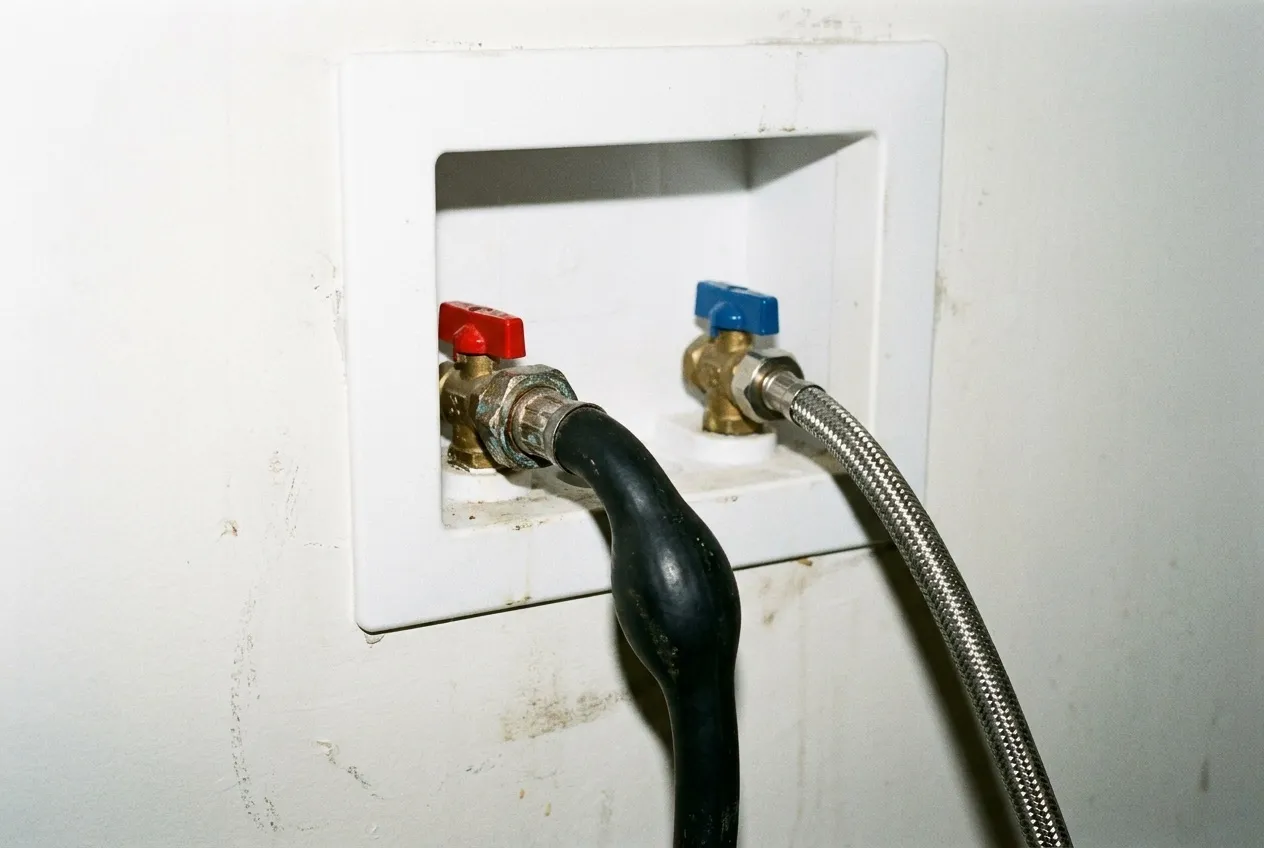
Close the two valves behind the washer. They're the hot and cold valves the hoses connect to. If they won't turn, close the house valve where the main line enters the home; the burst pipe guide shows where to look. Leave the curb meter to the water provider.
If water came up out of the drain pipe, stop running water. No sinks, showers, or another load until a plumber has looked at the drain.
Photograph before anything is cleaned up, and don't mop water that came up from the drain. Get the hose, the floor, and the bottom of every wall the water touched.
Call about the damage. Water Fighters Restoration is Open 24 hours, 7 days, and on-site within an hour.
Fill hose or drain: why it matters
Which side failed decides the water's category under the IICRC water damage standard. A burst fill hose is supply water, Category 1 at the source. The standard lists "discharge from dishwashers or washing machines; overflows from washing machines" as Category 2. If the standpipe is pushing up water from the house drain, it isn't washer water anymore. Backflow from beyond any trap is Category 3, "regardless of visible content or color," and it's a sewage cleanup job.
Category 2 doesn't automatically mean drywall and carpet come out, but it changes what can be dried in place. The wet carpet guide covers pad and carpet decisions by category.
Why fill hoses fail
Hoses age where you can't see them. IBHS warns that "some signs of deterioration may occur from the inside out and may not be visible until it is too late." Its claims research found 78% of hose failures were in machines less than 11 years old, and most of those were in machines eight to 10 years old.
The weak spot is the bend. "The most common site of failure is near the connection where the hose bends," IBHS says. It suggests checking both hoses monthly for "blisters in the hose, worn tubing, stress cracks or a loose connection." A steel-braided hose lasts longer and is "far less likely to result in a catastrophic water loss." The hose inside the braid still ages, though.
Placement matters more than it used to. A 2005 insurer analysis noted that washers have moved from basements to utility rooms near living areas. It also traced one out of every 10 water-damage claims to a malfunctioning water heater or washing machine.
Where washer water goes
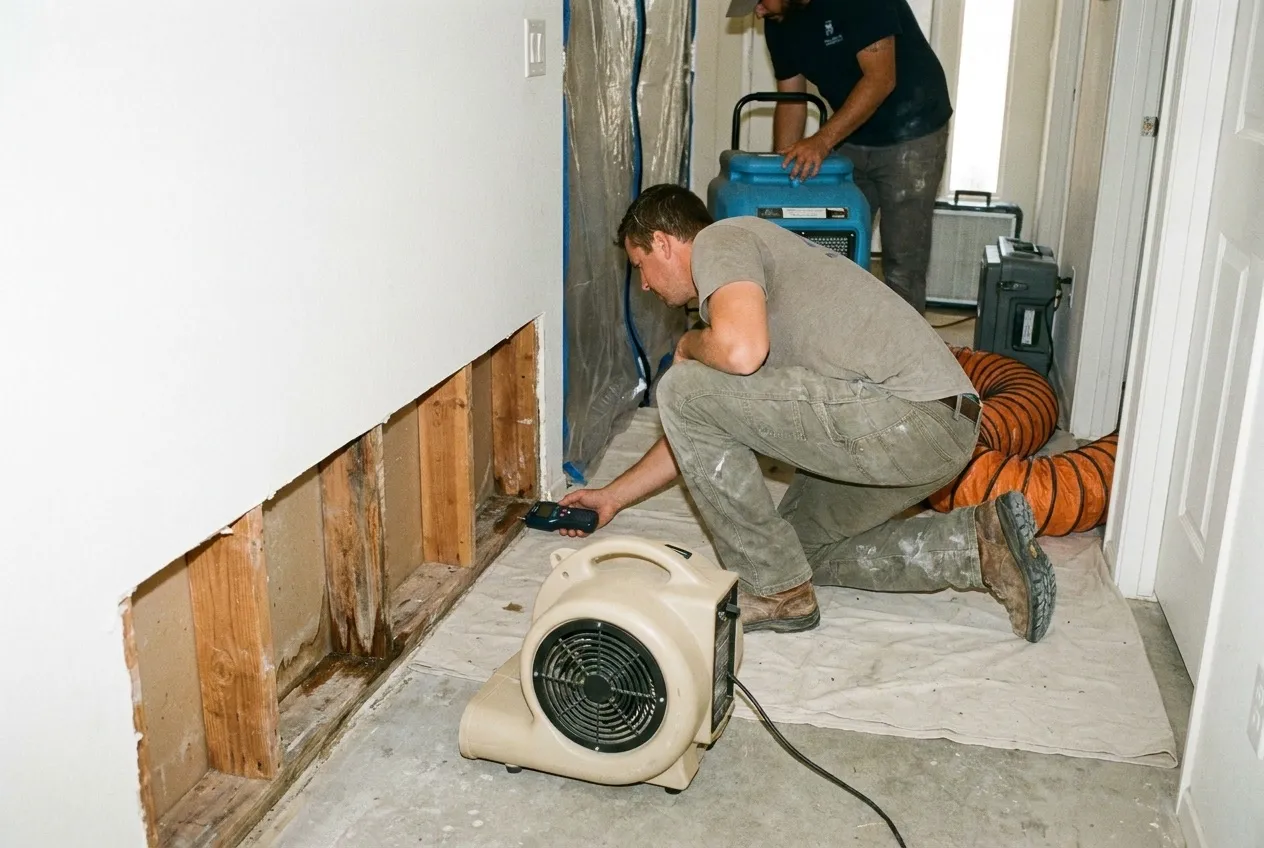
Most Phoenix-area houses sit on concrete slabs, and basements are uncommon. In a ground-floor laundry, washer water spreads across the floor and under the bottom plates into whatever shares the wall: a hallway, a bedroom closet, the kitchen, or the garage. A second-floor laundry sends it down into the ceiling below. The Desert Ridge page answers what to do about an upstairs laundry.
Moisture mapping follows the water past the doorway. The baseboards come off, and where the readings call for it, a narrow strip of lower drywall is removed to expose the bottom plate. Air movers push air into the open cavity, and dehumidifiers pull the moisture out of the room. On carpet, extraction comes first.
The EPA says it is important to dry water-damaged areas "within 24-48 hours to prevent mold growth." A laundry wall that stays wet can turn into a mold remediation job.
Insurance and the rebuild
Coverage depends on the policy and on how the water got out. A sudden hose burst and a slow drip that ran for weeks read differently, so the date, the failed hose, and the readings all go in the file. Your free estimate is the same document your insurer receives, with direct insurance billing.
One team does mitigation and rebuild, so the baseboards, drywall, and flooring go back under the same water damage restoration file. Replacing a valve, changing a standpipe, or clearing a drain is plumber work.
Five washer checks that head off a flood
- Hose age. IBHS says to replace supply hoses every five years, even with no visible wear. Write the install date on the hose label.
- The bend at the valve. Look for blisters, cracks, or bulges near the connection, where hoses fail most often.
- A 3-to-4-inch gap. Leave that space between the machine and the wall so the hose doesn't kink.
- Valves off when the washer isn't in use. Always close them before a trip of several days, and run loads when someone is home.
- A drain that keeps up. If water ever shows at the top of the standpipe, have a plumber check the drain before the next load.
Common Questions
How often should washing machine hoses be replaced, even braided ones?
Every five years, according to IBHS, even when the hose looks fine, because deterioration can start on the inside. Washer makers put hoses on a three-to-five-year clock. A braided steel jacket helps a hose last longer, but the hose inside it still ages, so the same clock applies.
A fill hose burst. Is that clean water?
At the source, yes. The IICRC standard lists "broken water supply lines" and "appliance malfunctions involving water-supply lines" as Category 1. It also says clean water can deteriorate to Category 2 or 3, and that "time and temperature" can affect its category, so the call is made on site. Drain and overflow water is Category 2, and water pushed up from the house drain is Category 3; the categories guide lays out the framework.
The washer drain overflowed, but the machine works fine. What happened?
The drain may not be keeping up. A washer pumps water out faster than a gravity drain carries it, so a partly clogged trap or a slow branch line can push water over the top of the standpipe. Current code has the washer discharge through an air break into a standpipe 18 to 42 inches above its trap, though older standpipes vary. Clearing the drain is a plumber's job.
How far from the wall should the washer sit?
Three to four inches. An IBHS consumer brochure gives that gap "to avoid kinking the hose near the valve connection." That bend is where hoses most often fail.
Should the washer's water valves be turned off between loads?
IBHS says to turn off the hot and cold valves when the machine isn't in use, and always when you'll be away for several days. Screw-type valves can be hard to turn and can leak at the shaft. A single-lever valve that closes both makes the habit practical, and installing one is plumber work. In IBHS's data, about 6% of washer failures happened in unoccupied homes, and those claims were nearly two and a half times as severe.