
Shower Leak Water Damage in Phoenix
Published October 8, 2026 · Last reviewed October 8, 2026 · Water Fighters Restoration
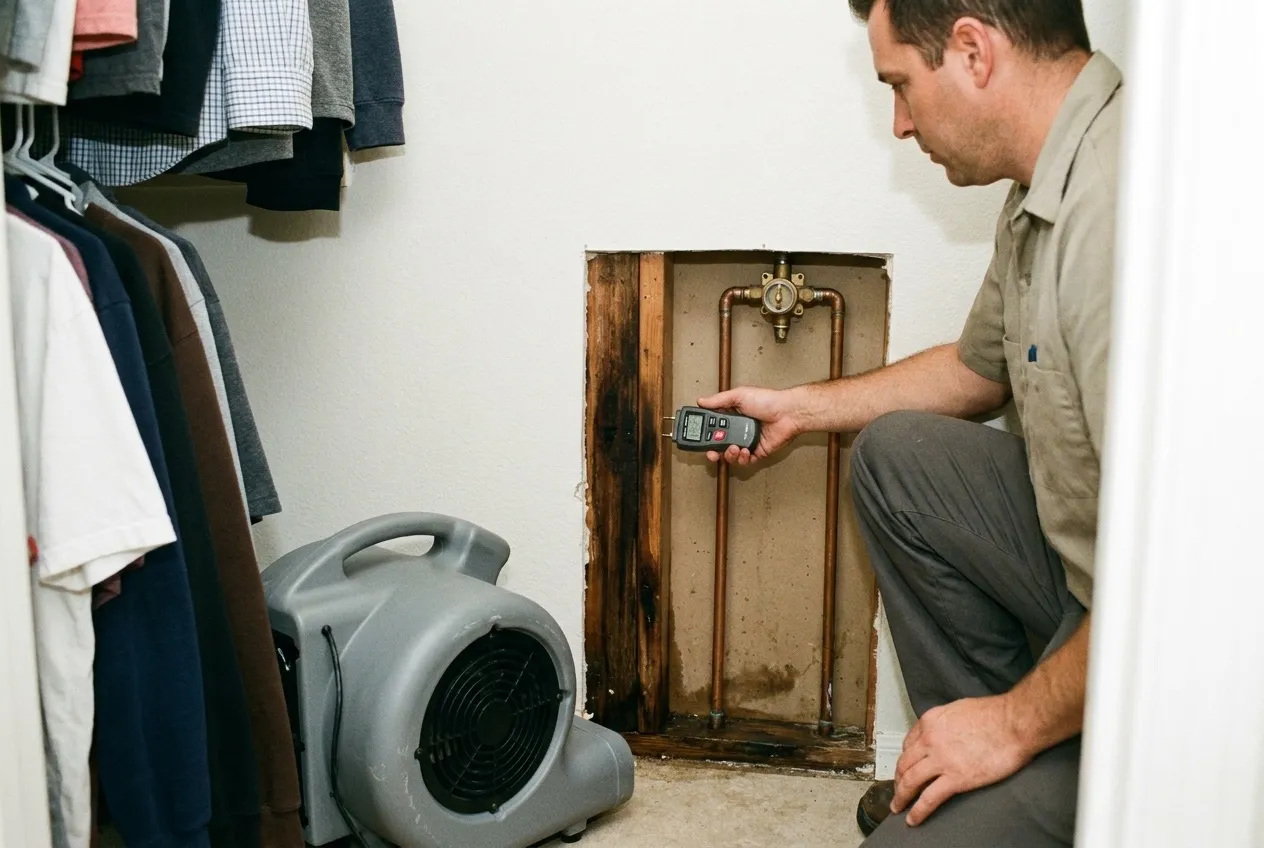
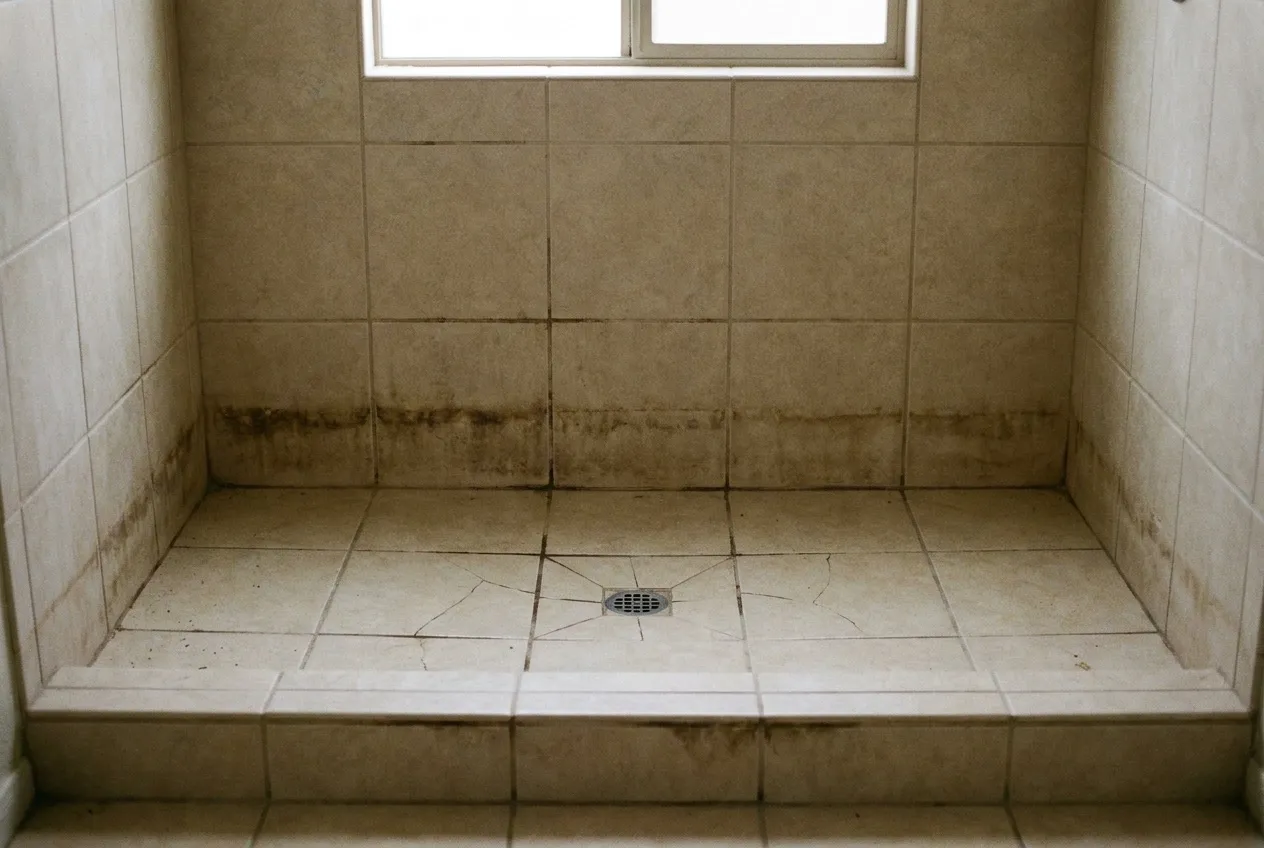
The baseboard in the hall outside the bathroom has a dark line along the bottom. Or the grout at the shower curb stays dark hours after the last shower. Or the closet on the other side of the shower wall has a damp, closed-up smell when you open the door. Shower water that gets past the tile often shows up outside the shower.
That's because the tile isn't the waterproofing. The tile contractors' association's technical staff put it plainly: "Water can pass through grout, stone and many tiles, so installations need waterproofing beneath the tile." When a shower leaks, something behind or under the tile has failed, or a pipe in the wall has.
What to do right now
Note when the water shows up. Wet only during or after a shower, or wet even when nobody has used it: that one detail narrows the source.
If the wall stays wet with the shower off, close the house valve where the main line enters the home. The burst pipe guide shows where to look. Leave the curb meter to the water provider.
Leave the tile and the wall closed. Openings go where the moisture readings point.
Call about the damage. Water Fighters Restoration is Open 24 hours, 7 days, and on-site within an hour.
The tile is the finish
In a tiled shower built on site, the residential code Phoenix adopted in 2025 puts the barrier behind the tile. The walls and floor framing get a liner or a bonded waterproof membrane, carried at least 2 inches above the finished threshold and sloped to weep holes in the drain. A lined, site-built shower floor is flood-tested at install, holding at least 2 inches of water at the threshold for at least 15 minutes with no leakage.
Those rules describe how a shower is built today. Older showers were built to the codes of their day, and some have a backer or pan that current code wouldn't allow.
Four places a shower leaks, and the tell for each
- Pan or floor. It shows during or after a shower, often at the curb, the doorway, or the floor just outside. In claims research by the Insurance Institute for Business & Home Safety (IBHS), more than half of shower-stall incidents involved a faulty pan.
- Valve and supply connections. The supply side holds pressure all day, so a wall that's wet when nobody has showered points here.
- Wall assembly. Cracked or crumbling grout, loose tile, or a failed backer lets water into the wall behind or beside the tile with each use.
- Tub-surround joints. Check where the tub meets the wall surround, around the spout and valve trim, and at the tub's drain and overflow.
A leak that shows only with use has more than one possible source, so readings come before any opening.
Pans, valves, and whose job they are
Original tile showers with mortar-bed pans have their own failure points, covered on the North Phoenix water damage page. Valve repair is the plumber's. The restoration side is finding where the water went and drying it.
What gets opened and dried
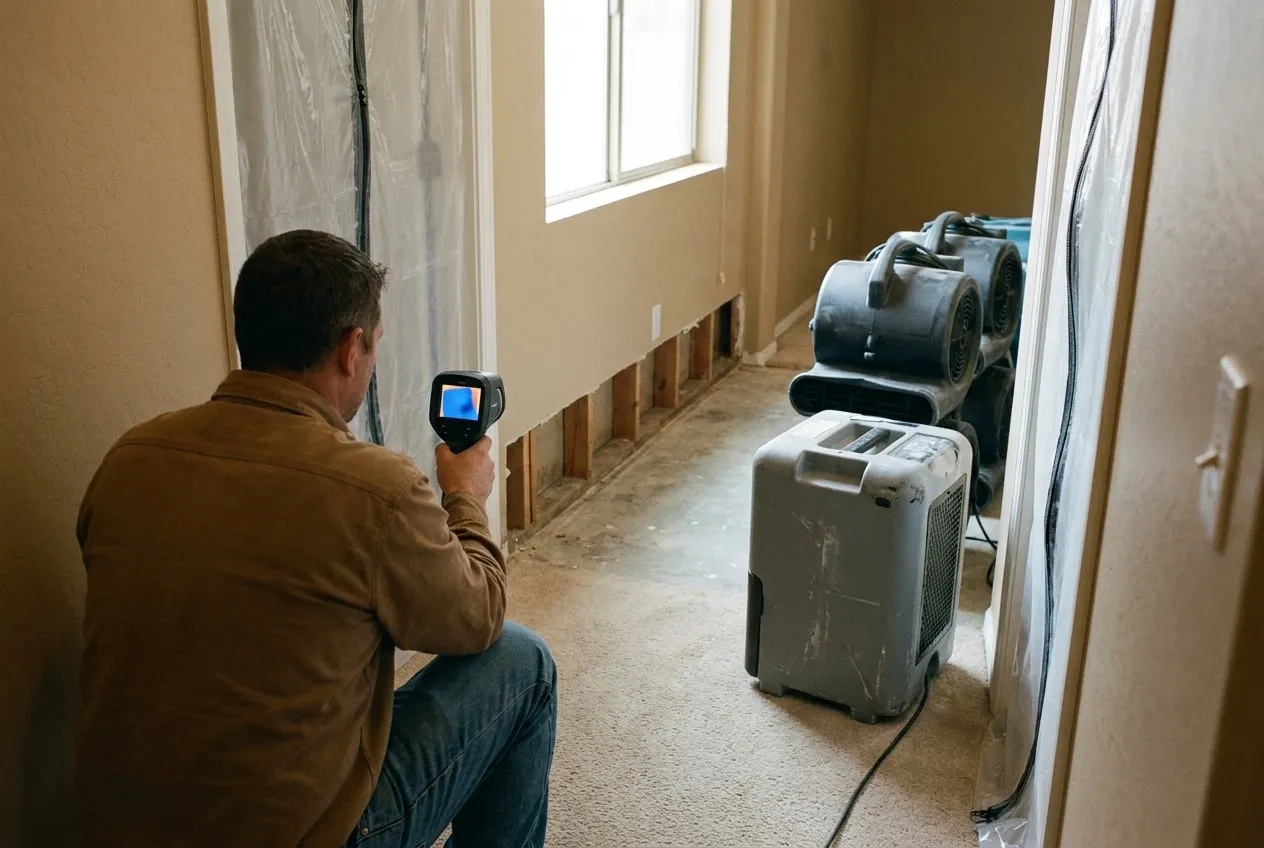
A pin meter and a thermal camera map the wet area before anything is cut, including the far side of the shared wall. Under an upstairs shower, that mapping continues into the ceiling below, which the ceiling water damage guide covers. Slow shower leaks can run a long time before anything shows, and the hidden water damage guide covers the signs to watch for.
The baseboard comes off along the shared wall, and a strip of lower drywall or a section of closet wall is removed where the readings point. Air movers and dehumidifiers then dry the cavity to measured goals. The EPA says it is important to dry water-damaged areas "within 24-48 hours to prevent mold growth." A seep that ran for months may need mold remediation, and the drying time guide explains how readings decide when drying is done.
Category depends on the source. Under the IICRC standard, water from the valve or a supply connection is Category 1 at the source, but clean water can deteriorate to Category 2 or 3. Water leaking from a pan or drain is used shower water, often slow and long-running, so its category is set on site.
In older homes, suspect wall and floor materials are tested before demolition; see the asbestos and lead guide. One team does mitigation and rebuild, so the drywall, baseboard, texture, paint, and flooring outside the shower go back under the same water damage restoration file.
What insurance usually looks at
Coverage depends on the policy and the cause. A sudden supply failure and a pan that seeped for years read differently, so the date you first noticed it, the readings, and photos all go in the file. Your free estimate is the same document the insurer receives, with direct insurance billing.
Preventing the next one
IBHS suggests inspecting tile and grout every six months, "paying attention to loose or cracked tiles and cracked or crumbling grout lines," and repairing as needed. Watch the curb, the floor outside the shower door, and the wall on the other side. A dark baseboard there is worth a moisture reading before it's worth a paint touch-up.
Common Questions
Can we keep using the shower until it's fixed?
If it leaks only with use, stop using that shower until a plumber has looked. If the wall is wet when the shower hasn't run, not using it won't stop a supply-side leak. Close the house valve where the line enters the home, and if it won't turn, call the City: Phoenix Water's 24/7 line is 602-261-8000. Then the wet wall gets mapped and dried.
Does sealing the grout stop a shower leak?
No. The tile contractors' association's technical staff says water can pass through grout, stone, and many tiles, which is why the waterproofing goes beneath the tile. Sealer is upkeep for the tile. If water is reaching the wall, the barrier behind the tile, or a joint in it, has failed.
How do you tell a shower valve leak from a shower floor leak?
A wall that's wet when nobody has showered points to the supply side of the valve. A leak that shows only during or after a shower can be the pan or drain, or the tile and grout. It can also be the pipe from the valve up to the shower head or spout, which carries pressure only while the water runs. Readings and a thermal camera sort it out before anything is opened, and the valve repair is the plumber's.
Why is green board behind shower tile a problem?
Current code says water-resistant gypsum board "shall not be used where there will be direct exposure to water, or in areas subject to continuous high humidity." Tub and shower walls get a listed backer instead, such as glass mat gypsum, fiber-reinforced gypsum, or fiber-cement board. Some older showers predate that rule. When one is opened, the backer is replaced with a code-listed material before new tile goes up.
Are older homes more likely to have shower leaks?
In IBHS research, homes more than 20 years old were 37% more likely to have water damage involving a shower. In Phoenix, the median housing unit was built in 1986, and about 7 in 10 units, apartments included, were built before 2000. Much of the city's housing is well past that 20-year mark.