
AC Condensate Leak Water Damage in Phoenix
Published October 8, 2026 · Last reviewed October 8, 2026 · Water Fighters Restoration
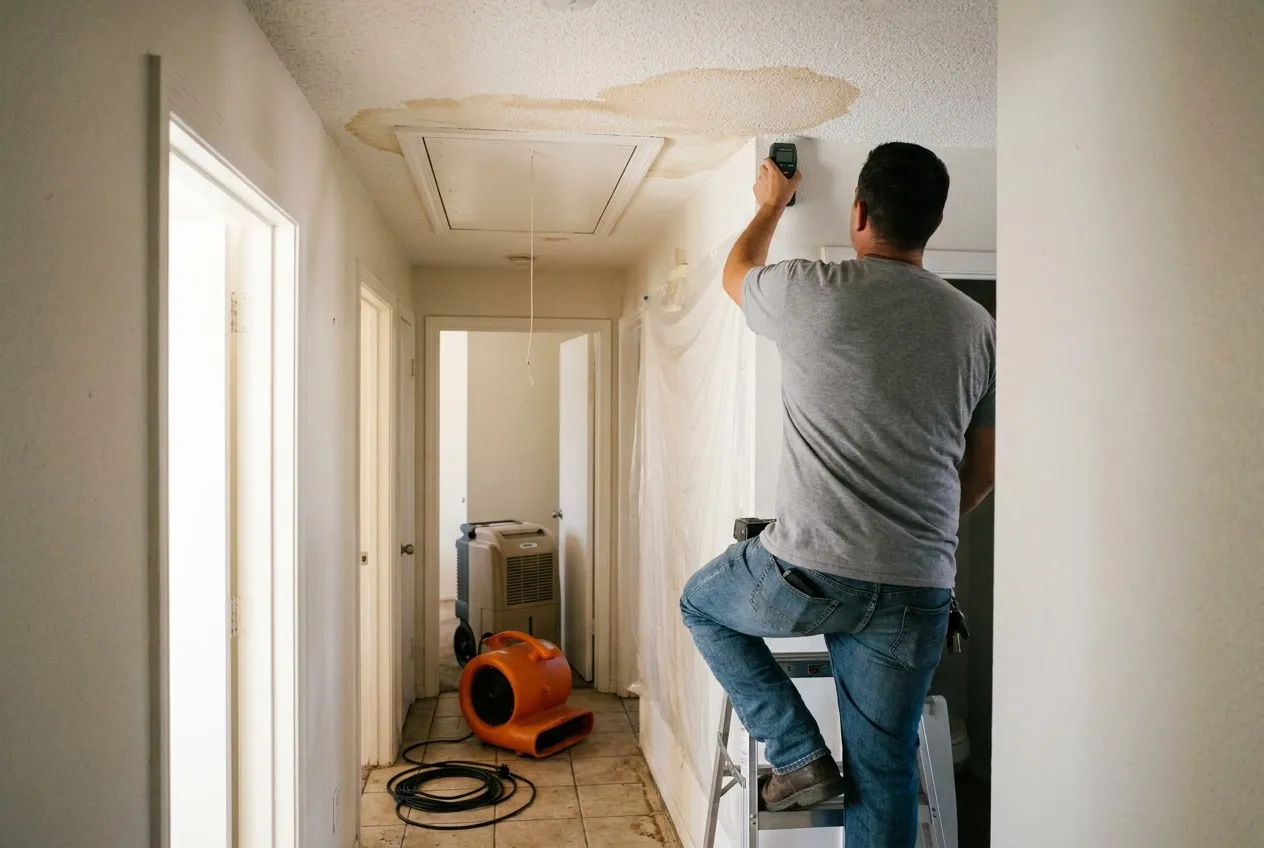
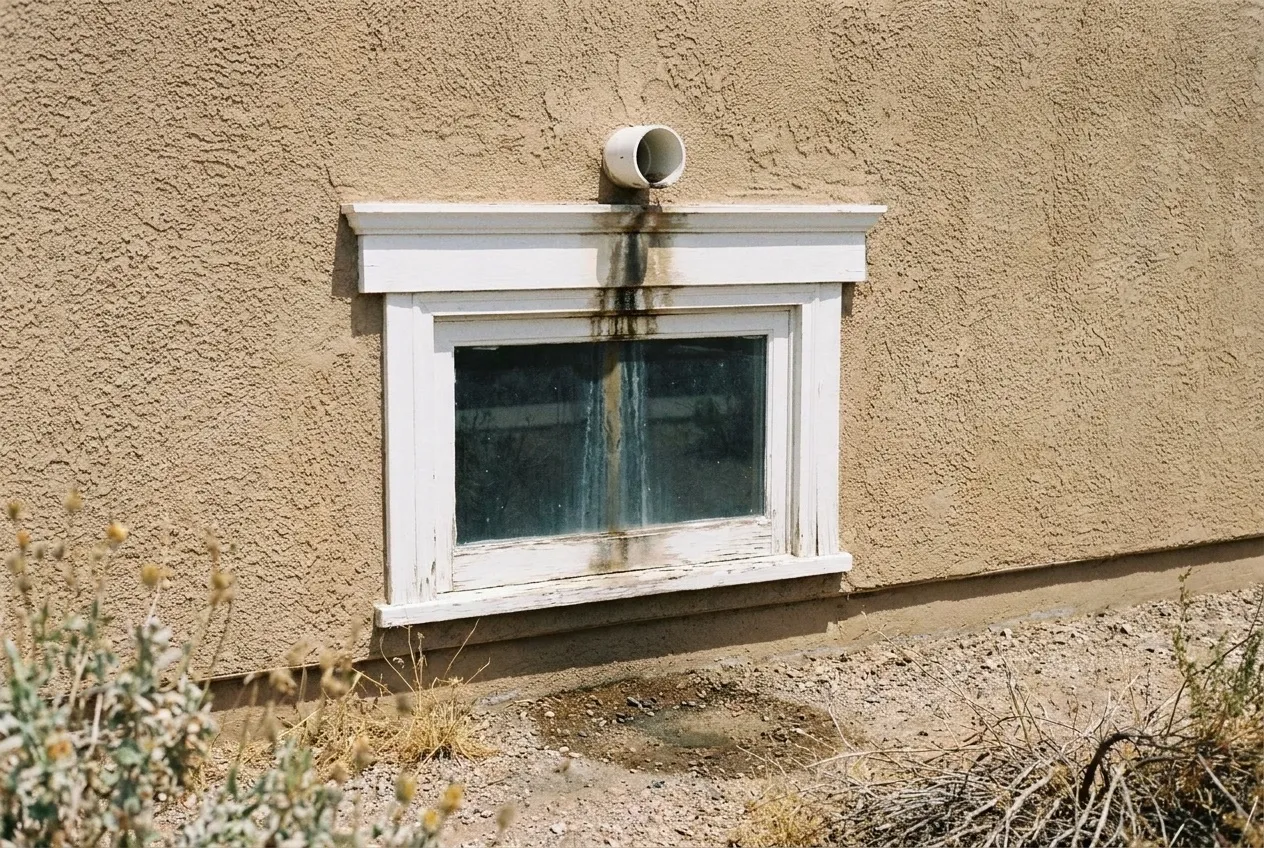
A tan stain creeps out from one corner of the attic hatch in the hallway. Or a short white pipe over a bedroom window drips onto the gravel on a cloudless afternoon. Or the house warms up and the air conditioner has stopped running. All three can start in the same place: the drain pan under your air conditioner's indoor coil.
An air conditioner pulls water out of the air the whole time it cools. That water collects in the pan and leaves through a condensate drain line. Phoenix averages 111 days a year at 100°F or hotter, by National Weather Service normals, and the average first one comes May 2. When the line clogs, the water still has to go somewhere.
What to do right now
Turn the system off at the thermostat. No cooling means no new condensate.
Leave the attic and the switches alone. Don't climb into the attic, reach into the pan, or bypass a switch that shut the system down. Clearing the drain line is your HVAC contractor's job.
Stay out from under a sagging ceiling or a wet light fixture. The ceiling water damage guide covers bulges, stains, and older textured ceilings.
Call about the damage. Water Fighters Restoration is Open 24 hours, 7 days, and on-site within an hour. One licensed team covers the Valley, from Ahwatukee to Desert Ridge.
How the drain is supposed to work
Phoenix adopted the 2024 International Residential Code, effective Aug. 1, 2025. It says condensate shall be "conveyed from the drain pan outlet to an approved place of disposal." Where an overflow or a clogged line would damage the building, it also requires a backup for each cooling coil (section M1411.9.1).
That rule applies when equipment is installed, so older systems vary, and some have no backup at all. Standard plans approved under Phoenix's 2018 code stayed in effect through July 31, 2026, and that code carried the same rule.
The four backups the code allows
Current code allows four kinds of backup:
- A backup pan with its own drain. A second pan sits under the coil, at least 1.5 inches deep. Its drain empties "to a conspicuous point of disposal to alert occupants" when the main drain stops.
- An overflow line. A second drain connects to the unit's own pan, higher than the main drain connection, and empties where someone will notice it.
- A backup pan with a water-level switch. This pan has no drain, and the switch shuts the equipment off before the pan overflows.
- A water-level switch on the main drain. Mounted in the drain line, the overflow line, or the unit's pan, it shuts the system off when the main drain is blocked.
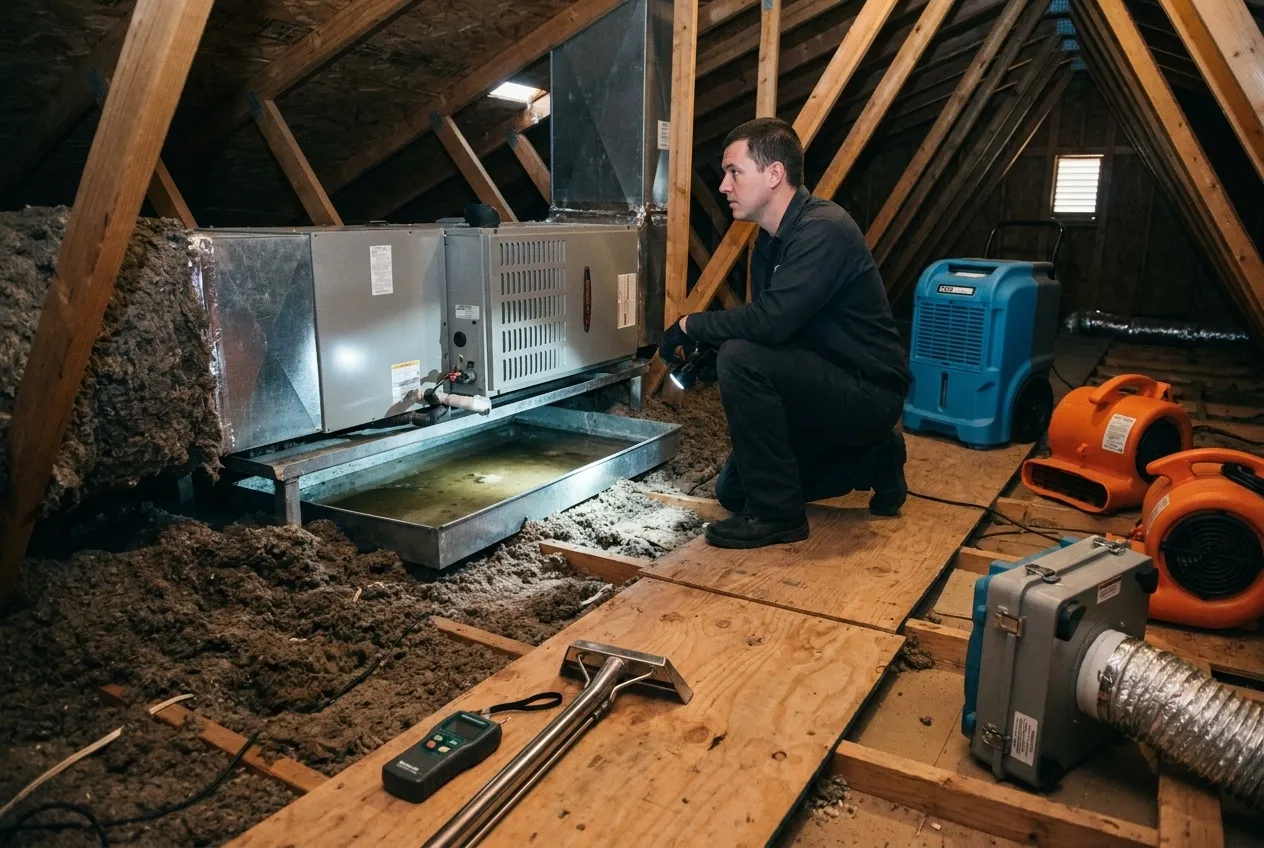
In an attic, a condensate pump must also stop the equipment when the pump fails. Put together, a drip from a pipe outside, or an AC that quit with water in the pan, can be a backup doing its job. A ceiling stain means water got past whatever was there.
Why a Phoenix summer loads the drain
A cooling coil pulls moisture out of the air, so humid air means more water for the drain to carry. During the monsoon, the Weather Service says humidity climbs, "leading to exceptionally warm evenings." Lows sometimes don't drop below 90 degrees, so the system keeps working after dark, in wetter air.
What gets opened and dried
The stain marks where water reached the paint, which may not be where it started. A pin meter and a thermal camera map the ceiling, the walls below, and the area around the air handler before anything comes down. Sagged drywall comes out under a controlled work area.
Saturated blown-in insulation is usually removed. It is evaluated by contamination, condition, and access, and pulling it lets the drywall underneath dry and be measured. The EPA says it is important to dry water-damaged areas "within 24-48 hours to prevent mold growth." The Phoenix mold guide covers what follows an overflow that was never dried. The water's category is set on site, by how long it ran and what it soaked through.
One team does mitigation and rebuild, so the insulation, ceiling drywall, texture, and paint go back under the same file through water damage restoration. If a water heater shares the attic, the water heater flooding guide covers its pan and drain.
What insurance usually looks at
Coverage depends on the policy and on what failed. The insurance guide has its own section on AC leaks. From the damage side, the file needs the date the water appeared, what failed, moisture readings, and photos taken before removal.
A 2005 insurer analysis of three years of homeowner water claims listed "air conditioners located in attics" among the appliances causing the most damage. Your free estimate is the same document the insurer receives, with direct insurance billing.
Preventing the next one
Many Phoenix-area homes put the air handler in the attic, while others use a closet or a rooftop package unit. Ask your HVAC contractor which backup your system has and where its outlet ends. If it's a pipe on an outside wall, glance at it in July. Once your contractor confirms it's the backup line, a drip there on a dry day means the main drain needs attention.
Evaporative coolers are a different machine, covered in the swamp cooler leak guide.
Common Questions
Water is dripping from a small pipe above a window. Is that a leak?
If that pipe is the backup line, the drip is the warning the code built in. A backup drain must empty "to a conspicuous point of disposal to alert occupants." Some systems also run the main drain outdoors, so have your HVAC contractor confirm which line it is. Turn the system off at the thermostat, and have the pan and the ceiling below checked.
The AC shut itself off and there's water in the pan. What happened?
Most likely a water-level switch tripped because the drain backed up. That shutdown is how two of the code's backups stop an overflow, so leave the switch alone. Other faults can also stop an AC, so have your HVAC contractor find the cause. Then have the ceiling below checked for water that got out first.
Is water from an AC overflow clean water?
Not reliably. A state indoor-air program lists HVAC leaks free of antifreeze as Category 1. A university guideline written to the IICRC standard lists condensate water as Category 2, and the standard says clean water can deteriorate to Category 2 or 3. Water that sat in a pan or ran through insulation is judged on site; the water damage categories guide explains how.
Does monsoon humidity make the AC produce more water?
Yes, because wetter air means more condensate for the same drain. A National Weather Service study of the 1982–1996 monsoons found the 2 p.m. dew point at Sky Harbor at 55°F or higher on about three of every four monsoon days. That study counted monsoon days by dew point, not by the calendar. Today the official season is a fixed window, June 15 through Sept. 30. A drain that barely kept up in June has more to carry in August.
What keeps an AC drain from backing up in the first place?
Maintenance on the pan and the line. The EPA's advice is to "keep air conditioning drip pans clean and the drain lines unobstructed and flowing properly." Current code also requires drain lines that can be cleared "without requiring the drain line to be cut." That work belongs to your HVAC contractor.