
Kitchen Leak Water Damage in Phoenix
Published October 8, 2026 · Last reviewed October 8, 2026 · Water Fighters Restoration
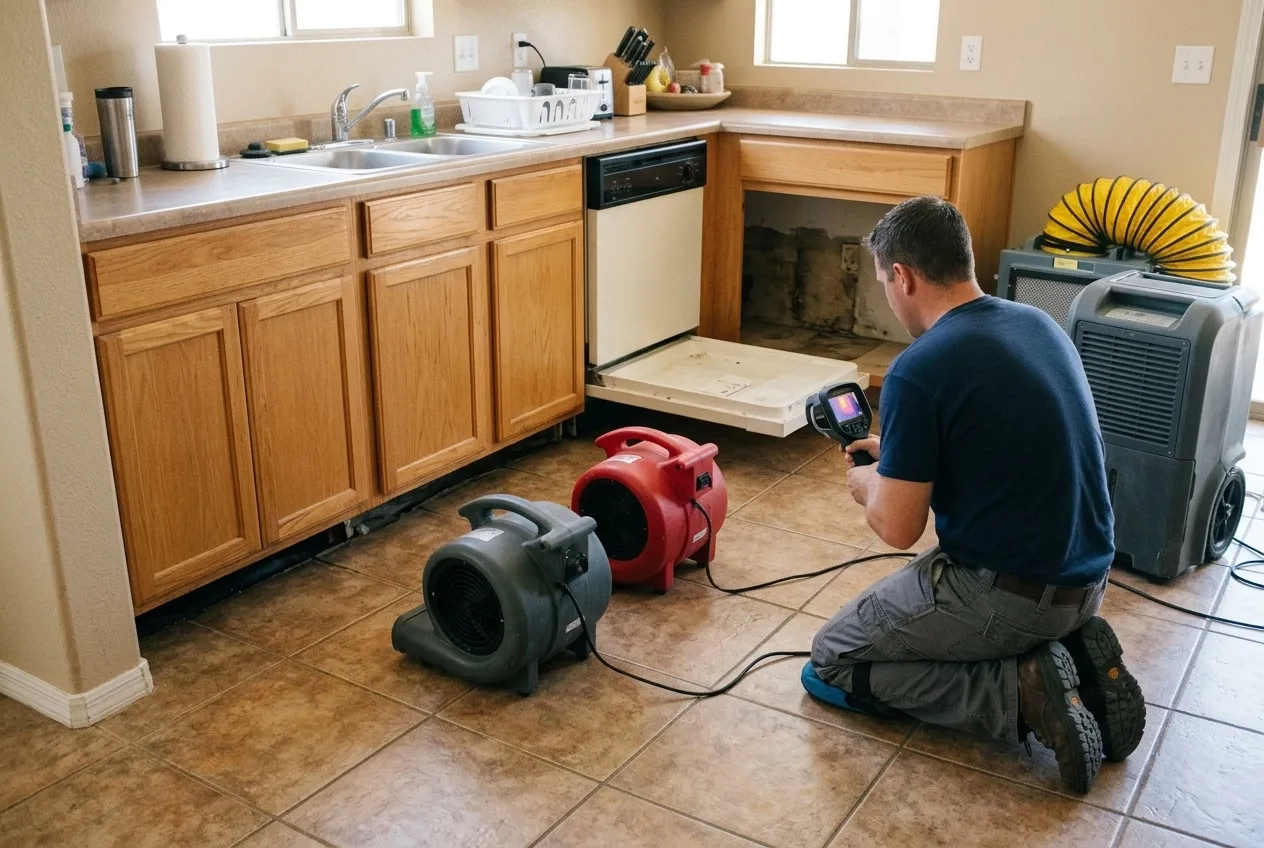
You open the sink cabinet for a trash bag, and the cabinet floor gives a little under your hand. Or a wood floor seam by the refrigerator sits slightly high. Or a dark line runs along the toe kick beside the dishwasher. A kitchen packs four water sources into one wall, and all four leak into the same hidden places.
About 7 in 10 Phoenix housing units were built before 2000, so many kitchens here are decades old. The ice-maker line, the sink supply lines, the dishwasher, and the drain under the sink don't all put the same kind of water on the floor. That difference decides what can be dried and what has to come out.
What to do right now
Close the nearest valve. That's the valve under the sink or the ice-maker line's own shutoff. If you can't find or turn one, close the house valve where the main line enters the home; the burst pipe guide shows where to look.
Stop the dishwasher and the sink. If water is rising out of the drain, don't run water anywhere in the house.
Call about the damage. Water Fighters Restoration is Open 24 hours, 7 days, and on-site within an hour.
Four kitchen water sources and what each one means
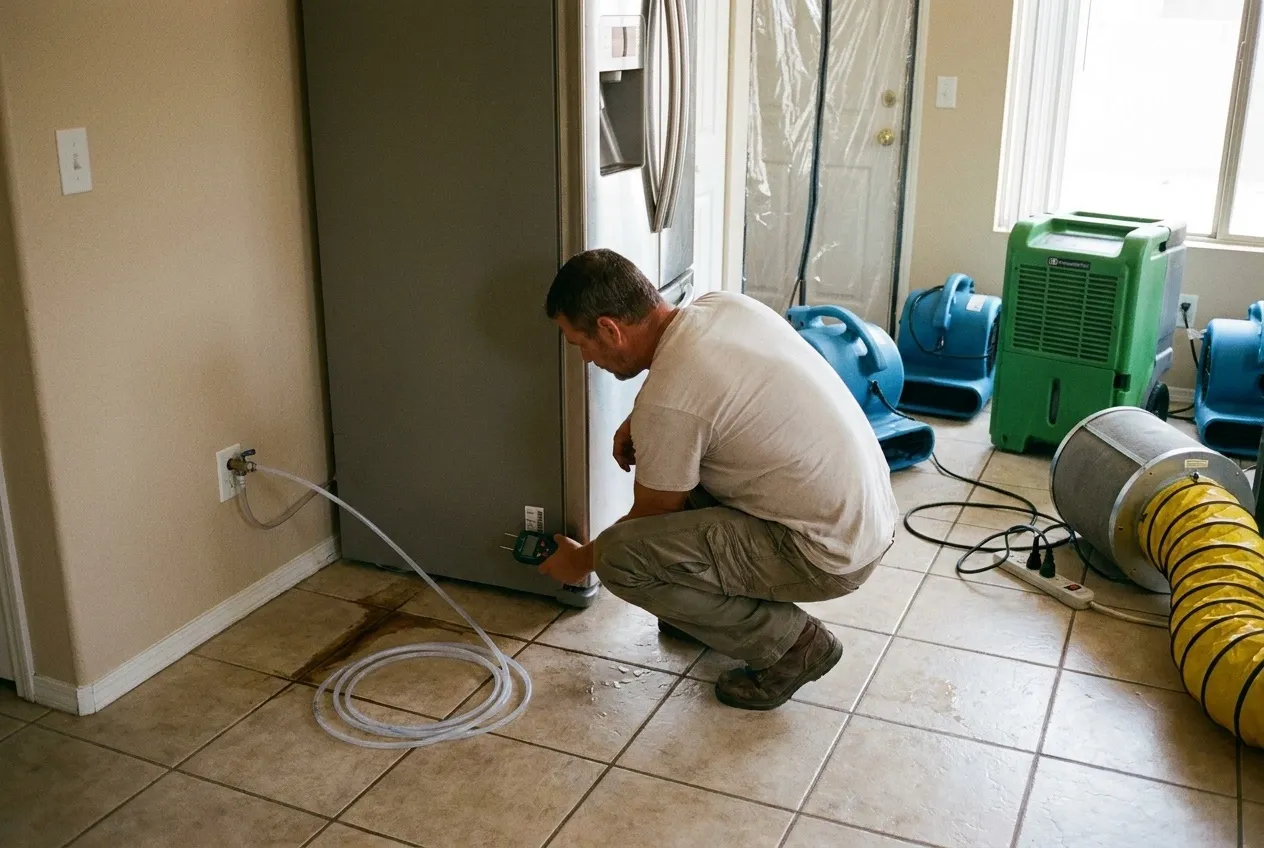
- The ice-maker line: clean supply water at the source. Its valve is often behind the refrigerator or under the sink.
- The sink supply lines: clean supply water at the source. They stay under pressure whether or not the faucet is on.
- The dishwasher drain: Category 2. The IICRC water damage standard lists "discharge from dishwashers" in that category.
- A drain backup from beyond the trap: Category 3. The standard covers backflow from beyond any trap "regardless of visible content or color." A sink filling from the house drain is Category 3 even when it looks like dishwater, and it's a sewage cleanup job.
Clean water doesn't stay clean. The same standard says Category 1 water can deteriorate to Category 2 or 3, depending on how long it sits and the temperature. Water from a leaking disposal or sink drain is used water carrying food waste, and it is handled as contaminated. The category is set on site.
Why the supply side fails
The Insurance Institute for Business & Home Safety (IBHS) calls plumbing supply system failures "the leading source of residential water losses." In its data, 65% of plumbing-supply-system claims came from a failure of the supply system material. Refrigerators add their own risk: 10% of ice-maker incidents involved new refrigerators that were installed wrong.
A 2005 insurer analysis ranked refrigerators with water or ice units, then dishwashers, right behind water heaters and washing machines among the appliances causing the most damage. It noted that a failed dishwasher hose now leaves more to repair, because of finishes like hardwood floors and cabinets.
The part that failed, whether a hose, a valve, or a connection, is a repair for the plumber or appliance technician. What the water did after it got out is the restoration job.
Where kitchen water hides
Base cabinets usually sit on the floor with a toe-kick space under the box. Water that reaches the floor can run under the cabinets and stay there while the floor in front looks dry. Flooring that continues beneath the dishwasher, refrigerator, and cabinets carries it farther. The dishwasher, disposal, and sink usually share one drain path under the sink, so a failed connection there sends used water straight into the sink base.
That's why the visible puddle is a poor guide to the size of the loss. The hidden water damage guide covers the signs that show up later.
What gets opened and dried
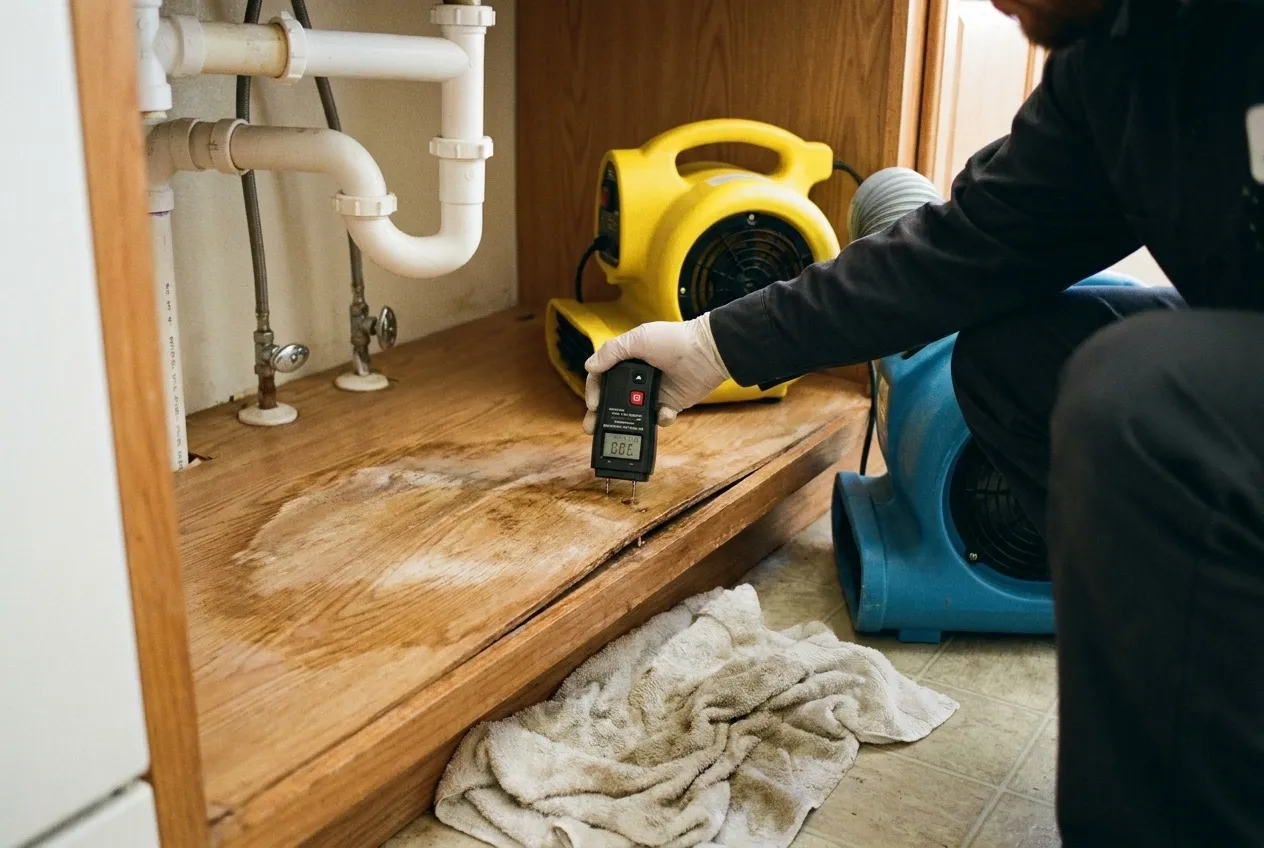
The toe kicks come off, and a moisture meter or thermal camera maps the floor and the cavity under the cabinets before anything is removed. Air movers push air into that cavity. Whether the cabinets can be dried in place depends on how the boxes are built. If a cabinet under a stone countertop has to come out, detaching and resetting the stone is its own careful job.
The water-damaged flooring guide covers tile, laminate, vinyl plank, and wood. In older kitchens, suspect flooring materials are tested before they're disturbed, as the asbestos and lead guide explains. The EPA says it is important to dry water-damaged areas "within 24-48 hours to prevent mold growth."
One team does mitigation and rebuild, so the toe kicks, cabinets, drywall, flooring, and backsplash go back under the same file. The water damage repair guide covers cabinets, countertops, and flooring transitions in the rebuild.
Insurance and home warranties
A home warranty and a homeowner policy cover different things. As the insurance guide puts it, a warranty "repairs or replaces" the dishwasher, while the soaked drywall, flooring, and cabinets are "your homeowner policy's territory." Coverage depends on the policy and the cause, and a sudden failure reads differently from a slow drip under the sink. Your free estimate is the same document the insurer receives, with direct insurance billing.
Preventing the next one
IBHS suggests inspecting the plumbing under every sink every six months. Check that connections are secure, look for corrosion, and look for kinks in copper or plastic pipe, which "could lead to pinhole leaks over time." Inspect the ice-maker valve on the same schedule to make sure it will shut off. The Laveen page covers the supply parts worth watching in 2000s-era homes.
Common Questions
Why is the refrigerator's ice-maker line such a common leak source?
In IBHS's data, 73% of ice-maker losses came from the supply line hose failing. The hose lives behind an appliance that moves, which is how kinks and crushed lines happen. IBHS suggests leaving 3 to 4 inches behind the refrigerator so the hose doesn't crimp, keeping it out from under the wheels, and inspecting it every six months.
How often is a sink leak the supply line?
In insurance-industry research, faulty supply lines caused 44% of sink losses, close to half. Supply lines hold pressure all the time, while a drain leaks only when water runs. IBHS puts the plumbing under every sink on a six-month check.
Why does the dishwasher drain hose loop up under the counter?
Code requires it. The dishwasher's waste line must "rise and be securely fastened to the underside of the sink rim or countertop." From there it connects to a wye on the sink tailpiece, to the disposer's dishwasher inlet, or through an air break to a standpipe. A hose that has slipped down or come loose is a job for the plumber or installer.
Water is under the dishwasher, but the floor in front of it looks dry. How far could it have gone?
Farther than the visible floor suggests. Water can run into the toe-kick space under the base cabinets and along flooring that continues beneath the dishwasher and cabinets. The toe kicks come off, and a moisture meter or thermal camera maps the wet area before anything is removed. Whether the cabinets themselves can stay is a separate decision, based on those readings and on how the boxes are built.
Can a leaking garbage disposal cause real damage?
Yes. The disposal sits on the sink drain and often takes the dishwasher's drain too, so a leak at its seals or connections drips used, food-laden water into the sink base. That water soaks the cabinet floor and can run under the cabinets. It's handled as contaminated, not clean, and the disposal itself is the plumber's repair.