
Water Damage Restoration in Laveen
Published August 21, 2026 · Last reviewed August 21, 2026 · Water Fighters Restoration
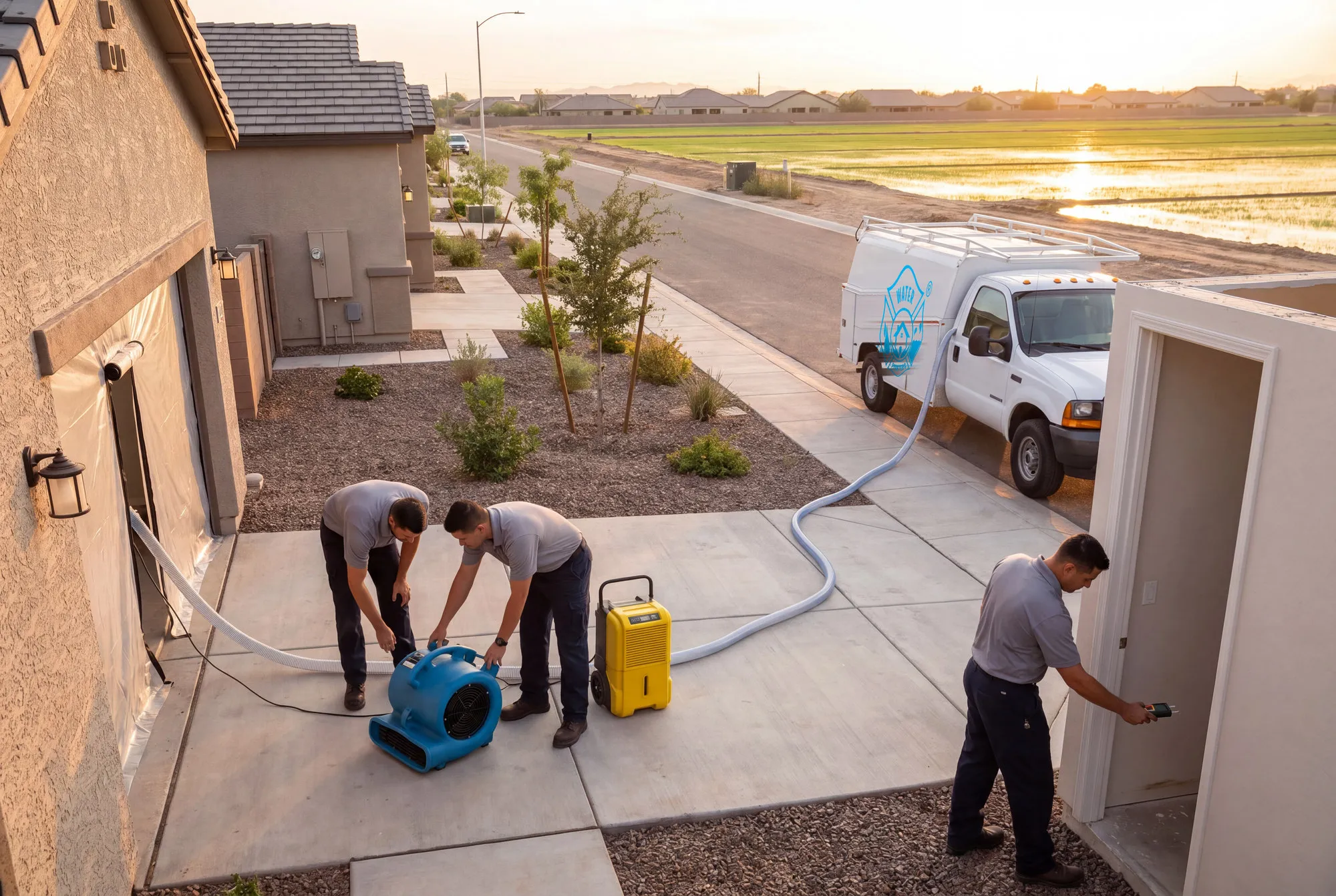
Twenty-five years ago Laveen was alfalfa, cotton, and dairy. Then the subdivisions arrived, fast, and a farming village on the southwest edge of Phoenix became a neighborhood of tile roofs and cul-de-sacs. The houses are new by Valley standards. The ground underneath them is not, and that combination produces a specific set of problems.
A Neighborhood Built on a Farm
Land that spent decades under flood irrigation does not behave like raw desert. It has been wetted and dried on a schedule for a very long time, and the clay in it has learned to move. When you build on that and then stop irrigating it, the soil keeps adjusting for years afterward. Slabs sit on top of that adjustment.
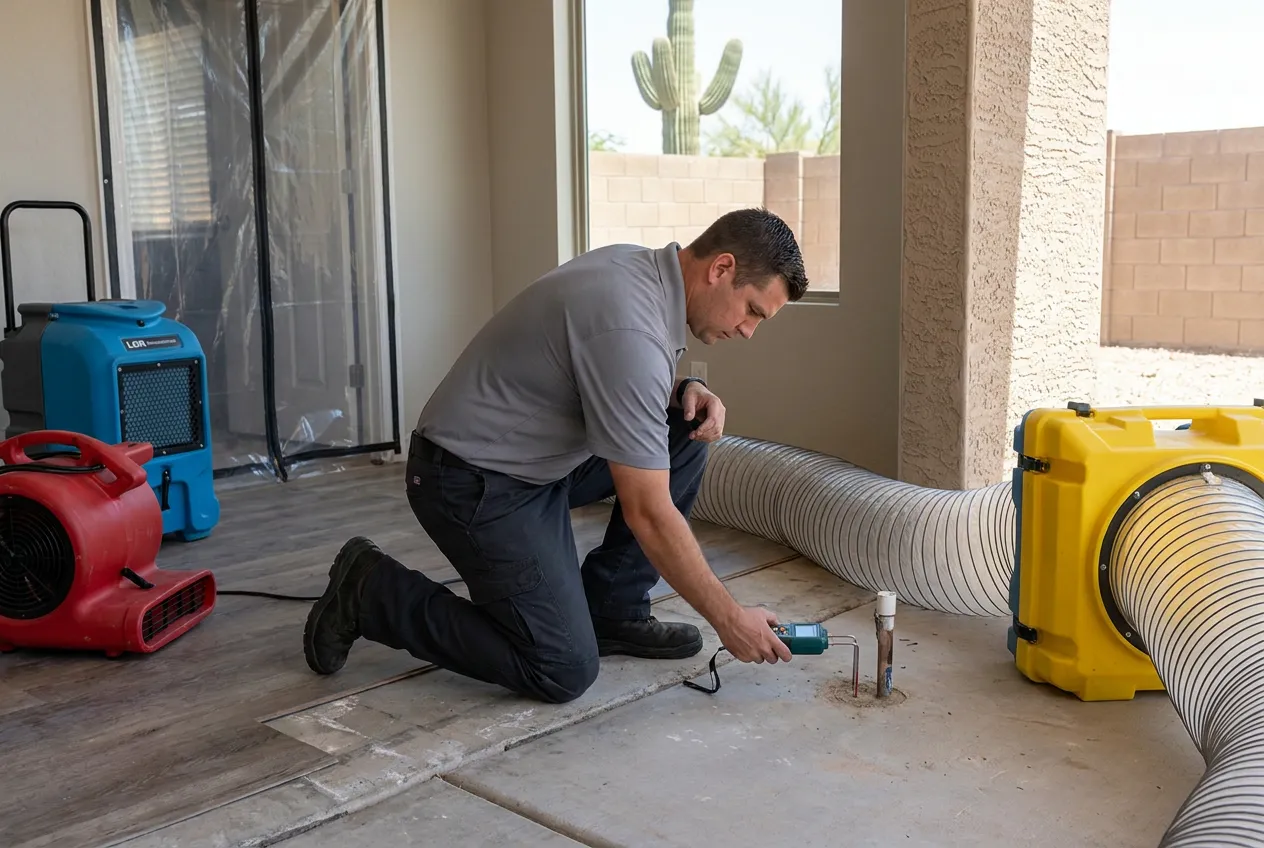
This is not a warning that Laveen homes are failing. Most are fine, and the engineering accounts for a great deal. It is a reason that the failures we do see here skew toward one category: things that break because something under them moved a little. Hairline separations at slab penetrations. Supply lines abraded where they pass through concrete. Drain lines that developed a low spot they did not have at the final inspection. The slab leak guide covers the detection side in detail, and the short version is that a slab leak in a house this new surprises people badly, because nobody expects it before the mortgage is half paid.
The Twenty-Year Birthday
The most common thing we hear in Laveen is a version of "the house is new." A 2004 house does not feel old. Its water heater is old. Its angle stops are old. Its washing machine hoses have been under pressure for two decades, and its dishwasher supply line has been quietly flexing every time the door opens.
Builder-grade components are chosen for a house that has to be finished on schedule and sold. That is not a scandal, it is how volume construction works. But it means the cheap parts across an entire subdivision came from the same pallets, went in during the same months, and reach the end of their patience together. In neighborhoods built in one push — which describes most of Laveen — that shows up as clusters. Three houses on one street, three months apart, same part.
If your house went up in the first wave, the highest-value hour you will spend on it involves a flashlight, the cabinet under the kitchen sink, the laundry connections, and the garage. Look at the braided lines and the shutoff valves. Anything crusted, weeping, or stiff is telling you something. Replacing those parts on purpose is dramatically less disruptive than replacing the flooring they ruin.
Irrigation That Never Left
Laveen still runs water the old way in places. Roosevelt Irrigation District canals and laterals cross the area, some lots retain flood irrigation rights, and horse properties on the edges keep the acreage tradition alive. That is part of what makes the place what it is, and it also means there is a lot of moving water at grade that has nothing to do with anyone's plumbing.
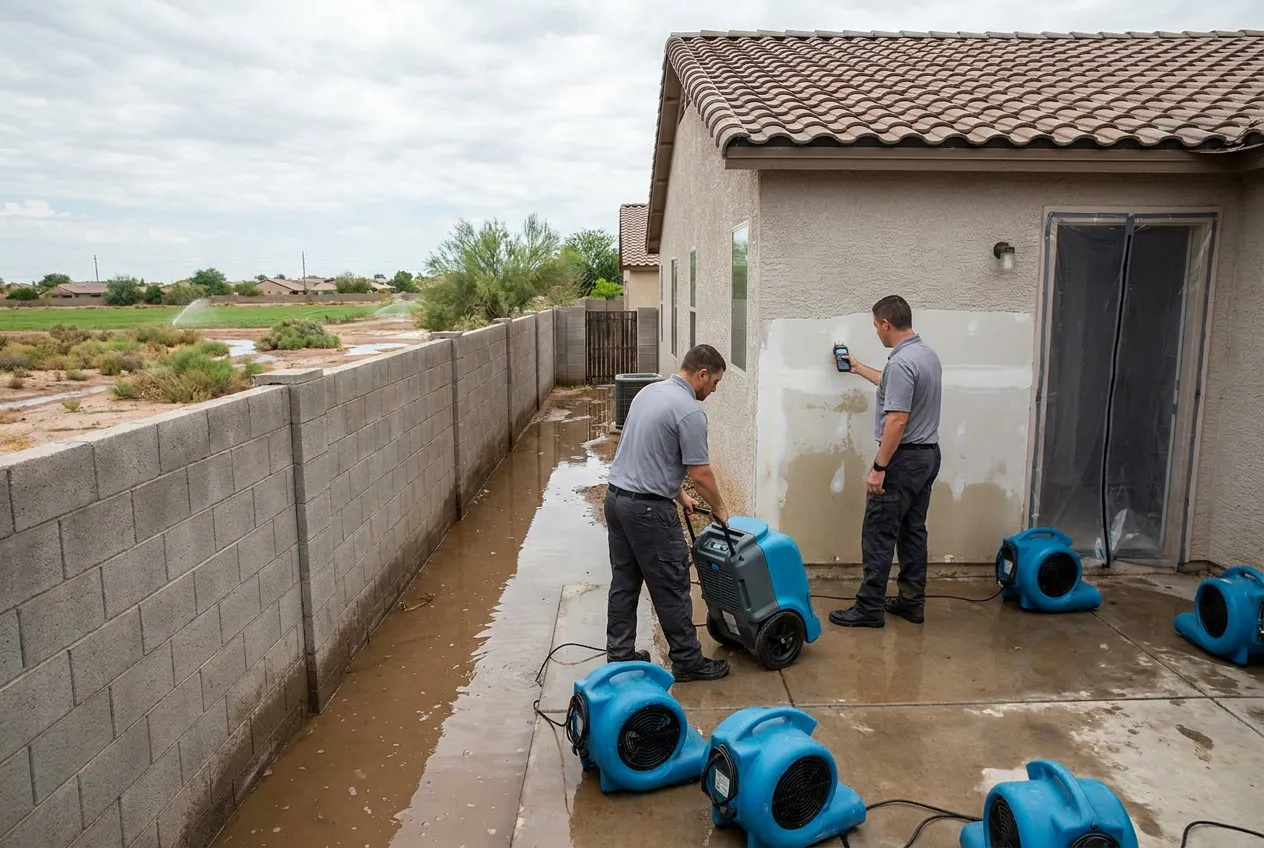
Two practical consequences. First, an irrigation event and a plumbing failure can look identical from inside the house — water at the baseboard on the side of the house facing the lateral. Finding the source is the whole job before drying starts, because drying the symptom of an active leak is money set on fire. Second, when a subdivision lot sits next to land that still floods on a schedule, the grading between them matters more than it does on a normal street.
Storm season adds the third piece. Flat lots with young landscaping shed water fast and hold it nowhere, and South Mountain sends its share west when a cell parks over it. Water that arrives from outside is contaminated from the first minute, no matter where it started, and gets handled as Category 3.
Common Questions
Can a house built in 2006 really have a slab leak already?
Yes, and we find them here. Age is only one input. Ground movement, install quality at the penetrations, and water chemistry all matter, and land with a long irrigation history moves more than raw desert does.
Water is coming in along the wall facing the irrigation lateral. Is that the canal or my pipes?
That is the first question to answer and it is answerable. A meter and a pressure check separate an outside source from an inside one, usually in the same visit. Drying before that answer exists is wasted work.
Our subdivision went up all at once. Does that change anything?
It changes when things break. Same builder, same parts, same install window means the inexpensive components tend to fail in clusters rather than randomly, so a neighbor's failure is useful information about your own house.
We're on acreage with horses, not in a subdivision. Do you come out here?
Yes. Outbuildings, well equipment, and detached structures are ordinary work. Access and the distance from the meter to the structure change the approach, not the coverage.
The floor in one room feels warm in a spot. What is that?
On a slab, a warm patch usually means a hot-water line under the concrete is losing water. It is one of the more reliable tells, and it is worth a call before the floor covering starts to lift.