
Water Damage Restoration in Maryvale
Published August 21, 2026 · Last reviewed August 21, 2026 · Water Fighters Restoration
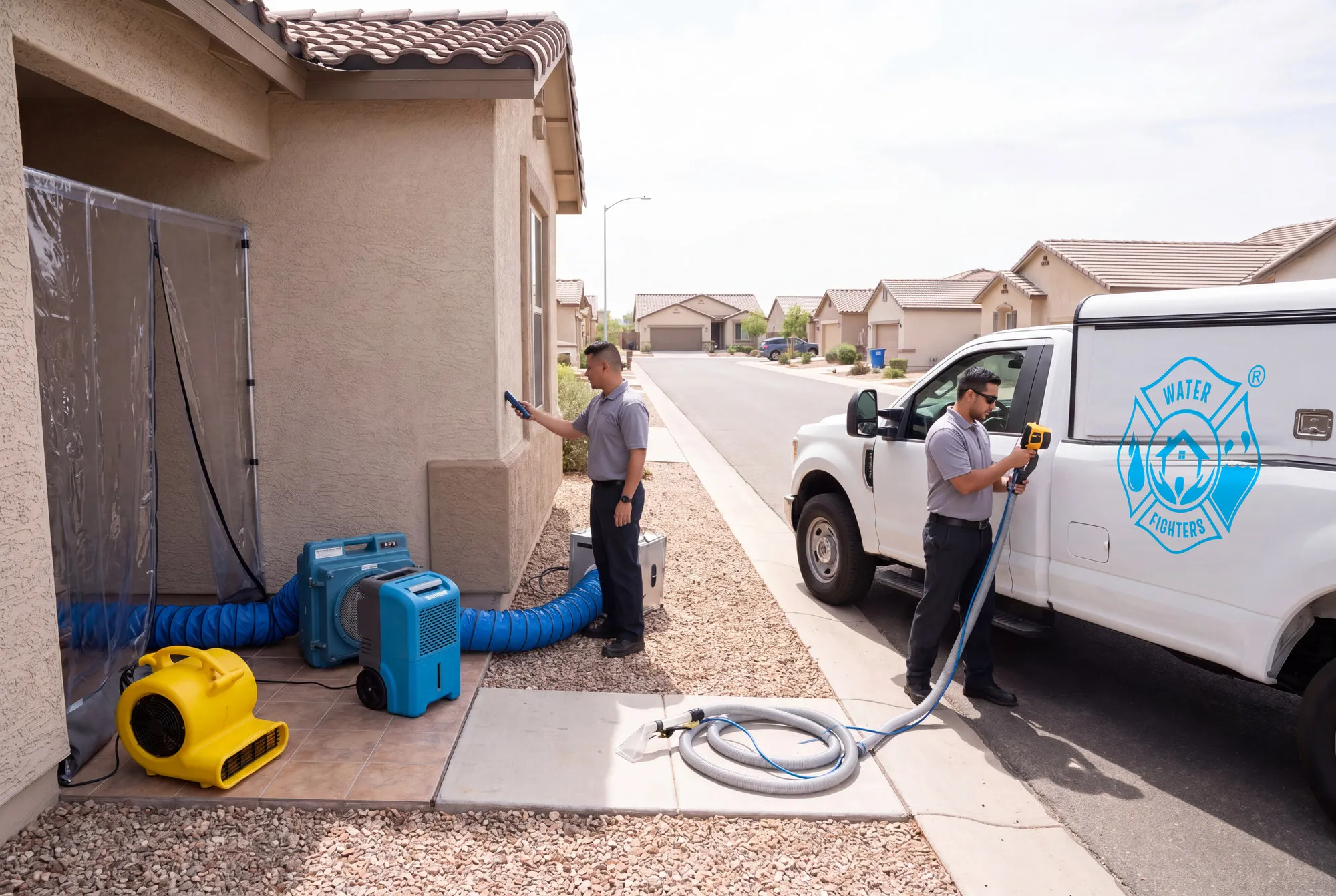
Maryvale was the first master-planned community in Phoenix, and for a while it was the fastest-growing neighborhood in the country. John F. Long started building in the mid-1950s and did not really stop for two decades. The result is one of the largest single-era concentrations of housing anywhere in the Valley — and a plumbing story that plays out street by street.
The First Suburb
The houses were built to be affordable, which meant they were built to a formula: single story, slab on grade, three bedrooms, a carport or garage, and standard materials installed the same way tens of thousands of times. That efficiency is why a working family could buy one in 1958. It is also why the failure pattern here is so predictable.
Everything in a house has a service life. When an entire neighborhood receives the same components in the same years, those service lives expire together. Sun City has this story and so does Maryvale, with one difference: Sun City residents talk about it constantly because the community organized around the topic, while Maryvale mostly finds out one house at a time.
Seventy years is a long time for plumbing. The original supply lines in these homes were commonly galvanized steel. The original drains were commonly cast iron. Neither material was a mistake in 1958, and neither was designed to still be in service now.
Galvanized on a Schedule
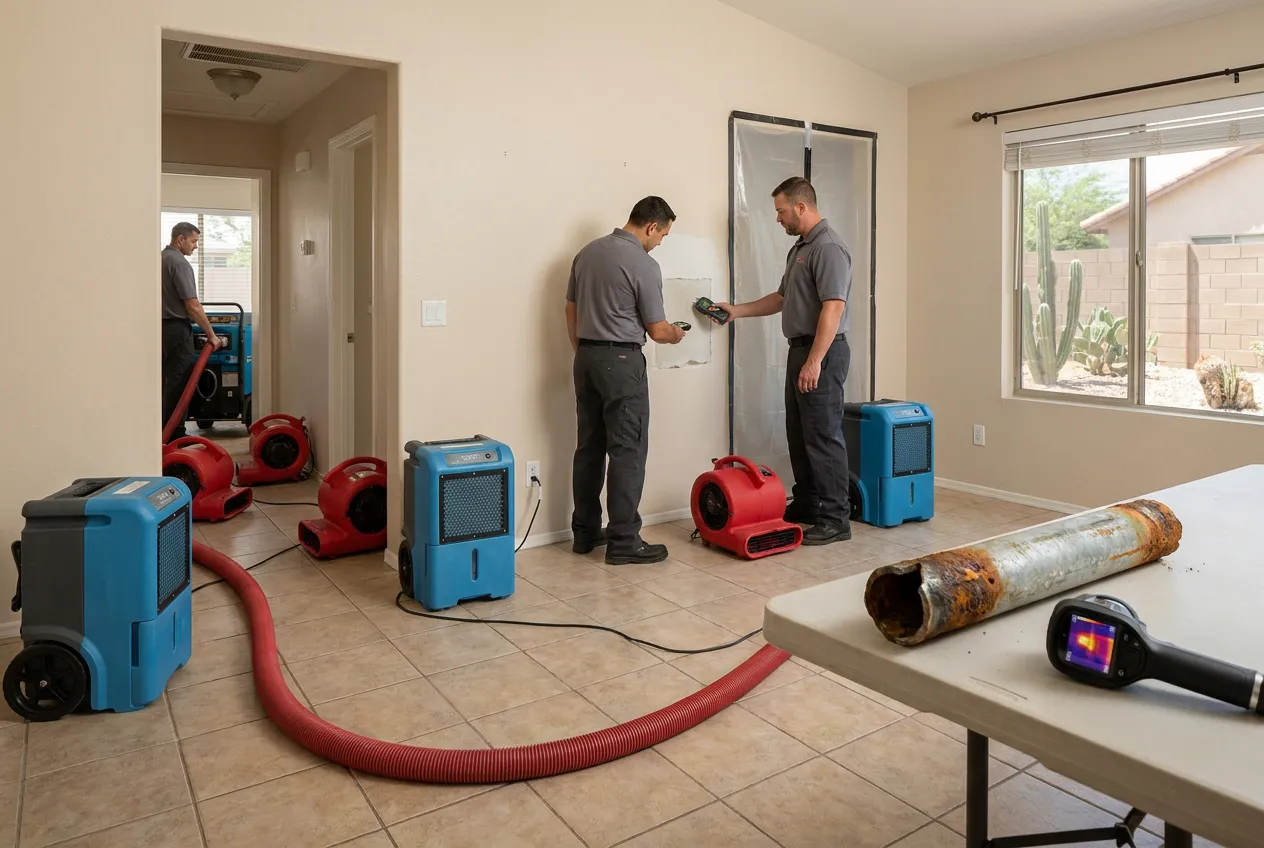
Galvanized pipe fails from the inside. Mineral deposits and corrosion build on the interior wall, the opening narrows, pressure drops, and eventually the thinned wall gives way. The whole process takes decades, which is why it feels like nothing is happening right up until something is.
The early signs are ones people live with instead of reporting. Water pressure that has slowly gotten worse. Rusty or discolored water first thing in the morning. A hot side that runs weaker than the cold. Those are not plumbing quirks in a seventy-year-old house; they are a status report on the pipe.
The failure itself usually happens inside a wall, and in a slab home there is no basement for it to drain into. It goes into the wall cavity, the bottom plate, the insulation, and out along the slab under the flooring. By the time it reaches the middle of a room, framing has been wet for a while.
Cast iron drains do the quieter version underneath, corroding along the bottom until sewage leaves the pipe under the slab. That reaches living space as a Category 3 loss and gets handled as one, with containment and sanitizing rather than a mop and a fan.
What That Means for a Family Here
Most of the people we help in Maryvale are not planning a repipe. They are dealing with what happened last night, on a budget, in a house they need to keep living in.
A few things are worth saying plainly. Fast response costs less than a slow one, every time, because the scope grows with the hours. Drywall wicks upward roughly an inch an hour, and a wall caught in the first evening is a patch, while the same wall two days later is a section. Insulation in a wet cavity does not dry in place; it comes out. Those are physical facts, not upsells, and they are why the call at eleven at night is cheaper than the call on Saturday.
The second thing: the estimate you get from us is the one your carrier gets. We photograph, meter, and log because that is what makes a claim move, and because a family should not be asked to take our word for what happened inside their wall. The cost guide explains what actually drives the number, without a price table, because the honest answer depends on what the meter says.
And if it turns out the original plumbing is the real story rather than one bad night, we will say so — the repipe conversation belongs to a plumber, and the drying and rebuild belong to us.
Common Questions
Our water pressure has been getting worse for years. Is that a plumbing problem or a city problem?
In a house of this era it is usually the pipe. Galvanized closes up from the inside as it corrodes, so pressure drops gradually. It is also the warning that comes before the leak.
The water is brown when we first turn it on in the morning.
That is corrosion sitting in the line overnight. It is not dangerous in the short term, but it tells you the interior of the pipe is deteriorating, and that is the same process that eventually opens a hole.
We rent. Who do we call?
Call us if water is moving right now, then tell the landlord or property manager. Structural drying is the owner's responsibility, and your renter's policy handles your belongings. Do not let the question of who pays delay the extraction, because the damage grows either way.
Is it worth repiping a house this old?
That is a plumber's call and a budget call, not ours. What we can tell you is what we find during a job — which sections failed, what condition the rest is in, and whether the pattern points at the pipe or at one bad fitting.
Everything in the house is original. Where do we start?
The water heater, because a tank failure floods the most for the least warning. Then the angle stops and supply lines at every fixture. Those are inexpensive parts that cause expensive losses.