
Water Damage Restoration in Encanto, Phoenix
Published September 2, 2026 · Last reviewed October 8, 2026 · Water Fighters Restoration
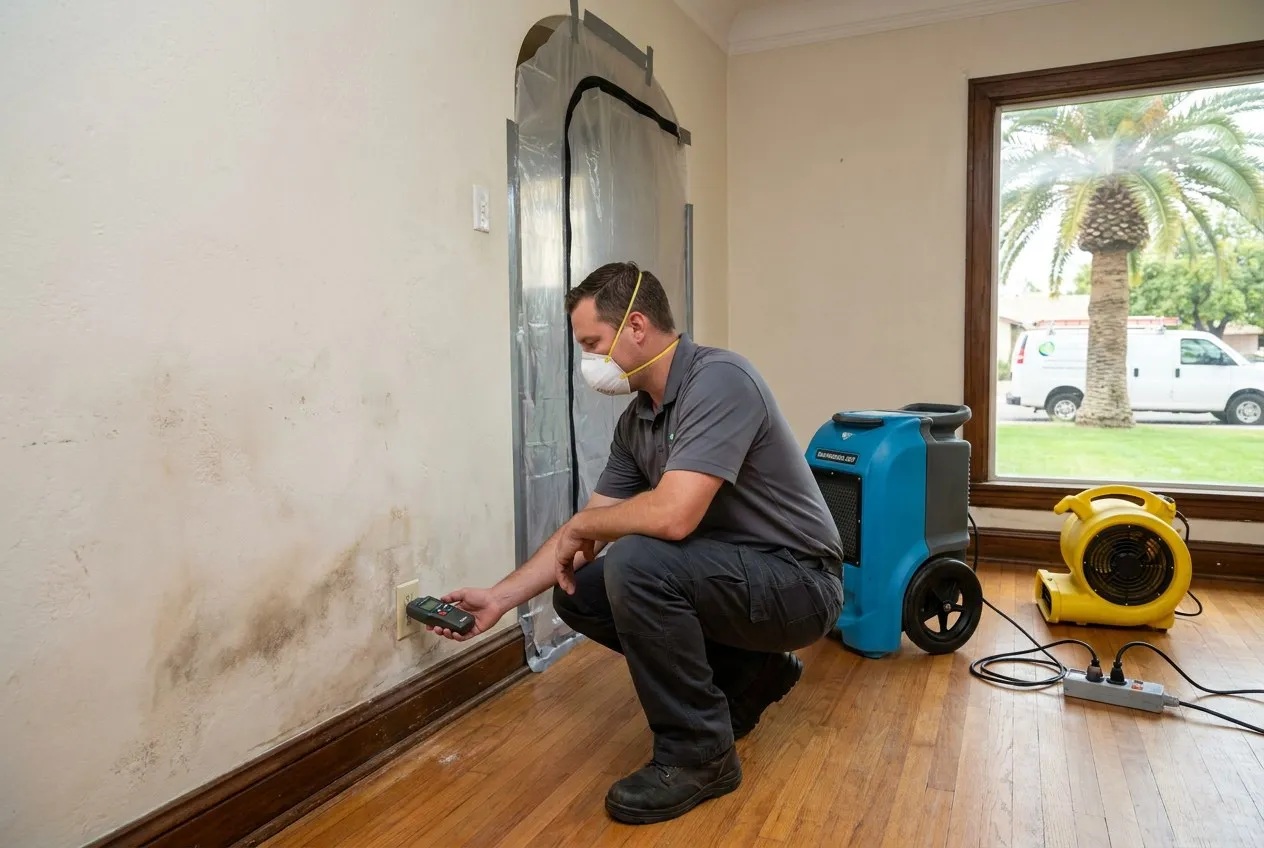
Encanto-Palmcroft was built as a garden suburb when Phoenix was learning how to control water at city scale. Its homes arrived mainly from 1927 through about 1940. Its streets curve around mature landscapes and hand-finished houses.
One part of that landscape still carries an unusual water system. The Encanto subdivision was built with eight-inch concrete irrigation pipes beneath each lot. Surface valves released water so slightly bermed lawns could flood by design.
Palmcroft does not share that special system. The distinction matters when wet soil appears beside a ninety-year-old wall.
The district lies between 7th and 15th Avenues, not Streets. The Central Phoenix restoration page covers the tower corridor to the east. The Coronado restoration page covers a separate historic area farther east.
Irrigation beneath the lawn changes source tracing
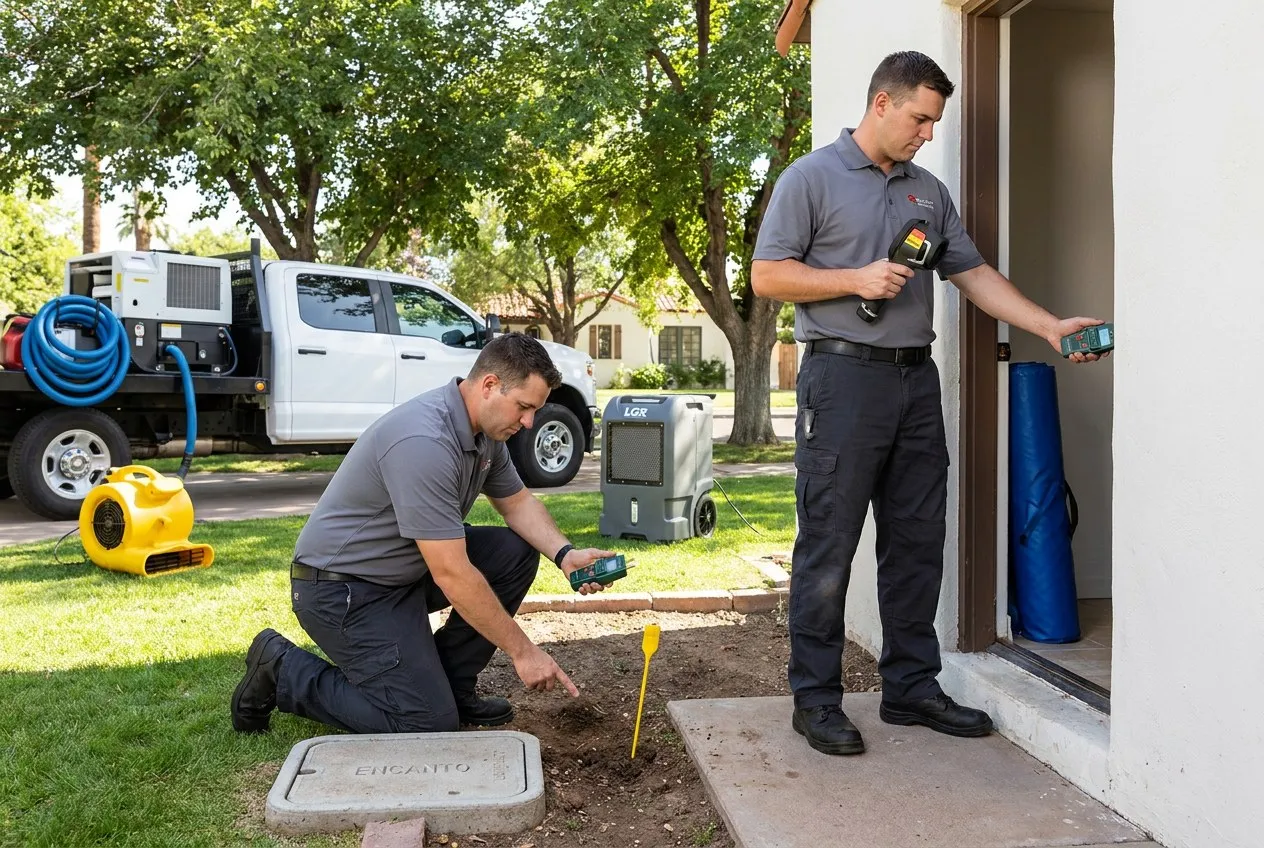
Many Encanto lots historically used flood irrigation, and some still do. Water enters the yard through buried concrete pipe and surface valves. The lot's shallow berm holds it long enough to soak the landscape.
That water should remain outside the structure. A broken irrigation pipe, changed grade, failed valve, or wall opening can create a new route toward the house.
A wet foundation edge after irrigation is not automatically a slab leak. A slab leak is not automatically irrigation. Timing supplies the first clue.
Irrigation moisture often follows a scheduled release and spreads from the yard inward. A pressurized plumbing leak may continue between irrigation cycles. Drain leakage usually appears when a fixture is used. Irrigation water crossing soil into the house is handled as Category 3.
The Arcadia restoration page describes another Phoenix area shaped by flood irrigation. Its housing and water systems are different, so the local details should not be merged.
Four clues help identify the water source
- Timing: Note whether moisture appears after irrigation, rain, fixture use, or all day.
- Location: Compare the wettest exterior soil with the wettest interior wall or floor.
- Water movement: Watch for an active meter, pressure loss, or a drain-related pattern.
- Material depth: Moisture readings show whether water is at the surface, beneath flooring, or inside plaster and lath.
The goal is not to choose a source from one clue. It is to build a pattern before historic material is opened.
Water Fighters Restoration is Open 24 hours, 7 days. Crews stage as one licensed team, Valley-wide, with the promise on-site within an hour.
Plaster, supply pipe, and drains age differently
Encanto-Palmcroft's period of significance runs from 1920 through 1952. The housing stock includes Spanish Colonial Revival, Tudor, Monterey, Pueblo Revival, and Moderne examples.
Unrenovated homes may still carry galvanized supply and cast-iron drainage from early construction. Remodels often replaced only the accessible section. One wall can therefore contain several generations of work.
Galvanized pipe fails from the inside. Corrosion narrows the opening and thins the wall. Cast iron can crack, scale internally, or fail at joints. Wastewater released from a drain is Category 3. Age sets the inspection priority but does not confirm failure.
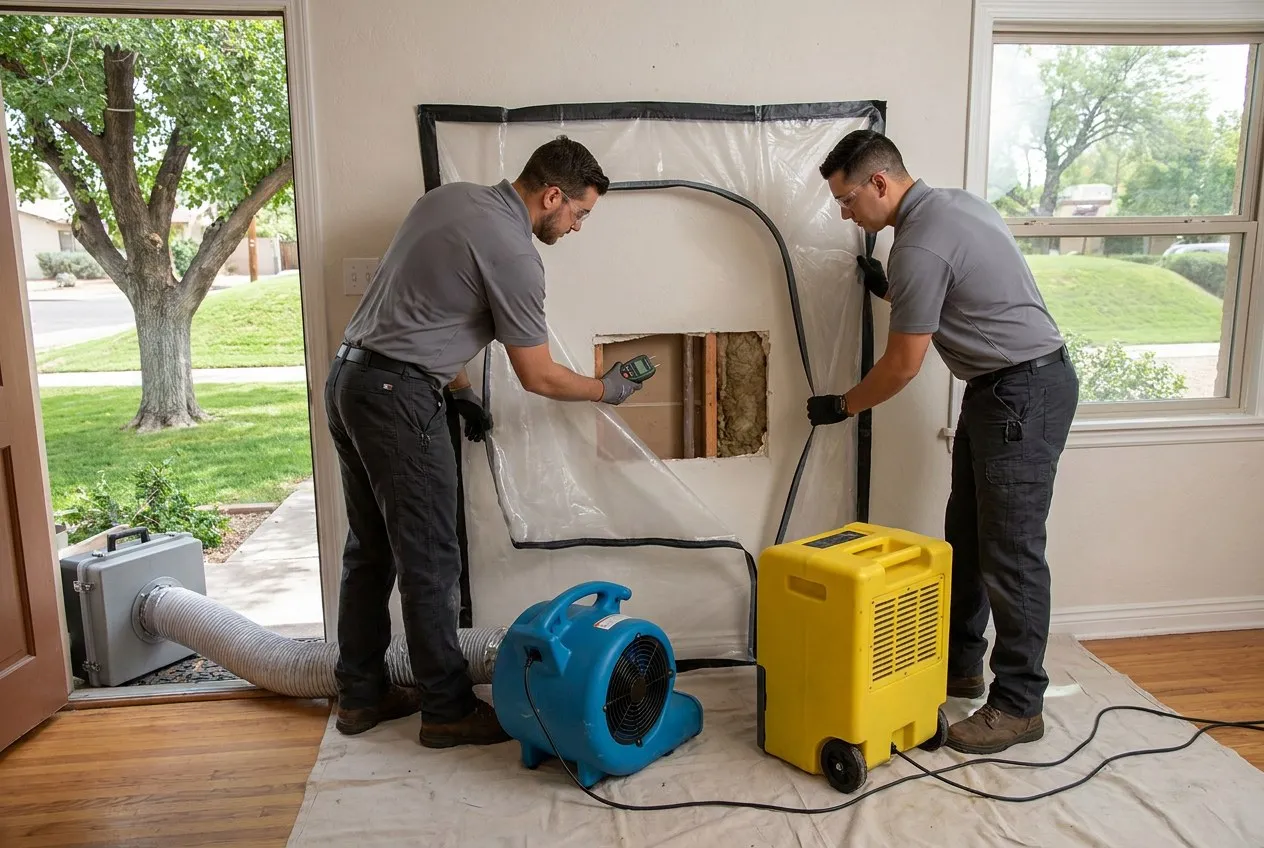
Plaster and lath can hold water beyond the edge of a visible stain. The surface may feel cool before it looks damaged. A moisture map helps decide whether drying in place is reasonable or whether controlled access is needed.
The mold remediation page explains why retained moisture matters inside enclosed assemblies. The slab leak guide covers concealed supply losses beneath the floor.
Below-grade water needs a different map
Basements are uncommon in Phoenix, but some older homes have below-grade rooms or partial cellars. Water can enter through a wall joint, window well, stair opening, plumbing penetration, or interior pipe.
The lowest visible puddle does not always identify the entry point. Water follows gravity after it enters, so technicians compare upper wall edges, floor joints, and exterior grade.
Outside water that crossed soil is handled as Category 3. Cleanup then includes contamination controls, removal decisions for affected porous material, cleaning, and measured drying. It is not treated as clean rainwater.
Historic layers affect safe demolition
A wet plaster wall may also contain old paint, patch compounds, adhesives, or other concealed layers. Lead paint and asbestos concerns are evaluated before disturbance when the age and material call for it.
Water Fighters Restoration is an EPA Lead-Safe Certified Firm. Suspect asbestos material is tested and handled through appropriate professional procedures. Homeowners are not directed to scrape, cut, or sample it themselves.
Repeated chimney staining deserves a source check
Brick chimneys and their roof transitions can create a narrow storm-entry path. Water may enter at flashing, masonry joints, or an adjacent roof detail. The stain can dry between storms and look old.
A current inspection compares the stain with moisture readings and recent weather. Repeated wetting can affect plaster, wood framing, and finishes even when no water reaches the floor.
One team does mitigation and rebuild. Necessary opening, drying, plaster repair, and finish restoration can remain under one documented scope.
Water Fighters Restoration is IICRC Certified 70192944 · AZ ROC 324471 · ROC 324468 · EPA Lead-Safe Certified Firm · Licensed, Bonded & Insured.
Common Questions
Can lath-and-plaster walls be dried in place after a leak?
Sometimes, if the plaster remains bonded and the assembly can release moisture. Technicians map the full wet area, inspect concealed cavities, and monitor readings before deciding whether controlled removal is needed. Hidden cavity moisture is covered in the Phoenix mold guide.
What changes when water reaches a rare below-grade room in Encanto?
The inspection must trace both the entry point and the lowest collection point. Outside water crossing soil is handled as Category 3 and belongs in the storm damage response.
How can I tell an old stain from an active leak in a ninety-year-old house?
An active area usually shows elevated moisture, a changing edge, or a pattern tied to rain or fixture use. Painted-over discoloration alone cannot date the leak, so readings and source testing matter.
How do lead paint and old asbestos layers change wet-plaster demolition?
They require material evaluation and controlled professional work before disturbance. Water Fighters Restoration is an EPA Lead-Safe Certified Firm, and suspect asbestos material is handled through appropriate testing and licensed procedures.
Why does water keep appearing around a brick chimney during storms?
The route may be at flashing, masonry, or an adjacent roof detail. Storm water gets its category on site, water that crossed soil is handled as Category 3, and sealing the visible stain does not correct the entry path.