
Ceiling Water Damage in Phoenix
Published September 1, 2026 · Last reviewed October 8, 2026 · Water Fighters Restoration
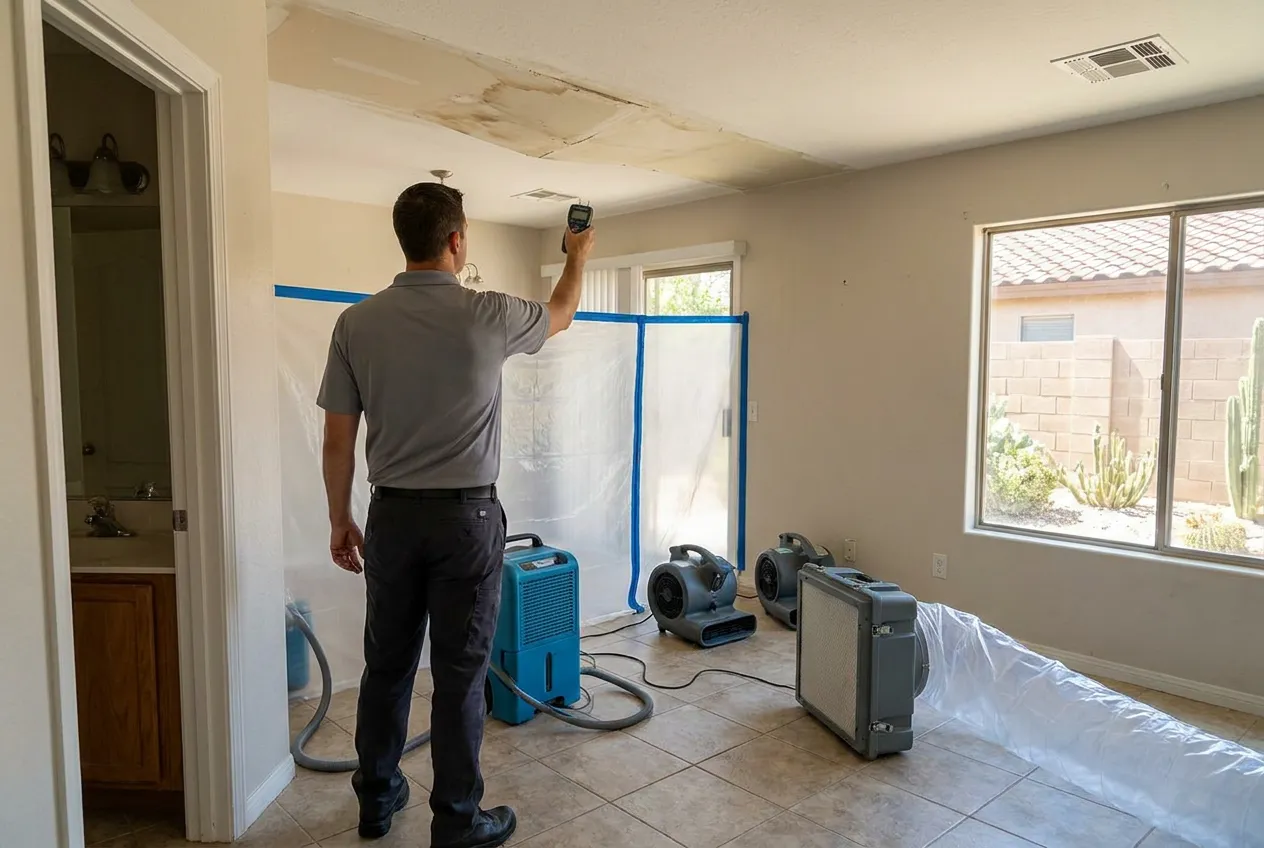
A ceiling stain is evidence. A drip is active evidence. A bulge is a reason to move out from under it.
Water weighs 8.34 pounds per gallon. Half-inch drywall weighs about 1.6 pounds per square foot while dry. Once saturated, the gypsum core softens, the paper face stretches, and fasteners can pull through.
The ceiling does not need to look dramatic to be unsafe. A low sag, widening seam, or soft area around a light can mean water is collecting above the visible surface.
Water Fighters Restoration is Open 24 hours, 7 days. The response promise is on-site within an hour.
What to do in the next ten minutes
- Move people and pets out from under the wet area. Give the sag or drip a wider boundary than it appears to need.
- Stay clear of lights, fans, and wiring near the water. Do not touch a wet fixture or use a ladder beneath it.
- Stop the source only when the shutoff is safely accessible. A known toilet, appliance, or supply-line valve may be isolated without entering the damaged area.
- Do not poke the bulge casually. Opening it without controlling the room can release water, ceiling material, insulation, or suspect texture.
- Photograph from a safe position. Capture the stain, nearby fixtures, floor below, and time of discovery.
- Call for an inspection. The visible spot rarely shows the full moisture boundary.
A safely placed bucket may protect the floor. It does not make the ceiling stable.
What the stain can and cannot tell you
The stain's shape records how water moved through the ceiling surface. It does not reliably identify the source.
A brown ring often forms at the edge of a wet area as water carries dust or material residue outward. A narrow line may follow a drywall seam or framing member. A diffuse patch can reflect wet insulation spreading moisture across the board.
A stain that darkens during rain points toward a roof or flashing path. It does not prove where the opening is. Wind can drive water under one roof detail before it travels along framing and appears elsewhere.
A mark that returns when the air conditioner runs may involve condensate. A stain below an upstairs bathroom may come from a supply line, drain, toilet, shower assembly, or overflow.
Technicians still check the area above, adjoining ceiling bays, walls, and floor below.
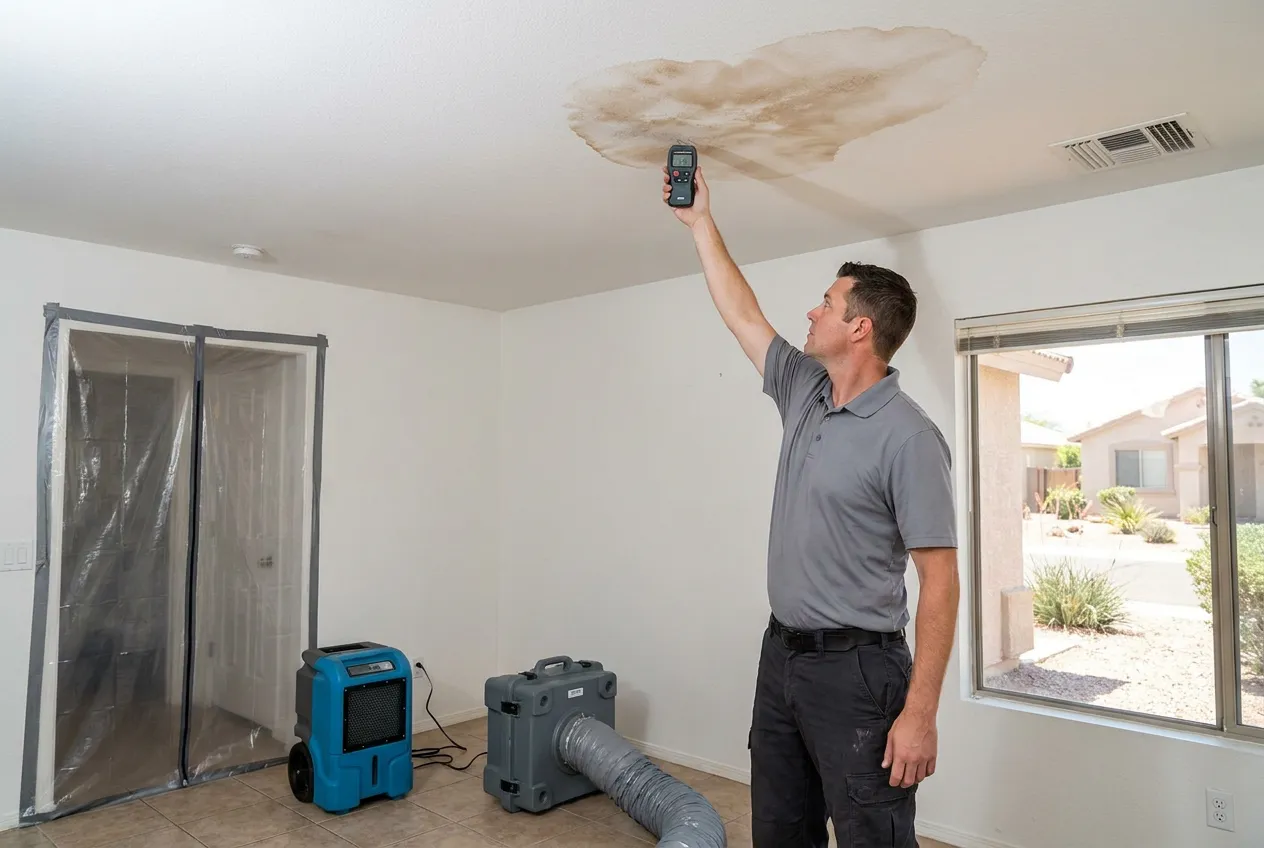
Why a ceiling bulge is urgent
A bulge means the ceiling surface has deformed under moisture and load. Wet drywall loses the bonds that give the gypsum core strength.
A few pooled gallons add substantial weight above an area that is already softer than it was when dry. The board can sag, tear around fasteners, and release without a long warning.
A sagging ceiling is generally not salvageable. Drying equipment cannot restore lost shape and structural integrity to a board that has pulled loose or broken down.
The safe plan is controlled. The room is cleared. Electrical and overhead conditions are assessed. Water is released or material is removed by professionals under a protected work area.
Source patterns change with the home layout
Many single-story Phoenix homes place air handlers in the attic. Not all do. Rooftop package units and closet systems are also common enough that the mechanical layout must be confirmed.
In an attic system, a condensate overflow can soak insulation and ceiling drywall. Attic supply lines can create a similar path. During storms, roof and flashing failures may send wind-driven water through the same assembly.
The storm-damage restoration page covers roof-entry work. The monsoon flood guide explains why wind direction and runoff conditions matter.
Some Phoenix homes also have water heaters in attic spaces. A tank, pan, fitting, or connected line can affect a broad ceiling area before water reaches the room. See the water-heater flooding guide for that loss pattern.
In a two-story home, the first check often moves upstairs. Bathrooms, laundry rooms, and supply or drain lines can place water directly over finished space.
The room below still needs a full inspection. Water may enter a wall, follow a joist, or collect above a ceiling several feet from the fixture.
Roof and storm water get a category on site
Water entering from outside gets its category on site. Monsoon rain that passed through roofing, flashing, vents, or wall openings is handled as Category 3 when the inspection finds it picked up contamination on the way in, and water that crossed the ground outside is handled as Category 3 from the start.
The water may cross roof dust, bird or animal residue, insulation, and concealed materials before reaching the ceiling. It is not treated as a clean-water loss because it looks clear in the bucket.
Professionals establish containment, remove affected porous materials when needed, clean remaining surfaces, and dry the assembly under measured conditions.
The emergency flood cleanup service explains the immediate response when water has spread beyond the ceiling and into rooms below.
Before opening a popcorn ceiling, test the material
The common statement that popcorn ceilings were banned in 1977 is wrong.
The 1977 Consumer Product Safety Commission ban covered certain asbestos-containing patching compounds and fireplace ash. It did not create a blanket ban on popcorn ceiling texture.
Texture restrictions came through Clean Air Act rules in 1973 and 1978. Existing stock remained in use, so asbestos-containing ceiling texture continued to appear into the mid-1980s.
OSHA treats surfacing material in pre-1981 buildings as presumed asbestos-containing unless testing shows otherwise. For practical safety, homes built before the 1980s are highest risk. Treat any pre-1990 popcorn ceiling as suspect until tested.
That pre-1990 date is a safety margin, not a regulatory cutoff. Lab analysis is the only way to know whether the sampled texture contains asbestos.
Wet texture is less likely to release fibers while it remains wet. The hazard is disturbance and dried debris. Scraping, drilling, puncturing, or tearing suspect material can spread it beyond the original wet area.
Water Fighters Restoration offers asbestos testing. Suspect material is not opened as a casual step in finding the leak.
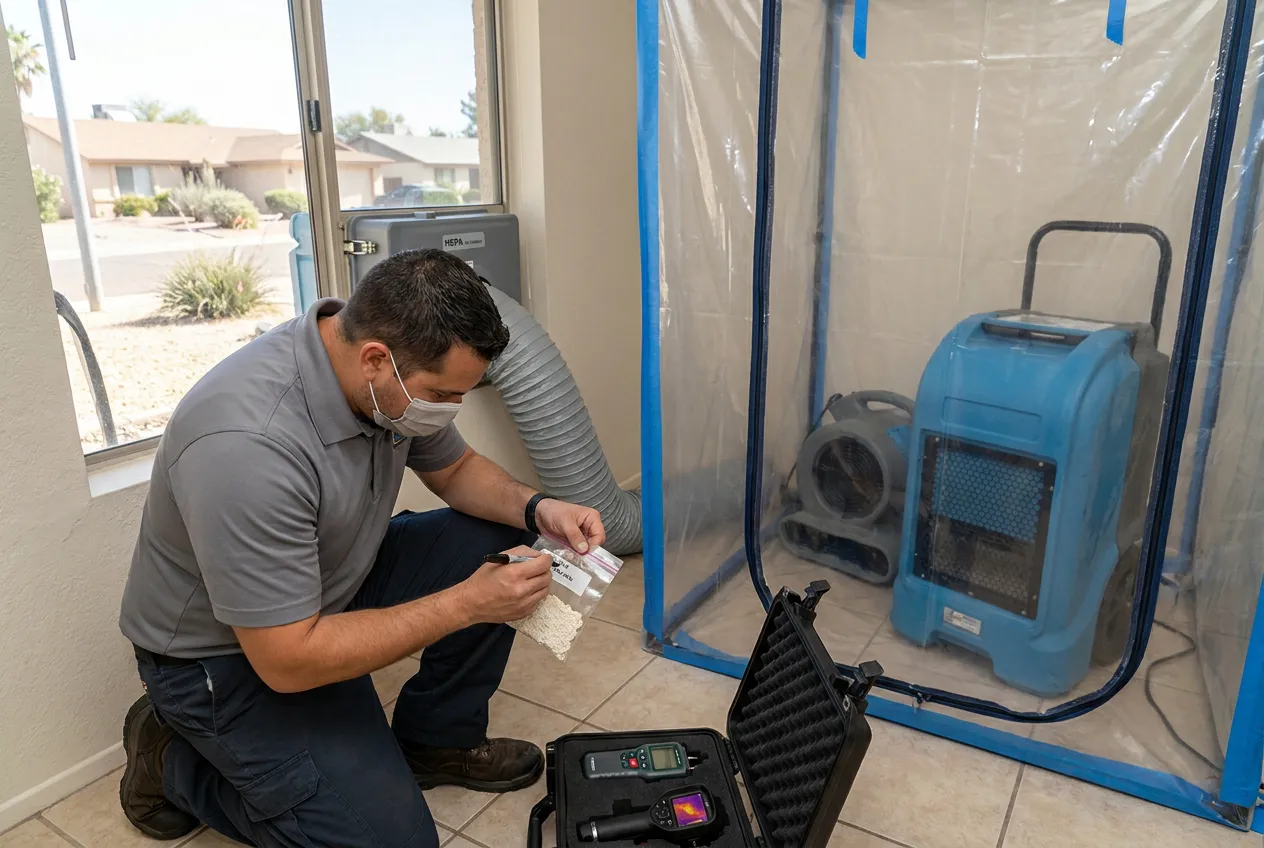
Professional ceiling mitigation follows the water upward
The first inspection begins below the stain and continues above it when safe access exists. Technicians check the visible ceiling, nearby walls, insulation, framing, mechanical equipment, and the likely source room.
Moisture readings define the affected boundary. Source confirmation and direct material readings guide the work.
Standing or released water is extracted. Unsalvageable sagging drywall is removed under controlled conditions. Wet insulation is evaluated by contamination, condition, and access.
Drying equipment is placed for the open assembly, not aimed at an intact ceiling and left to guess. Monitoring shows whether framing and remaining materials are responding.
The water damage restoration service covers mitigation through repair.
Documentation should connect the stain to the repair
A useful file records the discovery time, source status, room layout, ceiling condition, moisture boundary, photographs, removal, equipment, and monitoring results.
If a plumber, roofer, HVAC contractor, or asbestos laboratory is involved, those records should identify their part of the sequence. Coverage depends on the policy and cause, not on a contractor's promise.
One team does mitigation and rebuild. When ceiling board, insulation, texture, paint, trim, or adjacent wall material must be removed, the repair stays connected to the documented loss.
Water Fighters Restoration is IICRC Certified 70192944 · AZ ROC 324471 · ROC 324468 · EPA Lead-Safe Certified Firm · Licensed, Bonded & Insured.
Common Questions
What does a brown ring around a ceiling stain mean?
It usually shows the outer edge of prior water movement, where dust or material residue collected as the area dried. The ring does not identify the exact source, so the ceiling bay and area above still need a water-damage inspection.
Why is sagging ceiling drywall generally unsalvageable?
Saturation weakens the gypsum core, stretches the paper face, and can pull the board through its fasteners. Drying does not restore lost shape or structural integrity, which calls for professional water restoration.
Why can an attic condensate stain appear several feet from the air handler?
Condensate can follow framing or settle through insulation before reaching the ceiling surface. The stain may mark the lowest exit, not the source, which requires a wider water-damage inspection.
Does a 1977 construction date prove popcorn texture is asbestos-free?
No. The 1977 ban did not apply broadly to popcorn ceiling texture, and existing asbestos-containing stock remained in use later. Treat pre-1990 popcorn texture as suspect until a laboratory test says otherwise.
Why can the wet ceiling area be larger than the visible stain?
Water can spread through insulation, along framing, and across the back of drywall before reaching the painted face. Moisture mapping therefore continues past the stain and into nearby ceiling bays and walls.