
Checking a snowbird home for water damage after a summer away
Published November 18, 2026 · Last reviewed November 18, 2026 · Water Fighters Restoration
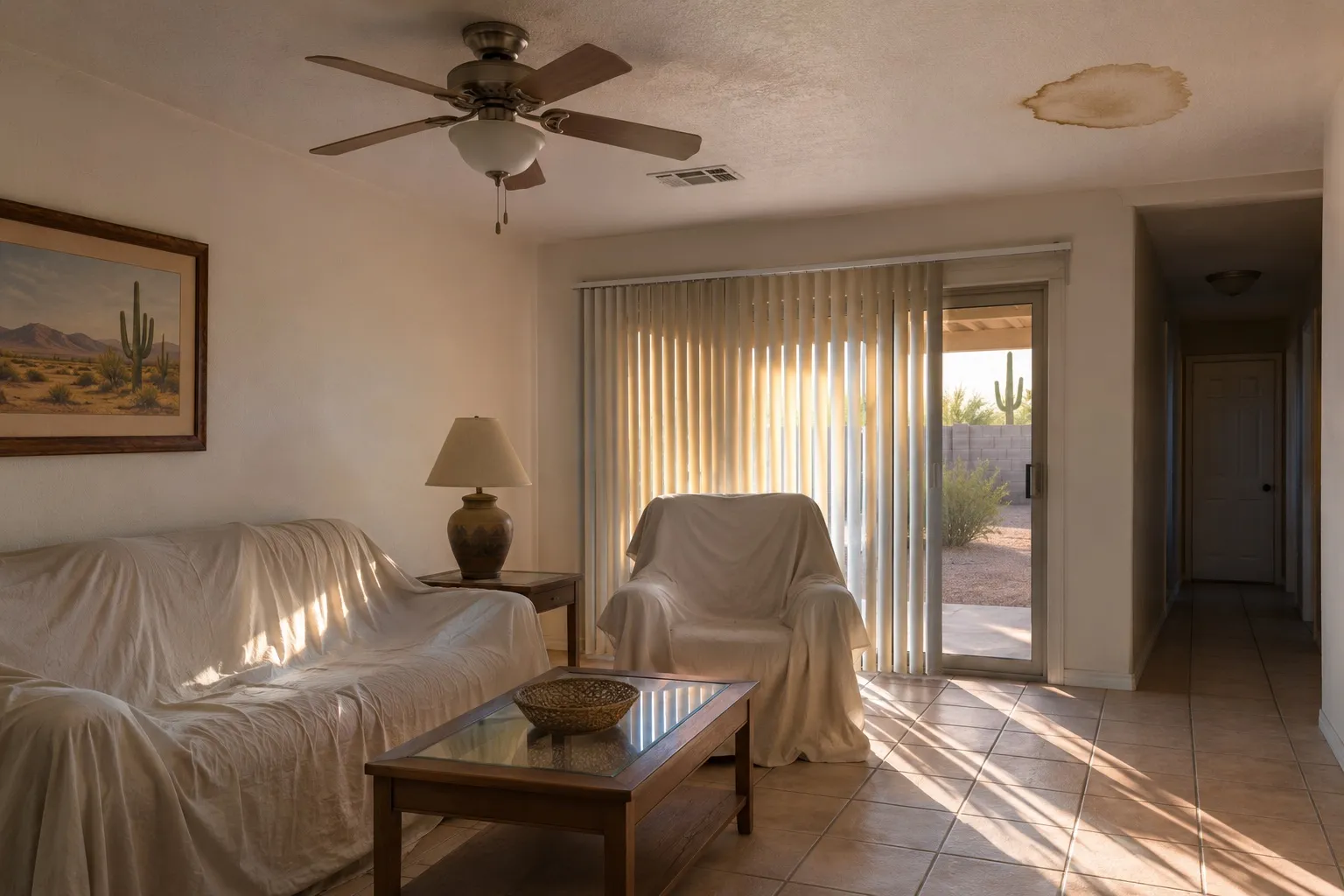
Sheets still cover the sofa, and the house has been shut since you left. From the doorway, nothing looks wet. Before you run a tap or switch on the water heater, give the house an hour and bring the water back one fixture at a time. If something leaks, you'll know which one it was.
The first hour back, in order
Start outside, where the water comes in. The Arizona Municipal Water Users Association (AMWUA) says the house valve is generally on the supply riser at the front or side of the house, under a hose bibb. If you left the valve open, close it by hand.
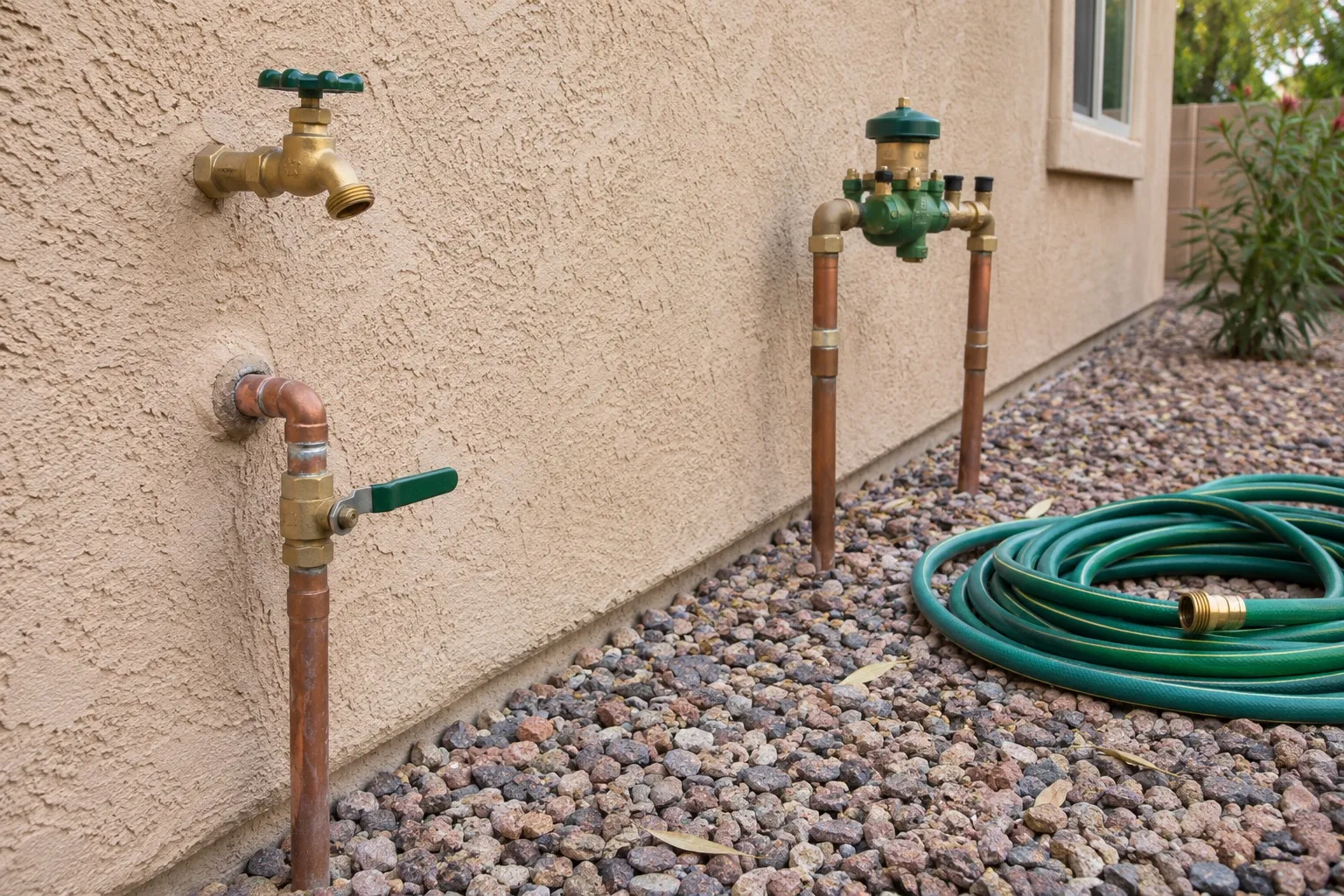
- With the irrigation controller idle and the pool not filling (or their valves closed), read the water meter before you turn anything on. The hidden water damage guide shows how. If the meter moves while the house valve is still shut, that points to the service line or a branch that bypasses the valve. Call your water provider (EPCOR in Sun City and Sun City West) and a plumber. The valve in the meter box is the provider's to turn.
- Open the house valve slowly, by hand; AMWUA warns that old or corroded valves can break. Once the pipes go quiet, read the meter again with every tap off. If it still moves, something past the valve is taking water, and a plumber can trace it.
- Look at the floor and any drain pan around the water heater before its power or gas goes back on. An electric tank should be full first, so run a hot tap until it flows steadily. To relight a gas heater, follow its label or call a plumber.
- Turn on each toilet's supply valve and watch the tank fill and the connection behind it. Flush once and stay until it refills.
- Open the shutoff valves under each sink and check the connections with a flashlight and a dry paper towel. Run water into every drain to refill the traps; the City of Phoenix notes that trap water can evaporate in a vacant house. Check the washer hoses before the first load.
- If the air conditioner ran all summer, its drain carried condensate all summer. Look at the ceiling near the attic hatch or the air-handler closet, and at the backup drain outlet outside if there is one. That outlet only warns someone who sees it drip. A water-level switch shuts the system off before the pan overflows, so a house where one tripped may have sat without cooling.
- Check every ceiling. A dry stain can still hide wet material, and a moisture reading tells an active leak from an old one.
- From the yard, look for slipped roof tiles and broken pieces in the gravel; walking the roof is a roofer's job. Storm reports to the National Weather Service in 2026 included hail estimated at up to 2 inches in the Glendale and north Phoenix area on Oct. 21. That was three weeks after the Weather Service's monsoon window, June 15 to Sept. 30.
- Smell each closet and sink cabinet as you open it. EPA says you may suspect hidden mold "if a building smells moldy, but you cannot see the source." It suggests hiring an experienced professional.
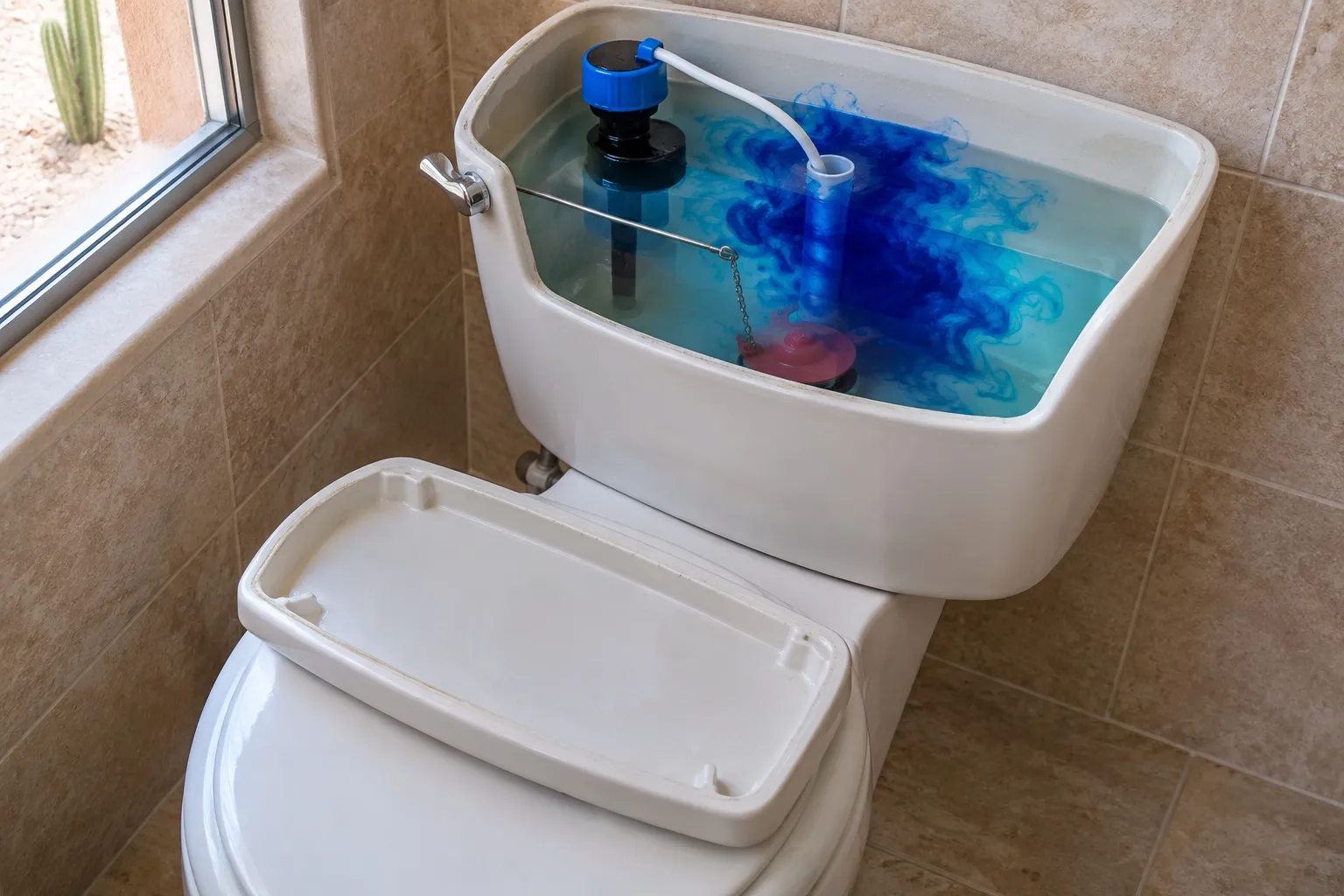
Once the house is running again, give each toilet EPA's dye test. Put a few drops of food coloring in the tank and wait 10 minutes. If color shows up in the bowl, EPA says you have a leak, with tank water seeping into the bowl.
If you find water
Close the house valve again and photograph everything wet before anything gets moved. Call your insurer promptly, then call (602) 884-5325. Water Fighters Restoration is Open 24 hours, 7 days, and on-site within an hour. One team does mitigation and rebuild, and the free estimate is the same one your insurer receives.
Clean water that sat for weeks isn't treated as clean anymore; the category gets set on site. Rain through the roof also gets its category on site, and storm water that came in at ground level is Category 3. EPA says to dry wet areas within 24 to 48 hours to prevent mold growth. A leak that ran for weeks is long past that, so mold decisions belong to a professional.
What insurance policies say about an empty house
The 2011 edition of the standard HO 3 homeowners form says "vacant for more than 60 consecutive days" twice. Past that point, it stops covering vandalism to the house, including damage that follows from the vandals' acts. Broken glass loses coverage too, except breakage from earth movement.
Insurers' own policies can read differently. The Insurance Information Institute says most homeowners policies have a vacancy clause that limits or excludes coverage once a home is unoccupied, typically for 30 to 60 consecutive days. Ask your agent what yours says. The insurance claim guide covers how to tell new damage from old.
Before you leave next spring
Close the house valve, plus the valves on any irrigation or pool line that bypasses it, unless that line should keep running. The Sun City Posse, a volunteer nonprofit, tells departing residents to make sure the irrigation works properly and to disconnect an electric water heater. Take drop-in cleaning tablets out of the toilet tanks. New York City's Department of Environmental Protection says they can corrode the flapper in a toilet left unflushed for a long time.
Someone with a key to the house should look inside while you're gone. The Insurance Information Institute suggests a weekly check by a neighbor, family member, or property manager, and a call to your insurer before any long absence. In Sun City, the Posse's outside-only Vacation Watch needs a new request for each trip, at least seven days ahead. The Phoenix water damage handbook has a shorter list.
Common Questions
Our house was furnished but empty all summer. Does the insurance policy treat it as vacant?
It depends on the policy's wording. In consumer guidance, the National Association of Insurance Commissioners calls a furnished house with no occupants unoccupied, and an empty, unfurnished one vacant. The 2011 standard HO 3 form doesn't define "vacant," and the Insurance Information Institute uses the two words interchangeably. Ask your agent which applies, and tell the insurer before the next long absence.
Does the Sun City Posse's Vacation Watch check inside the house?
No. The Posse, a volunteer nonprofit, checks the outside of the home the day after you leave and about every two weeks until your Return Date. If volunteers see a problem, they notify the local contact you named. A leak under a sink doesn't show from outside. In Sun City West, ask the Posses there what their check covers.
Does closing the house valve also shut off the sprinklers and the pool fill?
Not always. AMWUA's home water guide says some supply lines bypass the house valve and have their own valves, and the irrigation shutoff usually sits next to the backflow preventer. If the meter still moves with all those valves closed, call your water provider and a plumber.
We're flying north for the holidays in December. What does a standard homeowners policy say about frozen pipes while we're gone?
The 2011 standard HO 3 form excludes damage from frozen plumbing. The exception is if you used reasonable care to keep heat in the building, or to shut off the water and drain the systems. The Insurance Information Institute suggests a thermostat of at least 55 degrees in winter. If the house has fire sprinklers, the form expects the water and the heat both kept on. Policies vary, so check with your agent. The freeze warning guide covers what can freeze in a Valley house.
Should the air conditioning stay on while the house sits empty all summer?
One Arizona fire district has said yes. In a 2017 release, the Green Valley Fire District told departing winter visitors to leave thermostats at 78 to 85 degrees. The district, south of Tucson, is now the Santa Rita Fire District. EPA advises keeping indoor humidity below 60 percent where possible. A running system makes condensate all summer, so have your HVAC contractor check the drain and the backup before you go.