Freeze Warning in Phoenix: what to protect tonight
Published November 18, 2026 · Last reviewed November 18, 2026 · Water Fighters Restoration
The forecast says hard freeze, and your weather app shows a Freeze Warning for tonight. Phoenix Freeze Warnings list possible damage to "unprotected outdoor plumbing" among their impacts. At a desert house, the pipes at risk are outdoors or in space the house doesn't heat.
What can freeze at a Valley house
The American Red Cross list of pipes that freeze most often starts outdoors, with hose bibs, pool supply lines, and sprinkler lines. It goes on to supply pipes in unheated attics and garages and pipes along outside walls with little or no insulation. A Valley house can add the plumbing at the pool and spa equipment, the supply line to an evaporative cooler, and the lines at a water softener in the garage.
Every irrigation system needs a backflow preventer, according to the Arizona Municipal Water Users Association. Phoenix's plumbing code keeps the device out of pits and vaults and at least 12 inches above grade, so it stands in the open.
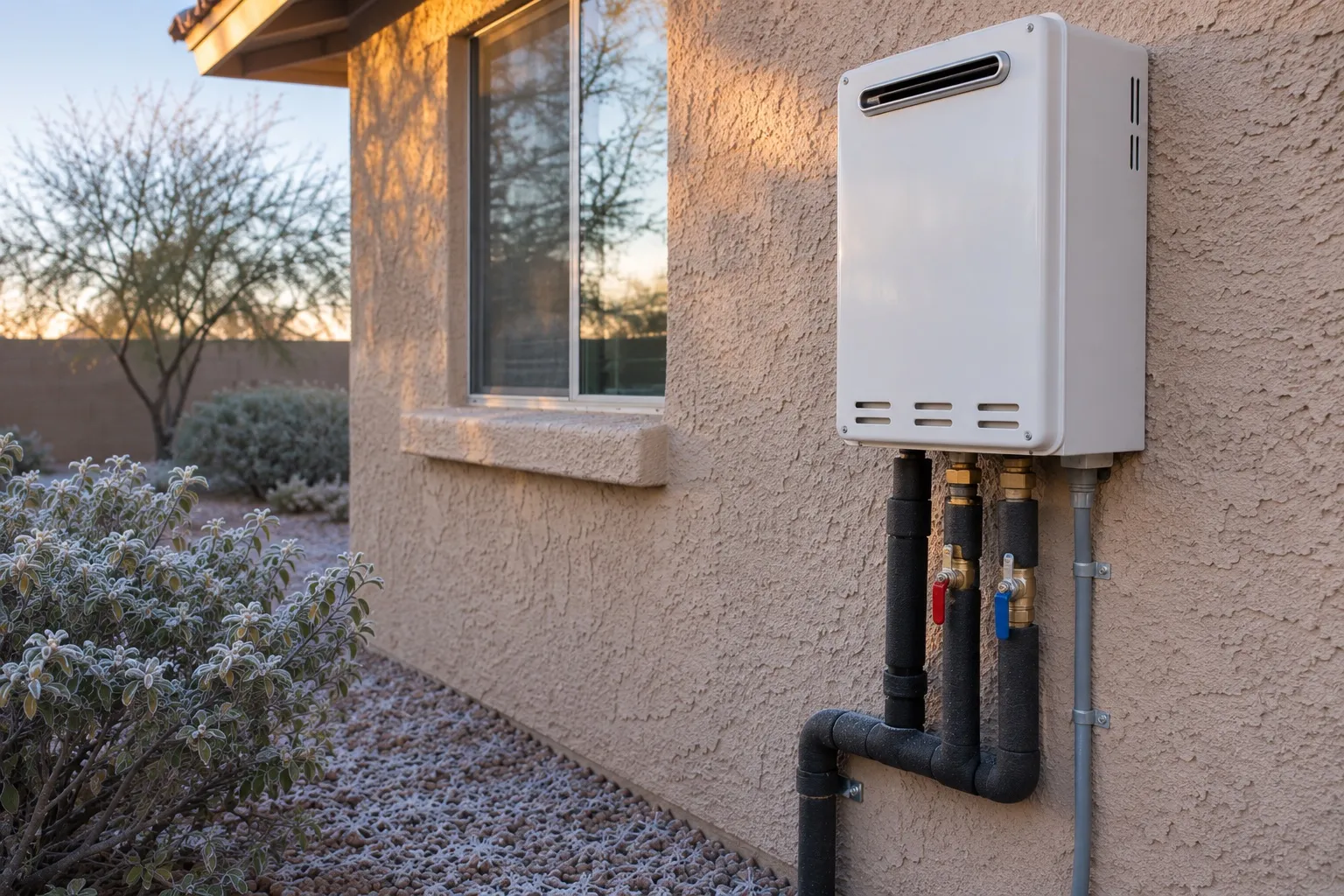
Many outdoor tankless water heaters protect themselves from freezing only while they have electricity, and gas models also need the gas and water on. That protection covers the heater. The makers say the pipes and valves under it need their own insulation with the power on or off.
Before bed on a freeze night
- Find the house valve and any shutoff on the pipe below the backflow preventer.
- Disconnect and drain the hoses and store them in the garage. If a valve inside the house feeds a hose bib, the City of Phoenix says to close it, then open the bib outside to drain and leave it open.
- Turn off drip irrigation and sprinklers for the night, as Scottsdale's cold-weather tips say.
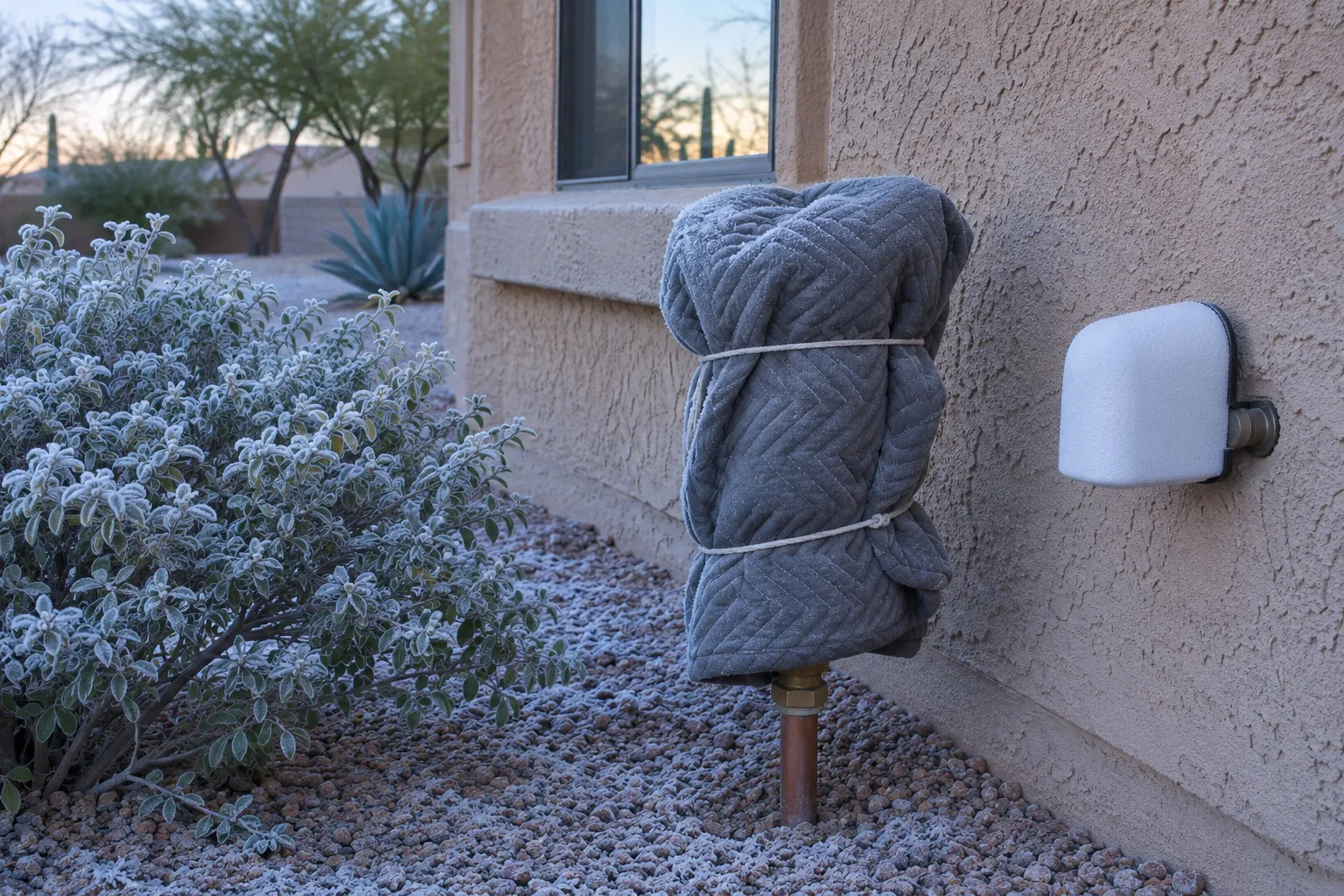
- Wrap the backflow preventer and every bare pipe and valve outside, including the lines under a tankless heater. Scottsdale lists a towel, blanket, or small rug as temporary insulation.
- Keep the garage door closed if water lines run through the garage, as the City of Phoenix advises.
- Open the cabinet doors under sinks on outside walls so the house's warm air reaches the pipes. Phoenix and Scottsdale both suggest it.
- Let cold water drip slowly from a faucet fed by exposed pipe, the Red Cross says.
- If you have a pool, run the pump overnight; Scottsdale recommends it.
Where it freezes in the Valley
The National Weather Service's 1991 to 2020 normal for Sky Harbor is 0.6 nights a year at or below 32°F. A Freeze Warning covers a forecast zone, and the airport is one sensor. On the 11 nights from January 2022 through January 2025 when the Central Phoenix zone was under a Freeze Warning, Sky Harbor's low stayed between 35 and 38°F. NOAA's daily records put the East Mesa weather station at 32°F or colder on all 11.
From 2005 to 2025, those records average 10.3 nights a winter at or below 32°F at the East Mesa station. The Youngtown station, beside Sun City, averages 5.5. Most of those nights fell in December or January.
If you live in Anthem, Cave Creek, Carefree, or New River, a cold night with no warning isn't an all-clear. The four share one forecast zone. Outside the metro's main population areas, the Weather Service's criteria call for a Freeze Warning the first time a season's temperatures reach 32°F. That zone had a Freeze Warning for the morning of Jan. 10, 2024, then none in the next two winters.
What to check in the morning
Open an outside faucet first, skipping any bib you drained the night before. If nothing comes out, Scottsdale says the pipes have likely frozen; the City of Phoenix's advice is to leave the faucet on and call a plumber. The Red Cross treats a thin trickle as a sign of a frozen pipe too. Never thaw a pipe with a torch or other open flame, a warning both Scottsdale and the Red Cross give.
A split line often doesn't leak until the ice melts. Scottsdale expects pipes in the sun to thaw by mid-morning and shaded ones not until after midday. Walk the yard again then, from the backflow preventer to the pipe coming up out of the ground at the house valve.
Which valve to close if a line split
For a split hose bib, a garage or attic line, or the lines under a tankless heater, close the house valve where the water line enters the home. When the split is at the backflow preventer or past it, close the shutoff on the pipe below the device, if your system has one. If there isn't one, or water keeps coming, close the house valve.
Then watch the split. A front hose bib or the irrigation line can branch off before the house valve. If water still runs at the split, it's coming from the pipe between the meter and your valves. Leave the meter, the meter box, and the curb stop alone. Call your water provider (in Phoenix, the City's 24/7 water line, 602-261-8000) and a plumber.
When water got inside
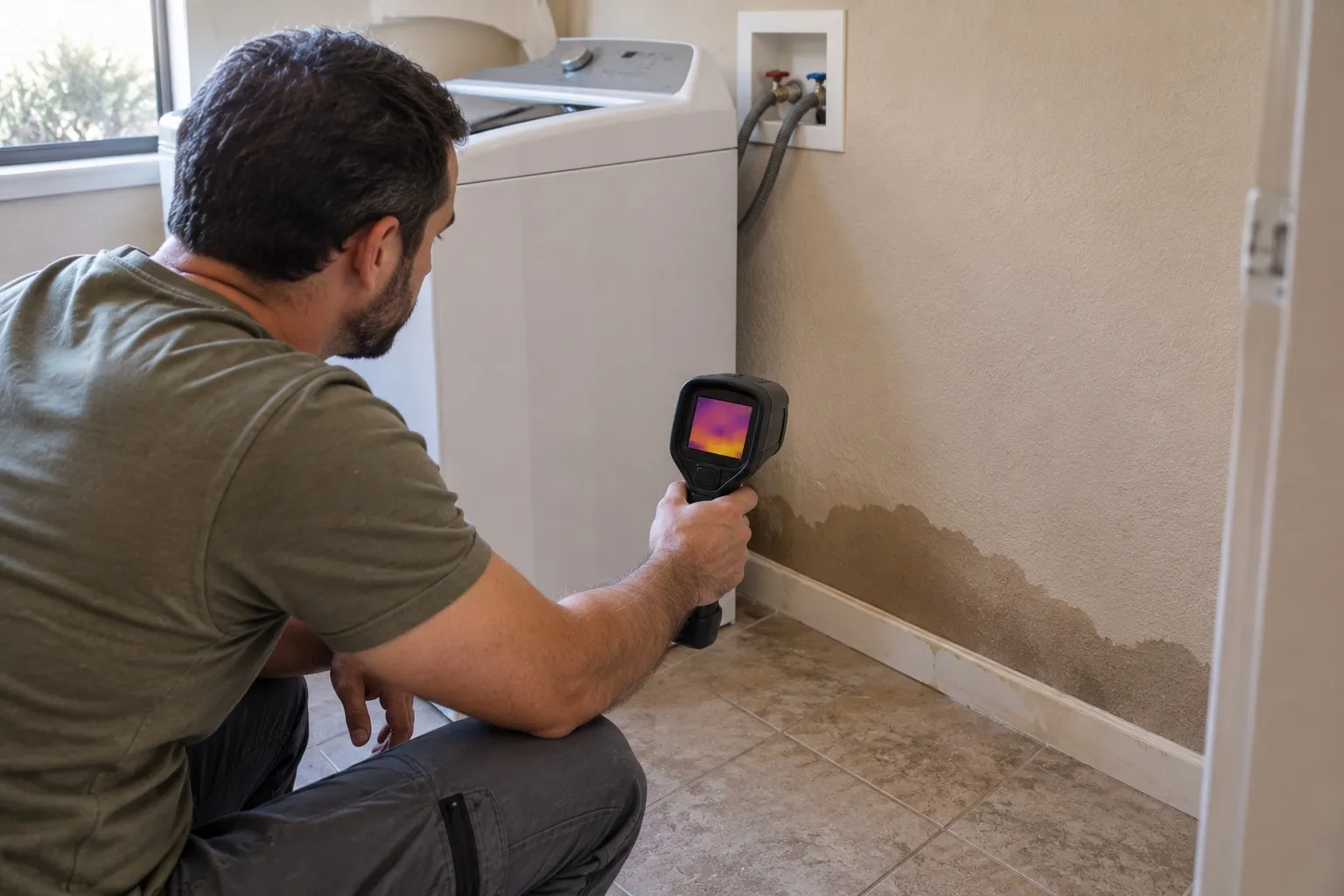
Water from a line that split inside the house starts as clean supply water, Category 1. Water that crossed the soil from a split irrigation line or backflow preventer, then came in under a door or at the slab edge, is outside water that touched the ground. It's handled as Category 3. A restorer sets the category on site, and the water categories guide explains how the category decides what has to come out.
The EPA says to dry water-damaged areas and items within 24 to 48 hours to prevent mold growth. Moisture readings show when the drying is done. A plumber repairs the pipe. Water Fighters Restoration is Open 24 hours, 7 days, and on-site within an hour. One team does mitigation and rebuild, from first call to final walkthrough.
Common Questions
The forecast says hard freeze, but my weather app says Freeze Warning. Are those different?
Not anymore. The National Weather Service folded the Hard Freeze Warning into the Freeze Warning on or about Oct. 1, 2024, and "hard freeze" can still appear in the warning's text. In Phoenix, a Freeze Warning goes out when 32°F or colder is expected for the first time in a winter, or at any time in major population areas.
Should I leave a faucet dripping tonight, and which one?
The Red Cross says to let cold water drip from the faucet served by exposed pipes. "If the temperatures are not too extreme," the City of Phoenix says, you can let cold water trickle from your sinks as a very slow drip. Scottsdale's tip for outside faucets is 5 drops a minute, needed only when 28°F or colder is expected for at least 4 hours.
What should go over the backflow preventer tonight?
Rubber or foam insulation, the City of Phoenix says, or for a short-term fix, a thick blanket secured over it. If the device cracks, replacing its parts is work for a qualified professional, the City adds, because the water in it can be under extreme pressure.
Our tankless water heater hangs on an outside wall. What happens to it if the power goes out tonight?
If it has built-in freeze protection, as many do, that protection stops when the power does. The makers' instructions say to drain the unit if an outage is expected during freezing weather; the heater's manual gives the steps, or a plumber can do it. Keep the lines and valves underneath insulated either way.
Should the pool pump run all night when a freeze is forecast?
Yes. Scottsdale's advice is to set the timer to run the pump from 9 p.m. to 7 a.m., because running water won't freeze. A 2012 Department of Energy Building America guide says some variable speed pumps have freeze protection that starts the pump on its own at a set temperature. A power outage stops the pump and its freeze mode. Draining pool equipment is a call for your pool service.