
Irrigation Leak Water Damage in Phoenix
Published October 8, 2026 · Last reviewed October 8, 2026 · Water Fighters Restoration
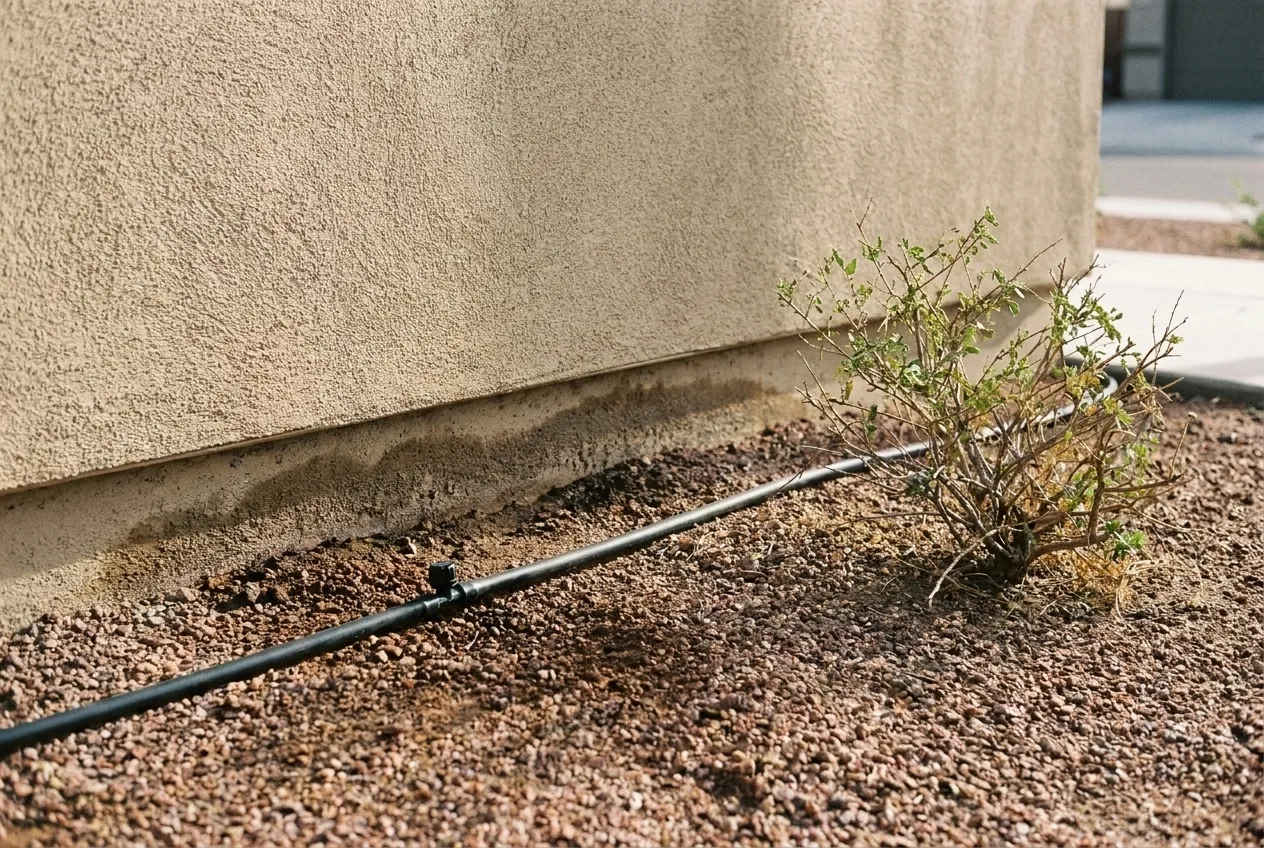
The carpet is damp along one wall, and only that wall. The baseboard there has gone a shade darker. On the other side of the stucco, a drip line runs through the rock to a shrub planted a foot from the house, and nothing inside the house is leaking.
A 2005 watering booklet from the Valley's water conservation offices says "over half of household water—in some cases as much as three-quarters—goes into our landscapes." The drip systems that deliver it are built to run long and soak deep. A 1-gallon-per-hour emitter takes 10 hours to put down 10 gallons, and trees are watered 3 feet deep. Put that system against a stem wall and a leak doesn't puddle. It soaks the soil at the foundation edge and can wick into the wall base, the tack strip, and the baseboard.
This guide covers pressurized drip and sprinkler lines. Flood irrigation is a different system with its own story, covered on pages like Arcadia's.
Five checks when an irrigation leak may be reaching the house
- Check the controller. Look at the program and the backup battery. The leak guide from the City of Phoenix and the Arizona Municipal Water Users Association (AMWUA) calls controller programming "a more common cause" of high water use, so it's the first stop.
- Open the valve boxes. Look for mud or standing water. The same guide says "continuous seeping often indicates a malfunctioning valve," and debris can keep a valve from closing.
- Watch the emitters run. "Water should trickle rather than squirt from emitters." Look for missing, cracked, or blown-off emitters, and for sprinkler heads spraying the wall.
- Walk the wall line. A damp strip at the base of the stucco, small holes, or depressions in the soil can point to an underground leak.
- Close the irrigation valve and watch the meter. The irrigation supply valve usually sits next to the backflow preventer; close it by hand. Never turn anything in the meter box. If the meter stops, the leak is most likely in the pipe between the backflow preventer and a valve box, or in a valve inside that box.
The hidden water damage guide walks through the full meter method. AMWUA notes that a leak can mean a "broken drip line is gushing instead of dripping."
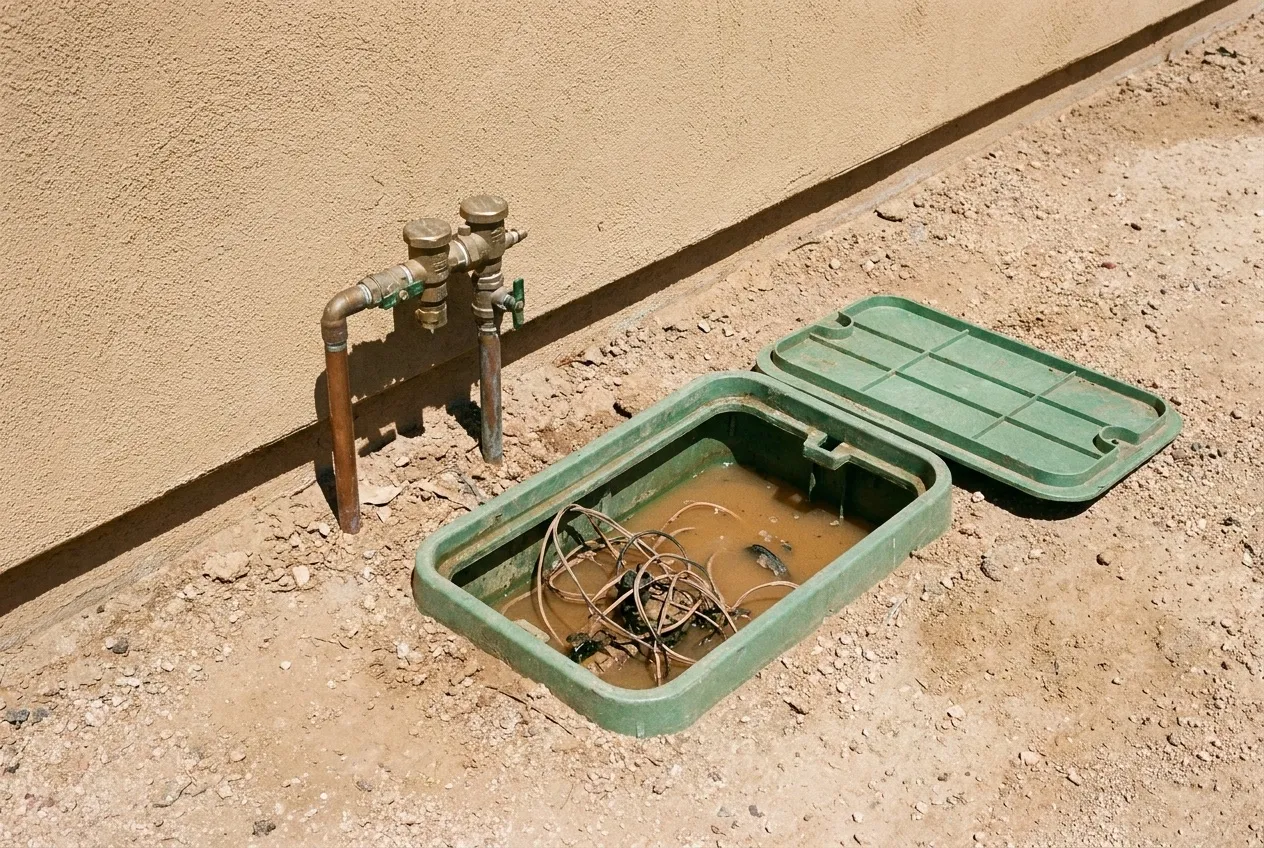
What it does at the foundation
The Arizona Geological Survey (AZGS) says damage to Arizona structures "is commonly related to soil characteristics - shrink/swell soils and collapsing soils." Smectite clay "swells to many times its original volume" when water is added and shrinks as it dries. Collapsing soils, loose and dry to begin with, can shrink when wetted. Where soils are expansive or collapsible, repeated wetting is the problem, and an irrigation zone at the wall wets the same soil on a schedule.
AZGS advice is plain: "reduce watering around your home's foundation" and "avoid placing plants next to your foundation." The watering booklet adds that a plant's roots sit near its dripline, under the outer edge of the canopy, so that's where emitters belong. A shrub planted tight to the wall pulls its emitters there too.
The residential code, as Maricopa County quotes it, expects the ground to fall at least 6 inches within the first 10 feet of the foundation. Where a wall or lot line is too close for that, it allows swales instead. Rock and soil added over the years can change that.
What gets opened and dried
Irrigation water that soaked through soil before reaching the house is outside water that touched the ground. It's handled as Category 3. Under Category 3 handling, porous materials the water reached, like carpet pad, tack strip, and the bottom of the drywall, are generally removed rather than dried in place.
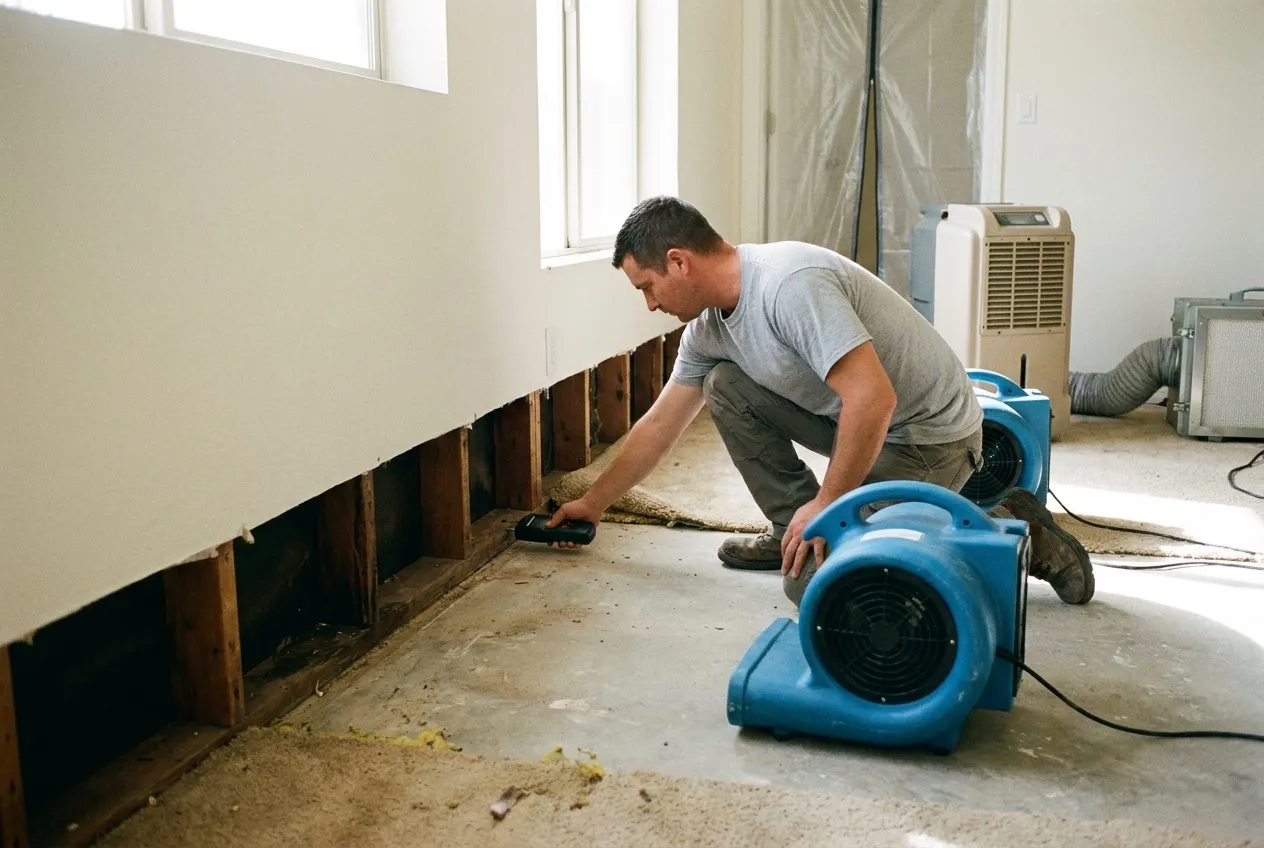
Inside, an irrigation leak often shows first at the wall facing the wet bed. Look for a damp carpet edge or tack strip, a darkened baseboard, or a high reading at the bottom of the drywall. Readings start there and move along the wall until they come back dry, and once the wall is open, the bottom plate gets read directly. Air movers and dehumidifiers run until the readings reach their drying goals.
If the readings point under the slab instead, the slab leak guide covers how a supply leak differs. The pool leak guide covers the other buried line that can wet a slab edge. Storm runoff against the wall gets the same Category 3 handling, as the monsoon guide explains.
Once the wall is dry, the baseboard, drywall, and flooring go back. One team does mitigation and rebuild, so the repair stays in the same water damage restoration file that documented the loss.
Who fixes what
The irrigation repair belongs to a landscaper or irrigation contractor. Backflow testing belongs to a certified backflow tester, and foundation movement to a structural engineer. Water Fighters Restoration handles the water damage to the building and the rebuild. It's Open 24 hours, 7 days, and on-site within an hour.
For how policies weigh sudden versus gradual damage, see the coverage guide. A broken HOA common-area line raises its own questions about whose water it is, which the Stetson Valley page covers.
Preventing the next one
The City of Phoenix says to check often for "moist or soggy ground around exposed sprinkler valves, in-ground valve boxes or backflow preventers." It also says to inspect drip lines for cracks and missing emitters. Aim sprinkler heads so they don't spray walls. If a swamp cooler's bleed-off line ends in a bed against the house, that's more water at the foundation; the swamp cooler guide explains what its salts do to soil.
Common Questions
Why is the irrigation running every day after a power outage?
The controller may have reset. After a surge or outage, a controller can revert to its factory default program, which the Valley watering booklet says is "commonly 10 minutes each day." Check the program and the backup battery. Daily watering along the wall keeps the foundation edge wet.
How can I tell if one irrigation valve is stuck open?
That zone keeps watering after the controller stops. To confirm, turn off power to the controller. If the zone still runs, the valve is the problem. Mud or standing water in that zone's valve box points the same way. A landscaper or irrigation contractor replaces the valve.
We changed the landscaping. Does the old drip line along the wall need to be capped?
Yes. The City of Phoenix says to "cap off, plug or disconnect" abandoned sprinkler heads, drip lines, and zones, because otherwise water pools on the surface. It also recommends keeping an "as-built" diagram of heads, valves, and lines. A live line left along the wall keeps the foundation edge wet with nothing there to use the water. An irrigation contractor or landscaper does the capping.
Why do drip emitters keep popping off the tubing?
The system pressure may be too high. That's the Valley watering booklet's reading when emitters "pop off the tubing frequently," and it says to call a professional landscaper. Until then, each blown-off emitter turns a slow trickle into an open line running beside the house.
How much of the foundation should show above the landscape rock?
Six inches on the usual stucco-over-frame or block wall. Under the residential code, as Maricopa County quotes it, concrete and masonry foundation walls extend at least 6 inches above finished grade, or 4 inches where masonry veneer is used. Rock and soil added over the years can bury that clearance and steer irrigation water at the wall.