
Roof Leak Water Damage in Phoenix
Published October 8, 2026 · Last reviewed October 8, 2026 · Water Fighters Restoration
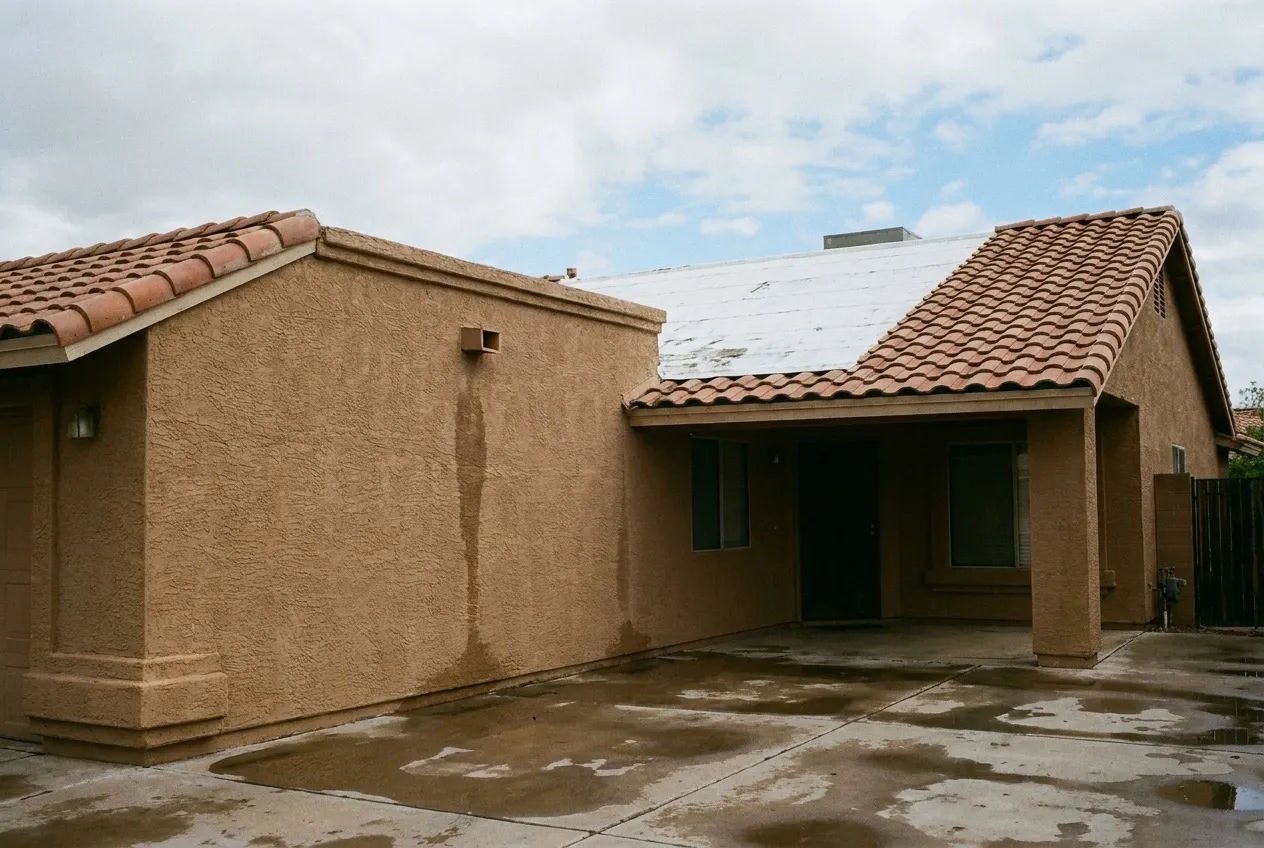
The stain shows up the day after the first real rain in months. It's a tan ring on the hallway ceiling, and a slow drip is ticking into a pan you set under it. Nothing blew off the roof, and no tile is lying in the yard. The roof simply met water for the first time since spring, and something in it had worn out in the meantime.
Rain is scarce in Phoenix, so a roof can go months without a real test. Sky Harbor's 1991–2020 normal is 7.22 inches of rain a year, and June averages 0.02 inches under highs that average 104.2°F. A defect can sit through the whole dry stretch until one storm finds it.
This guide covers the slow, aging-roof leak. When wind tears tile or membrane loose, that's a different job, and the storm damage page covers it, including emergency tarping.
Where a Phoenix roof lets water in when the wind didn't open it
- Aged underlayment under tile that looks fine. The tile sheds most of the rain. The underlayment underneath stops what gets past a cracked tile, a gap, or wind-driven rain, and it wears out long before the tile does.
- A cracked or slipped tile. A broken or missing tile can let sun reach the felt below and age the underlayment faster.
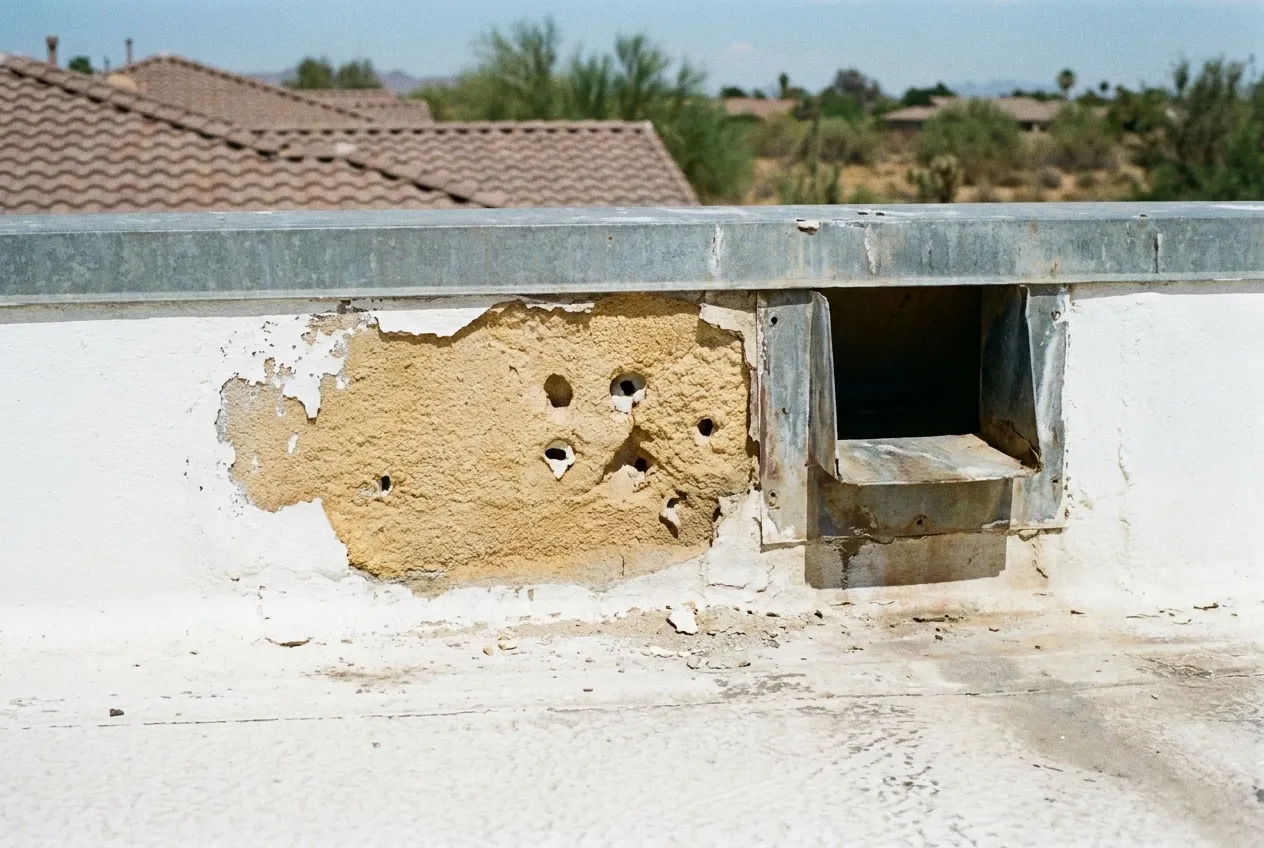
- A worn or pecked foam coating. Spray foam covers a flat section in one continuous layer. The white coating on top protects the foam from UV. When it wears thin, the sun damages the foam, and birds can peck holes in it that lead to leaks.
- Ponding behind a parapet. Water on a flat section has to reach a scupper or drain. Dust and debris can collect in that outlet, and then the parapet keeps the water on the roof.
- Rooftop equipment. A rooftop cooler sits over the opening cut for its duct, and University of Arizona Extension notes that "overflow of concentrated salts from the cooler can damage roofs." The swamp cooler leak guide covers that machine.
What to do when the ceiling starts dripping
Stay off the roof. Tile can shatter when someone walks on it, and repairing the roof is a roofer's job. Your work is inside. Move people, pets, and anything you care about out from under the wet area, and keep clear of light fixtures, fans, and any sag. Set a bucket under the drip, photograph the ceiling and the floor below, and note the time you found it.
Then make two calls: a roofer for the opening and a restoration company for the inside. When you hire the roofer, check the license through the Arizona Registrar of Contractors' online contractor search. The ceiling water damage guide has the full first-ten-minutes safety list. Water Fighters Restoration is Open 24 hours, 7 days, and on-site within an hour.
The category is set on site
Rain coming through a roof isn't automatically Category 3. Clear rainwater picks up whatever it crosses on the way down: roof dust, old felt, attic insulation, the back of the drywall. A technician looks at what the water touched and where it ended up, and sets the category on site. That call decides what can be dried in place and what has to come out.
What gets opened and dried
The stain marks where the water came out, not where it went in. Water can run along a rafter or settle through insulation and surface several feet from the opening. So readings start at the stain and keep going, through the ceiling bays on each side, the walls below, and the framing above, until they come back dry. EPA notes that moisture meters "can monitor the process of drying."
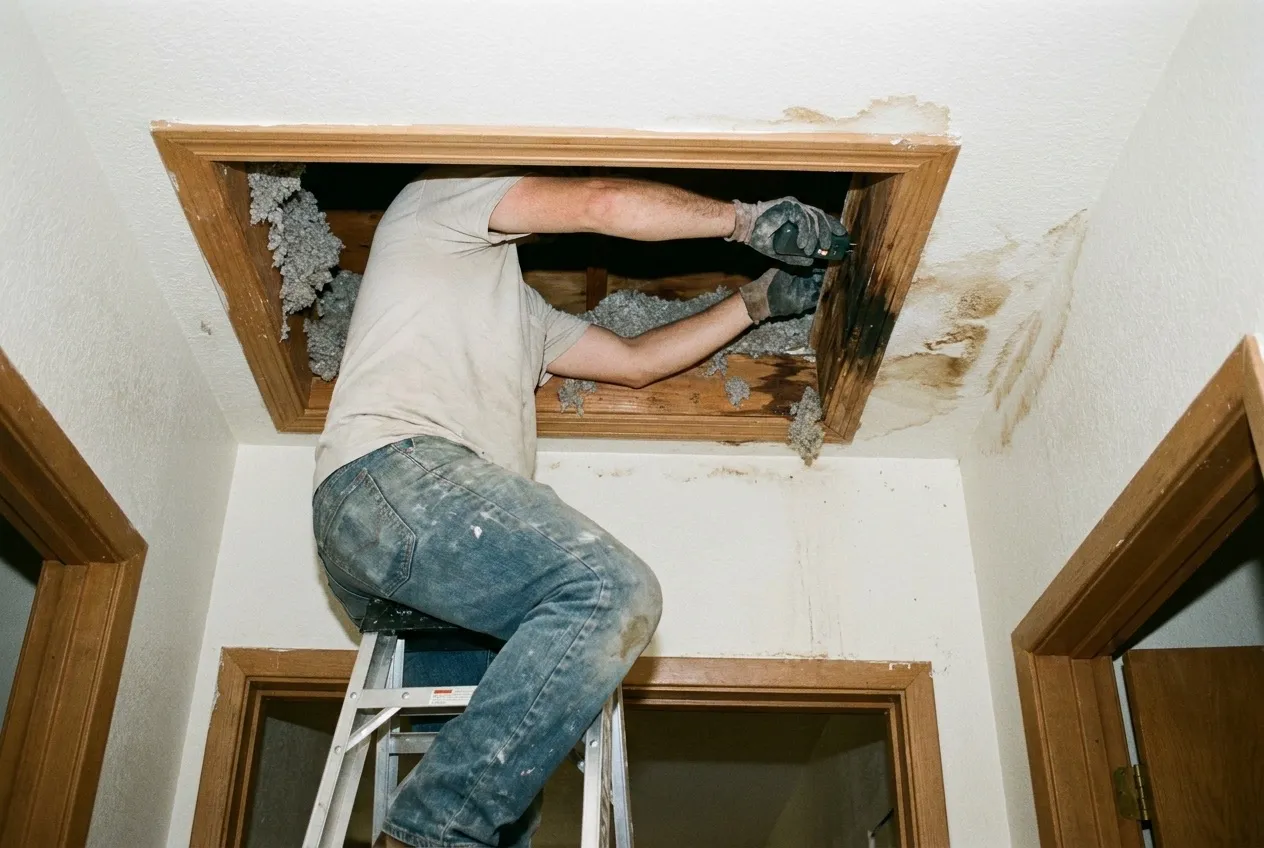
Soaked blown-in insulation generally can't be dried where it lies, so wet sections are evaluated and removed. Ceiling drywall that has sagged comes down under control, not on its own schedule. What remains gets air movers and dehumidifiers, with readings taken until each material reaches its drying goal. EPA says that in most cases, items dried within 24 to 48 hours will not become moldy. That's why drying starts when the leak is found, not after the roofer finishes.
Once the roof is closed and the readings are dry, the ceiling drywall, texture, and paint go back. One team does mitigation and rebuild, so the repair stays in the same water damage restoration file that documented the loss.
How insurance usually looks at it
Policies commonly treat a sudden, storm-created opening differently from age, wear and tear, or deferred maintenance. Whether the roof itself is covered and whether the interior damage it caused is covered are often two separate questions. Dated photos and moisture readings show what got wet and when. The coverage guide walks through sudden versus gradual damage in plain terms.
Preventing the next one
From the ground, look for cracked or slipped tiles and debris in the scuppers. Have the scuppers and roof drains cleared before June; the monsoon guide carries the full seasonal checklist. Keep the rooftop cooler on a service schedule, and let a roofer handle anything that means lifting tile or walking foam.
In north Phoenix, the Deer Valley page lists monsoon intrusion at roof penetrations on flat and low-slope sections among the risks that area's housing carries.
Common Questions
How long does the underlayment under a Phoenix tile roof last?
One Arizona consumer program puts it at 8 to 20 years in this climate. That's one program's estimate, not an industry standard. Whatever the number, the underlayment usually goes before the tile does. When the tile is still sound, a roofer lifts it, lays new underlayment, and sets the same tile back, a job the trade calls "R and R."
Why can a roof leak show up in a winter rain, not just during the monsoon?
Because most of an average year's rain falls outside the monsoon. The Weather Service window runs June 15 to September 30 and averages 2.43 inches, against a normal year of 7.22 inches at Sky Harbor. Any rain can find aged underlayment under tile that looks intact, or a foam coating worn thin. Moisture readings, not the calendar, decide what is wet now.
How often should a tile roof be looked at, and by whom?
One Arizona consumer program recommends a visual check at least twice a year and after any hail or dust storm, and says tile repair isn't a do-it-yourself job. You look from the ground. A roofer checks the underlayment at the valleys or near a chimney by pulling up a few tiles. Tiles can shatter underfoot, which is why you stay on the ground.
What lets water through a foam roof that has no seams?
A worn coating or a bird. The white elastomeric top coat protects the foam from UV, and when it wears thin, the sun gets to the foam underneath. Birds can also peck holes that lead to leaks. An Arizona consumer guide says foam "must be inspected every five to seven years," and sun-damaged foam needs complete replacement, which is a roofer's job.
Why does a flat roof with parapets need overflow scuppers?
A parapet can hold water like a pan if the main drain clogs. The residential code Phoenix adopted calls for an overflow drain or scupper where roof drains are required and the parapet would trap water if they back up. The National Roofing Contractors Association's drainage test is no ponding 48 hours after a rain in drying weather, because standing water past that point "can be detrimental to the roof assembly."