
Swamp Cooler Leak Water Damage in Phoenix
Published October 8, 2026 · Last reviewed October 8, 2026 · Water Fighters Restoration
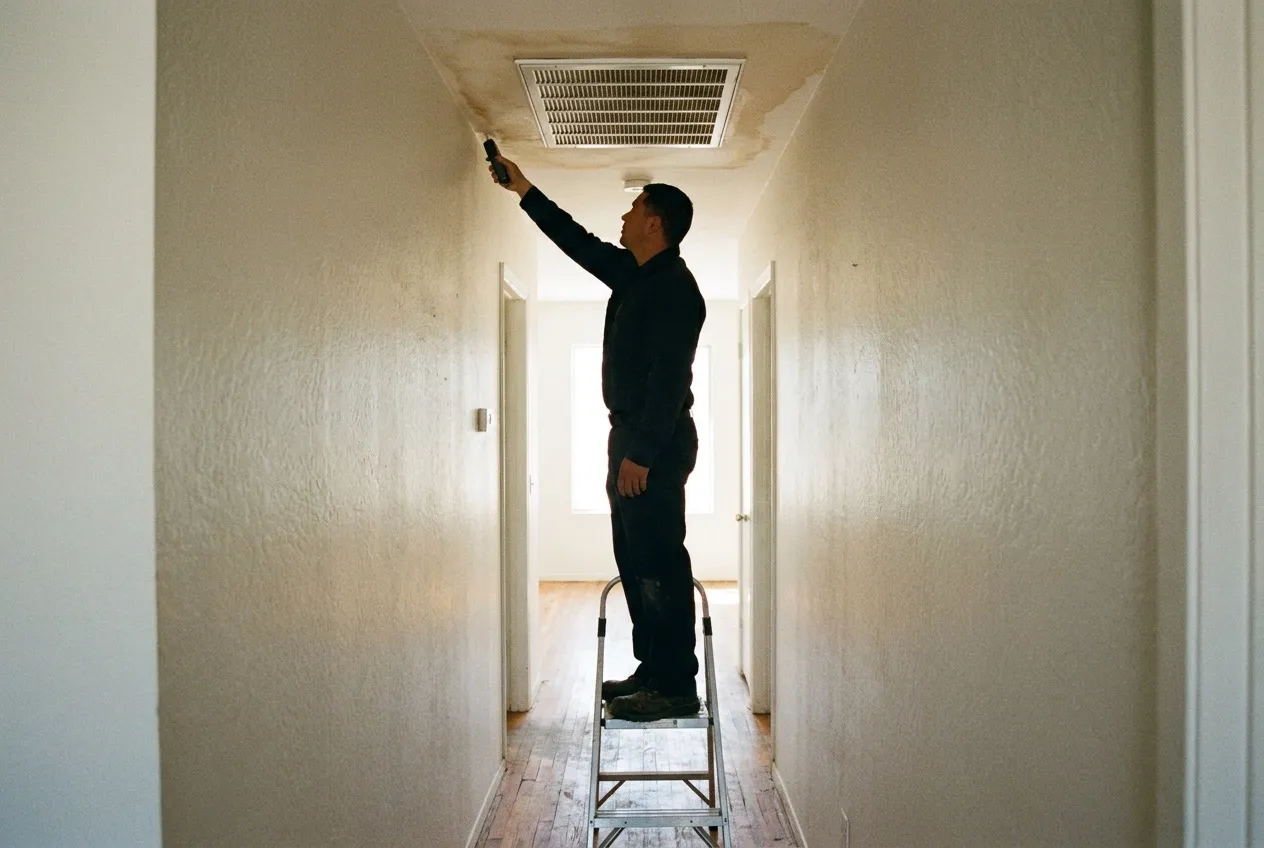
The ring starts at the cooler grille in the hallway ceiling. It's tan, a little wider than last week, and while the cooler runs, a drop falls from the grille every few seconds. No bathroom sits above that hallway. The water is coming from the machine on the roof.
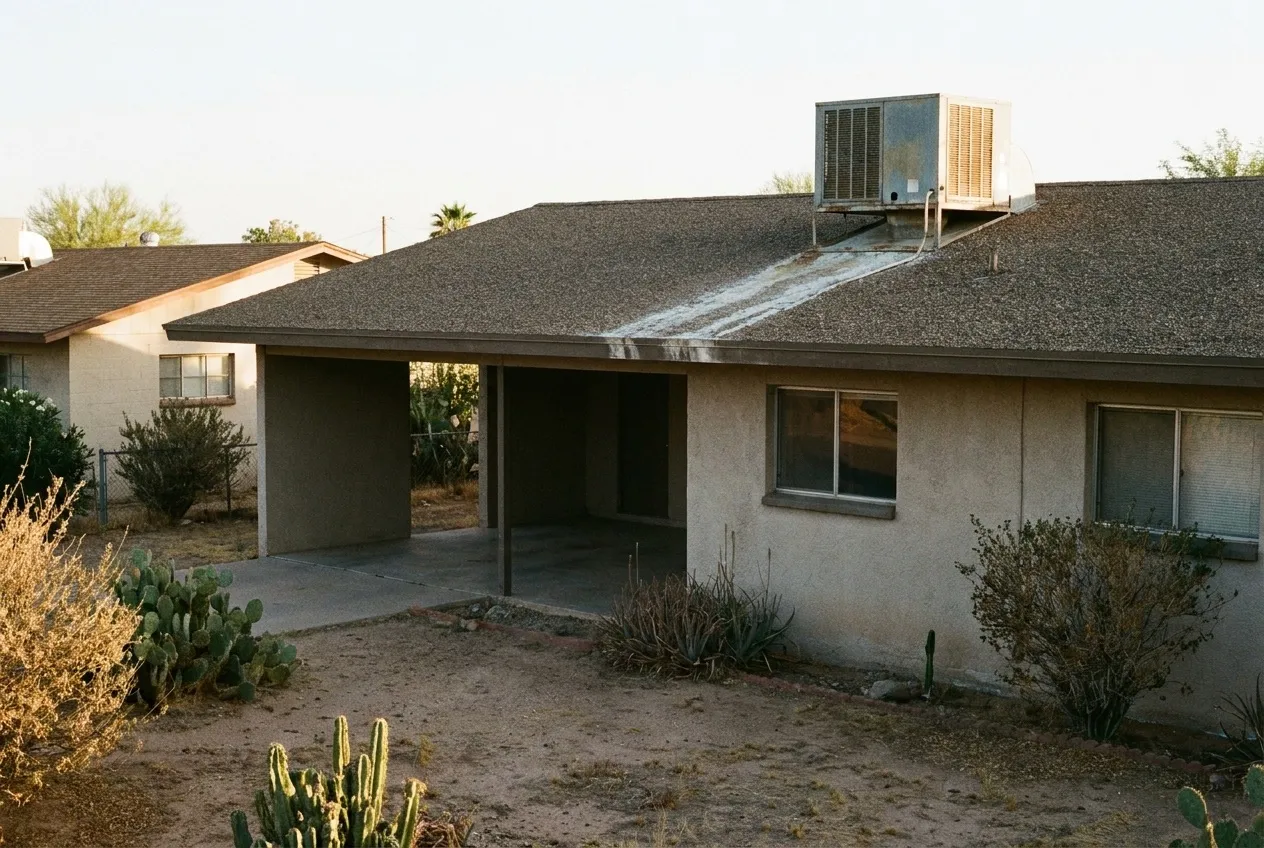
Water on the roof, on purpose
A down-draft evaporative cooler keeps a pan of water on your roof by design, right over the opening cut for its duct. An early-1990s study by the University of Arizona and the City of Phoenix monitored coolers at 46 Phoenix homes. Preliminary data showed about 4.4 gallons per running hour on units without bleed-off and 10.4 on units with it. Those are old study figures, but the point holds: a running cooler moves gallons of water an hour above the ceiling.
Phoenix water adds a second problem. The City's 2025 report puts hardness at 10 to 17.6 grains per gallon, and University of Arizona Extension notes that mineral scale "can cause rust and corrosion in metal coolers."
Where a swamp cooler leaks
- The float valve. If the float sticks, water runs continuously and overflows the tray. University of Arizona Water Wise guidance says the level should sit about one inch below the top of the tray and below the top of the overflow pipe.
- The tray and casing. Rusted areas in the tray and split seams in the casing can both leak, which is why they're on the spring checklist.
- The supply line. City of Phoenix plumbing tips say exposed plastic pipe is "more susceptible to extreme temperatures, leaks and breaks." The City also says to drain exposed lines when frost is possible.
- Where the overflow and bleed-off water are sent. A bleed-off valve sends some water to a drain line or the landscape. Extension notes that "overflow of concentrated salts from the cooler can damage roofs."
- The duct penetration. The seal where the duct passes through the roof is one place water can get in, because water from the cooler can run toward it.
What to do when it's dripping
Turn the cooler off at its wall control so the pump stops. If the cooler's supply valve is reachable from the ground, close it. If not, close the house valve where the main line enters the home, and leave the curb meter box to the water provider.
Don't climb onto the roof to look. Extension's own list of cooler drawbacks says maintenance is "difficult if the cooler is roof-mounted." Rooftop work belongs to a cooler service. Inside, keep clear of the ceiling light and anything sagging, and follow the ceiling water damage guide for the first ten minutes. Water Fighters Restoration is Open 24 hours, 7 days, and on-site within an hour.
The three seasonal moments
University of Arizona guidance ties cooler care to three seasonal moments: spring startup, the monsoon switch to air conditioning, and fall shutdown. While the cooler is in use, Extension says it should be "inspected monthly and serviced as needed."
The monsoon switch has its own step. Extension says coolers "function well except for the few weeks of the summer 'monsoon' season," so some households switch to the air conditioner. When the cooler will sit unused for several days, Extension's advice is to drain it.
What gets opened and dried
The category is set on site, by what the water picked up. A split supply tube starts as clean supply water. Water that has cycled through the pads and sat in the pan is not clean supply water. Either one may then cross the roof deck, insulation, and drywall before it reaches the room. The category call decides what can be dried in place and what comes out.
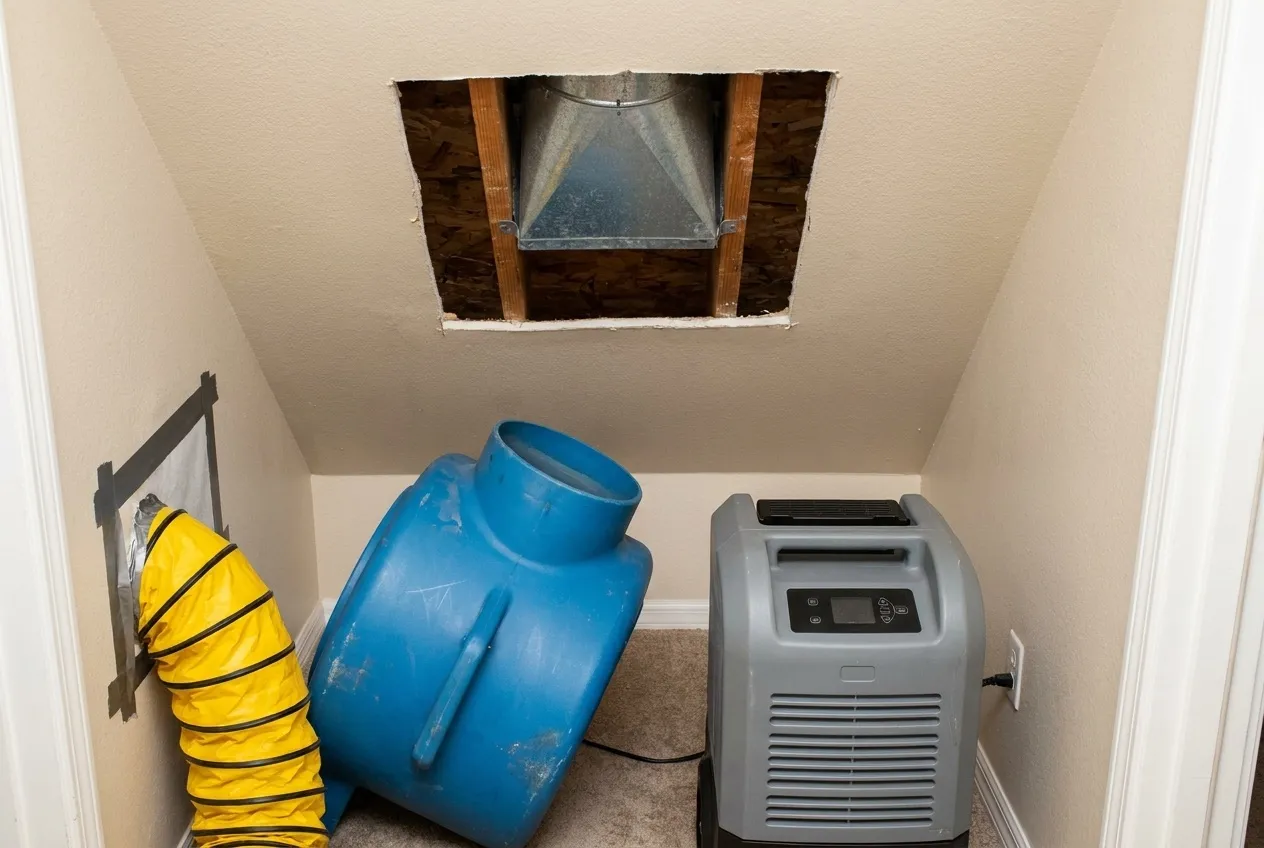
Readings start at the grille and spread outward. Cooler water can follow the duct boot or framing and surface away from the unit, so nearby ceiling bays, the duct drop, and the walls below all get checked. Where the drywall around the duct is soaked, opening it lets the joists and the duct boot dry. Air movers and dehumidifiers run until readings reach their drying goals.
EPA notes that moisture meters "can monitor the process of drying," and that in most cases, items dried within 24 to 48 hours will not become moldy. If a wet assembly stayed wet longer, the Phoenix mold guide covers what changes.
The rebuild comes after the readings are dry and a cooler service has repaired the unit. One team does mitigation and rebuild, so the ceiling drywall, texture, and paint go back under the same water damage restoration file.
Insurance and related guides
Policies often look at a sudden overflow differently from a slow drip that ran for weeks. Dated photos and moisture readings help show which one you had, and the coverage guide explains the difference.
The cooler is one of several roof openings; the roof leak guide covers the rest. If the meter moves with everything off, the cooler's refill is one of the devices the hidden water damage guide walks through. North of the Valley, the Black Canyon City page covers rooftop cooler leaks and the occasional frost on exposed lines.
Common Questions
How much water does a running swamp cooler move through?
An early-1990s University of Arizona and City of Phoenix study of 46 Phoenix homes found about 7.6 gallons per hour of operation. Units without bleed-off came in around 4.4 gallons an hour and units with it around 10.4. Bleed-off systems in that study used about 8,650 gallons per cooling season. Treat those as study figures from that era, not a reading for your unit.
Should a swamp cooler be drained and covered for winter?
Yes. University of Arizona Water Wise guidance is to dissolve mineral buildup, drain and scrape the tray, then dry it and check it for cracks. After that, disconnect the water line, blow it out "to prevent freezing," and cover the unit. The City of Phoenix adds insulating cooler equipment and draining exposed lines when frost is possible. On a ground- or eave-mounted unit, that's you or a cooler service. On a roof unit, it's a cooler service.
Is it a problem when a swamp cooler and the air conditioner share ducts?
It can be, if the dampers aren't doing their job. A shared system needs dampers to separate the two units. University of Arizona Extension says that without them, "moist air from the evaporative cooler will enter and corrode the refrigeration unit," and that dampers should be checked annually. An HVAC or cooler service checks them.
Is it a problem if a swamp cooler's bleed-off water runs into the flower beds?
It can be. University of Arizona horticulture specialists discourage using bleed-off water on plants. The minerals may damage plants, and the salt "can result in the sealing of soils, especially soils with a high clay content." Where the bleed line ends is a cooler service's call, and the irrigation leak guide covers water at the foundation.
What should a cooler service check at spring startup?
Ask the service to look for split seams in the casing and rust spots in the tray. They should reconnect the supply line without drips, then confirm the float valve shuts off with the water below the top of the overflow pipe. Then they run the pump to see that the pads wet evenly. On a down-draft unit, these are rooftop tasks, so they belong to the service, not to you on a ladder.