
Water Damage Restoration in Black Canyon City, AZ
Published September 2, 2026 · Last reviewed September 2, 2026 · Water Fighters Restoration
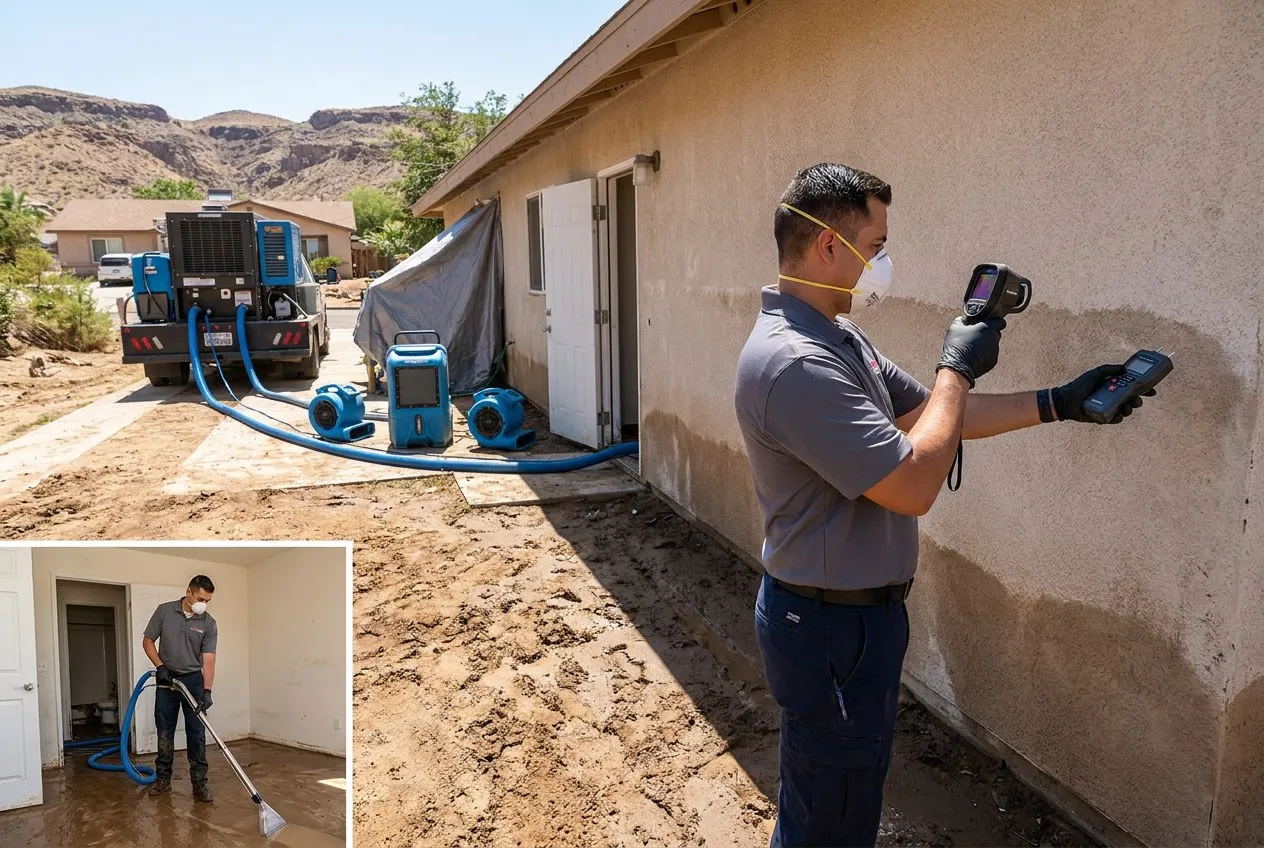
Black Canyon City is a river community, not a north-Valley suburb. The Agua Fria runs through its center, and Black Canyon Creek joins it there. Documented flows above 50,000 cubic feet per second define the local flood scale.
The community sits just inside Yavapai County. The county line is near Rock Springs at the south edge. Black Canyon City is unincorporated, and a 2004 incorporation vote failed.
Its 2020 population was 2,677, with a median age of 60.5. About 44 percent of housing is mobile or manufactured. Roughly half is conventional single-family construction.
That combination creates two separate restoration questions. What did the river bring into the building, and how is this particular floor system built?
The New River restoration page covers a seasonal wash and hauled-water community in Maricopa County. The Anthem restoration page covers the planned, piped community about 15 minutes south along Interstate 17.
The Agua Fria runs through the community
The USGS gauge near Rock Springs recorded 85,000 cubic feet per second in November 1919. Other major peaks reached 59,500 in February 1980, 54,800 in January 2010, 53,500 in March 1991, and 52,800 in December 1978.
National Weather Service flood stages at that gauge begin with action at 15 feet. Minor flood stage is 16 feet, moderate is 19, and major is 24.
On March 22, 2023, storm runoff combined with snowmelt and raised the Agua Fria. Rivers Edge RV Park and other low areas were evacuated. Residents returned later that day.
Those records support a real river-flood page without placing every property in the same exposure.
River or creek water is Category 3. It can carry silt, fuel residue, animal waste, plant matter, and debris. The storm damage service explains the controlled cleanup and drying sequence.
Nearly half the homes dry differently
Black Canyon City's housing includes almost no pre-1960 stock. The main build periods are the 1960s through 1980s, followed by the 2000s as the largest single decade.
That range includes a real polybutylene-era window. Material still must be confirmed at each home.
Manufactured homes require inspection above and below the floor because hidden underfloor assemblies can stay wet after the room looks dry.
The Apache Junction restoration page carries the deeper manufactured-home drying explanation. Black Canyon City's distinctive layer is river water, mud, and septic service.
A site-built home on a low bank and a manufactured home above a skirted crawl space cannot share one default drying plan.
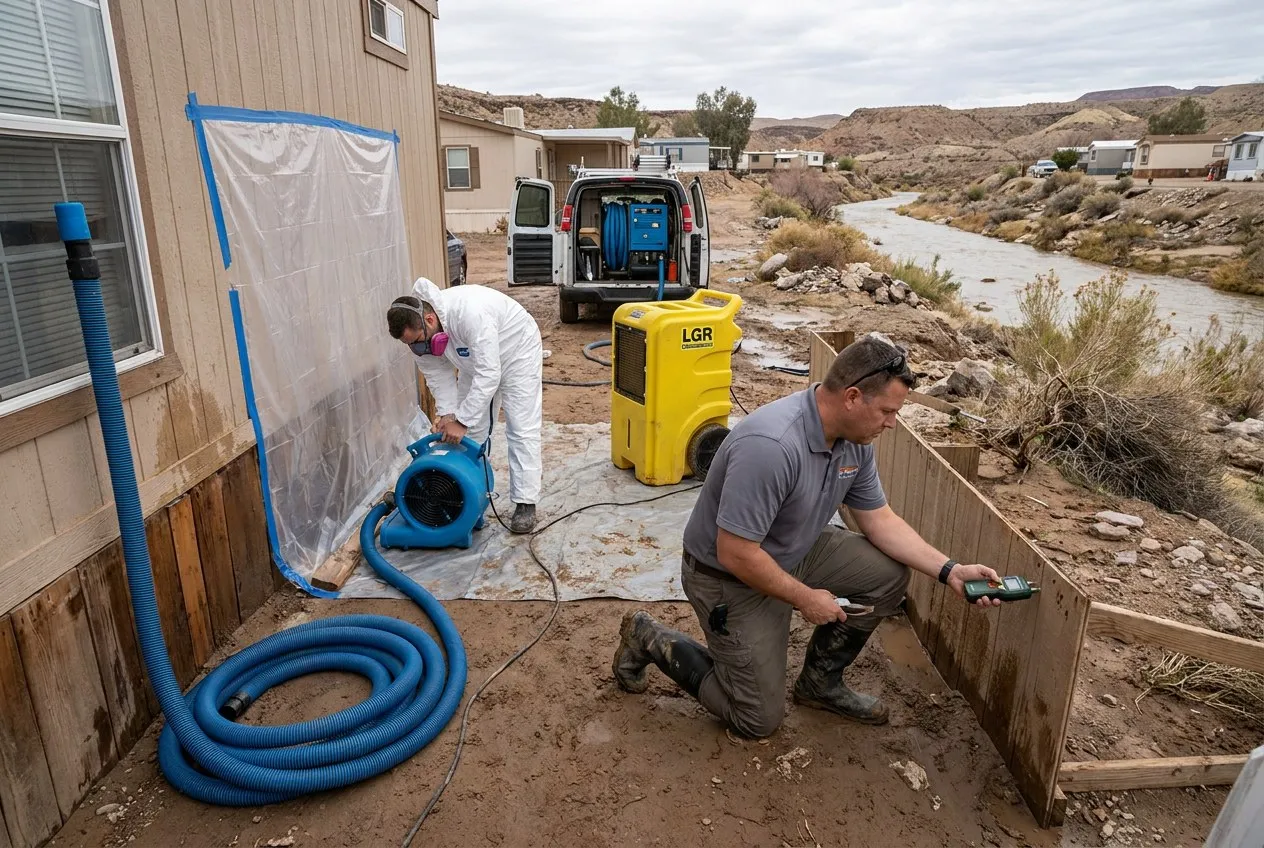
Water Fighters Restoration is Open 24 hours, 7 days. Crews stage as one licensed team, Valley-wide, with the promise on-site within an hour.
Water comes from a local district, and wastewater is septic
The local Black Canyon City Water Improvement District uses three Agua Fria aquifer wells, not Phoenix or EPCOR service.
Groundwater in the area is naturally high in arsenic. The district installed treatment in the mid-2000s, and its treated water meets federal standards. That fact should not be turned into a claim that tap water is unsafe.
There is no community-wide sewer. County-permitted septic systems are the normal wastewater route, aside from one small subdivision-scale district.
Anything from a septic system or drain backup is Category 3. The sewage cleanup page covers professional containment, removal, cleaning, and drying.
Five steps change when floodwater brings silt
- Control access. Mud can hide sharp debris, holes, unstable flooring, and electrical hazards.
- Document the deposit. Silt depth, high-water lines, and flow direction help preserve the event record.
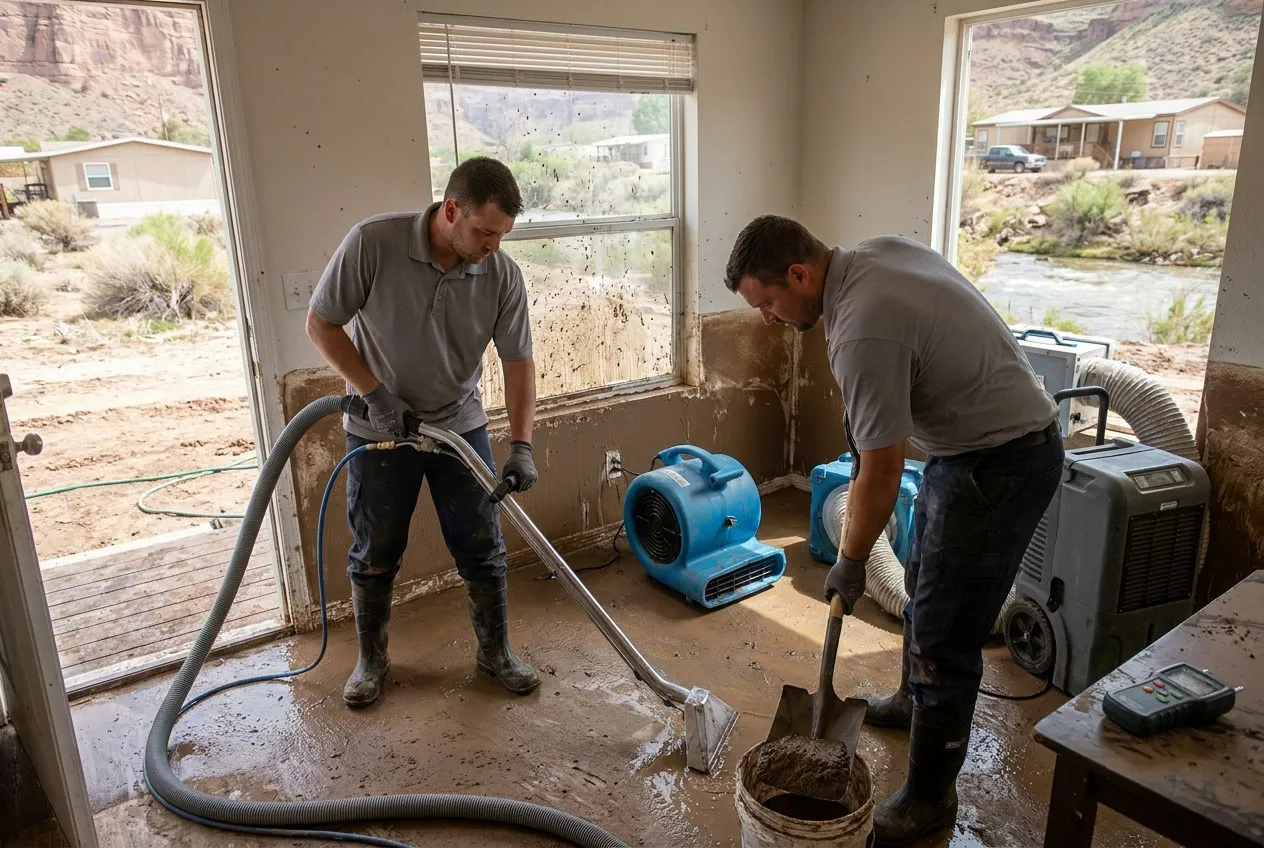
- Remove water and bulk sediment. Extraction alone does not remove the fine material left inside assemblies.
- Assess porous components. Drywall, insulation, particleboard, and underfloor materials may retain contamination.
- Clean, dry, and verify retained structure. Moisture readings follow cleaning and removal, not replace them.
The grit under a boot remains after the puddle is gone. That is why muddy flood cleanup is not simply a longer clean-water extraction.
A changed bank widens the assessment
If floodwater removes part of a bank or grade, the loss extends beyond wet finishes. The inspection records exposed foundation edges, settlement signs, wall movement, and access changes.
Water Fighters Restoration can coordinate structural assessment where the building condition requires it. Bank stability, soil engineering, and geotechnical design remain with qualified specialists.
Do not backfill the route before it is documented and assessed. The missing soil may explain both the entry path and a continuing structural concern.
Access also matters. Black Canyon City is about 15 minutes past Anthem and roughly 40 minutes from central Phoenix under ordinary conditions. Flooded crossings or road restrictions can change the usable route.
Everyday losses still happen above the river
Rooftop evaporative coolers can leak at supply tubing, valves, pans, drains, or roof penetrations. A small rooftop release may stain a ceiling before anyone sees water outside.
At roughly 2,083 feet, occasional frost affects hose bibbs and exposed equipment first. This is not a Prescott hard-freeze story.
Once the source is controlled, technicians map the actual assembly and establish drying targets. One team does mitigation and rebuild.
Water Fighters Restoration is IICRC Certified 70192944 · AZ ROC 324471 · ROC 324468 · EPA Lead-Safe Certified Firm · Licensed, Bonded & Insured.
Common Questions
What usually freezes first in Black Canyon City compared with Phoenix?
Exposed hose bibbs, cooler lines, backflow parts, and outdoor equipment are the first realistic weak points. Indoor plumbing is not a broad hard-freeze story at this elevation.
Why can a canyon river community flood with less warning than a Valley suburb?
Water concentrates through a narrower drainage route and can rise from rain or snowmelt upstream. Gauge stages and official warnings matter more than rainfall at one property during the storm damage response.
What is assessed when the creek removes part of a bank beside the house?
The record extends beyond wet walls to exposed foundations, movement, lost grade, and access. Structural and geotechnical specialists are coordinated where needed, while restoration handles the damaged building materials.
How does a rooftop swamp cooler cause interior water damage?
A supply tube, valve, pan, drain, or roof penetration can leak above the ceiling. Moisture mapping follows the highest wet point before repair, as explained in the ceiling damage guide.
What can be saved after floodwater leaves silt and mud inside?
Salvage depends on contamination, porosity, structural condition, and whether the item can be fully cleaned and dried. Solid nonporous materials have a different path than insulation, particleboard, or saturated underfloor components.