
Water Damage Restoration in New River, AZ
Published September 2, 2026 · Last reviewed October 8, 2026 · Water Fighters Restoration
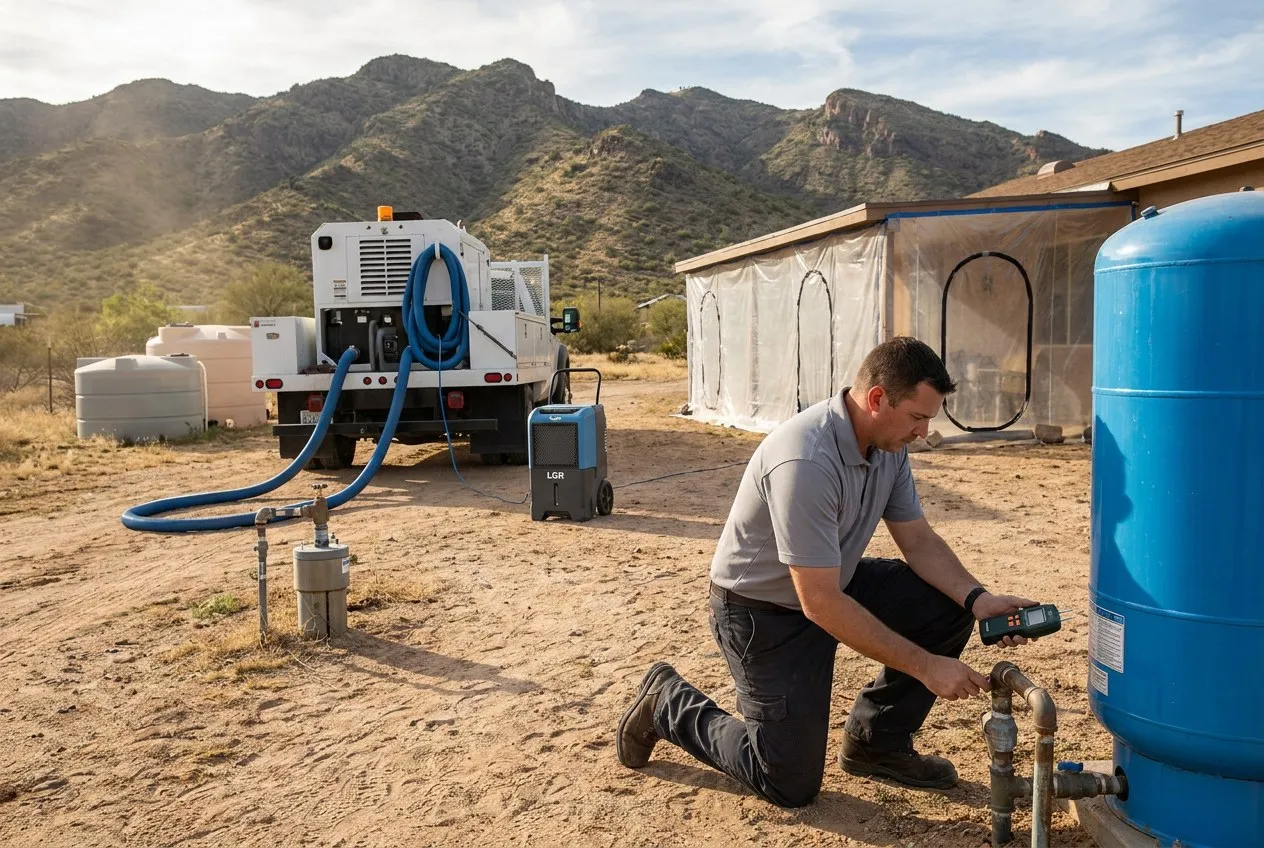
New River is named for a seasonal wash in the Agua Fria system. The channel can move more than 15,000 cubic feet per second during a major storm. Many nearby homes still receive drinking water from a well or delivery truck.
That contrast defines local water damage. There may be no municipal main, curb, storm drain, or sewer line at the property. The plumbing system can begin at a well, storage tank, or pressure vessel hundreds of feet from the house.
New River is an unincorporated Maricopa County community covering about 56 square miles. Its 2020 population was 17,290.
The Anthem restoration page covers the separate HOA community with piped EPCOR water. Desert Hills has a split water system.
A flood-prone wash crosses a place without piped water
Most of New River has no piped water utility. Many residents use private wells, while others rely on hauled water stored on site.
Phoenix once allowed haulers to fill from city hydrants. After that practice ended, haulers and account holders began using an EPCOR filling station in Anthem in 2018. EPCOR does not pipe water to New River homes.
Well conditions vary sharply. State-based reporting identified more than 1,200 permits and monitored declines of 23 to 179 feet from pre-2000 peaks.
A shallow aquifer over bedrock can leave neighboring properties on different well and delivery systems.
The August 2014 storm showed the wash scale
On August 19, 2014, storms dropped more than four inches in places along the corridor. Sediment buried the Flood Control District's New River Fire gauge, and the district later estimated the peak there from high-water marks at about 32,600 cubic feet per second.
Skunk Creek at Interstate 17 peaked at about 13,000 cubic feet per second, and its overflow flooded the northbound lanes. Swift-water rescues followed.
Three weeks later, 3.30 inches in seven hours set Phoenix's calendar-day record. A dry channel cannot be treated as open ground during a storm.
The New River is seasonal, not riverfront. Its dam sits about 20 miles downstream near Peoria and does not protect this community.
Water from a wash, road, yard, or sheet-flow route is Category 3. The monsoon flood guide covers contaminated-water entry and the first documentation steps.
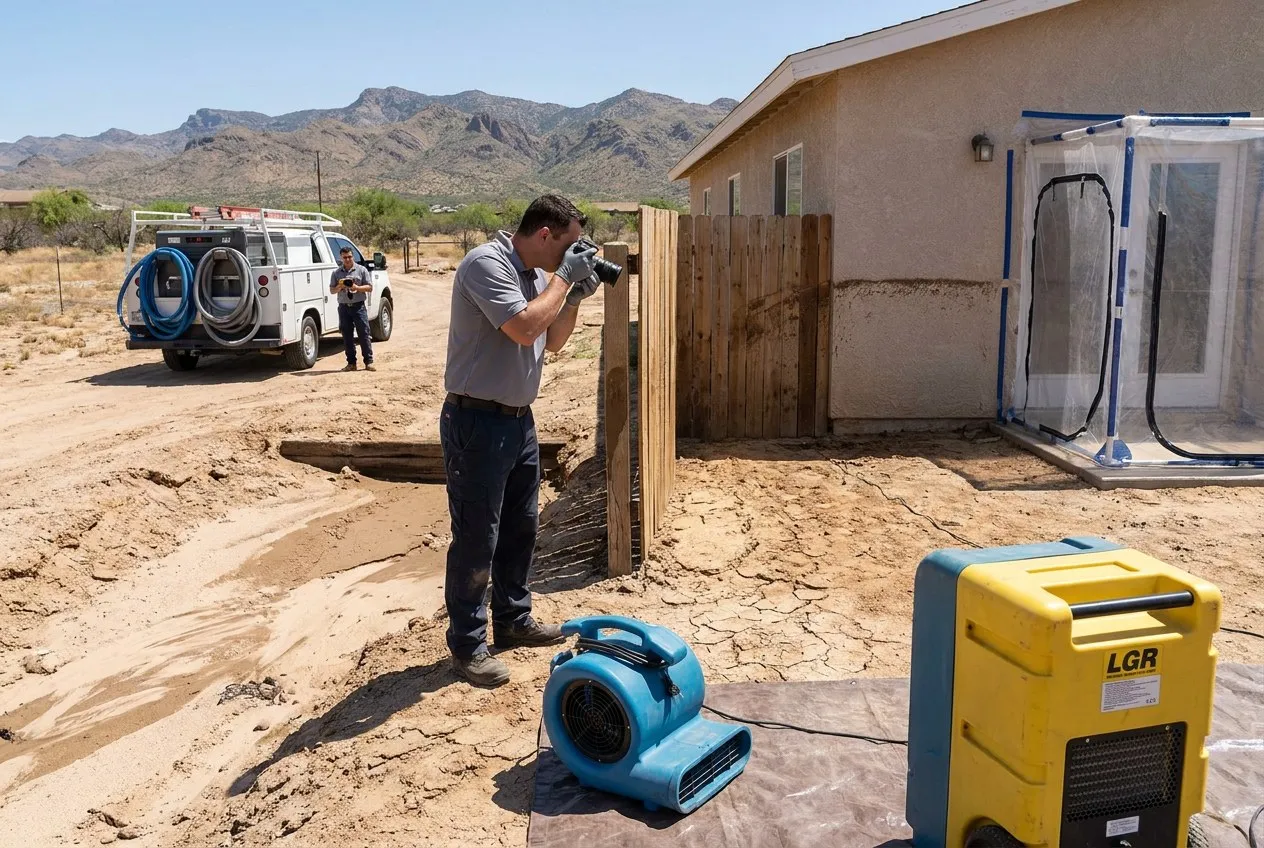
Water Fighters Restoration is Open 24 hours, 7 days. Crews stage as one licensed team, Valley-wide, with the promise on-site within an hour.
Five private systems should be checked before the wall is opened
- Well or delivery source: Confirm whether water begins at a well, hauled-water tank, or both.
- Storage and pressure equipment: Inspect tank fittings, booster pumps, pressure tanks, and controls.
- Long private runs: Trace buried and exposed lines to the house, barn, and outbuildings.
- Indoor supply and drains: Separate a private-system failure from a fixture, appliance, or interior line.
- Septic route: Identify whether the loss involves wastewater before extraction or removal begins.
About 60 percent of housing dates from 2000 onward, and another 24 percent from the 1990s. With almost no pre-1970 stock, old galvanized stories do not fit.
Most homes are detached, and about eight percent are manufactured. Acreage systems, storage equipment, and outdoor runs are the more useful inspection frame.
Flooded wells and septic systems require professional controls
Floodwater over a wellhead creates a possible contamination issue. Indoor cleanup and water-supply assessment are separate but connected jobs.
Water Fighters Restoration handles the affected structure. Licensed well professionals and appropriate testing determine the well's condition and any treatment. Homeowners are not coached through shocking or sampling a flooded well.
Septic is the normal wastewater pattern across New River. During and after flooding, saturated soil can limit how the system accepts discharge. A septic backup is Category 3 and requires professional containment, removal, cleaning, and drying.
The sewage cleanup service explains that lane.
Acreage grade and access control the water path
Lots often lack curbs and storm drains. Rain follows sheet flow, small washes, driveways, and owner-altered grades.
A raised house pad should shed water away from the structure. Tire ruts, fill, berms, outbuildings, and animal areas can redirect it. The inspection compares high-water marks with the current slope before soil is moved.
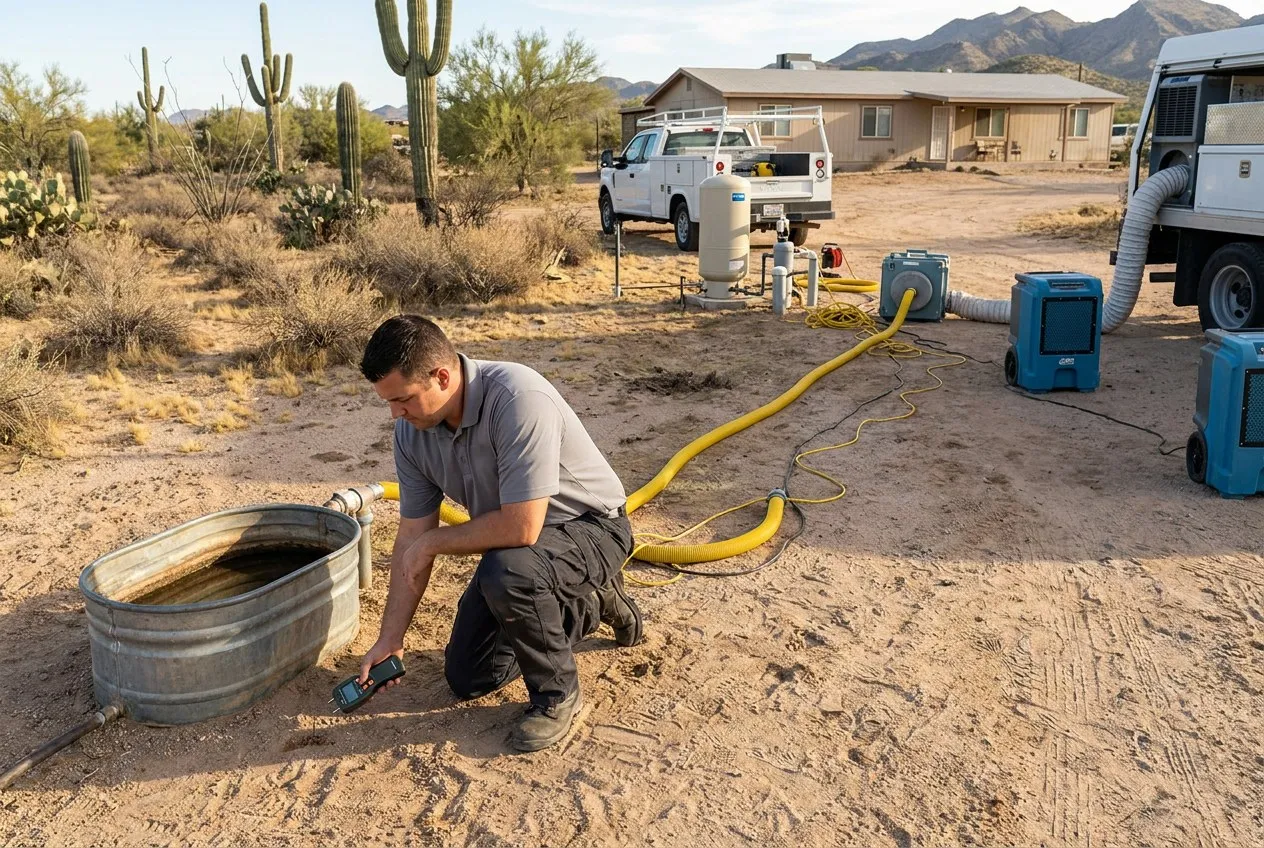
A stuck stock-waterer float can also release pressurized water for hours. If the line shares a supply route with the house, wet soil may lead back toward the same meter, tank, or pump.
The Black Canyon City restoration page covers a different unincorporated setting where a permanent river and documented evacuations define the flood risk.
Outdoor components carry the realistic freeze risk
New River sits roughly 1,000 feet above central Phoenix, though terrain varies. Occasional sub-freezing nights can affect exposed well lines, pressure equipment, backflow devices, and hose bibbs.
Indoor plumbing is not the freeze headline. Outdoor systems and unprotected fittings are.
Once the source is controlled, technicians extract water, map the assembly, and dry retained material to measured targets. One team does mitigation and rebuild.
Water Fighters Restoration is IICRC Certified 70192944 · AZ ROC 324471 · ROC 324468 · EPA Lead-Safe Certified Firm · Licensed, Bonded & Insured.
Common Questions
What should happen when floodwater covers a New River wellhead?
The well is treated as potentially contaminated until licensed assessment and testing establish its condition. A qualified well professional handles the supply system without hazardous homeowner sampling. Structural cleanup follows the monsoon damage scope.
Can I keep using a septic system during and right after a flood?
Use should be limited until a qualified septic professional confirms the system and surrounding soil can accept discharge. Any wastewater entering the home is Category 3 and belongs in a professional cleanup scope.
Where does storm water go when a New River property has no curbs or storm drains?
It follows slope as sheet flow and collects in small washes, ruts, low driveways, and altered grades. The route remains visible in high-water marks and sediment described in the monsoon flood guide.
How can I tell whether an owner-graded pad still sheds water away from the house?
The assessment compares elevations, flow marks, berms, fill, and low openings around the structure. A pad can look raised while one driveway or addition creates a path back toward the wall.
Can a stuck livestock waterer flood a house?
Yes, if the release saturates soil along a shared private line or slopes toward the structure. Water crossing soil before entry is Category 3. Trace the stock-water line and wettest path.