
Water Damage Restoration in Carefree, AZ
Published September 2, 2026 · Last reviewed September 2, 2026 · Water Fighters Restoration
Carefree was purpose-built as a resort community in the mid-1950s. It incorporated in 1984 to avoid annexation by Scottsdale. That timeline separates it from neighboring Cave Creek, whose settlement, zoning, and horse-property identity are different.
The town sits around 2,402 feet. Granite outcrops shape custom homes, drainage, and equipment access. About 19 percent of housing is classified as seasonal or recreational vacancy, so some summer leaks go undiscovered.
Carefree is not a 55-plus community. Its median age was 65.2 in 2020, and just over half of residents were 65 or older. The Cave Creek restoration page covers the neighboring town's creek, rural lots, and upstream-dam story. The Scottsdale restoration page covers the larger city to the south.
Carefree owns its water company
The Carefree Water Company began in 1957, and the town bought it in 1999. Supply includes a CAP allocation, six wells, and Scottsdale-treated water.
Roughly 20 to 25 percent of properties once used Cave Creek's system. Carefree acquired that service area in 2021 and moved more than 550 accounts by 2023.
A few dozen customers remain on Cave Creek service. That means the first call should confirm the actual provider before utility coordination begins.
Most Carefree homes do not rely on private wells. The town system is the main story. Long private runs between the meter, house, and detached casita can still create concealed losses on large custom lots.
Seasonal homes meet a wetter foothill climate
Carefree receives about 12.6 inches of rain in a year, roughly 70 percent more than Phoenix. Much of it arrives in concentrated monsoon bursts.
Galloway Wash cuts a broad sandy route near downtown. It can fill rapidly during rainy weather, and an 11-acre stretch has been preserved since 1995. It is the only named wash used for this page.
On June 16, 2018, more than 1.5 inches fell in under an hour across the Cave Creek and Carefree area. That is useful local storm context without importing flood events from Camp Creek or other communities.
Water entering from a wash, yard, road, or exterior drainage path is Category 3. The storm damage service explains contaminated-water controls and the transition into structural drying.
A closed house can look normal from the driveway. Inside, the air may carry the damp mineral smell of wet gypsum long after surface water disappears.
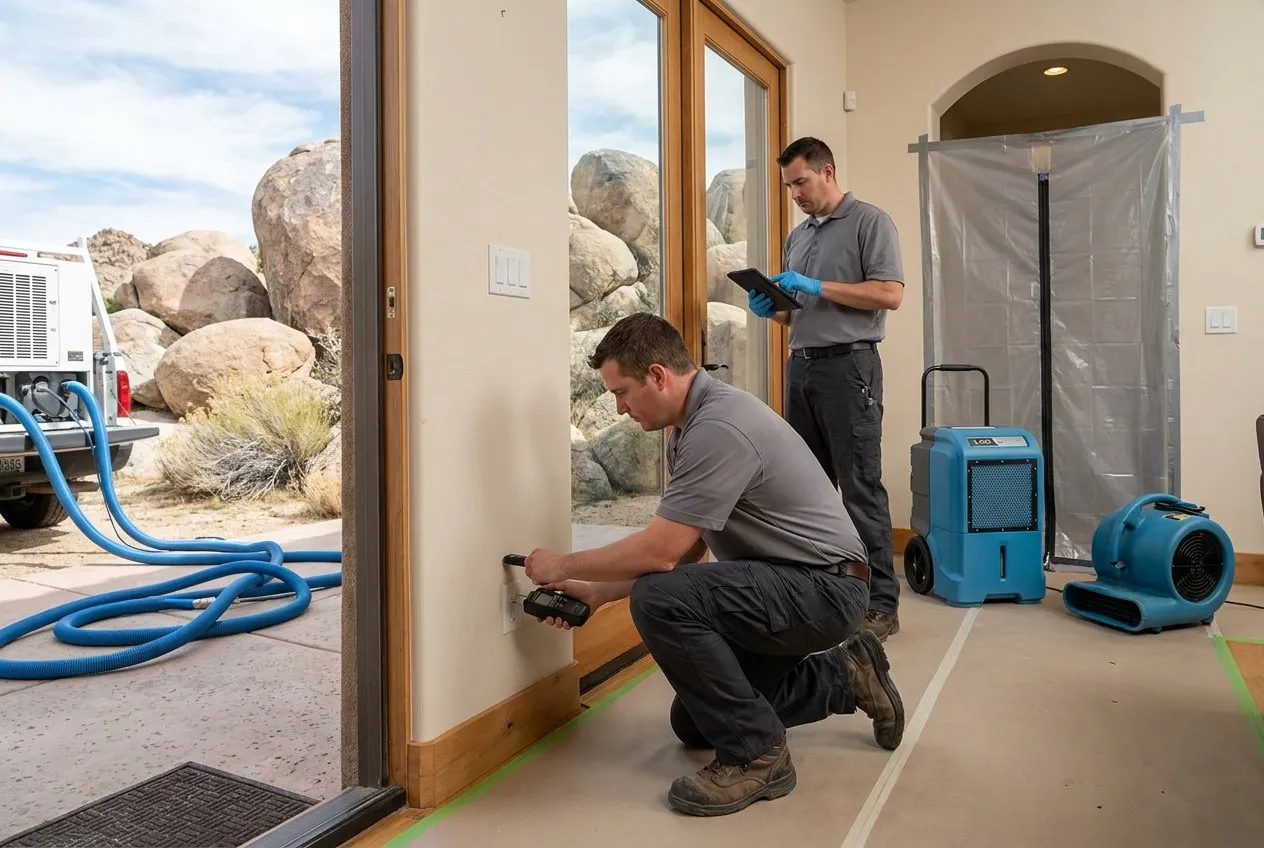
Water Fighters Restoration is Open 24 hours, 7 days. Crews stage as one licensed team, Valley-wide, with the promise on-site within an hour.
Water can follow a boulder into the house
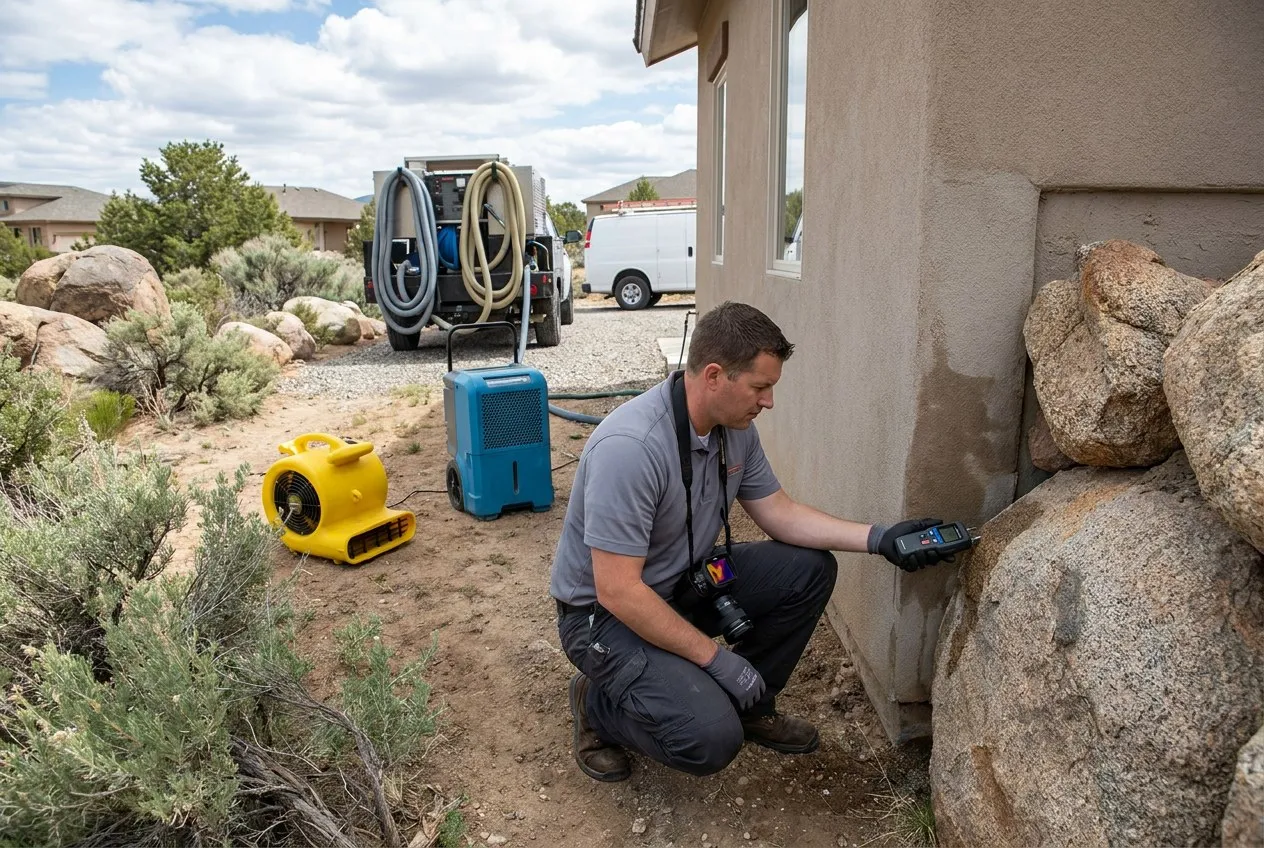
Custom Carefree homes are often built around granite outcrops rather than on uniform production lots. A rock surface may pass beside or through an architectural wall, courtyard, or foundation detail.
Water follows slope and contact points. It may run along the rock, enter at a seal or wall transition, then appear below the visible joint.
A useful tracing sequence is simple:
- Map the highest interior moisture, not only the floor puddle.
- Inspect the exterior rock-to-building transition and the grade above it.
- Compare wet and dry portions of the same wall assembly.
- Confirm whether rain, irrigation, or a pressurized line matches the timing.
- Open material only where readings and construction show a reason.
The Boulders community straddles the Scottsdale line. It is not wholly inside Carefree. Service notes should record the actual jurisdiction rather than relying on the development name.
Septic and long private runs add separate risks
Most Carefree homes use individual septic systems. Liberty Utilities serves commercial, multifamily, and a few subdivision areas. The local treatment plant closed in 2018, and those flows now go to Scottsdale.
A septic backup is Category 3. It requires professional containment, removal decisions, cleaning, and verification. The sewage cleanup page covers that process.
Long buried lines to a casita, guest area, or detached structure can leak without wetting the main home's plumbing wall. Pressure loss, unusual meter use, or one strip of soft soil can narrow the route.
Winter exposure is real but limited. Carefree's record low is 15 degrees, while normal January lows average around 41 to 42 degrees. Cold snaps can damage exposed hose bibbs or backflow equipment, but Carefree is not Prescott.
The Anthem restoration page covers a stronger nearby freeze pattern.
Foam roofs, contents, and access need separate decisions
The 1980s are Carefree's largest single housing decade. Roughly 40 percent of homes may fall within the broader 1978–1995 polybutylene window, but material remains property-specific.
Custom roofs and parapets can also pond water when drainage is restricted. Foam-roof damage may begin as a small surface defect, then reach the interior after repeated wetting.
Fine art and high-value contents should be separated from the building scope. Water Fighters Restoration can document and stabilize affected contents within its capabilities, then coordinate specialist conservators when an item requires that trade. The contents restoration page explains the handling lane.
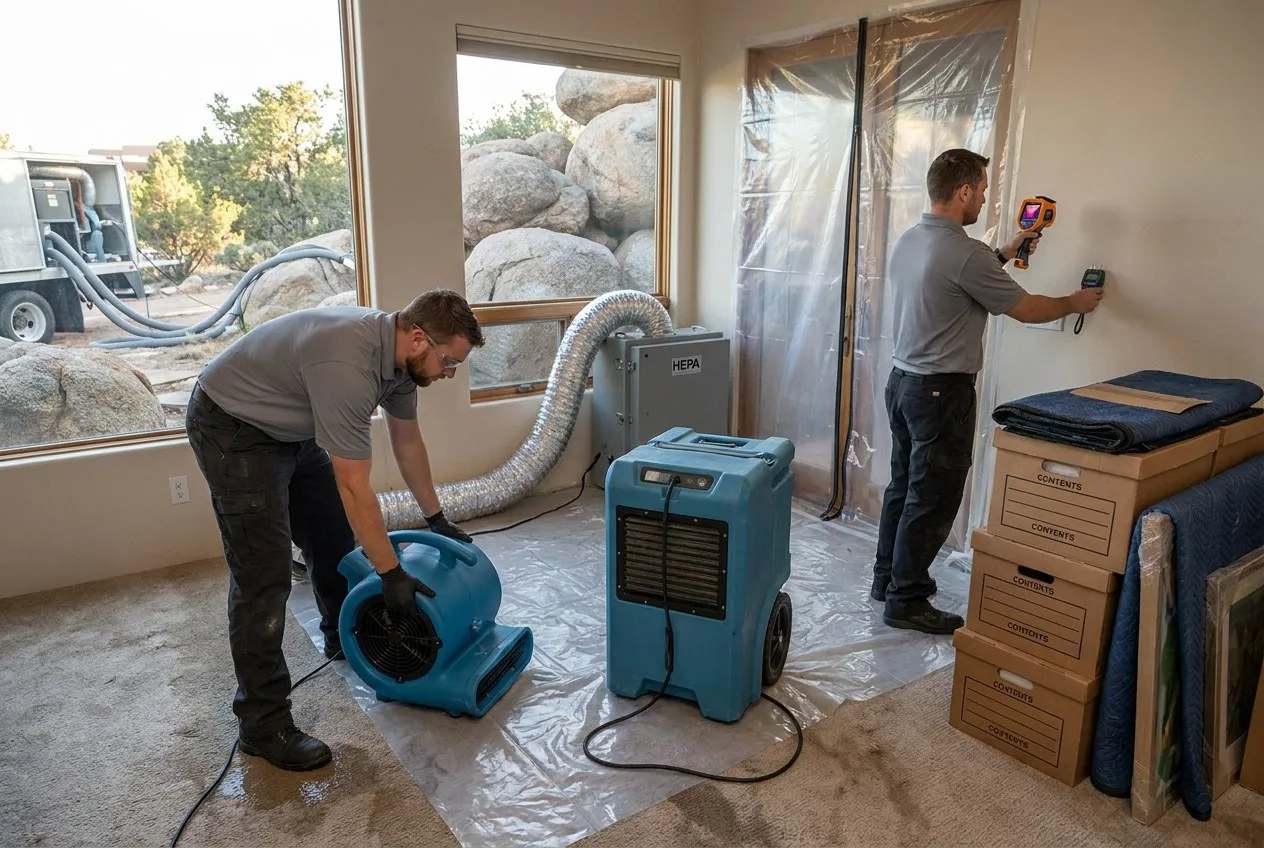
One team does mitigation and rebuild. That keeps source access, structural drying, finish repair, and custom-detail reconstruction connected.
Water Fighters Restoration is IICRC Certified 70192944 · AZ ROC 324471 · ROC 324468 · EPA Lead-Safe Certified Firm · Licensed, Bonded & Insured.
Common Questions
When does ponding on a Carefree foam roof become interior water damage?
It becomes an interior loss when water passes the roof system and wets the building assembly. Trace the defect, drainage route, and highest wet point indoors. Exterior entry belongs in the Category 3 storm response.
How is a leak traced when a home is built around a granite boulder?
Technicians compare the slope of the rock with moisture readings above and below the transition. Water can follow the stone before entering at a seal, wall joint, or adjacent grade.
What happens when water reaches fine art inside a Carefree home?
The item is documented, protected from further exposure, and separated from active drying conditions when appropriate. Qualified conservator care can be coordinated through the contents restoration process.
How is a leak found on a long buried supply line to a casita?
The trace compares meter movement, pressure, wet soil, and the private line route between structures. The building-damage scope begins where that loss reaches the slab, wall, or finished area.
Do pack rats really damage water lines?
They can damage exposed flexible tubing or nearby insulation, but tooth marks do not confirm the full source. The line, fitting, and surrounding moisture pattern still need inspection before repair and drying.