
Water Damage Restoration in Desert Ridge
Published August 21, 2026 · Last reviewed August 21, 2026 · Water Fighters Restoration
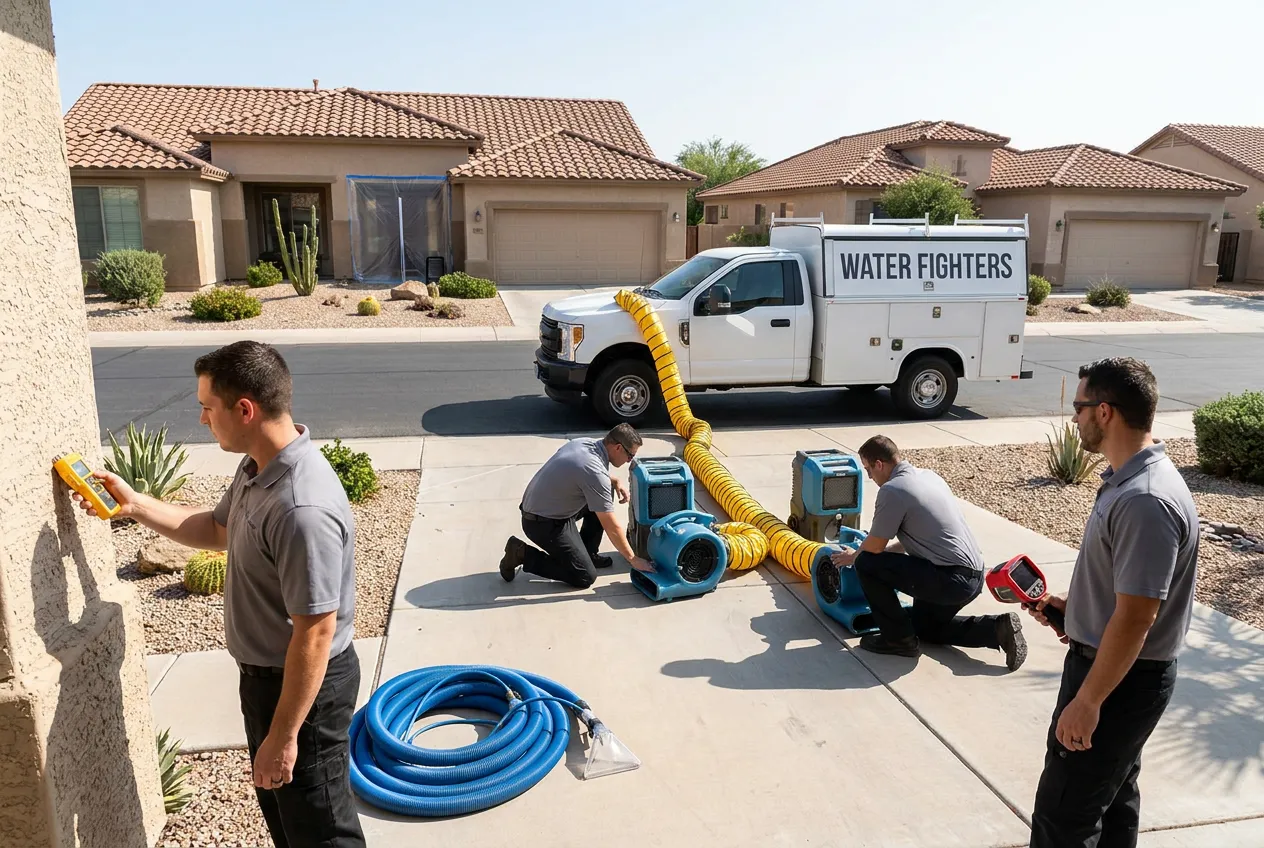
Desert Ridge is one of the newest large neighborhoods in Phoenix — a master-planned community north of the 101 that filled in through the 2000s and kept going. The houses here are young enough that most owners have never thought about their plumbing. They are also now old enough that we get calls from them every week.
The 2000s Master Plan
The community went up quickly, on a plan, with the materials of its decade. That mostly means PEX supply lines instead of copper or galvanized, ABS or PVC drains instead of cast iron, and manufactured components throughout — angle stops, hose bibs, water heaters, and the fittings that connect all of it.
This is a genuinely better set of materials than what a 1958 house got. PEX does not corrode. It tolerates movement and freezing far better than rigid pipe. Nothing in a Desert Ridge wall is slowly closing itself off with mineral deposits.
Which is why the failure pattern here is not about the pipe. It is about everything attached to the pipe, and about the fact that a house built in 2004 is now twenty-plus years old regardless of how new it feels. Nobody replaces a water heater because a neighborhood is fashionable.
What Fails in a PEX House
Three things account for most of it.
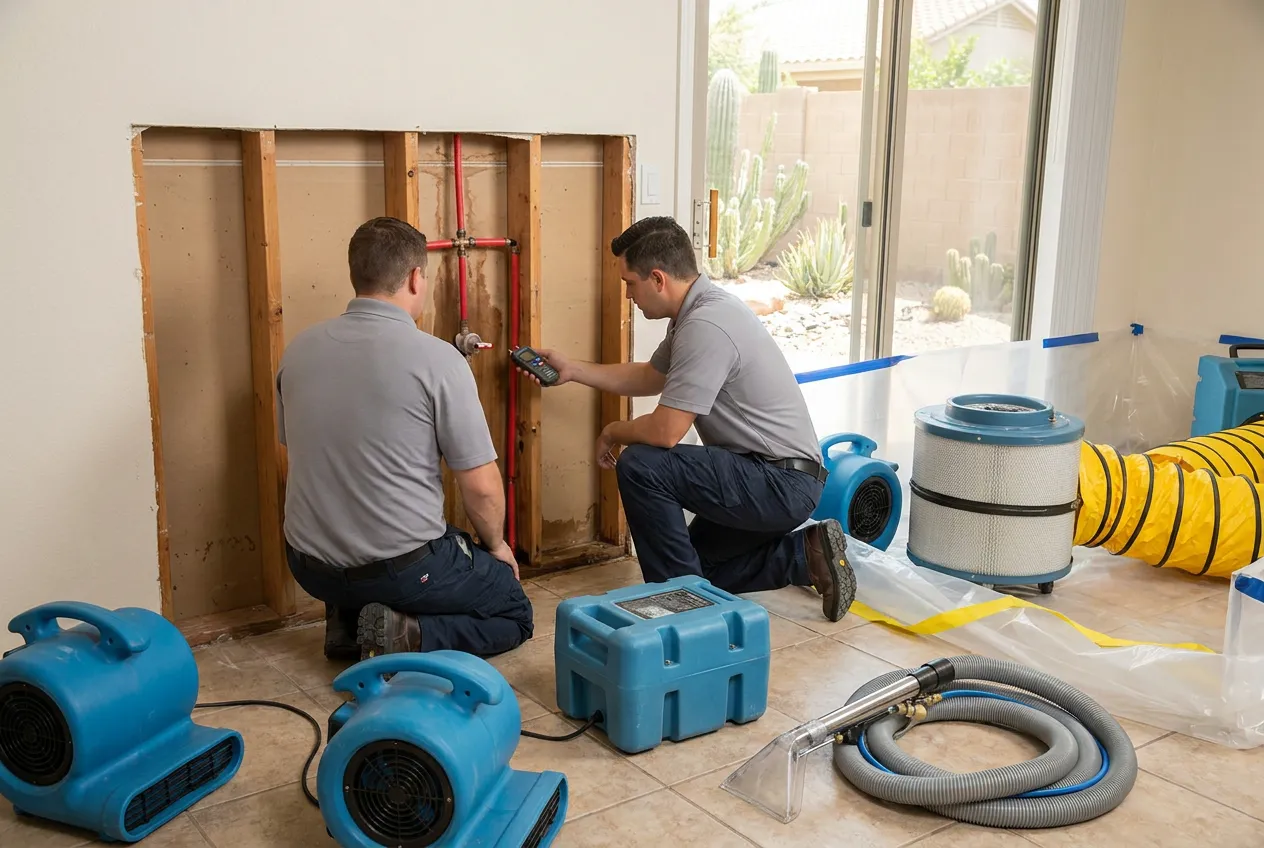
Connections. PEX is joined with fittings — crimp rings, expansion fittings, push-fit connectors — and a fitting is a manufactured part installed by a person on a schedule. The overwhelming majority hold for decades. The ones that do not tend to reveal themselves inside a wall or above a ceiling, which is the expensive place for a slow drip to live.
Appliances and their supply lines. Washing machine hoses, refrigerator ice-maker lines, dishwasher supplies, and water softener connections. These are the least glamorous parts of a house and the most common start of a real loss. A braided line that has been under constant pressure since 2005 has done its job for a long time.
Water heaters. A tank in a Desert Ridge house is likely on its first or second unit, and a first unit is now well past the age where replacement on purpose beats replacement on failure. When the tank goes, it goes all at once.
None of this requires a repipe. It requires an afternoon with a flashlight, and the handbook has the full list of what to look at.
Two-Story Problems
Most Desert Ridge homes have a second floor, and that changes the geometry of a loss more than people expect.
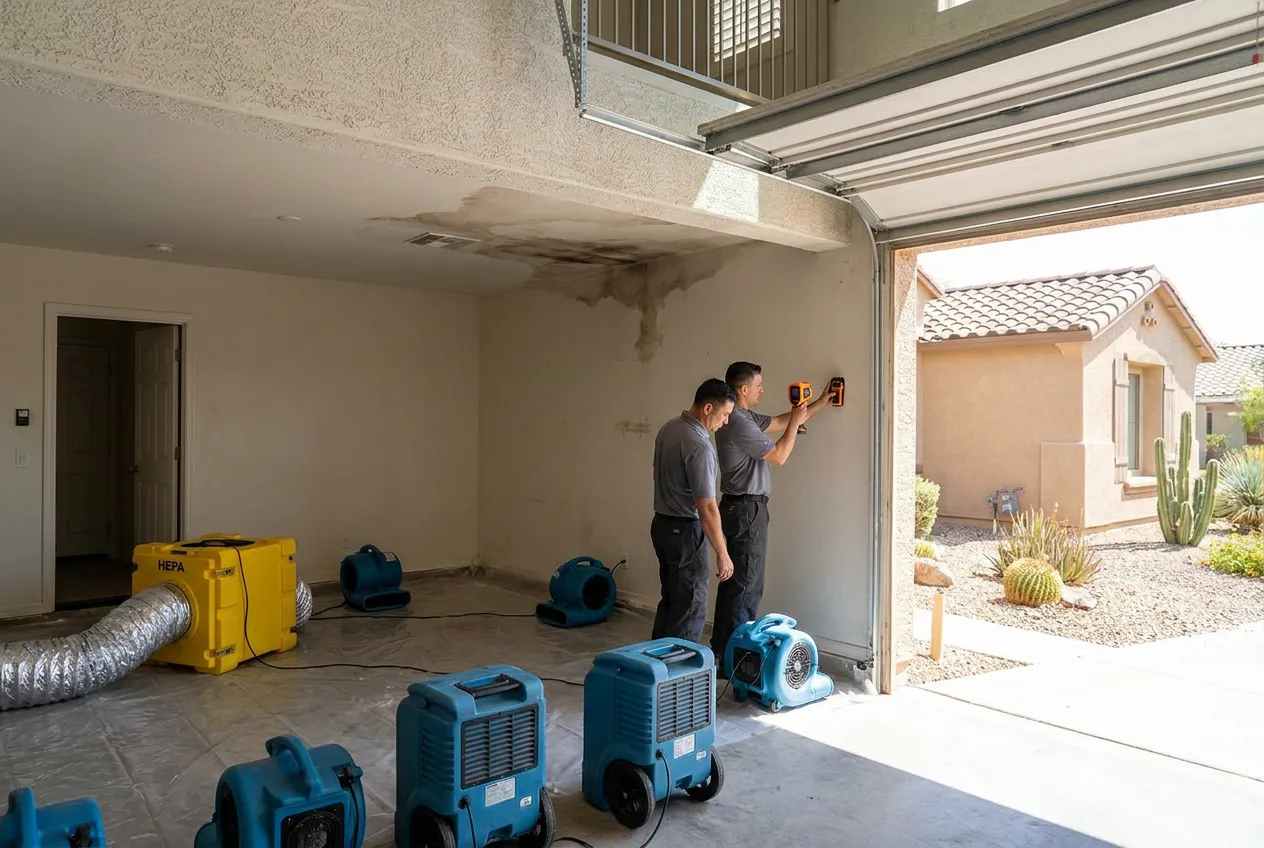
A failure on a ground floor spreads outward across the slab. A failure upstairs travels down, and it uses the structure to do it: through the subfloor, along the joists, down the inside of walls, into the ceiling below, and frequently into the garage. One upstairs laundry hose can produce damage in four rooms on two floors, and the room where the water started may be the least damaged of them.
The second-floor laundry is the specific hazard. It is a convenience nearly every home in this era has, and it puts a pressurized water connection above finished living space. A pan and a drain help. A leak detector on the floor behind the machine helps more, and costs very little.
The other upstairs feature worth knowing about is the attic air handler. Condensate lines clog during a Phoenix cooling season, the pan overflows, and the first sign is a stain on a ceiling in a room nobody was in. If a ceiling stains in July with no storm in sight, that is the likely cause, and the cause guide covers the related tank story.
Common Questions
Our house is from 2005. Isn't that too new for plumbing problems?
The pipe is fine. The parts attached to it are twenty years old — water heater, angle stops, appliance hoses, softener connections — and those are what fail. New construction does not exempt a house from component age.
Does PEX have a lifespan we should worry about?
The tubing itself holds up well and does not corrode. Failures in these homes cluster at connections and fittings rather than in the middle of a run, which is why the ones we find are usually inside walls or above ceilings.
The laundry is upstairs. What can we do about that?
A drain pan plumbed to a drain, and a leak detector on the floor behind the machine. Detectors are inexpensive and they catch the slow version before it reaches the ceiling below.
A ceiling stained in the summer and it hasn't rained in months.
Almost always the attic air handler. The condensate line clogs, the pan overflows, and it comes through the ceiling. An annual flush prevents most of it.
Water came through the garage ceiling. Where did it actually start?
Usually not in the garage. Water travels along framing before it falls, so the visible drip is the lowest exit it found, not the source. Finding the origin is the first step, before anything gets dried.