
Hidden Water Damage Signs in Phoenix
Published October 8, 2026 · Last reviewed October 8, 2026 · Water Fighters Restoration
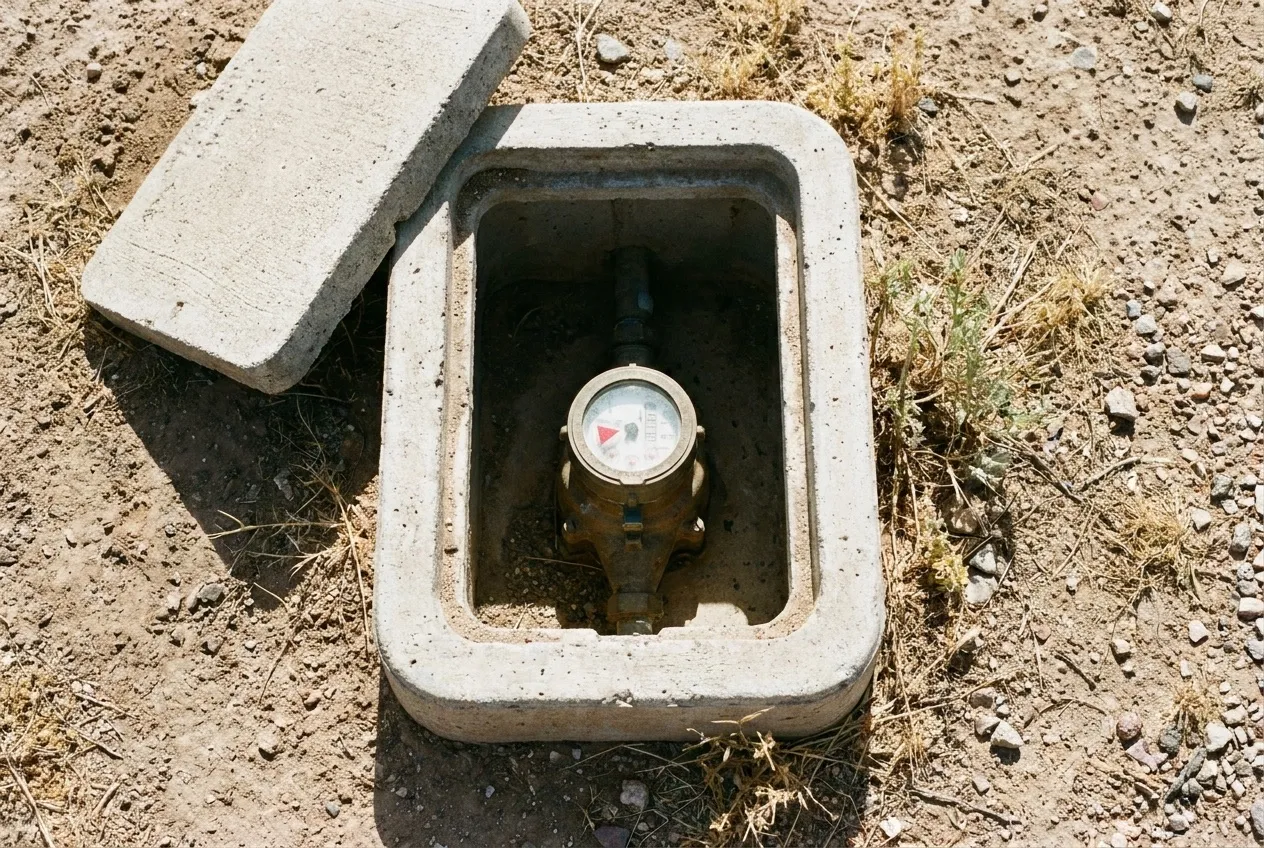
The water bill came in high, and nothing in the house looks wet. There's no puddle and no stain. The only thing moving is the little triangle on the meter face, turning slowly with every faucet off.
An evaporation pan at Mesa loses about 94 inches of water a year, and Phoenix gets about 7 inches of rain. Pans overstate what real surfaces lose, but the point stands: surface water disappears fast here. A hidden leak leaves fingerprints instead.
The dry-climate fingerprints
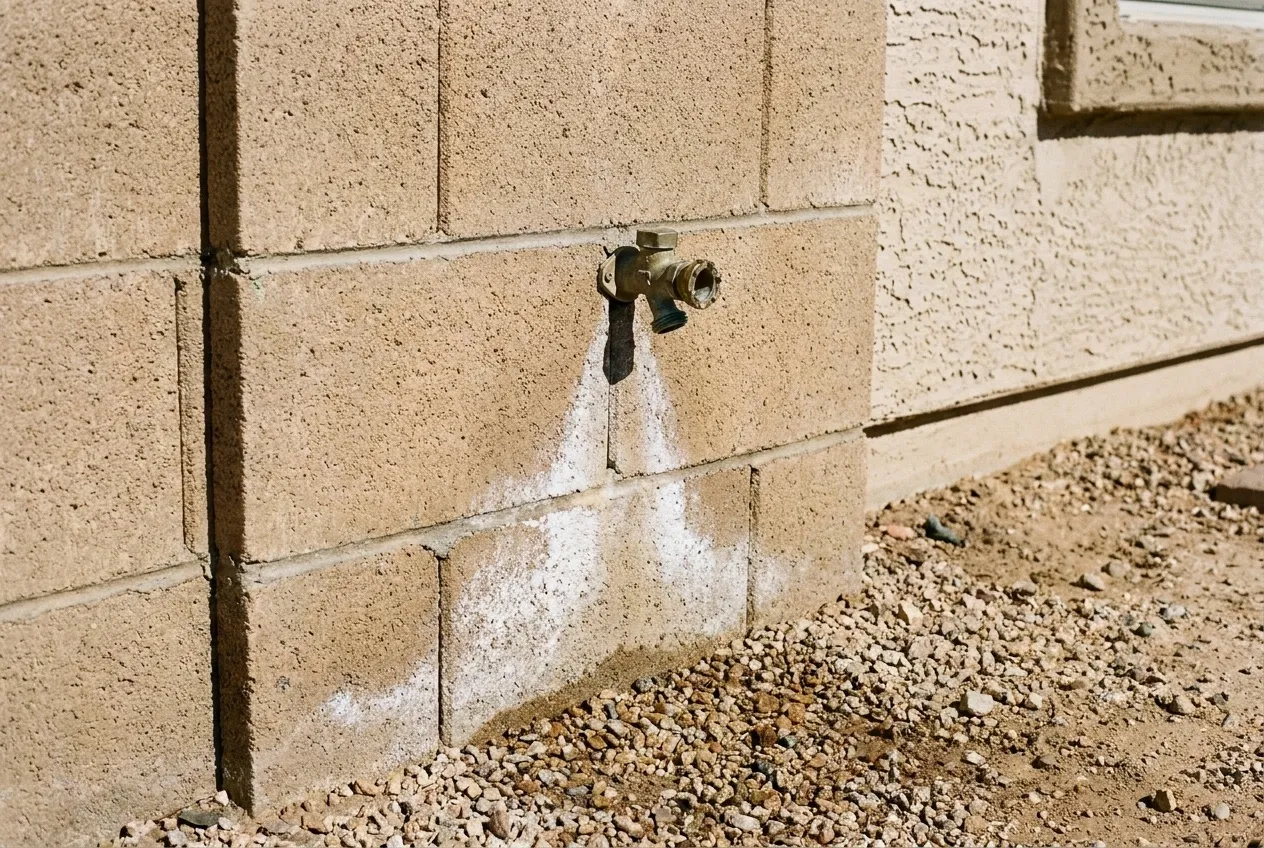
Mineral traces. The City of Phoenix's 2025 water report puts hardness at 10 to 17.6 grains per gallon. When a slow leak dries, those minerals can stay behind as a pale crust at a valve, a supply line, or a cabinet base. A white deposit proves nothing by itself; if you can't tell mineral from growth, the mold inspection guide covers how that question gets checked.
Efflorescence on concrete block. The Concrete Masonry & Hardscapes Association (CMHA) says heavy white streaks just below mortar joints, or localized deposits, mean water "has entered or is entering the wall at a higher elevation." Uniform bloom on a new wall is normal as it dries. Localized or recurring deposits are the signal. CMHA says efflorescence "will not affect structural performance," but the water feeding it still comes from somewhere.
A bill that's high for the season. The City says unexplained month-to-month or year-to-year increases in water use may indicate a leak. If nothing indoors is obvious, it says to check outdoors, where "soggy ground or sinkholes can be evidence of underground line leaks."
Reading the meter
Most meters sit near the curb or sidewalk in a concrete box, and the lid lifts with a long screwdriver. Go carefully, since small animals sometimes take up residence inside, and some providers lock the lids. Find the low-flow indicator, a small triangle, star, or gear that turns when water moves. On an analog meter, read it, wait 20 minutes, and read again. A digital meter needs light to wake up; then watch the flow rate for at least 10 flashes.
Reading is all you do at the box. The City of Phoenix says shutting water off at the meter "requires a special tool and you may be held responsible for any repairs to a damaged water meter." The shutoff that's yours is the house valve where the main line enters the home.
The isolation check: where is the water going?
Work through this order from the leak guide by the City and the Arizona Municipal Water Users Association (AMWUA), reading the meter after each step. Turn old valves by hand only, since they can fail.
- Turn everything off. Every faucet, fixture, and appliance, including the evaporative cooler and the pool autofill. If the meter still moves, water is going somewhere.
- Close the house valve. It's usually at the front or side of the house, below a hose bibb. Close any bypass lines too, and check that a faucet, the irrigation, and the pool fill all run dry. If the meter still moves, the leak is in the service line between the meter and the house, which is a plumber's job. Reopen the valve.
- Close the irrigation valve next to the backflow preventer. If the meter stops, the leak is in the yard lines; see the irrigation leak guide.
- Close the pool fill. Shut the pool supply valve, then read. The pool leak guide explains how an autofill can mask a leak.
- Close each device's supply valve in turn: reverse-osmosis unit, softener, washer, icemaker, water heater, evaporative cooler, humidifier, water feature. Read after each one.
- If nothing stops it, close every remaining supply and bypass valve except the house valve, then look. Outside, check for wet spots, small holes, and depressions along pipe routes. Inside, check for damp spots and stains. After running hot water, a warm spot on the floor "could indicate a leaking hot water pipe under the concrete slab," and the slab leak guide takes it from there.
If a valve breaks or won't close, the City of Phoenix's water emergency number is 602-261-8000. Outside Phoenix, call your water provider.
What professionals add
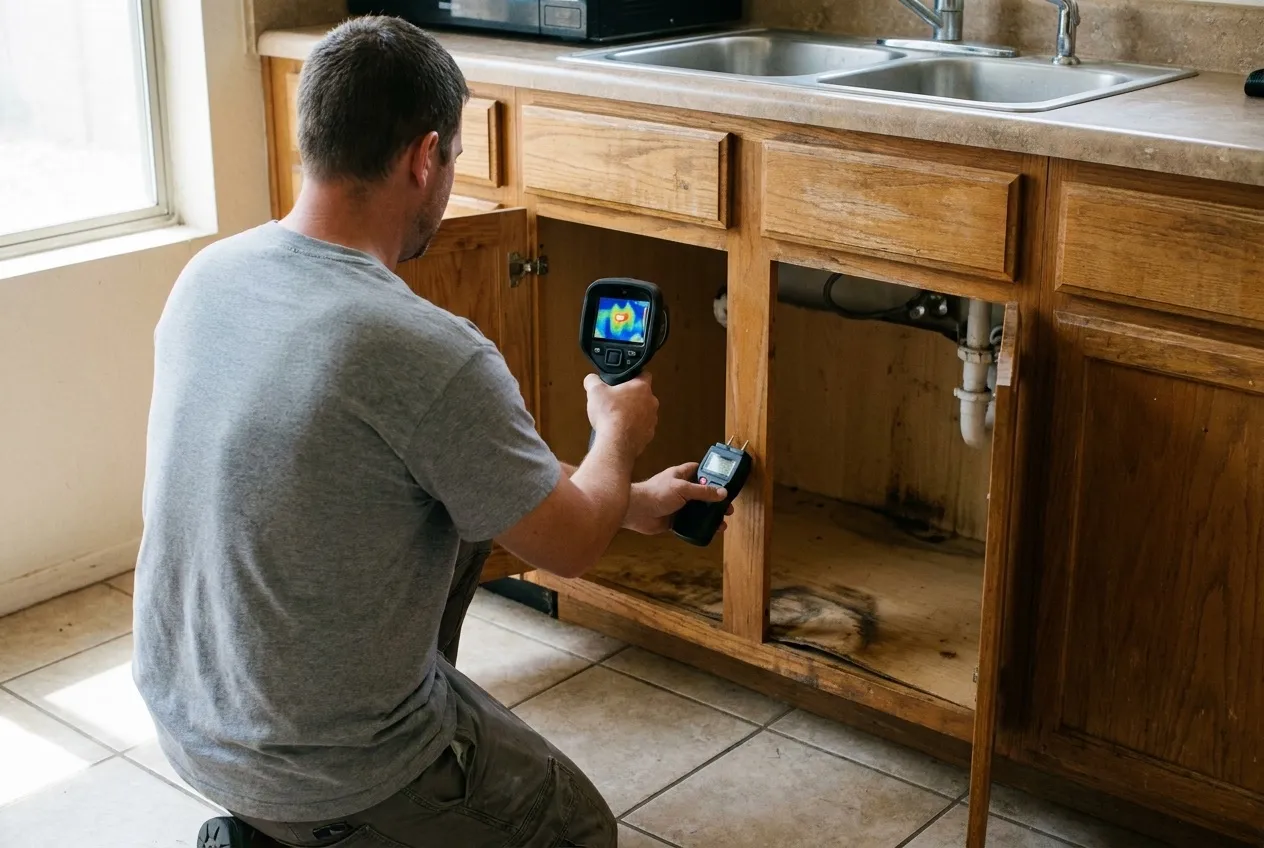
A thermal camera helps, but it doesn't see water. As one forensic consulting article puts it, "thermal images do not depict moisture or distinguish between wet or dry." They show temperature patterns, and reflections or sun-warmed surfaces can produce false hits. A cool spot on the screen gets confirmed with a moisture meter.
Finding the leaking pipe is a plumber's or leak-detection company's job. Water Fighters Restoration maps how far the moisture reaches and dries it. One team does mitigation and rebuild, so the whole water damage restoration job stays in one file. Water Fighters is Open 24 hours, 7 days, and on-site within an hour.
EPA says items dried within 24 to 48 hours will not become moldy in most cases. A hidden leak may have run longer; the Phoenix mold guide covers what changes.
Why finding it early matters
The 2011 HO 3 homeowners form, as quoted by United Policyholders, excludes "constant or repeated seepage or leakage of water or steam over a period of weeks, months, years." From a typical insurer's view, the article notes, "all that matters is when the leak began." Forms vary, but the lesson is to act on the first sign. The coverage guide explains sudden versus gradual. If you bought a resale home, the Stetson Valley page covers whether an earlier leak was dried properly.
Common Questions
The meter shows water moving, but nothing in the house looks wet. Where is it going?
Somewhere you can't see yet. If the meter keeps moving with the house valve and any bypass lines closed, the leak is in the service line. If it stops when the irrigation valve closes, it's the yard lines; if not, try the pool fill, then each device, including the cooler. If nothing stops it, the leak is in the house's own pipes, possibly under the slab. The valve in the curb meter box stays with your water provider.
Can the water meter move when nothing is leaking?
Yes. Several devices refill or regenerate on their own: a pool autofill, an evaporative cooler's refill, an icemaker, and a reverse-osmosis system or water softener during regeneration. A flushed toilet or a faucet left running moves it too. The AMWUA and City guide says to rule those out first.
A Phoenix meter reads in cubic feet. How much water is that?
One cubic foot is 7.48 gallons, per the AMWUA and City guide. A leak of a tenth of a gallon a minute wastes 4,320 gallons a month. EPA's check is to read the meter before and after two hours with no water use: "If the meter changes at all, you probably have a leak."
Which month's water bill shows a hidden leak best?
A winter one. EPA points to a colder month such as January or February, and says that if a family of four uses more than 12,000 gallons a month, "there could be serious leaks." In the Valley watering booklet's schedule, December through March has the longest gaps between landscape waterings, and coolers are usually off. That often makes the winter bill the cleanest baseline, unless the lawn is overseeded for winter.
The meter test passed. Can there still be a hidden leak?
Yes. The meter test catches continuous leaks on the supply side. The AMWUA and City guide notes that "leaks may be intermittent, meaning they only occur when a water-using device is in operation." A drain line can leak only when water runs down it. Water from outside, like rain through a roof or storm runoff, never passes through the meter. A moisture reading at the stain settles it.