
Water-Damaged Flooring in Phoenix
Published October 8, 2026 · Last reviewed October 8, 2026 · Water Fighters Restoration
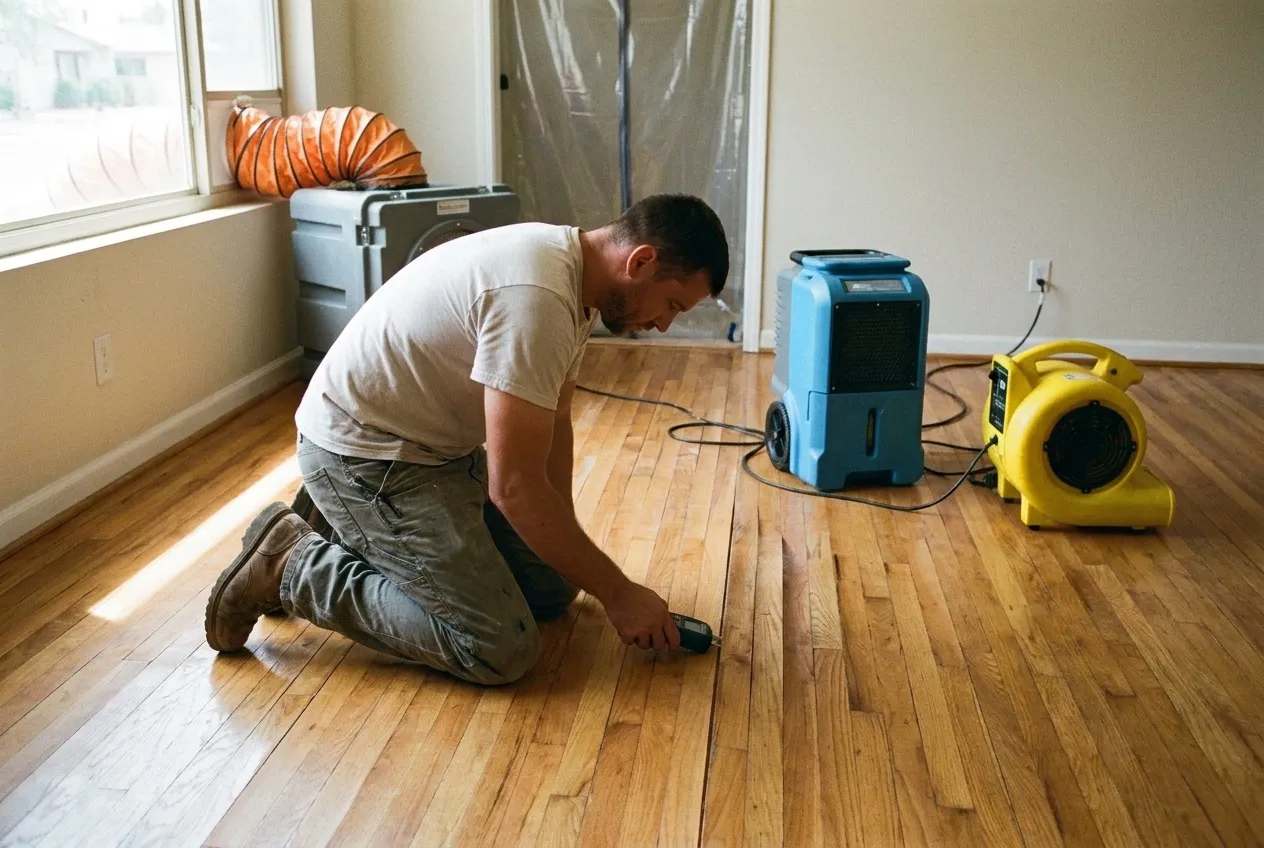
The supply line under the kitchen sink let go overnight. By morning the oak strips in the hallway have raised edges you can feel through a sock, and the laminate by the dishwasher has a ridge at every seam. The vinyl plank in the dining room looks untouched, which tells you less than you'd hope. Most of what water does to a floor happens underneath it, and each floor type fails on its own clock. Carpet is its own decision, covered in the wet carpet guide.
What water does to each floor
- Tile. The tile rarely suffers from clean water. The questions are the grout, the setting bed, the bond, and the slab underneath. The slab leak guide covers when tile survives.
- Vinyl plank. It's sold as waterproof, and it is, against spills. Leak water runs past the edges and through the seams to the subfloor.
- Laminate. The core is compressed wood fiber, and it swells where water reaches it, usually at the joints.
- Solid hardwood. It holds water deep, cups when the bottom of the board is wetter than the top, and can crown later if it's sanded flat too soon.
- Engineered wood. It moves less than solid wood but can be refinished fewer times, so there's less room to sand out damage.
What to do while it's still wet
Stop the water at the fixture valve, or close the house valve where the line enters the home. Leave the curb meter box to your water provider. Photograph every floor, edges and seams included, and then leave the floor where it is. Pulling planks, lifting an old vinyl layer or sanding a cupped board makes the next decision harder. About 40 percent of the City of Phoenix's housing was built before 1980, and in those houses an older layer under the newer floor may need testing before anyone disturbs it. EPA says to dry water-damaged areas within 24 to 48 hours to prevent mold growth. Water Fighters Restoration is Open 24 hours, 7 days, and on-site within an hour.
The water that matters is under the floor
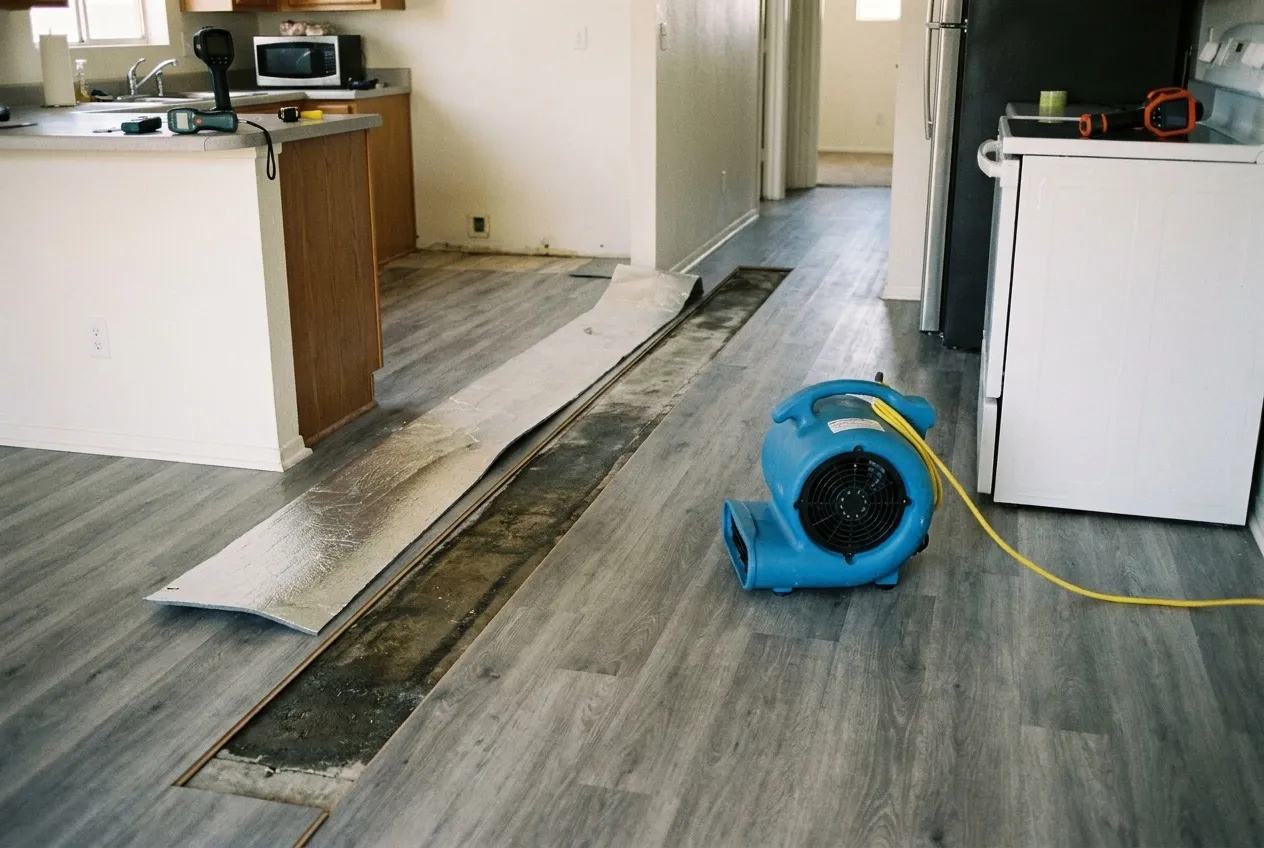
In many Valley homes, tile, laminate, vinyl plank and a lot of engineered wood sit on a concrete slab or a thin underlayment over it. For laminate over an above-grade slab, NALFA, the laminate trade group, calls for a 6-mil vapor barrier. That plastic keeps slab moisture out of the floor. After a leak, it also traps the water that got under the planks, which has very little path to evaporate until the floor is opened.
EPA's cleanup table says the subfloor under flooring "must also be cleaned and dried," and that table covers clean water only. When Category 3 water gets under vinyl plank, a 2025 Cleanfax article frames the question as less whether it can be dried than whether it should be. Outside water that crossed the yard or street is handled as Category 3, and so is any sewer or drain backup. The categories guide explains the call.
What gets opened up and dried
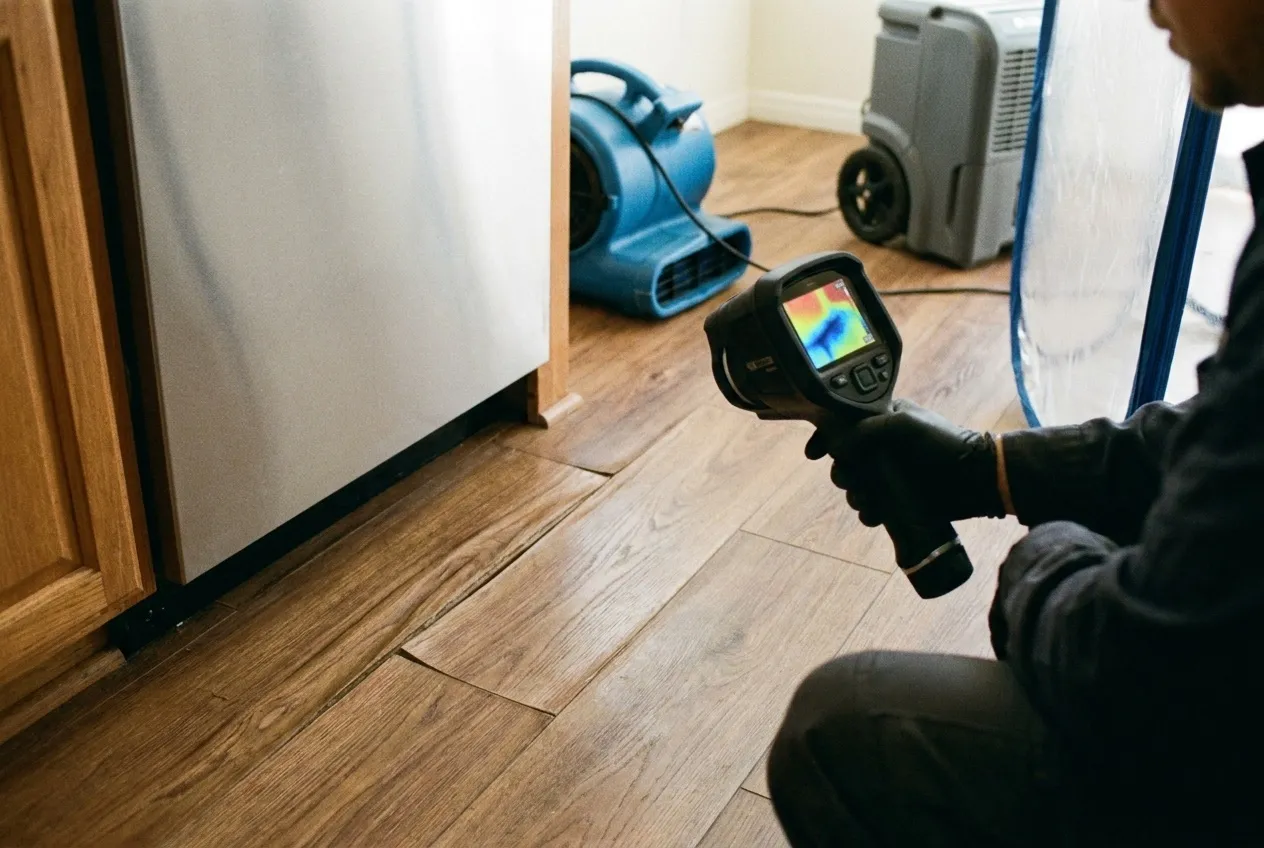
Readings decide, not the look of the floor. A thermal camera shows temperature, so a cool streak along laminate seams is a lead, and a pin meter in the material confirms it or rules it out. Together they set how far a tear-out goes and which floors can stay down to dry in place.
Hardwood cups now and can crown later
The NWFA describes cupping as boards with raised edges and centers lower than the edges. The bigger risk comes once the floor starts to flatten. The NWFA's magazine described a previously flooded floor where the surface read about 6.5 to 7.0 percent moisture while deeper pins read above 10. Sand a floor like that flat too soon and the raised edges are cut away, so the top crowns as the wood reaches equilibrium.
Under the S500's class system, wood is a low-evaporation material, and water held deep in it makes a Class 4 loss, where drying may take longer. EPA's cleanup table also urges caution when applying heat to hardwood floors. The drying-time guide explains why wood runs on a longer clock than the carpet beside it.
Insurance, warranties and the rebuild
In the warranties Cleanfax describes, "waterproof" covers the product against surface spills, and leaks and floods sit outside it. For how policies weigh sudden versus long-term damage, see the coverage guide. Water Fighters gives free estimates, the estimate you receive is the same one your insurer receives, and we bill the insurance company directly. One team does mitigation and rebuild, so the readings behind a tear-out stay in the same water damage restoration file as the replacement. The repair guide covers matching and transitions.
Preventing the next one
The NWFA recommends keeping a home with wood floors between 60 and 80 degrees Fahrenheit and 30 to 50 percent humidity year-round, because floors that lose moisture can gap or split. In a newer house, cupping raises a builder-or-homeowner question, which the Queen Creek page takes up.
Common Questions
Our vinyl plank was sold as waterproof. Why does it have to come up?
Because "waterproof" means waterproof against spills. One manufacturer's warranty says its coverage "refers to topical moisture" and "does not extend to damage of the subfloor or adhesives." It lists plumbing or appliance leaks, storms and floods as abnormal conditions. Leak water runs through the seams and sits on the subfloor, where it has little way to dry while the planks stay down. When Category 3 water gets under vinyl, Fred Hueston, writing in the IICRC's Inspector's Review, calls removal usually the safest option.
The cupped hardwood is flattening out. Can it be sanded now?
Not until the readings say so. Northern Arizona University's S500-based guideline wants moisture content still falling and every affected board within 2.5 percent of a control reading elsewhere on the same floor. It also wants no more than 1 percent difference between the top and bottom quarter inch, and an HVAC system that holds normal room conditions. Sand sooner, and the floor can crown.
Is engineered wood more forgiving than solid hardwood after a leak?
Somewhat, with a trade-off. The NWFA says engineered floors expand and contract less than solid wood, but they can be refinished fewer times, so there's less room to sand out damage. In one instructor's monthly Category 1 flood-house tests, with materials wet 24 to 36 hours before drying began, both took until day 5.
There's an old vinyl floor under our laminate. Does that change the tear-out?
It can. EPA lists vinyl floor tiles, the backing on vinyl sheet flooring, and flooring adhesives among asbestos-containing products. Federal worker rules treat vinyl flooring installed by 1980 as asbestos-containing unless it is determined otherwise under the standard. Old vinyl tile can also pass moisture vapor, which a newer floor laid over it can trap. EPA's advice is to have suspect material tested before it's disturbed, and the asbestos and lead guide covers who does that.
Why did the laminate swell at the seams first?
Because the seams are where water reaches the core. NALFA describes that core as wood fibers compressed under intense heat and pressure, with a backing typically made from melamine or other water-resistant materials. A joint is the way in. The industry's own standard includes a thickness-swell test that keeps a sample submerged for 24 hours.