
How Long Water Damage Takes to Dry
Published October 8, 2026 · Last reviewed October 8, 2026 · Water Fighters Restoration
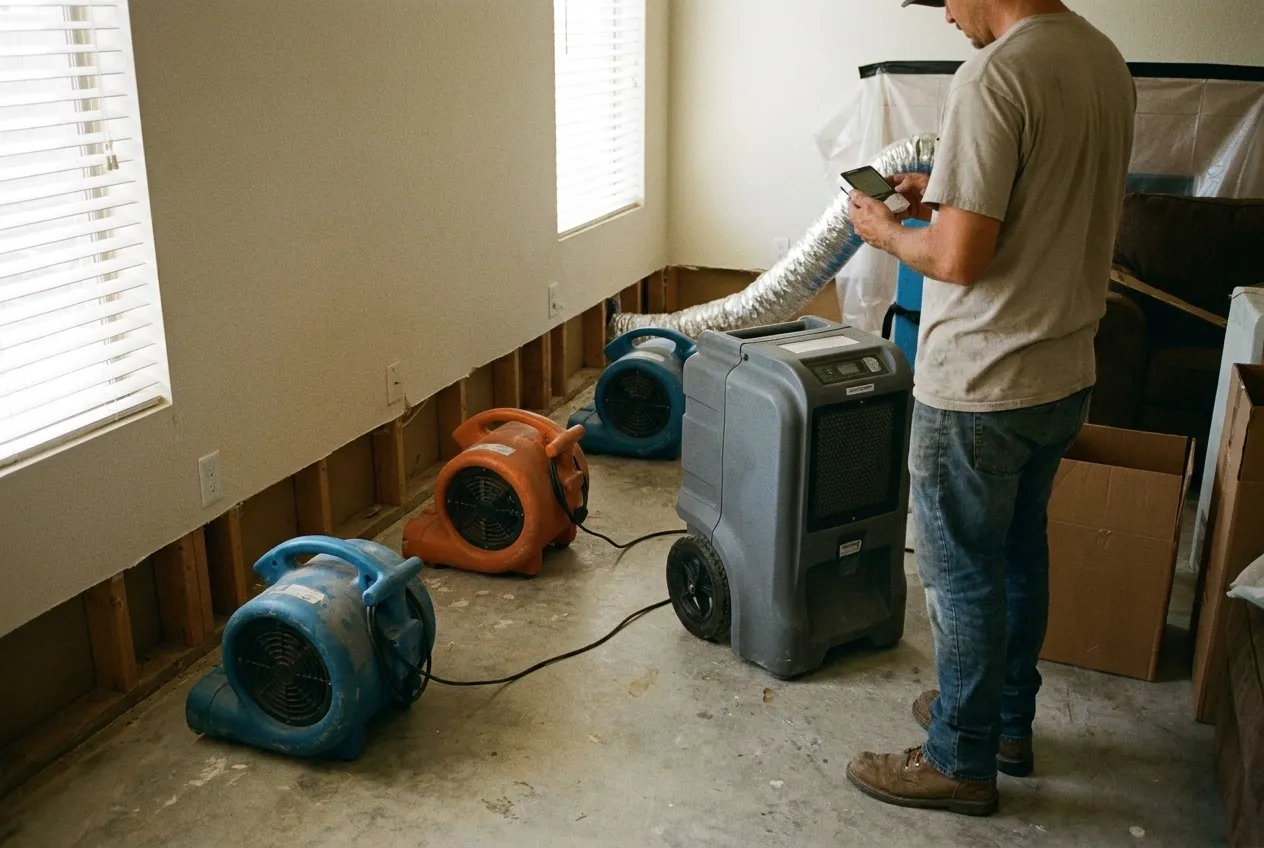
Day three. The air movers are still roaring, the dehumidifier's drain hose is still dribbling into the bathtub, and the living room carpet feels dry under your hand. Someone said this would be done by now. The calendar answer to how long drying takes is "days." The useful answer is "until each wet material reaches its drying goal," and every material runs on its own clock. The handbook's drying chapter covers the basics, and this page covers what sets the clock.
What sets the drying time
- The material. Carpet, cushion, trim and perhaps drywall can reach their dry standard in three days, one panelist said in a 2018 Restoration & Remediation Q&A. He added that a whole structure, with its framing, floor assemblies and concrete, typically isn't dry in three days.
- The class. Water held deep in plaster, wood, concrete or masonry is Class 4, where drying "may require special methods, longer drying times, or substantial water vapor pressure differentials." The categories guide defines all four classes.
- The air. Wet material only gives up water to air that can take more. Damp air slows every material in the room.
- The temperature. A 2022 J.S. Held paper calls air between about 70 and 90 degrees Fahrenheit ideal, especially in the first 36 to 48 hours, and says air above 90 impedes dehumidifiers. A Phoenix house closed up in summer can run hotter than that inside, which is one reason crews manage temperature, not just airflow.
- Contamination. For Category 2 or 3 water, the S500 says remediation should occur before restorative drying. That step comes first, and the drying clock starts after it.
While the equipment runs
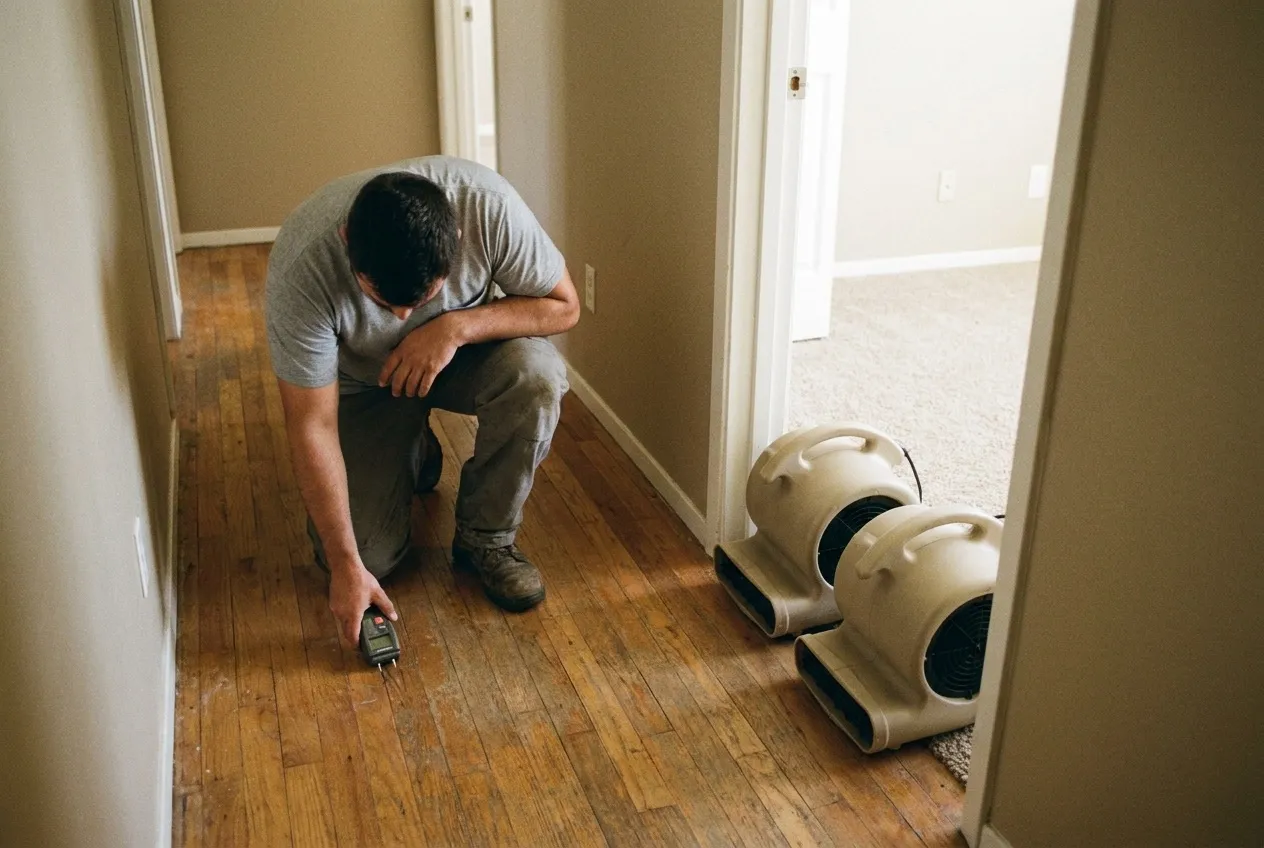
Your part is mostly questions. Ask which materials are still above their drying goal, and what each goal is based on. A good answer names a reading, not a day. Water Fighters Restoration is Open 24 hours, 7 days, and on-site within an hour.
Why moving air alone falls short
Relative humidity is a percentage measured against the air's current temperature. The National Weather Service gives the example: 30-degree air with a 30-degree dew point is at 100 percent relative humidity, while 80-degree air with a 60-degree dew point is at 50 percent. The higher the dew point, the more moisture the air holds. That's why restorers track dew point or grains of water per pound of dry air, not relative humidity alone.
Air movers speed evaporation, but the water has to go somewhere. J.S. Held puts it simply: if the humidity is too high, the air "won't be able to accept the water molecules from the object to be dried." Without dehumidification, it adds, absorbent materials in the room could soak the moisture back up. It also says "air records alone will not prove that a building is dry," and that after 24 hours the conditions show whether dehumidification is keeping up. The equipment has limits too. The same paper says low-grain refrigerant dehumidifiers keep removing significant water vapor below 40 grains per pound, while conventional units lose efficiency below 55. The flood cleanup page covers why extraction comes before any of this.
What Phoenix air does to the clock
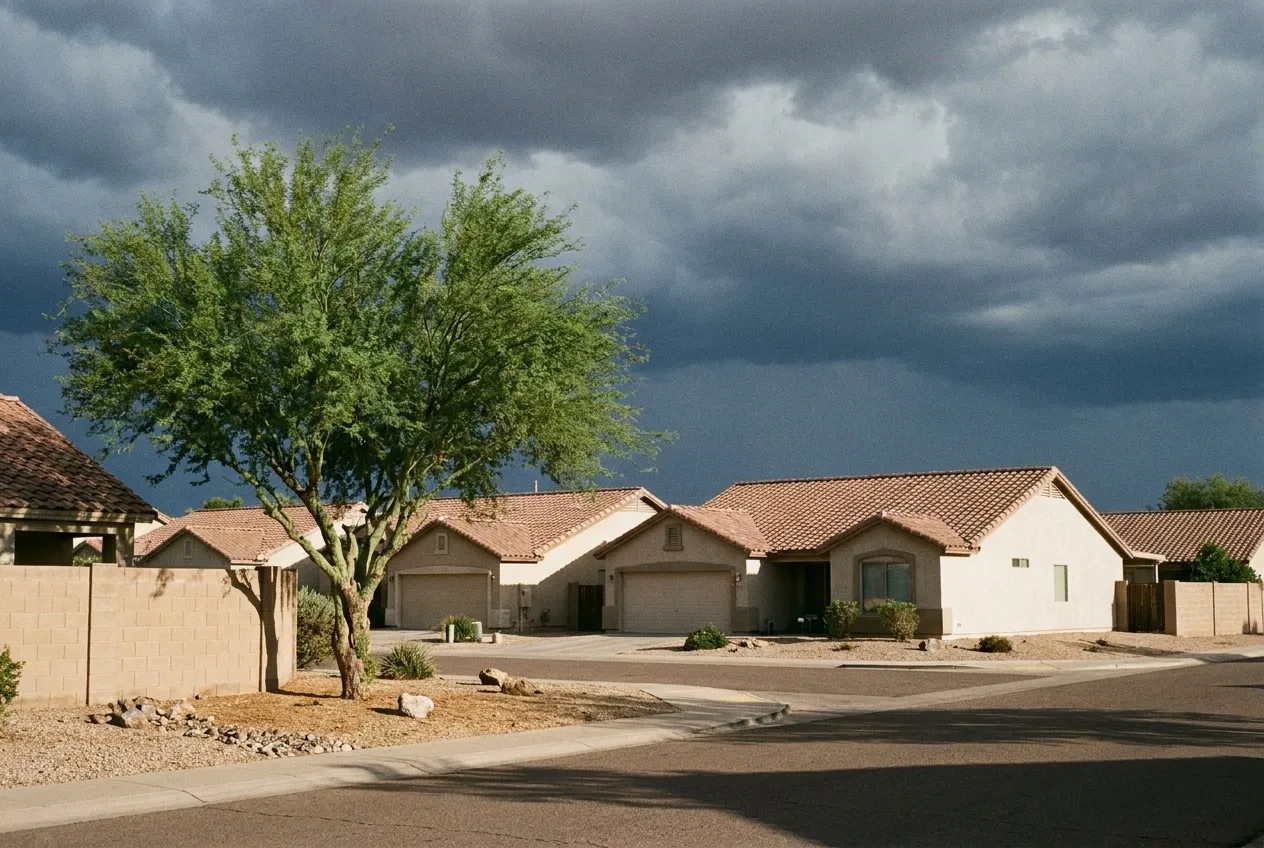
Dry outdoor air can help. NOAA's averages for Sky Harbor put annual relative humidity at 46 percent in the morning and 23 percent in the afternoon, against 84 and 55 in Birmingham, Alabama. June averages 28 and 12. By August, with the monsoon, it's 47 and 24, and the Weather Service describes "increased monsoon humidity" on top of summer heat. These are outdoor airport averages, not your living room.
A 2009 Restoration & Remediation article looked at outside air leaking into a job. Its verdict: "In dry regions it will be beneficial; in humid climates it can be crippling and destroy the drying strategy." It also noted that outside conditions may actually aid drying when outdoor specific humidity is lower than inside. A low outdoor percentage doesn't settle that by itself. Crews compare grains or dew point inside and out, and dust, security and monsoon storms limit the option.
The finish line, and what insurance looks at
Each material is done when it reaches its own goal, so a house can have dry carpet and wet hardwood on the same day. Concrete gives up water slowly, which the slab leak guide covers, and the North Phoenix page takes up 1960s and 1970s block masonry. The shortest dry-out starts early. EPA says it's important to dry water-damaged areas within 24 to 48 hours to prevent mold growth, and its cleanup table calls the 48-hour mark only a guideline.
For insurance, the readings justify every day the equipment stays. Water Fighters bills the insurance company directly, and the estimate you receive is the same one your insurer receives. One team does mitigation and rebuild, so when the last material hits its goal, the rebuild starts from the same file.
Common Questions
Why does hardwood take longer to dry than the carpet next to it?
Because wood holds water deeper and gives it up more slowly. The S500 class system calls wood a low-evaporation material, and water absorbed deep into it is Class 4, "deeply held or bound water." In one instructor's monthly Category 1 flood-house tests, most materials dried in 3 to 4 days, while the engineered wood and hardwood flooring took until day 5. The flooring guide covers what that does to the boards.
What does "grains per pound" mean on a drying log?
It's the weight of water vapor in each pound of dry air. A grain is a unit of mass, and there are 7,000 grains in a pound. Relative humidity is a percentage of what the air could hold at its current temperature, so it moves when the room warms or cools. Grains per pound doesn't, so a falling number means water is actually leaving the air.
The adjuster mentioned three days. Is that a rule?
No. Three days was never a standard. One industry instructor traces it to an old franchise guarantee, and insurance programs that pay for only three or four days of equipment keep it alive. The S500's drying goals are material conditions, not days. Plenty of materials do reach their goal in about three days, and the house is done when the last one does.
Every room got wet. What do the readings get compared against?
Normally, the dry standard comes from a reading on the same kind of material in an unaffected part of the house, as an IICRC technical tip recommends. The 2021 S500 also lets drying goals draw on regional climate history and published references, and one instructor recommends that when unaffected material is scarce. He cites USDA guidance that targets framing lumber at about 15 percent moisture content, not over 19. Either way, the log should say where the number came from.
Can a house be dried too much?
Yes. A drying-equipment maker's tech tip says the dry standard helps prevent over-drying, which can cause weakened building materials, cracked drywall, and brittle or warped wood flooring. The NWFA recommends keeping homes with wood floors between 30 and 50 percent humidity year-round. Phoenix's outdoor air often runs far below that: Sky Harbor's average afternoon humidity is 13 percent in May and 12 percent in June.