Water Damage Categories and Classes, Explained
Published October 8, 2026 · Last reviewed October 8, 2026 · Water Fighters Restoration
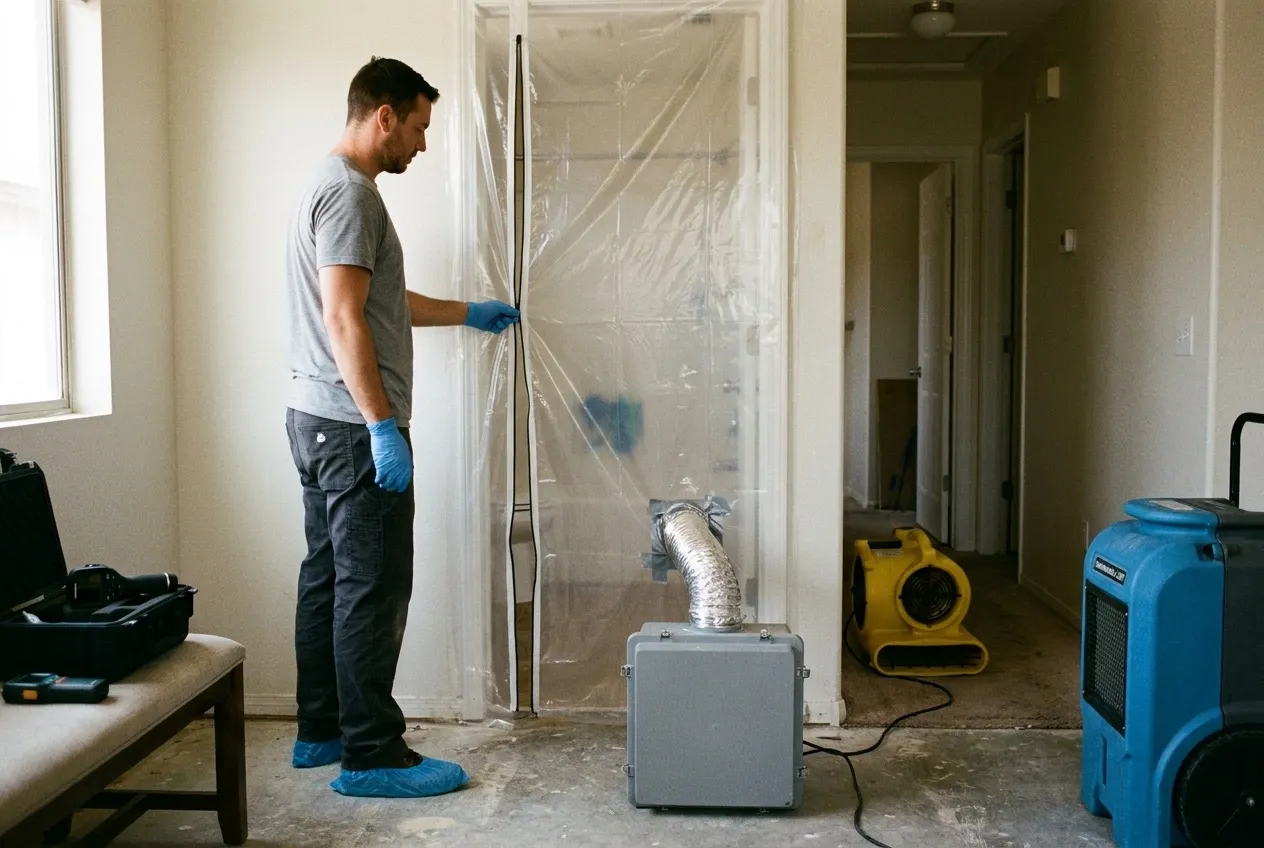
The technician comes out of the laundry room and calls it Category 2. The next day, the drying report adds Class 3. The two labels sound like one rating, but they answer different questions. The category is what's in the water. The class is how much of the house soaked it up, and how hard it will be to get back out. The handbook has the one-paragraph version, and this page is the system behind it.
The definitions
Both scales come from ANSI/IICRC S500, the restoration industry's water damage standard. The current edition is the fifth, from 2021, and it's a standard of care for restorers, not a law. Categories 1 and 2 below follow a 2022 J.S. Held paper citing the 2015 edition, and the classes follow 2015-edition summaries from J.S. Held and Cleanfax. Category 3 is the 2021 wording.
Categories: what is in the water
- Category 1: Water from a sanitary source that doesn't pose substantial risk from skin contact, swallowing or breathing. Examples include a broken supply line and a tub or sink overflow with no contaminants. The standard adds that clean water may not stay clean once it touches other surfaces or materials.
- Category 2: Water with significant contamination that has the potential to cause discomfort or sickness if contacted or consumed. Examples include dishwasher and washing machine discharge, a broken aquarium and a punctured water bed.
- Category 3: Water that is "grossly contaminated and can contain pathogenic, toxigenic, or other harmful agents." Examples include sewage, wasteline backflows from beyond any trap "regardless of visible content or color," seawater flooding, and rising water from rivers or streams.
A toilet overflow can land in any of the three, and the toilet overflow guide sorts it out.
Classes: how much got wet, and how hard it is to dry
- Class 1: The least water, absorption and evaporation load. Wet porous material covers less than roughly 5 percent of the combined floor, wall and ceiling area.
- Class 2: A significant amount, roughly 5 to 40 percent.
- Class 3: The greatest amount, more than roughly 40 percent.
- Class 4: Deeply held or bound water in low-evaporation materials like plaster, wood, concrete and masonry, or in built-up assemblies like multilayer subfloors. Drying may require special methods and longer drying times.
How a category gets decided
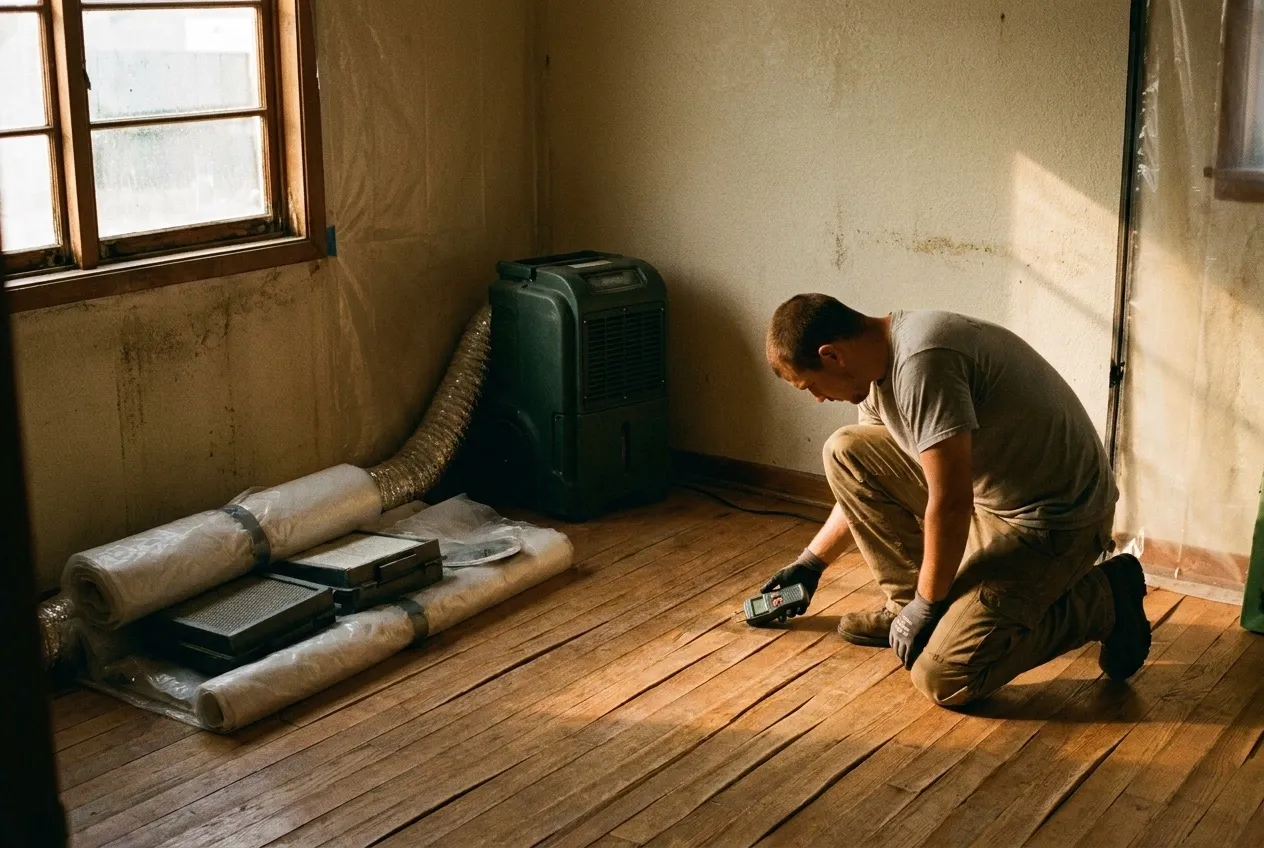
The S500 calls the category decision a "preliminary determination," made by the restorer after inspection to set the scope of work. Where the water came from is the starting point. What it touched, and how long it sat, can move it.
Time and temperature both count. A 2016 Cleanfax summary of the 2015 edition notes there are "no time references to when a category will or can change." Northern Arizona University's guideline sets its own clock: gray water untreated for longer than 48 hours may change to Category 3. Clean water caught early gives the category the least time to change.
Storm water has its own statement. On February 10, 2026, the S500 Consensus Body wrote that "top-down water ingress, wind-driven rain and water from weather related events are not automatically considered Category 3 Water." The restorer can call it Category 3 when inspection finds a grossly contaminated condition. Water from a running wash fits the named example of rising water from rivers or streams. Outside water that crossed the yard or street is handled as Category 3, which is more cautious than the S500 requires. The monsoon flood guide covers storm water.
Before the category is set
Treat the water as if it could be contaminated. EPA's cleanup table, which covers clean water only, says not to use fans before determining that the water is clean or sanitary. Water Fighters Restoration is Open 24 hours, 7 days, and on-site within an hour.
What the labels change on the job
In practice, the category mostly decides what leaves the house, and the class mostly decides how much drying equipment and time the job needs. On Category 1, the S500 says the restorer can proceed without contamination controls such as containment barriers. On Category 2 or 3, "remediation should occur prior to restorative drying," with contamination controls and worker protection. The sewage cleanup page covers a Category 3 job from containment to disposal.
The class is set after demolition or remediation is finished, and it describes only the job's initial conditions. It's used in calculating the initial humidity control, meaning how much dehumidification the job starts with. The drying-time guide explains why a Class 4 floor runs on a longer clock.
Insurance, the source and the rebuild
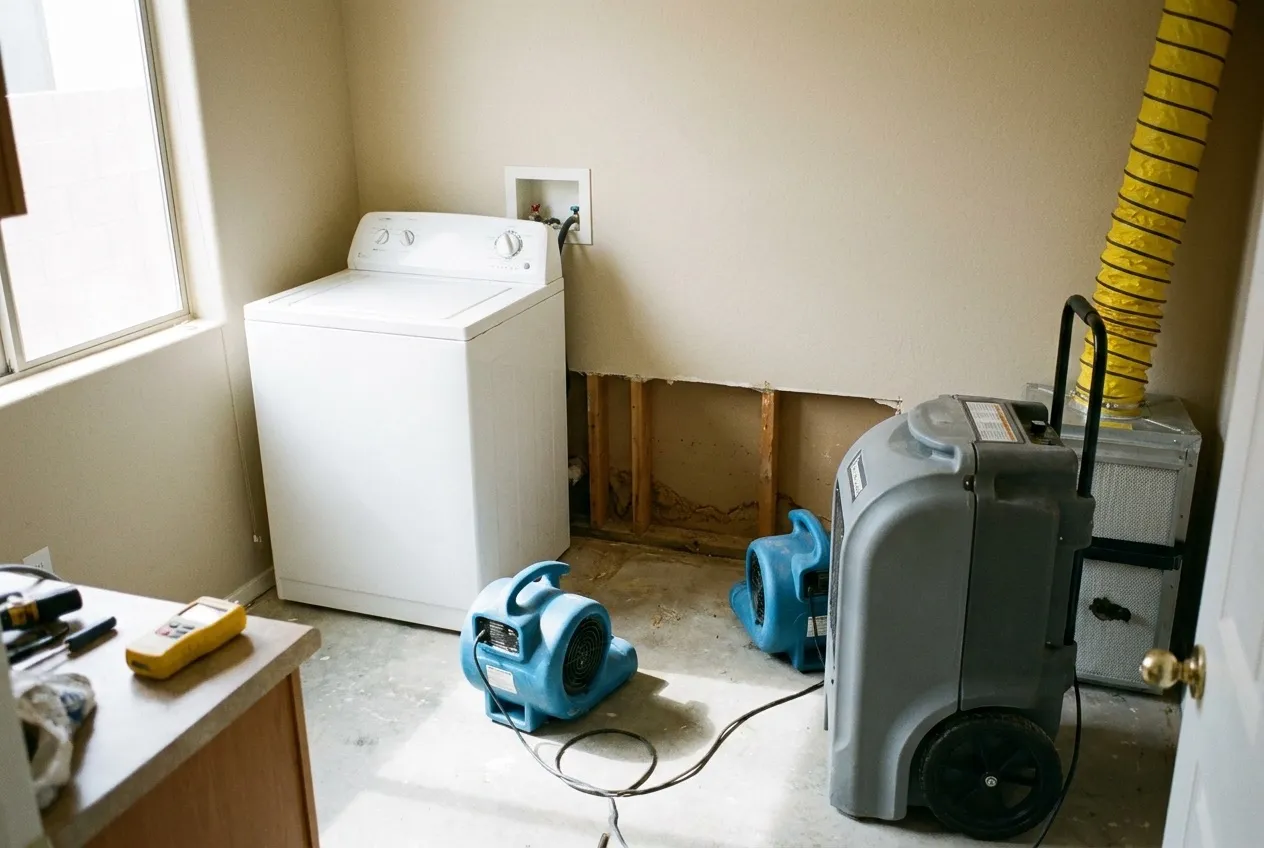
The category and class, with the photos and readings behind them, explain a scope: why the pad left, why a wall opened, why the equipment stayed. Water Fighters bills the insurance company directly, and the estimate you receive is the same one your insurer receives. The S500 assumes that finding and correcting the source is the property owner's responsibility, so a plumber or roofer is often part of the job. One team does mitigation and rebuild, so the category call made on day one stays in the same water damage restoration file as the finished repair. For a real-world category question, the Gold Canyon page takes up reclaimed irrigation water.
Common Questions
A drying report says "Category 1, Class 4." Is that good news or bad news?
Some of each, because the two numbers measure different things. Category 1 means the water was clean at the source, so the restorer can proceed without contamination controls, and materials can often be dried in place. Class 4 means water went deep into dense materials like hardwood, plaster or concrete. Drying those may require special methods and longer drying times.
Who makes the category call, and when does an outside expert come in?
The restorer makes the preliminary determination after inspection. The S500 says an assessment by an indoor environmental professional is often not necessary on a water damage job. It says one should be retained when the inspection finds elevated-risk conditions, such as high-risk occupants, a public health issue, or a need to confirm that the water actually contains contamination.
Does it matter where the water traveled before it reached the room?
Yes. The S500 says the categories consider both the water's originating source and "its quality after it contacts materials present on the job site." Clean supply water that runs through a wall cavity or across a dirty subfloor is judged by what it picked up on the way. The pipe it came from is only the start.
Why would a job be reclassified to Category 3 partway through?
Because inspection can find more than the first look did. A 2007 Restoration & Remediation article, citing the 2006 S500, says the category initially determined "can change during the course of the project." It adds that odors can indicate Category 1 water has deteriorated. Its worked example is a supply-line loss that ran about a week, developed odor and visible mold, and was reassessed as Category 3. Category 3 adds containment, worker protection and removal of porous materials.
Does a Category 3 loss mean asbestos or lead is involved?
No. The category describes contamination in the water. The S500 does note that Category 3 water can carry trace levels of regulated or hazardous materials, such as pesticides. Asbestos and lead in the building's own materials are a separate track, decided by building age and testing under government rules. The asbestos and lead guide covers who does what.