
Water Damage Restoration in Arcadia
Published August 21, 2026 · Last reviewed August 21, 2026 · Water Fighters Restoration
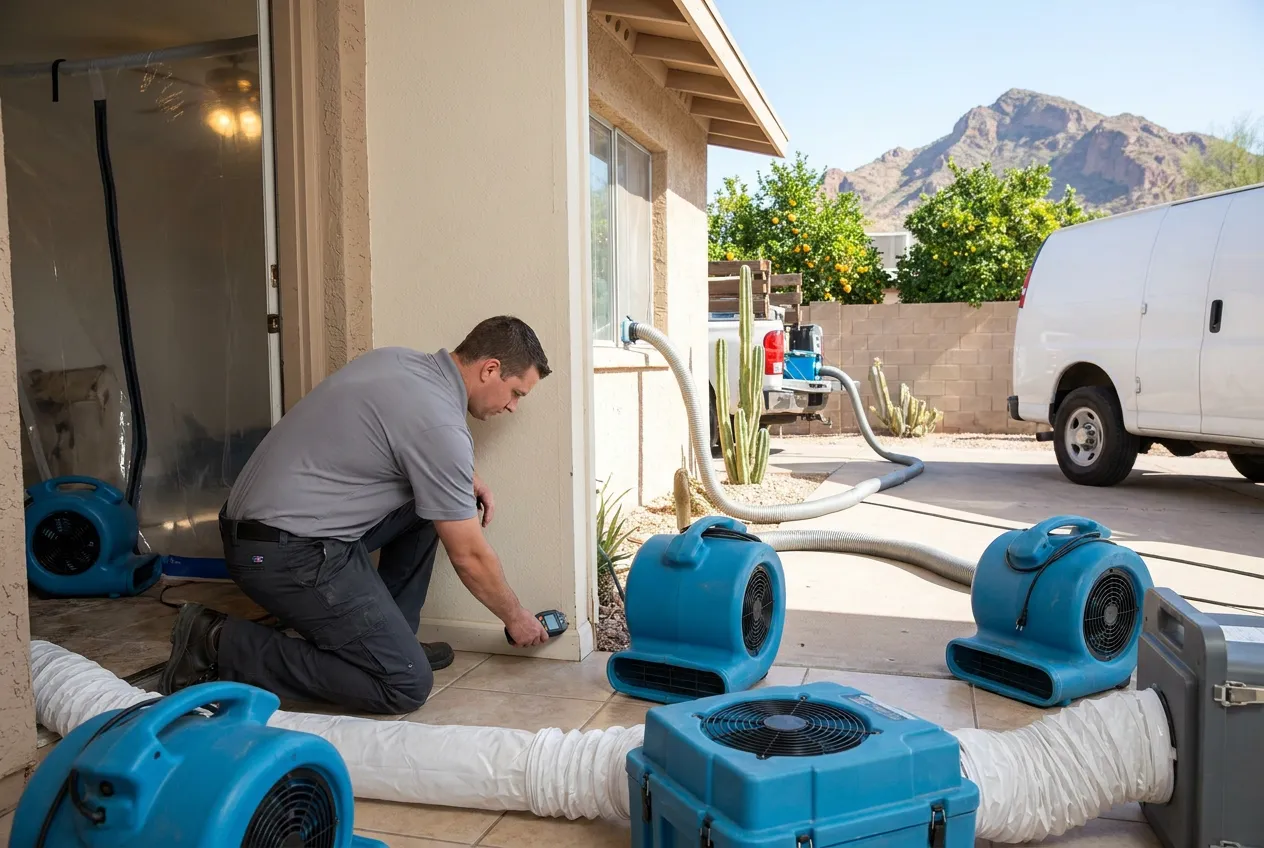
Arcadia is a neighborhood of low ranch houses on big irrigated lots under Camelback Mountain, and it has one structural quirk that shapes nearly every job we run here: the houses are old and the interiors are not. A kitchen finished last year sits on top of plumbing installed when Eisenhower was president.
Citrus Lots and Ranch Houses
The land was groves before it was neighborhoods. When the subdivisions went in through the forties, fifties, and sixties, they kept the lot sizes and the flood irrigation, which is why Arcadia still has grass and full-grown citrus in a desert city that mostly gave both up. The homes that went with those lots were single-story ranches, slab or partial slab, built with the materials of their decade.
Those materials are the point. Supply lines from that era are commonly galvanized steel, which corrodes inward until the wall of the pipe fails. Drain lines are commonly cast iron, which corrodes along the bottom where water sits. Both were good choices in 1955. Both are now seventy years into a service life nobody designed for seventy years.
Plenty of Arcadia homes have had some or all of it replaced. Plenty have had part of it replaced — the visible part, during a remodel — while the runs under the slab and inside the walls stayed exactly where they were.
The Cast Iron Problem
If you own an Arcadia house with original drains, this is the section to read twice.
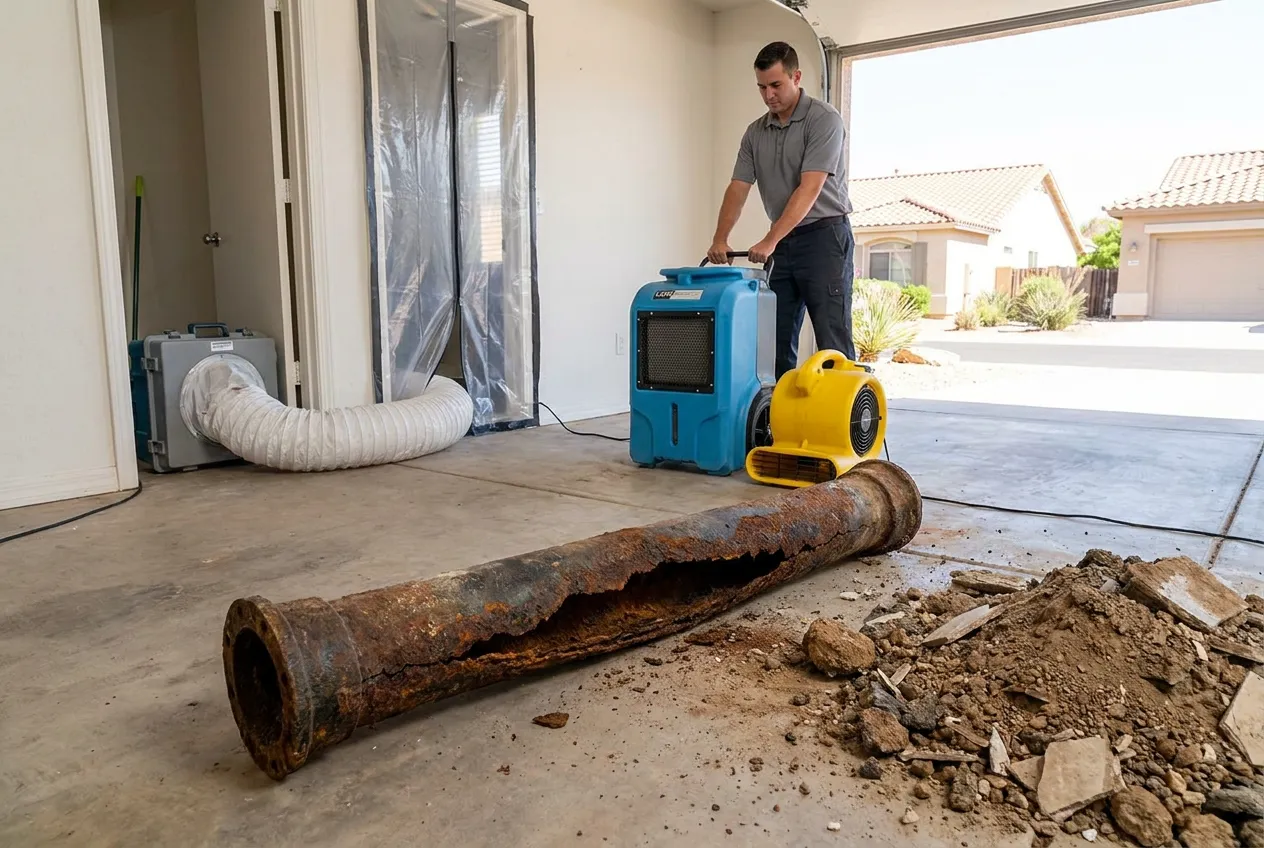
Cast iron does not fail like a supply line. There is no burst, no spray, no rushing water. The bottom of the pipe — the part permanently in contact with waste water — thins from the inside until it opens. What comes out goes into the soil under your slab, or into the sand bed, and it does that for a long time before anything appears indoors.
The symptoms are indirect and easy to explain away. A floor tile that cracks for no reason. A section of hardwood that cups. A smell in one bathroom that comes and goes. A slab that develops a soft or hollow sound when you tap it. Sometimes the first real sign is a sewer line that backs up, because the same corrosion that opened the bottom also collapsed the shape of the pipe.
Two things about that. First, this is sewage, so anything that reaches living space is Category 3 and gets contained and sanitized rather than mopped. Second, the drying job is genuinely harder than a clean-water loss, because the water has been under the slab and into the sand bed rather than on top of the floor. It needs to be found with instruments and dried with intent, which is what the drying standard exists for.
Renovations and What They Hide
Arcadia has been under continuous renovation for two decades. Kitchens open up, additions go on the back, and the houses get finishes far more expensive than the originals. That is good for the neighborhood and complicated for us, for one reason: a remodel usually replaces what it can see.
The new fixtures are new. The angle stops behind them may be new. The line feeding them from the main might be the same galvanized run that has been in the wall since the house was built, now connected to a fixture that will happily flow more water through it than it has moved in years. Mixed-era plumbing is normal here, and the transition points — where new copper or PEX meets old galvanized — are worth knowing about, because dissimilar metals joined without the right fitting corrode faster than either would alone.
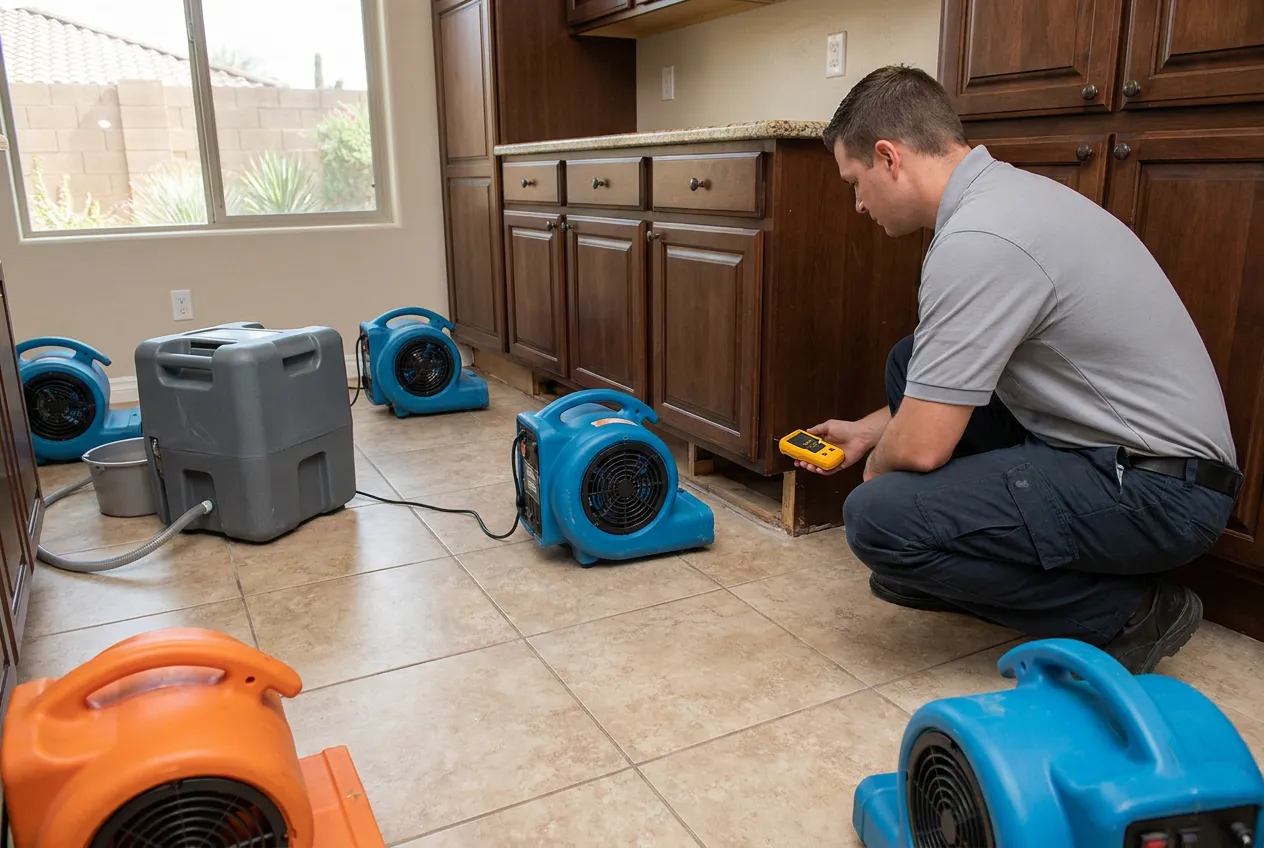
The other renovation consequence is what the water ruins. In a 1955 house with 1955 finishes, a slow leak damages materials that were cheap to begin with. In the same house with a current kitchen, engineered floors, custom cabinetry, and plaster detail, the same leak damages a great deal more. That is the argument for finding these things early rather than efficiently — and for a rebuild crew that can put the finishes back the way they were, not merely make the room dry.
Common Questions
We remodeled the kitchen five years ago. Doesn't that mean the plumbing is new?
Usually only the part the remodel touched. Fixtures and the lines immediately behind them get replaced; the runs inside walls and under the slab typically stay. Mixed-era plumbing is the norm in Arcadia, not the exception.
How do I know if my drains are still cast iron?
An accessible cleanout or the stub where a drain leaves the wall usually tells you by material and color, and a camera inspection settles it. In a home from this era that has never been repiped, cast iron is the default assumption.
The floor tile in the hall cracked and nothing hit it. Should I worry?
It is worth checking. Unexplained cracking, cupping wood, or a hollow sound in one area can indicate the slab is being undermined by a leak below it. It is not always plumbing, but it is worth ruling out.
Our lot floods on the irrigation schedule and always has. Is that a risk to the house?
Only where grading and thresholds let it in. The irrigation itself is designed to sit on the lot and soak. Problems start when a settled walkway, a low sill, or a blocked side yard sends it toward a door instead.
Which actually ruins more of the house, a pinhole or a burst?
Per gallon, yes, and it is the one that surprises people. A burst gets extracted the same night. A slow leak soaks framing and grows mold in a closed cavity for weeks before anyone sees a stain.