Flood Cleanup in Paradise Valley
Published September 1, 2026 · Last reviewed September 1, 2026 · Water Fighters Restoration
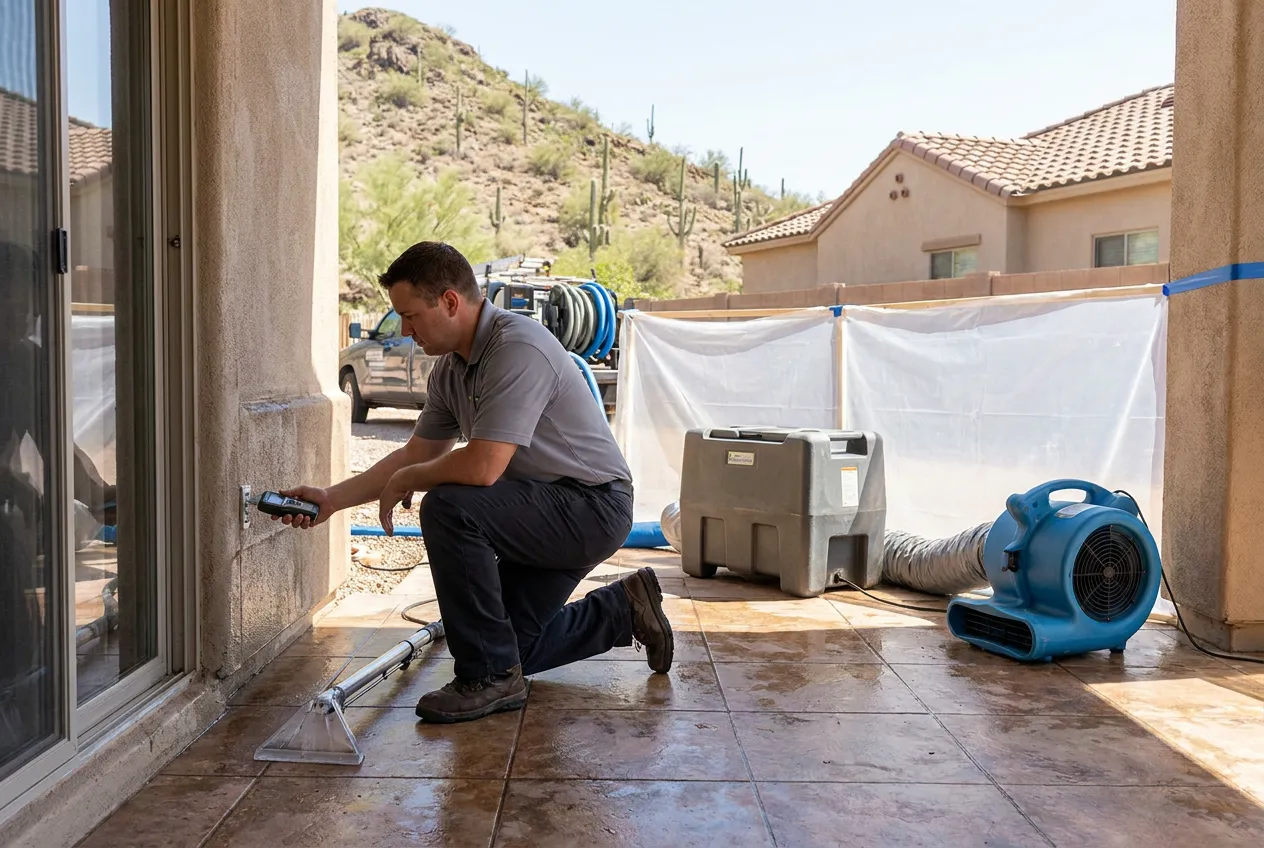
Water is moving across the side yard in a path that was dry an hour ago. A gate, wall opening, or low patio edge is now the point where the property meets the storm.
If standing water has receded, the Paradise Valley water damage restoration page covers the damage left inside. The steps below are for the active flood-cleanup moment.
First moves on a Paradise Valley flood loss
- Stay clear of energized water. Do not enter any area where runoff reaches exterior outlets, pool equipment, appliances, cords, or interior electrical components.
- Shut down a broken supply line from dry access. Close the main or fixture valve only when the route is safe. Outdoor runoff will continue until the drainage path falls.
- Keep everyone out of outside water. Ground runoff, wash flow, and drain or sewer backups are Category 3.
- Photograph the property route. From dry ground, capture the uphill direction, wash or swale, wall opening, threshold, and indoor water line.
- Request extraction and moisture mapping. Call (602) 884-5325. Water Fighters Restoration is Open 24 hours, 7 days, with the promise on-site within an hour.
Paradise Valley drains from mountains into private property routes
Paradise Valley sits among Camelback Mountain, Mummy Mountain, and the Phoenix Mountains. A storm cell on one slope can send runoff downslope while the sky over another part of town is already clearing.
The town's stormwater network includes natural washes, catch basins, streets, gutters, inlets, scuppers, storm drains, and retention basins. Much of the decisive drainage, however, runs across private land.
That is why two neighboring properties can perform differently. One wash remains open and passes water through. Another has sediment, dense growth, a landscape berm, or a new hardscape edge that slows the same route.
Paradise Valley tells residents to keep drainage ways and washes on private property clear. The natural entry and exit points should not be changed. An altered route can move water toward the owner's house or the neighbor below.
Walls and gates cannot erase a natural wash
Large lots often use perimeter walls, privacy gates, long drives, and several elevation changes. Those features must still accommodate the water that crossed the land before the improvements existed.
A wall opening can become a nozzle when debris collects against it. A driveway gate can trap shallow water until the level reaches the garage. A decorative swale may lose capacity after rock migrates into the low point.
The town adopted a stormwater master plan in 2025 to identify susceptible areas and prioritize mitigation. A public project can reduce a known hazard. It cannot replace the private drainage path between the wash and a particular door.
The storm-damage restoration service addresses openings caused by wind or impact. The monsoon flood guide explains runoff that crosses the lot.
Find the property-scale entry point before the water mark fades
Fresh sediment is evidence. So are leaves pinned to a fence, a sharp clean edge through dust, and a line of pea gravel inside a patio track.
Photograph those details before cleanup changes them. The route can support the mitigation scope and help explain why one room flooded while another at the same floor height remained dry.
Controlled removal comes before structural drying
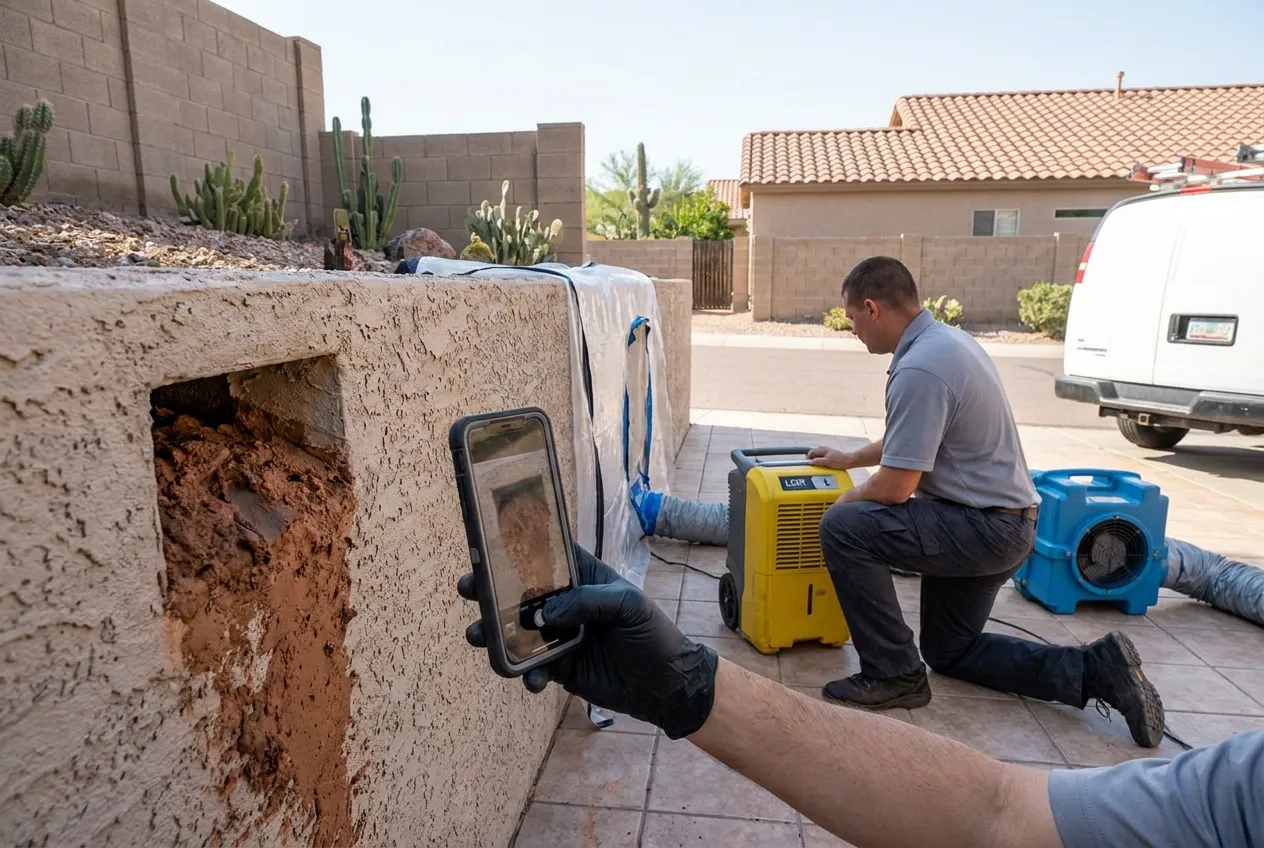
All outdoor entry is Category 3. Technicians establish a controlled work area, extract standing water, and evaluate porous finishes and contents exposed to contamination.
The inspection follows gravity but does not stop there. Water can move behind stone base, under cabinets, through wall insulation, and beneath flooring installed across several rooms.
After contamination and bulk water are addressed, dehumidification and directed air movement dry the retained structure. Readings at multiple heights can matter where runoff met a stepped slab or hillside wall.
Water Fighters Restoration completes mitigation and rebuild with one team. The water damage restoration service page explains how the drying record becomes the repair scope.
Water Fighters Restoration is IICRC Certified 70192944 · AZ ROC 324471 · ROC 324468 · EPA Lead-Safe Certified Firm · Licensed, Bonded & Insured.
Insurance separates storm openings from rising surface water
A roof or wall opening created by a storm may be evaluated differently from water that rises across the ground. Most homeowners insurance excludes flood damage, so document the cause and path with the coverage guide and photographs described in the claim guide.
Common Questions
Who maintains a wash that crosses private property in Paradise Valley?
The property owner is generally responsible for keeping the private drainage way clear and preserving its natural flow. Town guidance also warns that an obstructed wash can affect neighboring homes.
Can a new landscape wall change where stormwater enters a Paradise Valley lot?
Yes. A wall, berm, gate, or hardscape edge can concentrate or redirect shallow flow if drainage openings do not match the established route. That condition should be documented after the emergency is controlled.
Does being outside a mapped floodplain rule out a house flood here?
No. A mapped floodplain does not capture every local swale, blocked scupper, or threshold problem on a large lot. Property-scale drainage still decides many entries.
Why do wash-entry and exit points matter after a Paradise Valley flood?
They show whether water followed the established private drainage route or was redirected near the structure. Photographing both points helps connect the lot path to the interior restoration scope.