
Water Damage Restoration in Paradise Valley
Published August 4, 2026 · Last reviewed September 1, 2026 · Water Fighters Restoration
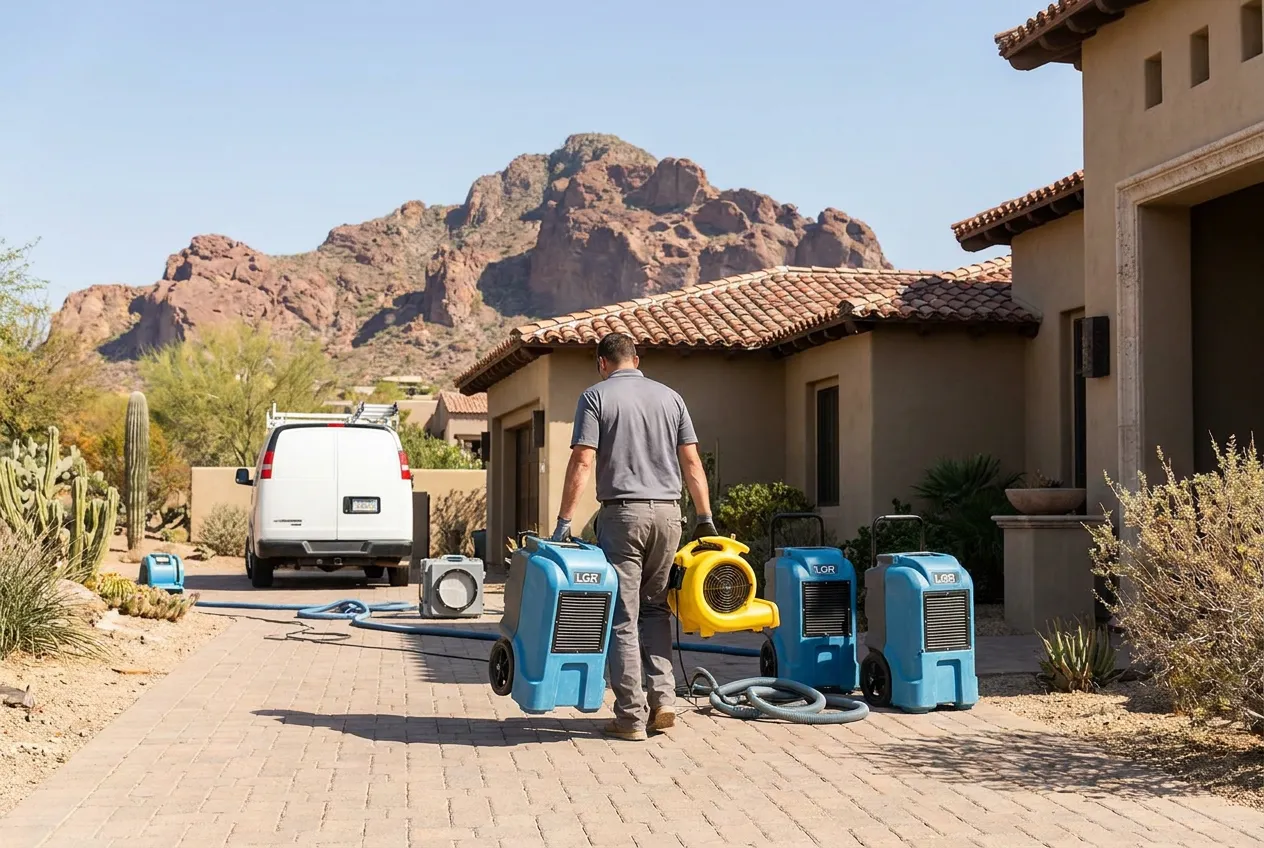
Paradise Valley incorporated to stay what it is: a town of large residential lots between the mountains, without much else. That restraint produced a specific water-damage profile — big single-level homes on big slabs, long private plumbing runs, houses that sit empty for months at a time, and runoff that comes straight off Camelback and Mummy Mountain when August decides to perform.
Water still coming in or rising outside? Use Flood Cleanup in Paradise Valley for the first-hour protocol and local drainage read.
The Empty-Estate Problem
The most expensive water losses in Paradise Valley are usually the quietest. A significant share of the town's homes are seasonal or secondary — and a supply line doesn't check the owner's calendar before it fails. A fitting lets go in June; the house sits sealed through a Phoenix summer; and what would have been a two-day dry-out becomes a structural mold remediation discovered by a house manager in September, in a home where every finish was custom.
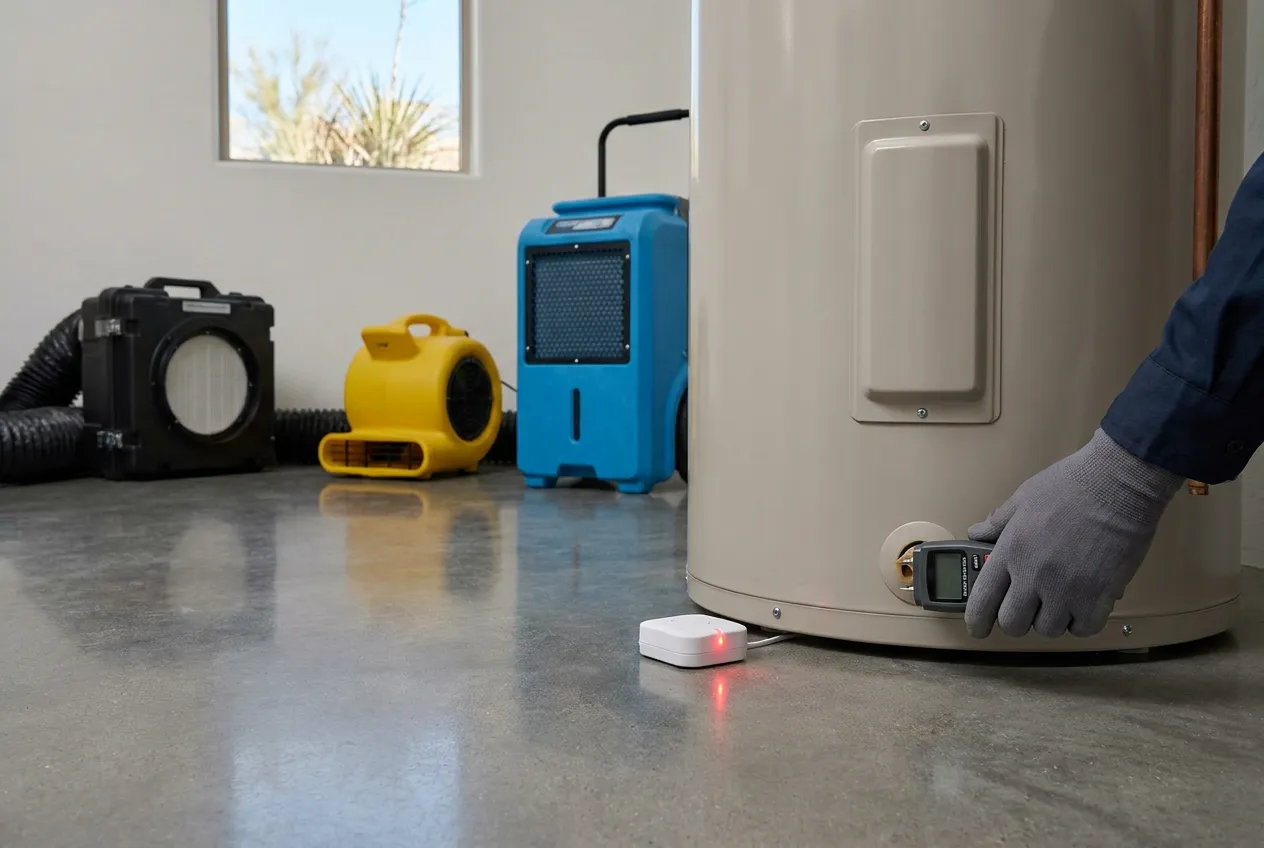
The defenses are unglamorous and effective: main valve off when the house goes dark, leak sensors at the water heater and under sinks with alerts that reach a person who can act, and a standing arrangement with whoever watches the house — manager, caretaker, neighbor — that includes authority to call for emergency mitigation without waiting for a time zone to wake up. We work vacant-home losses routinely: video-documented assessments, scopes readable from another state, and a single point of contact until the owner is back.
What the Mountains Send Down
Paradise Valley's geography is its brand and its drainage plan. Lots on the flanks of Camelback, Mummy Mountain, and the Phoenix Mountains edge take monsoon sheet flow directly off rock — fast, sediment-heavy water that follows the natural washes across driveways, through courtyards, and against whatever wall sits lowest. The town's low-density lots mean drainage is largely a property-by-property affair: your grading, your wash crossing, your courtyard scupper. When a stalled August cell drops an inch in twenty minutes on the mountainside above you, the failure point is usually one blocked drain or one door threshold — and the water that gets in is carrying the mountain with it. Storm intrusion here is an emergency extraction job from the first minute: contaminated water, multiple entry points, and finishes that punish delay.
Estate-Scale Losses
Square footage changes physics. A second-floor laundry failure in a large home can move water through four rooms and a ceiling before anyone hears it. Long supply runs mean more fittings, more valves, more places for a sixty-year-old original system or a modern manifold to fail. Wine rooms, theaters, wide-plank floors over radiant slabs, book-matched stone — Paradise Valley homes concentrate more replacement-cost-per-square-foot than anywhere else we work, which is why our bias runs hard toward saving materials in place: specialty mat-drying for wood, surgical wall openings sized by the meter rather than the saw, and documentation detailed enough that the insurance scope reflects the actual finishes rather than an allowance. When rebuild is unavoidable, one licensed team carries it from extraction to the final matched panel — one estimate, one schedule, one person answering for all of it.
Working Through Your People
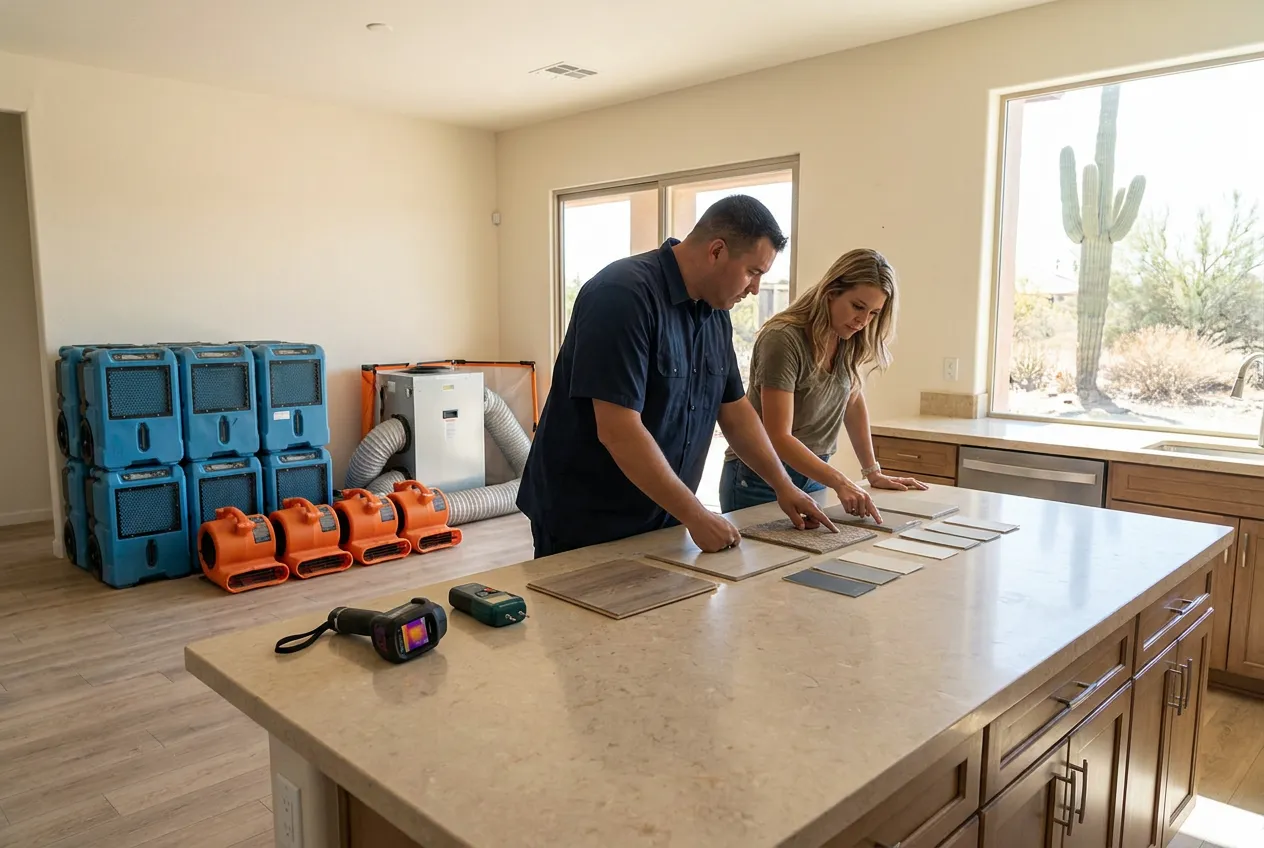
Much of our Paradise Valley work runs through a layer most cities don't have: house managers, family offices, builders on retainer, designers with opinions that matter. That's not friction — it's how it should work. We coordinate access and scheduling through your people, keep the trucks and the timeline discreet, photograph and log everything so decisions can be made remotely, and loop in your builder or designer on finish selections rather than guessing at a standard we didn't set. The satisfaction guarantee is the same one every client gets: the walkthrough ends when you — or the person you've trusted with the house — says it does.
Common Questions
Can you handle a loss when we're out of state?
Yes — it's a large share of our Paradise Valley work. Video assessment the day we arrive, written scope the same week, updates on your schedule, and coordination with your house manager or caretaker throughout.
How discreet is the work, honestly?
Marked trucks are required by the nature of the business, but staging, scheduling, and crew conduct are managed for a town where neighbors notice. Work windows, gate protocols, and who-may-speak-to-whom are set at the first call and kept.
Our lot backs to a mountainside wash. What should we do before monsoon season?
Walk the drainage path water will take across your property — wash crossing, courtyard drains, door thresholds — and clear it in June, not August. If flow has ever reached a structure, a grading conversation with a civil contractor is worth more than any cleanup ever will be.
A leak ran while the house was closed up. Is it too late to save the floors?
Sometimes no — it depends on species, installation, and how long the moisture sat, and the meters settle it rather than guesswork. What's certain is that every additional week closes options; call before the walkthrough, not after the remodel bids.
Will you work with our builder and designer on the repairs?
Preferably. Homes at this finish level have a design intent, and matching it beats approximating it. We handle mitigation and licensed reconstruction, and fold your team's selections into one documented scope — the cost structure stays transparent either way.