Flood Cleanup in Mesa
Published September 1, 2026 · Last reviewed September 1, 2026 · Water Fighters Restoration
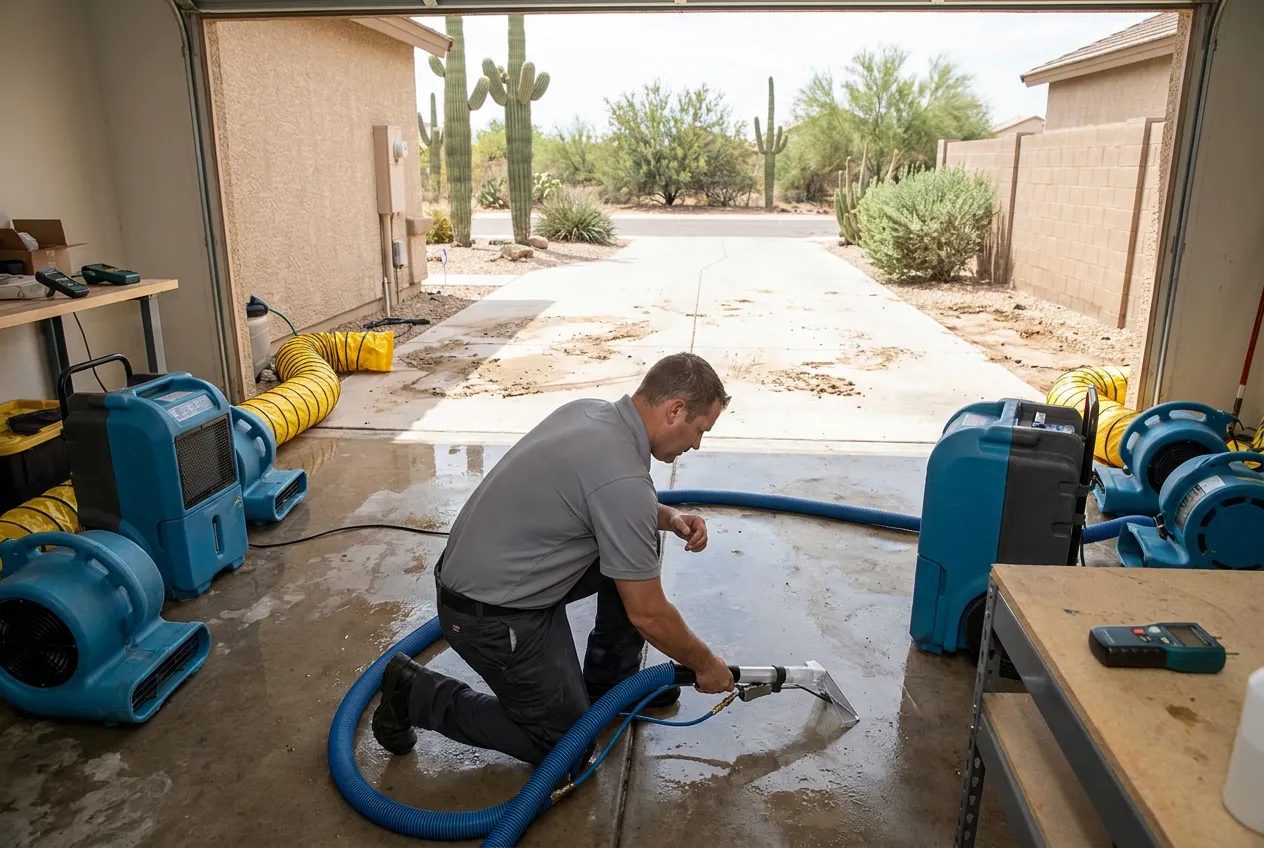
Water is spread across the garage, but the deepest mark is already fading from the door. In Mesa, that water may have crossed a driveway, followed a street, or arrived through a channel system serving miles of desert-edge drainage.
When the standing water is gone, move to the Mesa water damage restoration page for drying, removal, and repairs. Use this page while water is still present or the flood route is fresh.
What to do in the first hour in Mesa
- Stay out when water reaches electricity. Do not cross water touching outlets, appliances, extension cords, pool equipment, or the electrical panel. Shut off power only from a dry and safely reached disconnect.
- Stop a pressurized source when you can do so safely. Close the fixture valve or main for a failed supply line. A valve will not stop runoff moving across the lot.
- Keep people and pets away from outside water. Water that crossed soil, pavement, a wash, or a drain is Category 3.
- Photograph the route before it disappears. From dry ground, record the street, driveway, threshold, indoor water line, and affected contents.
- Call for controlled extraction. Water Fighters Restoration is Open 24 hours, 7 days at (602) 884-5325. The response promise is on-site within an hour.
East Mesa drains through a connected channel network
East Mesa sits below broad desert watersheds. Runoff can spread as sheet flow, collect at roads and subdivisions, then enter larger flood-control routes.
The Powerline Floodway, Ellsworth Channel, and Queen Creek drainage all connect with the East Maricopa Floodway system. They are separate pieces of one regional route, not interchangeable names for the same channel.
That system moves water away from developed areas. It does not remove the last local problem between the channel and a home. An inlet can fill with sediment. A side yard can slope toward the slab. A driveway can sit below the street crown.
A house may therefore flood without Queen Creek Wash leaving its mapped corridor. The water can come from a much smaller drainage area serving only a few streets.
The monsoon flood guide explains how short storms produce long runoff paths. The emergency flood cleanup hub covers the same first-hour response across the Valley.
Central Mesa depends on streets, inlets, and retention areas
Farther from the desert edge, water reaches larger channels through a local network of streets, storm drains, open channels, and retention areas. Each part has a different job.
A retention basin may hold water after the storm because it is working. The more useful question is whether the route into that basin stayed open. Leaves, sediment, landscape rock, and construction debris can reduce a small inlet during the hardest part of the rain.
Do not step into moving water to clear an opening. A submerged grate or culvert can create suction and hide damaged pavement.
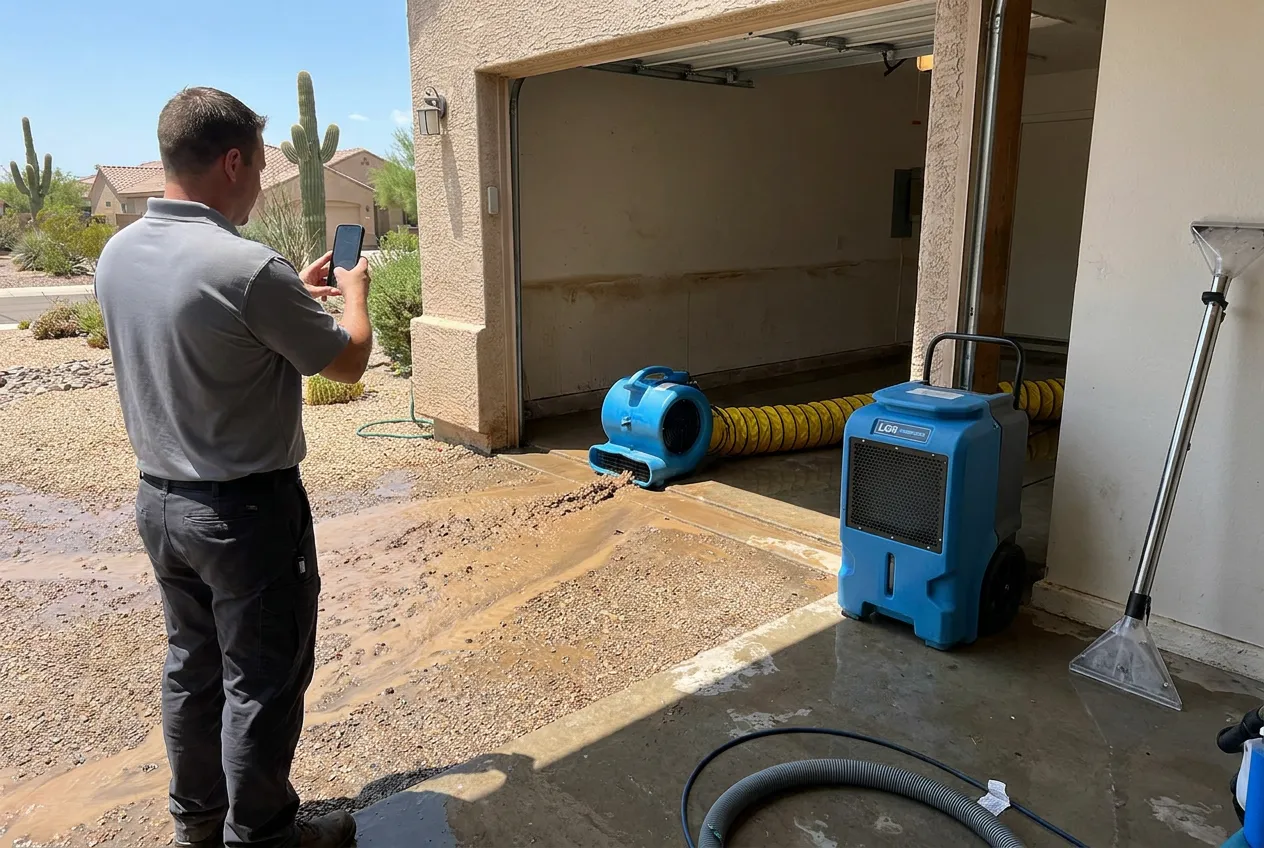
Look instead for evidence from a dry edge. A fan of silt across the garage floor points toward the entry. Debris caught on a fence shows the flow direction. A sharp line through dust can identify the route after the puddle is gone.
Category 3 extraction follows the water beyond the puddle
Outside water is Category 3. The cleanup area is controlled before extraction begins, and porous materials are evaluated for contamination as well as saturation.
Technicians remove bulk water first. They then map wall bases, flooring seams, cabinet ends, and adjoining rooms. A garage puddle can wet the common wall. Patio entry can travel beneath continuous plank flooring before the surface changes color.
Structural drying begins after contaminated water and unsalvageable material are addressed. Air movement and dehumidification are set for the wet assembly. Moisture readings show whether the retained structure is moving toward dry.
Water Fighters Restoration handles mitigation and rebuild with one team. The full sequence appears on the water damage restoration service page.
Water Fighters Restoration is IICRC Certified 70192944 · AZ ROC 324471 · ROC 324468 · EPA Lead-Safe Certified Firm · Licensed, Bonded & Insured.
Insurance starts with how the water crossed the building line
Rain entering through storm-created damage may be evaluated differently from surface water moving across normally dry ground. Most homeowners policies exclude flood, so document the exterior route and interior line with the claim guide and coverage guide.
Common Questions
Are Ellsworth Channel and the East Maricopa Floodway the same thing?
No. Ellsworth Channel is one part of the larger East Mesa drainage network. It carries water toward the East Maricopa Floodway system with other routes, including Powerline Floodway and Queen Creek drainage.
Can an East Mesa home flood when Queen Creek Wash stays inside its banks?
Yes. Local sheet flow, street ponding, and a blocked neighborhood inlet can reach a house without a major wash overtopping. The entry line at the property identifies the smaller route.
Why does a silt fan point back toward an East Mesa drainage route?
Sediment settles as runoff loses speed at the garage opening. Its shape can show the direction water traveled from a street, lot, or smaller channel before entering.
Why can central Mesa street flooding happen far from the East Mesa floodways?
Local drains and retention areas handle a separate neighborhood scale. A blocked inlet or low street can flood a property without involving Powerline Floodway or Ellsworth Channel. The Mesa restoration page covers the later interior scope.