
Flood Cleanup in Gilbert
Published September 1, 2026 · Last reviewed September 1, 2026 · Water Fighters Restoration
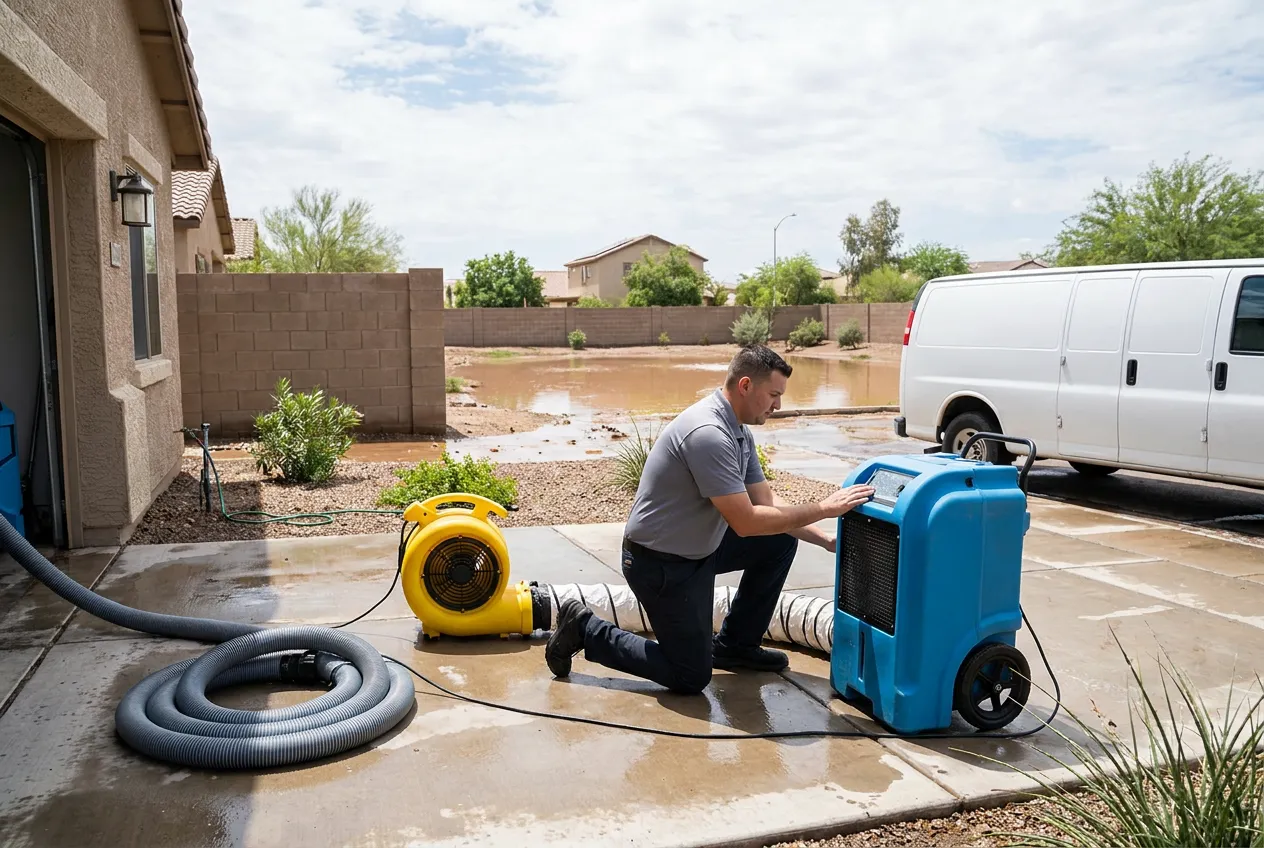
The park basin is filling, the curb is underwater, and a thin stream is moving beneath the garage door. In Gilbert, those three conditions can be parts of the same drainage route.
For damage left after the water is gone, use the Gilbert water damage restoration page. This page covers the standing-water and extraction phase.
What to do in the first hour in Gilbert
- Keep away from water touching electricity. Do not enter areas near outlets, appliances, pool equipment, cords, or the service panel. Disconnect power only from a dry and safe point.
- Stop a failed supply line when safely reachable. Close the local valve or main. Do not cross runoff to reach a shutoff.
- Treat ground and wash water as Category 3. Keep children, pets, and unprotected occupants outside the work area.
- Photograph the connected route. From dry ground, capture the wash or basin direction, street, threshold, indoor water line, and affected contents.
- Call for extraction. Water Fighters Restoration answers at (602) 884-5325. Open 24 hours, 7 days. The response promise is on-site within an hour.
Queen Creek and Sonoqui washes feed one larger route
Gilbert's flood-control map is organized around two major wash systems. Queen Creek Wash and Sonoqui Wash carry runoff toward the East Maricopa Floodway.
That floodway intercepts and conveys water that would otherwise spread through developed areas. The washes and floodway remain separate parts of the system. A home can sit far from the main floodway and still receive local runoff headed toward it.
The direction also explains delayed flow. Rain higher in a wash watershed may reach Gilbert after the storm over the house weakens. A dry street at the beginning of the storm can look different thirty minutes later.
Never enter a wash crossing because the water appears shallow. Depth, current, debris, and pavement condition are difficult to judge from the edge.
The monsoon flood guide explains upstream timing. The emergency flood cleanup hub covers the first response throughout the Valley.
Many Gilbert parks are also part of stormwater storage
Gilbert routes stormwater into waterways and retention basins, including basins built into community parks. A field that holds water after a storm is not necessarily malfunctioning. Temporary storage is part of the design.
The local problem may happen before water reaches that storage. Grass clippings, leaves, soil, and landscape material can cover an outlet or inlet. Water then backs into a street or follows a lower side yard.
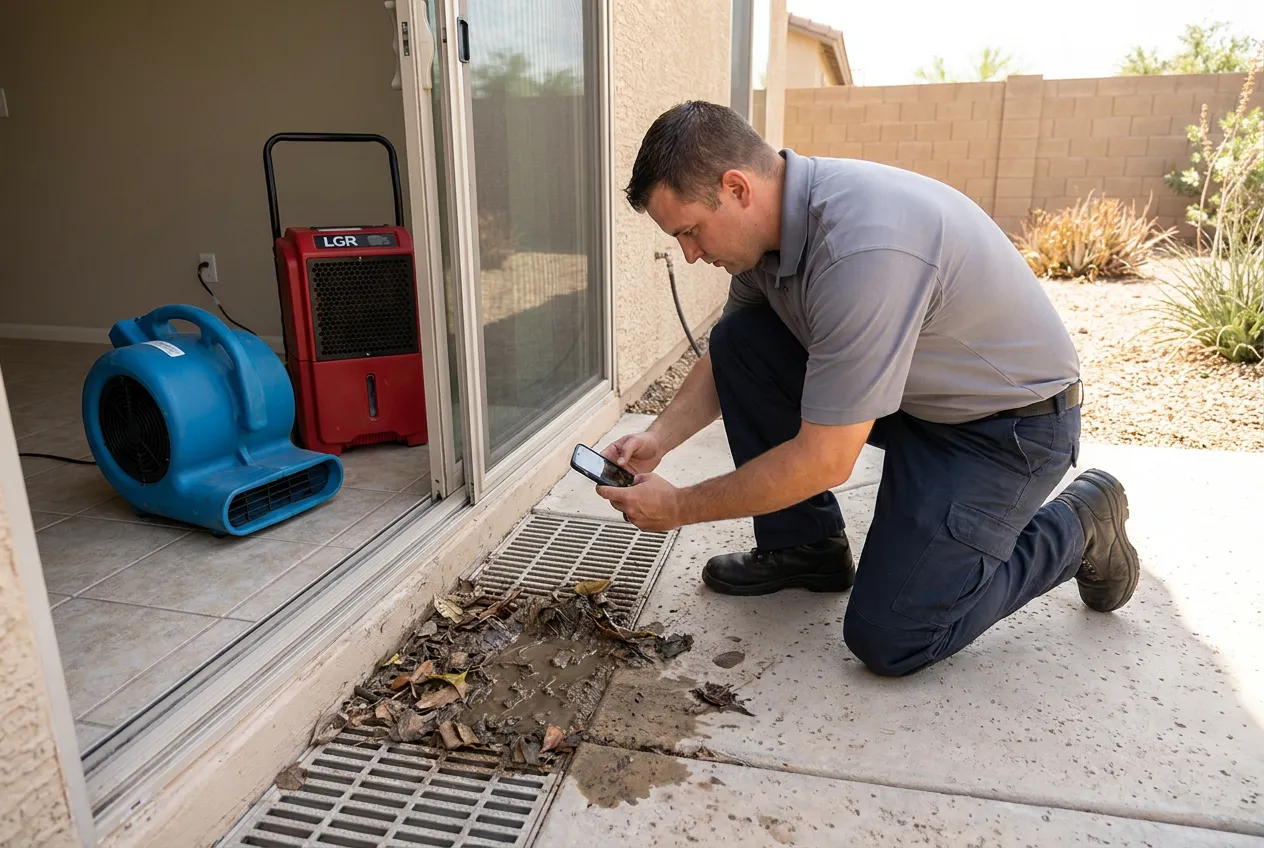
Do not reach into a submerged grate. Photograph the blocked condition from dry ground and report the public obstruction. A private swale can be inspected after the water falls and electrical hazards are cleared.
Outlet debris leaves a readable trail
Stormwater carries sediment and loose material along the route. A row of debris pinned against a wall shows the direction of travel. Mud inside a patio track shows where outside water crossed the building line.
Those details matter because the visible puddle may be gone before extraction begins. They also separate a ground-water route from rain that entered through a damaged roof or wall.
Category 3 cleanup continues beneath the visible surface
Outside runoff is Category 3 even when it looks clear. It has crossed soil, pavement, landscaping, and other uncontrolled surfaces.
Technicians control access, extract standing water, and evaluate exposed porous material. Moisture mapping then follows the route under flooring, into wall bases, and around cabinets or built-ins.
Drying begins after contamination and bulk water are handled. Air movement and dehumidification are adjusted to the wet materials. Daily readings show when retained components have reached the drying target.
Water Fighters Restoration handles mitigation and rebuild with one team. The restoration service page explains that handoff.
Water Fighters Restoration is IICRC Certified 70192944 · AZ ROC 324471 · ROC 324468 · EPA Lead-Safe Certified Firm · Licensed, Bonded & Insured.
The claim record should show the wash-to-room path
Rain through storm-created damage and rising surface water may be treated differently by insurance. Most homeowners policies exclude flood, so preserve the exterior route, entry point, and water line with the coverage guide and claim guide.
Common Questions
Why is the East Maricopa Floodway important during a Gilbert monsoon?
It intercepts runoff from the Queen Creek and Sonoqui wash systems and conveys it through a larger regional route. Neighborhood channels still have to deliver water to that system.
Why does a Gilbert park hold water after a monsoon?
Many park areas include retention basins designed to store stormwater temporarily. The standing water can show the basin is working, though nearby inlets and outlets still need to remain open.
Can landscape debris at an outlet contribute to street flooding?
Yes. Leaves, soil, and clippings can reduce a small opening during the peak rainfall. Photograph a submerged blockage from dry ground rather than attempting to clear it.
Why can a Gilbert street flood before runoff reaches a park basin?
A blocked curb inlet or outlet can slow the last neighborhood route even when the basin has capacity. The Gilbert restoration page explains the work after water reaches the structure.