
Water Damage Restoration in Gilbert
Published August 4, 2026 · Last reviewed September 1, 2026 · Water Fighters Restoration
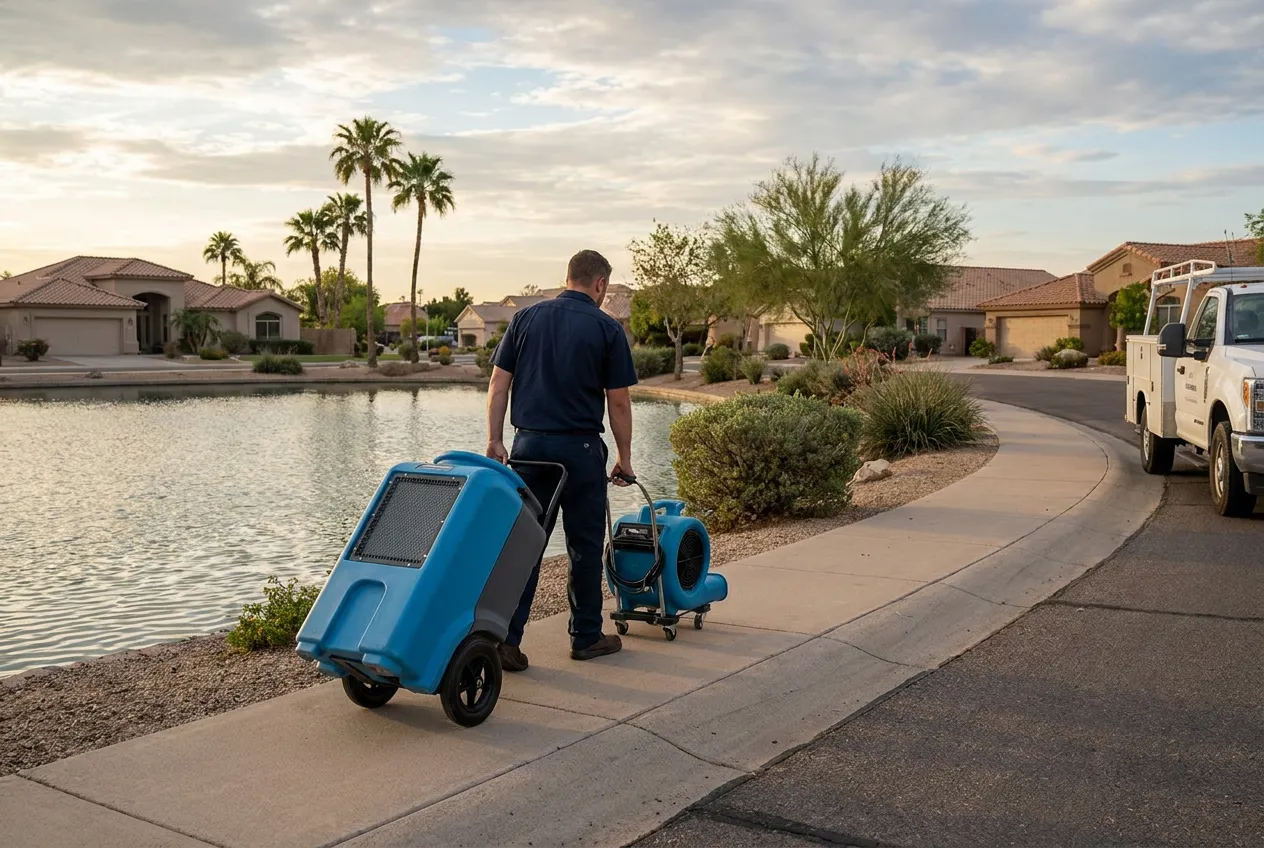
Gilbert went from farm town to a quarter-million people in about one generation, and its water-damage map reads like tree rings: irrigated acreage at the core, eighties lake communities in the first ring, and mile after mile of boom-era rooftops beyond them.
Water still coming in or rising outside? Use Flood Cleanup in Gilbert for the first-hour protocol and local drainage read.
From Hay Capital to Here
The Heritage District and the old blocks around it keep Gilbert's agricultural bones — and on the surrounding older streets, some of the Valley's last large flood-irrigated residential lots. Water delivered on schedule across a yard is a gift to trees and a variable for foundations: berms erode, valves stick, lots settle toward the house, and a damp interior wall gets blamed on plumbing that was never guilty. On any older-Gilbert loss near irrigated ground, we check the irrigation exposure as routine, the same way we do in Tempe's historic blocks. The homes themselves span mid-century to seventies construction — galvanized and early copper stories, told at the usual volume.
The Lake Communities
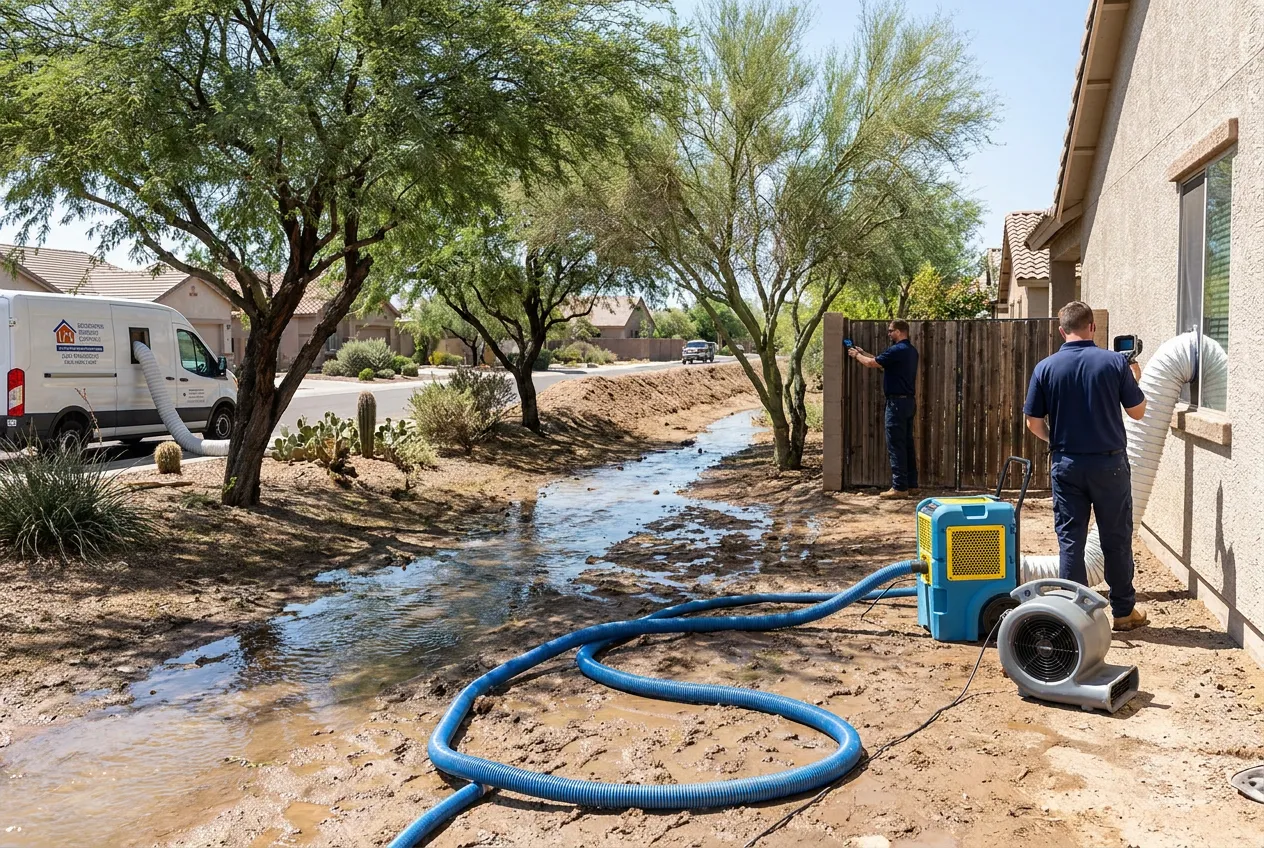
The Islands and Val Vista Lakes gave eighties Gilbert its postcard — homes wrapped around man-made water — and gave us a familiar pattern at neighborhood scale: the lakes are professionally managed; the supporting plumbing is the variable. Irrigation laterals against slabs, pool and dock-side equipment on waterfront lots, and grading that decides whether a failed valve waters the lawn or the living room. These communities also sit in the polybutylene era's heart — a home from that window that's never been repiped is carrying the gray pipe's sudden-failure risk behind every wall, and one fitting letting go is usually the system introducing itself.
The Boom Rings
South and east — Power Ranch, Seville, Morrison Ranch, Agritopia, and the Santan-corridor master plans — Gilbert built enormously through the late nineties and 2000s, which puts entire neighborhoods on the boom clock we've written about across the East Valley: original water heaters, builder-grade supply lines, and angle stops all reaching retirement age street by street, on the builder's schedule. The failure is ordinary; the spread is not — modern open floor plans let a laundry-room supply line involve three rooms before dinner. When it happens, extraction speed writes the invoice, and the one-team rebuild closes it without a contractor handoff.

Common Questions
How fast can you reach Gilbert?
Within the hour, any hour — Gilbert sits inside the standing Valley staging plan like every city on our map, southeast corner included.
Our older lot still gets flood irrigation. Should we change anything?
Keep it — just maintain it. Walk the berms and valves each season, watch the wall nearest the irrigated ground, and if dampness ever shows up on the watering schedule, the schedule is your diagnosis. We meter inside and trace outside before anyone opens drywall.
We're on the water in The Islands. Does lakefront change our risk?
The lake itself, rarely; the lot's supporting systems, sometimes. Waterfront homes mostly need what every Gilbert home needs — drainage walked before monsoon season, aging valves replaced on purpose instead of by surprise, and a fast call when something's wet.
Our Val Vista Lakes home is original to the eighties. What's the polybutylene story?
If it's never been repiped, a plumber can confirm the material in minutes at the manifold. One gray-pipe failure means budget for the system, not the fitting — we dry the damage and coordinate the rebuild while your plumber handles the lines; the cost guide explains why the fast call keeps that affordable.
Our 2004 Power Ranch home has had zero problems. Are we due?
You're on the curve — original water heaters and supply components from that build era are all inside their retirement window now. Replacing the cheap parts on purpose is the best deal in this entire industry.