
Hard water and leaks in Phoenix homes
Published November 18, 2026 · Last reviewed November 18, 2026 · Water Fighters Restoration
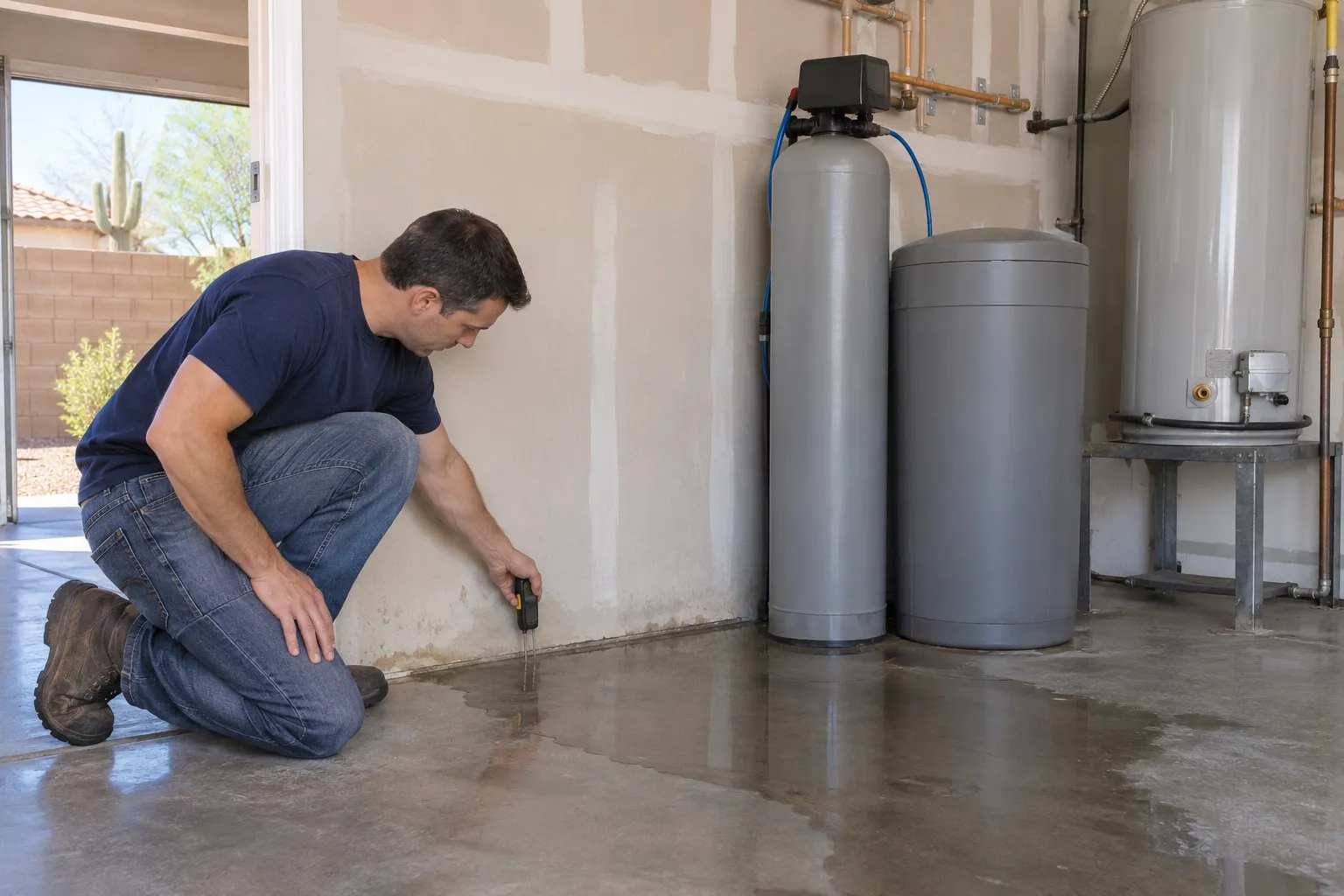
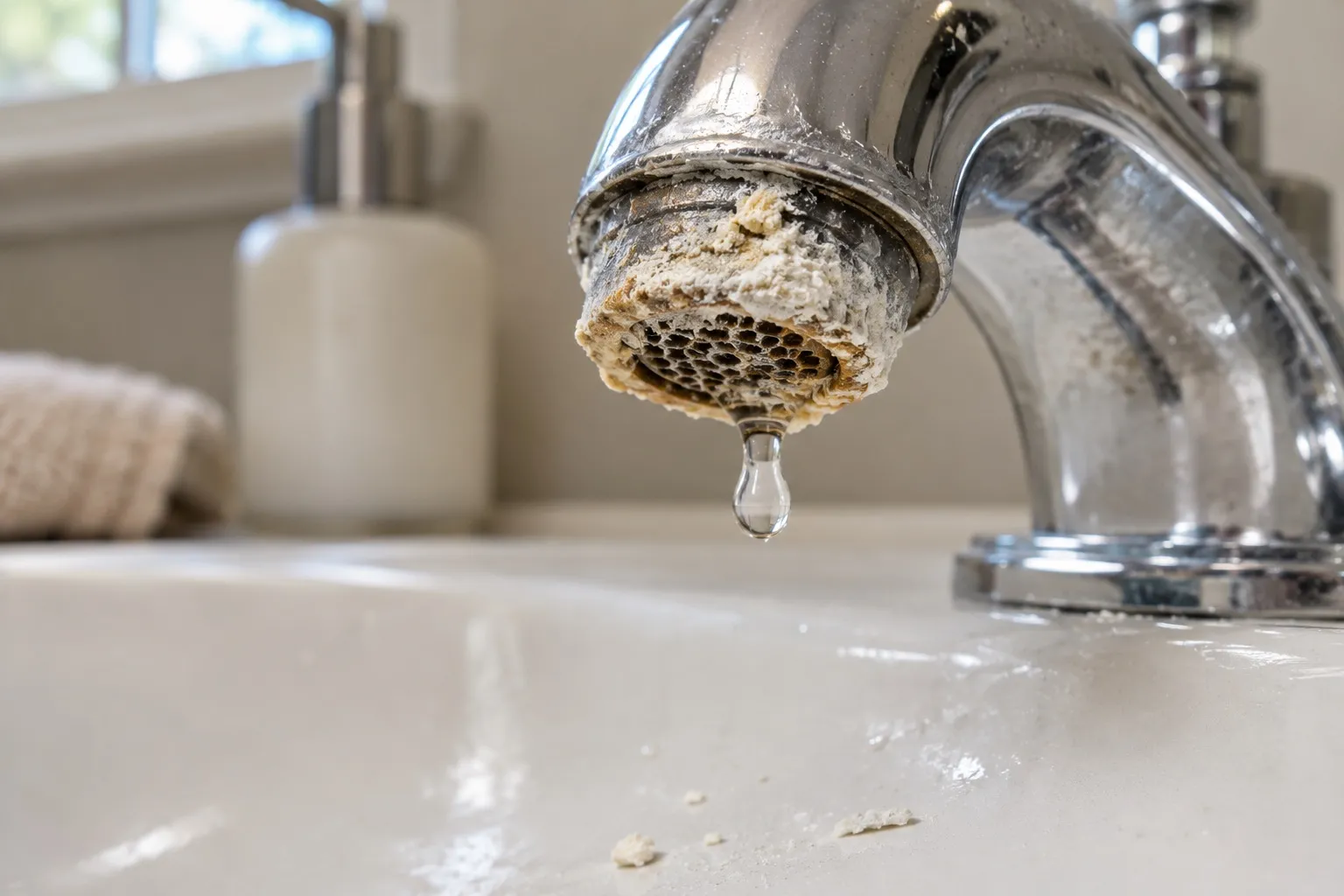
The faucet aerator has a white crust again. In the garage, the water heater rumbles while it heats, next to a softener that needs salt.
Hard water "can reduce the life of water heaters, toilet components, washing machines, and other plumbing products and appliances," according to the EPA. The Insurance Institute for Business & Home Safety lists hard water as a water damage risk factor. Whether a failing part soaks the floor or only raises the water bill depends on where its water goes.
How hard the water is, by provider
The EPA's softener guide says water above 7 grains per gallon "is generally considered hard." Phoenix's 2025 Water Quality Report gives a range of 10 to 17.6 grains per gallon. Glendale averaged 13.8 in 2025, and Mesa's 2025 zone averages were about 12 and 16 grains per gallon. In Scottsdale, the 2026 report lists approximate hardness of 13 to 17 grains per gallon, and 13 to 15 south of Indian School Road.
EPCOR's 2025 reports give 7 to 11 grains per gallon for its Sun City system and 3 to 11 for its Sun City West system. Both main City of Surprise systems averaged under 7 grains per gallon in 2025. Not every Surprise address is on City water, so check the provider on your bill. Peoria's numbers are on the Peoria slab leak page.
Sediment and scale in water heaters
The U.S. Geological Survey says solid calcium carbonate can form when hard water is heated, and that this scale can "reduce the life of equipment." In a tank, it settles on the bottom. Sediment there makes "varying amounts of noise and may cause premature tank failure," one manufacturer's manual warns. The same manual says a tank "will start to corrode, eventually developing a leak" once its anode rod is depleted. The Department of Energy suggests draining a quart every 3 months to remove sediment and following the manufacturer's directions. The water heater flooding guide covers the shutdown order and where the water goes.
In a tankless heater, scale "can restrict the flow of water through the heat exchanger and diminish the life of the unit," says a 2012 guide prepared for the U.S. Department of Energy.
Fixtures and appliance valves
Plumbing valves and fixtures with scale buildup "require more frequent cleaning or replacement to operate properly," the EPA says. Washers, dishwashers, and refrigerator ice makers fill through electric inlet valves, many with small screens. Scale and sediment can clog a screen or keep a valve from sealing. A valve that weeps behind an appliance can wet the floor where nobody looks. The kitchen and washing machine leak guides cover the lines behind those machines.
Scottsdale's hard water fact sheet suggests soaking faucet aerators and showerheads in white vinegar to loosen deposits. Replacing a scaled-up faucet cartridge is a plumber's job.
Softeners and RO units have their own leak points
A softener's control valve and bypass valve hold line pressure, as do the connections in and out. Its shorter brine tank may have an overflow fitting meant to be tubed to a drain, and regeneration water leaves through a small drain line. The EPA says to check those points for leaks now and then.
An under-sink reverse-osmosis (RO) unit taps the cold supply ahead of the kitchen faucet. Small plastic tubing joins its feed valve, storage tank, drain connection, and faucet, and a loose or cracked fitting there leaks at line pressure into the sink base.
Water on the floor or water down the drain
Some parts hold line pressure outside any drain: a water heater tank, a softener valve, RO tubing, an ice-maker line, the supply connections under a sink. When one fails, water lands on the floor and runs into cabinets and walls. A blocked or disconnected drain path can do the same: a softener drain line, a brine-tank overflow with no tube to a drain, an RO drain connection.
Other failures go down a drain. A spout drip lands in the sink. On a softener, a nonstop trickle to the drain "could indicate a broken valve or other malfunction," the EPA says. On an RO unit, the same trickle may mean the automatic shutoff needs replacing. These failures waste water and show up on the meter and the bill; the hidden water damage guide explains how to read the meter.
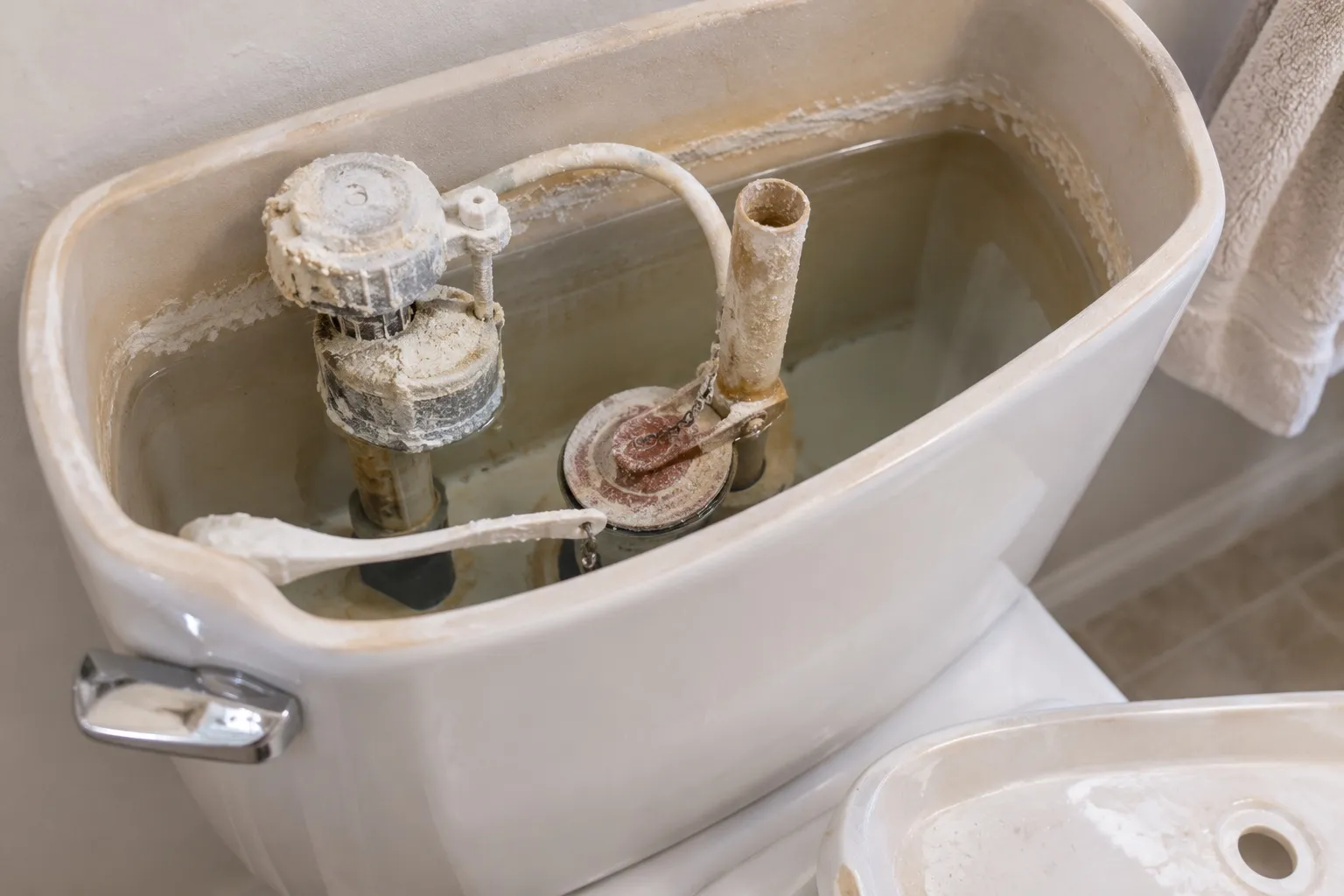
For toilet leaks, the Arizona Municipal Water Users Association (AMWUA) named flappers and fill valves "the main culprits" in a 2015 post on water audits. A fill valve that won't shut off sends extra water down the overflow tube into the bowl "instead of onto your bathroom floor," AMWUA explained. The EPA's dye test finds a tank leaking into the bowl: color the tank water with food coloring and wait 10 minutes before flushing. Color in the bowl means a leak. Flush afterward so the tank doesn't stain. The toilet overflow guide covers toilet failures that do reach the floor.
What to do when a part leaks
- Close the valve nearest the leak, or put a softener in bypass. An RO unit's small feed valve is on the cold line under the sink. For a water heater, follow the shutdown order in the water heater flooding guide.
- If water keeps coming or that valve won't turn, close the house valve where the main line enters the home. If it won't close, call your water provider and leave the curb meter box to them. For City of Phoenix customers, Phoenix Water's 24/7 line is 602-261-8000.
- Photograph the wet floor and wall bases before anything is moved.
- Call a plumber or water-treatment technician for the part, and a restoration company for wet drywall and flooring.
Water Fighters Restoration is on-site within an hour and Open 24 hours, 7 days. One team does mitigation and rebuild, from first call to final walkthrough. The water damage guides cover other leak sources.
Common Questions
Our water report lists hardness in ppm, but the softener asks for grains. How do we convert?
Divide the ppm (or mg/L) figure by 17.1, the factor Mesa's 2025 report uses. Chandler's 2025 report shows it worked out: 173 to 288 mg/L is 10.1 to 16.8 grains per gallon.
Is City of Surprise water as hard as Phoenix's?
No, on average it is softer. In 2025 the City's Mountain Vista and Desert Oasis systems averaged 3.9 and 6.2 grains per gallon (67 and 106 mg/L), moderately hard by U.S. Geological Survey guidelines, though Desert Oasis samples reached 11.11. Phoenix's 2025 samples ranged from 10 to 17.6. Some Surprise addresses get EPCOR or El Mirage water; the City's reports page has an address lookup.
How often does a tankless water heater need flushing in hard water?
As often as its manufacturer says. A 2012 guide prepared for the U.S. Department of Energy puts the range at "twice per year to once every three years," depending on the manufacturer and use. It adds that manufacturers may require a softener above 8 to 14 grains per gallon.
The water softener in the garage is leaking. Will the bypass valve stop it?
It can, if the leak is in the softener itself. The EPA describes the bypass valve as the way to divert water away from the softener. If water keeps coming, close the house valve where the main line enters the home. Leave the curb meter box to your water provider, and call a plumber or water-treatment technician for the softener.
Will a water softener make our water heater last longer?
Not necessarily. The EPA says hard water "can reduce the life of water heaters" and that a softener can reduce the effects of hard water. One manufacturer's manual, though, lists "water softening methods" among factors that "can increase the rate of anode rod depletion," and it says a depleted anode lets the tank corrode. Ask a plumber, and check your heater's manual.