Water Damage Restoration in Tolleson, AZ
Published September 2, 2026 · Last reviewed September 2, 2026 · Water Fighters Restoration
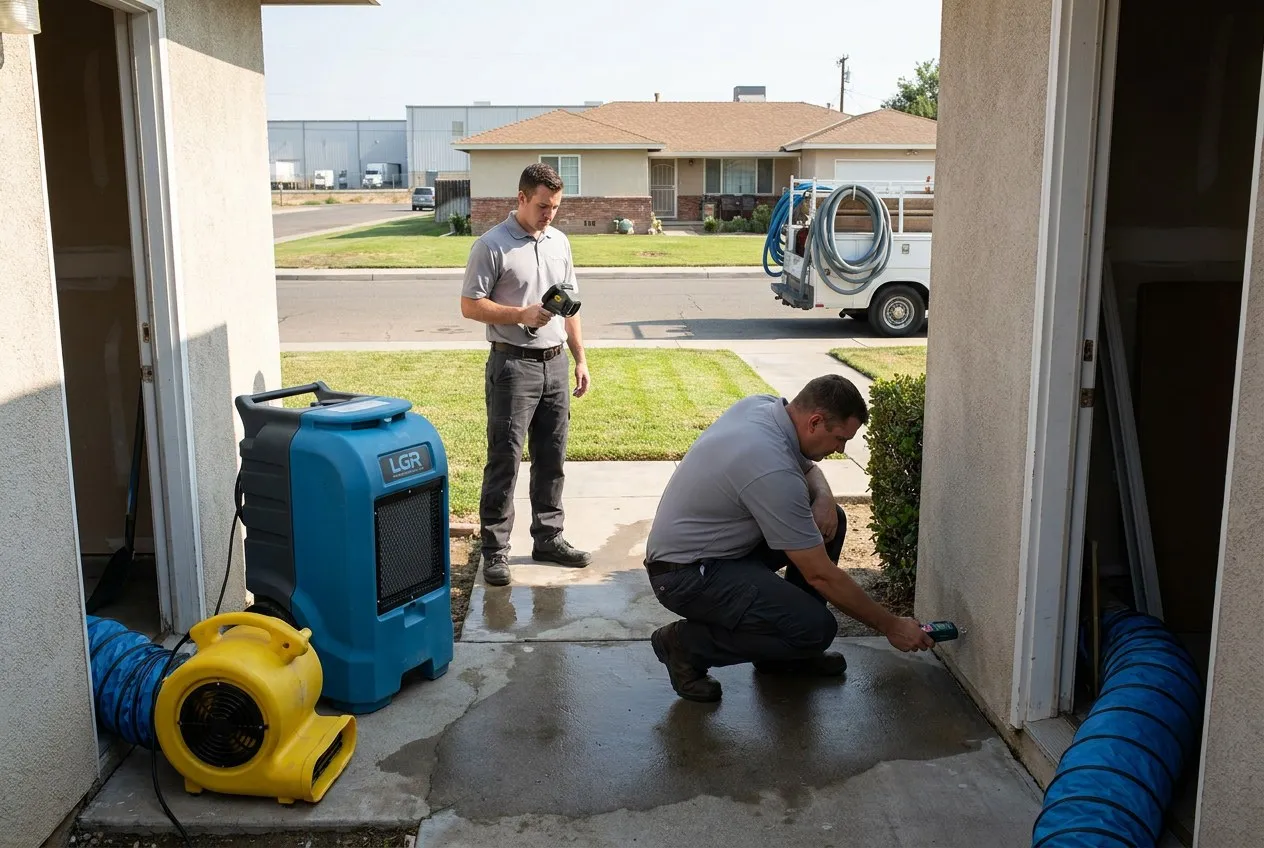
Tolleson covers only 5.73 square miles. About 7,200 people live there, while more than 20,000 jobs fill its refrigerated food and distribution corridor.
That creates two water-damage settings within one small city. The older residential core includes homes built before 1960. Nearby warehouses move cold storage, food, and freight through large operating spaces.
The city's drainage history matters just as much. Tolleson's own engineers documented homes with finished floors below the adjoining roadway grade. During heavy rain, the street can sit higher than the room it threatens.
Founded around the Ten Mile Store in 1912, Tolleson incorporated in 1929. Its 1950s Vegetable Center of the World title belongs to the agricultural past.
The Avondale restoration page covers the city to the west. The Goodyear restoration page covers a different mix of master-planned housing and commercial growth.
The older core includes below-street floors
A 2010 city report documented chronic Van Buren ponding. A sump near 95th Avenue depended on an abandoned irrigation remnant with no outlet.
The report also identified many homes between 91st and 96th Avenues with finished floors below the adjacent road grade. That condition gives street water a downhill path toward doors, wall bases, and additions.
Most of Tolleson lies in FEMA Zone X. Smaller AE and AH pockets near Van Buren and 96th include shallow ponding depths of one to three feet.
The flood story is flat-grade ponding. It is not riverfront flooding. The Salt River bed lies south of the city, and the Agua Fria is several miles west.
Water that crosses a street, yard, or irrigation route before entering is Category 3. The storm damage service explains contaminated-water controls and the move into structural drying.
Tolleson has two main housing clocks
Of roughly 2,922 housing units, 19 percent predate 1960 and create a real galvanized-era core. Another 21.5 percent arrived from 1980 through 1999.
The largest group is newer. About 39 percent was built from 2000 through 2009, and the median build year is 1996.
That means the city cannot be reduced to an old-pipe story. Early homes may have galvanized supply or older drains. Later houses are more likely to have copper, PEX, and builder-era fixtures.
About 58 percent of residents rent. Property managers and owners may need to coordinate access, emergency authorization, documentation, and finish repair across occupied units.
A damp line along an addition can be hard to place. The main room may sit below the street, while the added room may have a different floor height and drainage path.
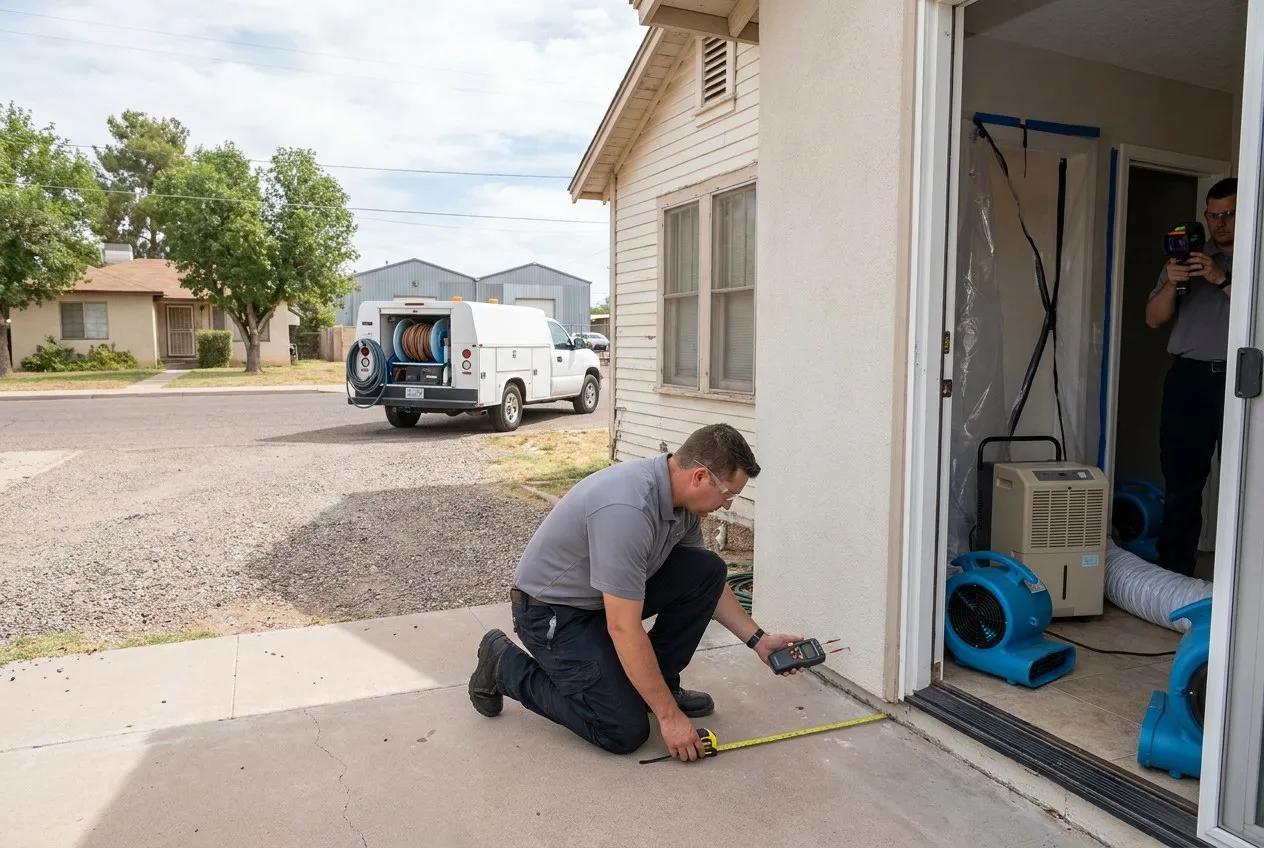
Water Fighters Restoration is Open 24 hours, 7 days. Crews stage as one licensed team, Valley-wide, with the promise on-site within an hour.
Refrigerated facilities need operating-building containment
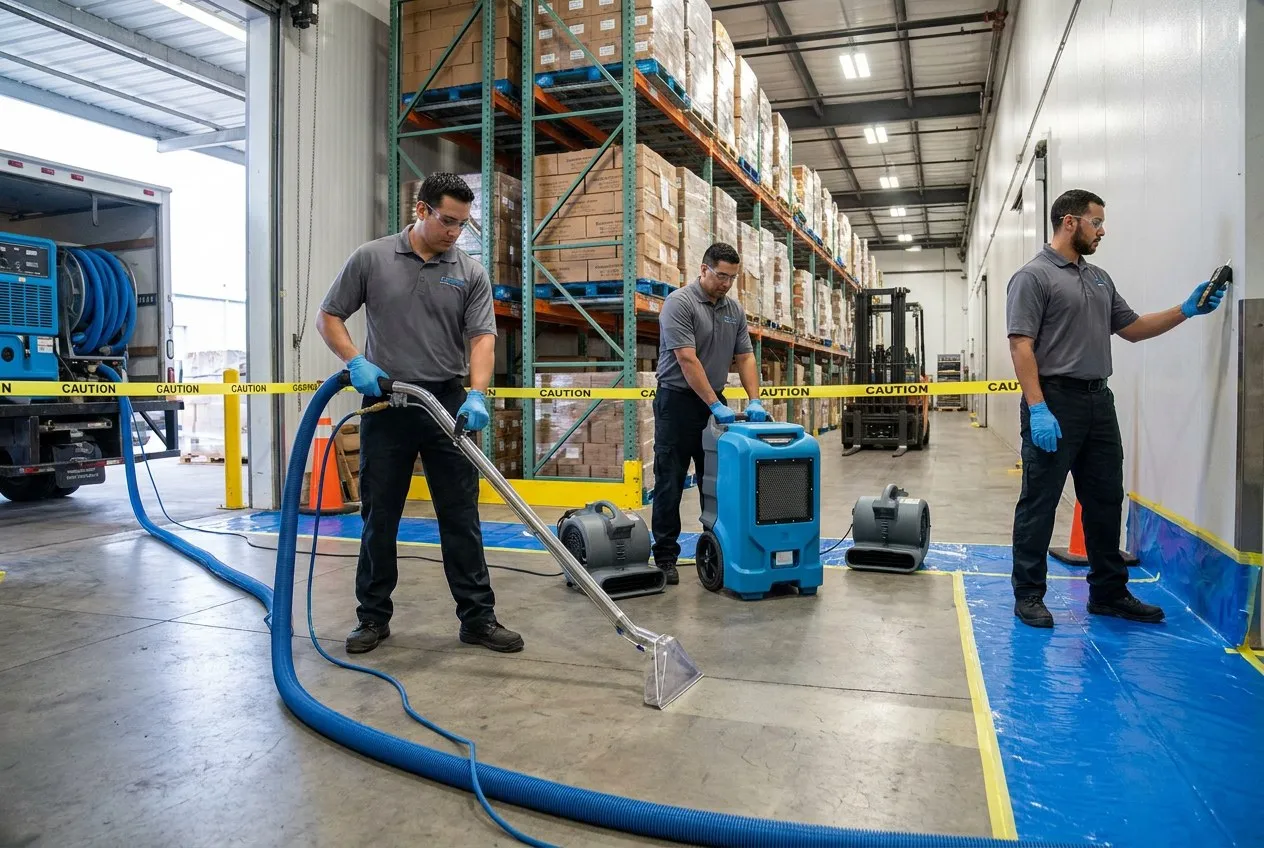
Food-distribution operations shape Tolleson's job base. A warehouse loss can affect concrete floors, insulated assemblies, drains, racking, and stored product.
The restoration lane is the building and affected materials. Facility management controls product disposition, food-safety decisions, refrigeration, and operating procedures.
Technicians define the wet zone, protect unaffected paths, extract water, and document moisture by assembly. Work zones can be separated so unaffected operations continue when conditions permit.
The low hum of refrigeration does not tell you whether insulated panels are dry. Readings do.
The commercial water damage page covers after-hours coordination and operating-facility mitigation. The commercial sewage cleanup page covers contaminated releases in business settings.
City water and sewer lines require a clear boundary
Tolleson operates its own utility with two treated wells and two Phoenix interconnections. Purchased Phoenix water supplied 88 percent in 2023.
The city also owns a major trickling-filter wastewater plant serving a system shaped by high-strength industrial food flows.
It is separate from Phoenix's 91st Avenue complex and does not make every backup city-side.
The source must be located. A blockage or break may sit within private building plumbing, the property lateral, or the public system. Anything from a sewer or drain backup is Category 3. The sewage cleanup page explains the interior response.
A flat-grade source check separates five paths
- Street ponding: Water is highest outside and follows grade toward a low threshold.
- Field or irrigation seepage: Moisture approaches from an adjoining soil route and may persist after irrigation stops.
- Pressurized supply: Meter movement or continuous release points toward water under pressure.
- Drain or sewer use: Moisture or backup appears when fixtures discharge.
- Roof or wall entry: Staining begins above the floor and follows a building joint.
The inspection compares timing, elevation, contamination, and the wettest point before naming the source.
Mitigation and rebuild need the same existing-condition record
An older or unpermitted addition can complicate access, matching, and permitting. It should be photographed before removal. The carrier and local authority determine coverage and permit requirements from the actual records.
Technicians extract water, map the assembly, remove material only where needed, and monitor drying. One team does mitigation and rebuild, keeping the original condition and repair scope connected.
Water Fighters Restoration is IICRC Certified 70192944 · AZ ROC 324471 · ROC 324468 · EPA Lead-Safe Certified Firm · Licensed, Bonded & Insured.
Common Questions
Why can one Tolleson house take street water while the next house stays dry?
Finished-floor height and lot grade can differ from one property to the next. The city's drainage report documented homes below adjacent roadway grade, so a few inches can change the storm entry route.
Can flood irrigation in a neighboring field move moisture toward a slab?
Yes, depending on soil, slope, duration, and nearby drainage. Water crossing that soil indoors is Category 3. Technicians compare the route with readings before naming the source.
How can a food-distribution warehouse be dried without risking stored product?
The wet building zone is isolated and documented while facility management controls product and food-safety decisions. Work paths, extraction, and equipment placement are coordinated through the commercial response plan.
Where does Tolleson's sewer responsibility end and the owner's begin?
The boundary depends on where the blockage or break sits and the utility's rules. A plumber or utility locates the source, while sewage cleanup handles the Category 3 interior damage and documents the affected area.
Does an old unpermitted addition complicate an insurance claim or rebuild?
It can. Existing conditions should be documented before removal, then the carrier and permitting authority decide how policy terms and current requirements apply.