
Water Damage Restoration in Goodyear
Published August 4, 2026 · Last reviewed August 21, 2026 · Water Fighters Restoration
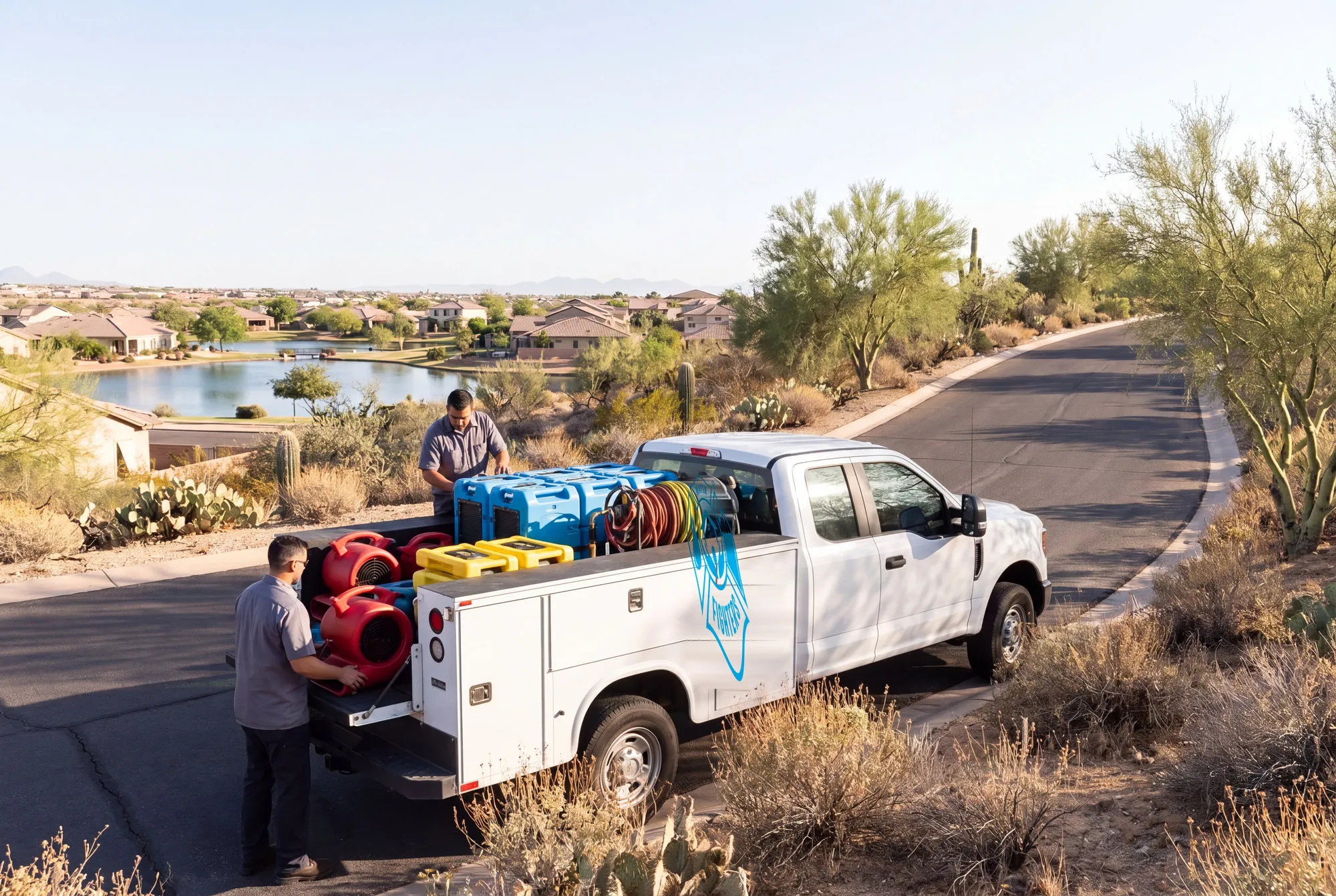
Goodyear climbs. Most Valley suburbs sprawl flat; Goodyear runs from the Palm Valley flats up into the Estrella foothills, where a master-planned community wraps two lakes into the mountainside. Elevation and water are the two things that make its damage patterns their own.
The Mountain Plan
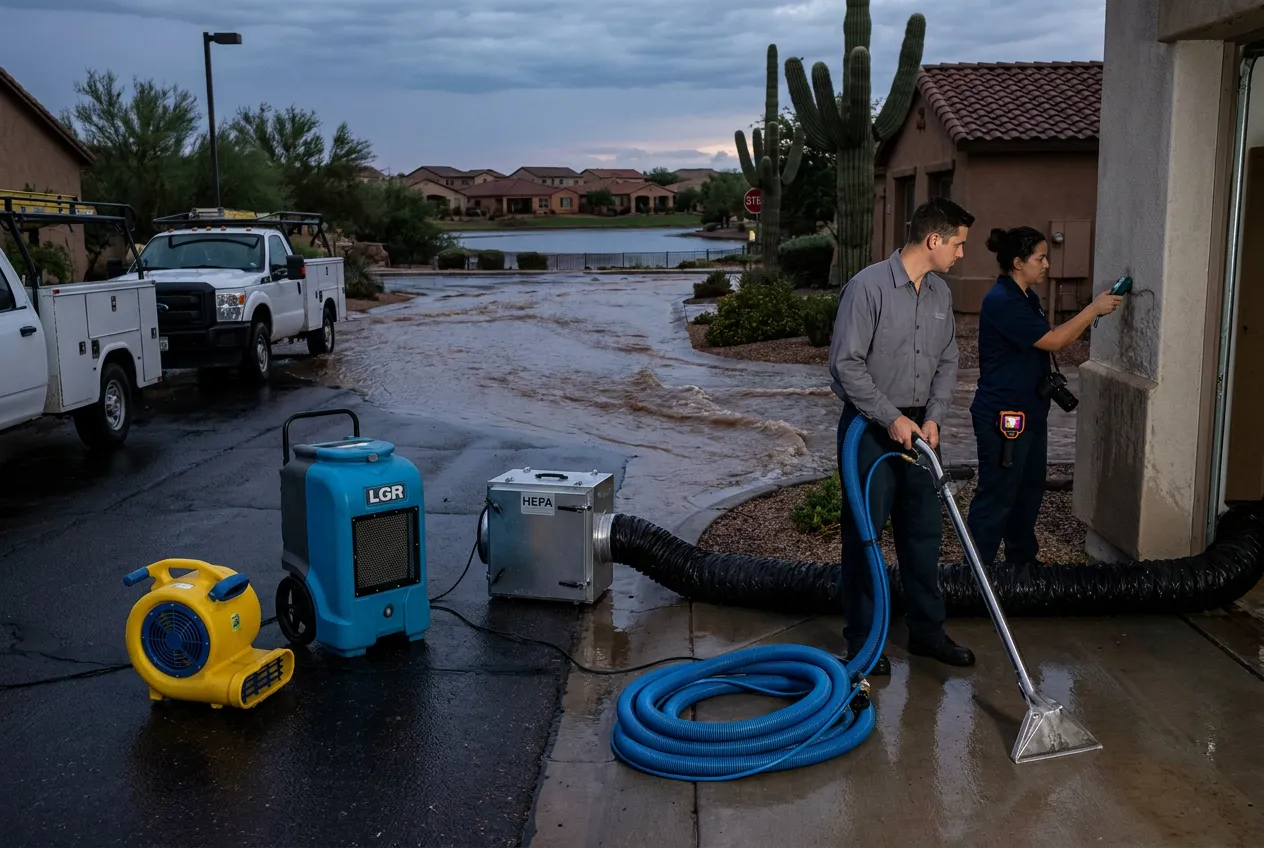
Estrella is the West Valley's terrain community — foothill streets, view lots, and lakes at the center of the plan. The terrain gives monsoon season a script: cells build over the Estrellas and send sheet flow downhill fast, and every foothill lot is a small drainage design whose berms, swales, and driveway crossings either work or don't in a twenty-minute storm. Homes here also carry long private utility runs and hillside grading that concentrates any failure — an irrigation main or supply line letting go uphill of a slab delivers its water with enthusiasm. Storm intrusion is contaminated from the first drop and an emergency extraction from the first minute; the June walk of your lot's runoff path is the cheapest prevention in this whole city.
PebbleCreek and the Fairway Homes
PebbleCreek concentrates Goodyear's active-adult story: a large golf community whose homes span the nineties through the 2000s, with the era's plumbing arc — the tail of the polybutylene window in the earliest sections, first-generation copper and builder components elsewhere — now deep into retirement age. The working protocol matches our 55+ standard everywhere: gate coordination, unhurried walkthroughs, a family member on speakerphone whenever wanted, and scopes written to be read from two time zones away. Fairway-adjacent lots add the golf-course irrigation variable at the property line, and the community's winter-resident rhythm adds the vacancy risk — a supply line doesn't check the calendar, and a May failure found in October is a rebuild story.
The Palm Valley Rings
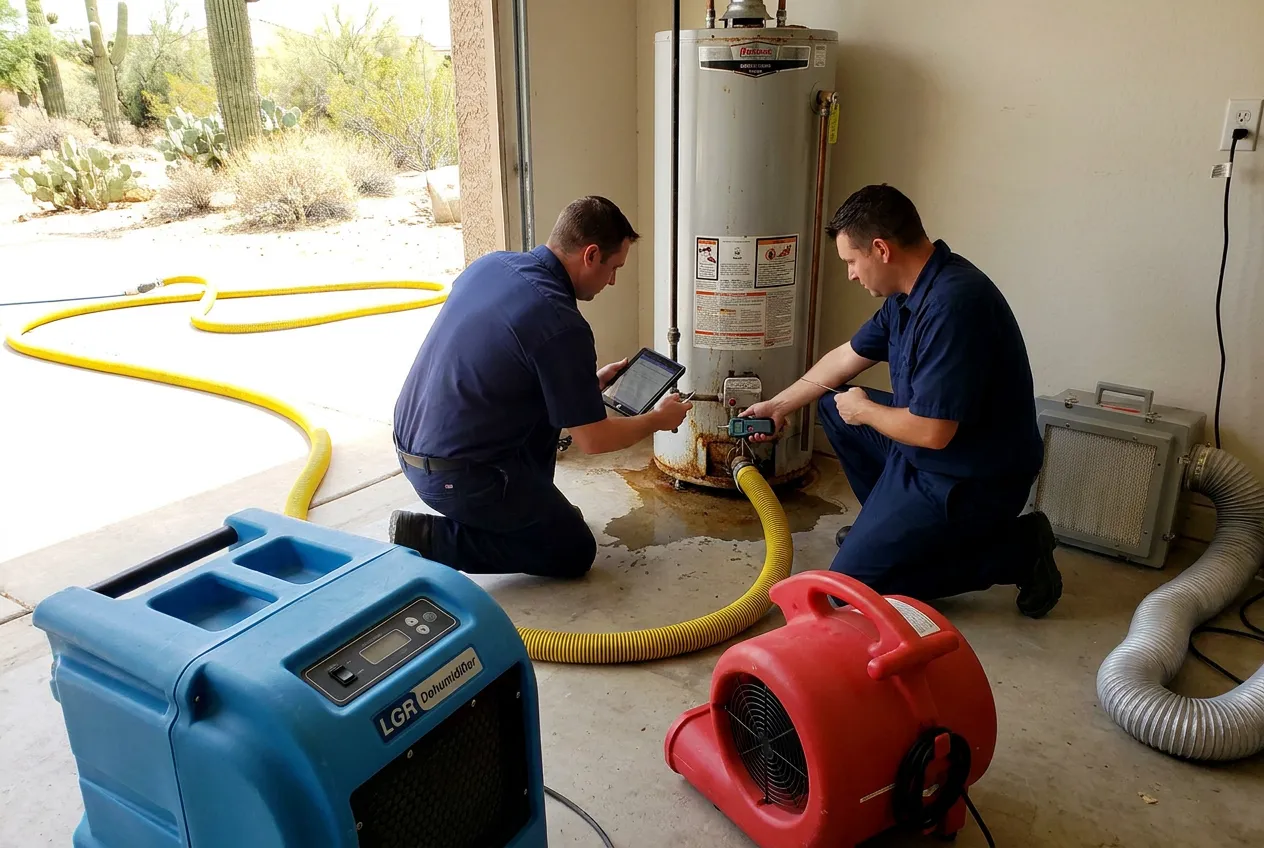
Palm Valley, Canyon Trails, Estrella-adjacent flats, and the newer plans along the loop corridors carry Goodyear's boom-clock chapter — huge tracts built through the 2000s whose original water heaters, supply lines, and appliance hoses are aging out together, street by street. Add the far-west construction frontier's usual monsoon note (grading in transition where new phases meet desert) and the diagnosis pattern here is straightforward: era tells us the suspect, the meters convict it, and the one-team rebuild closes the case with one estimate your carrier reads directly.
Common Questions
Can you really make Estrella's upper sections within the hour?
Yes — Goodyear is inside our western staging geography, foothills included, and the promise doesn't thin with elevation. Monsoon nights get staffed for exactly these streets.
We're seasonal residents at PebbleCreek. What's the pre-departure list?
Main valve off, a monthly interior walk arranged, leak sensors at the heater and under sinks, and a local contact authorized to act. The full version lives in the handbook's vacancy chapter — ten minutes of reading that has saved more homes than any product we own.
Our lot backs the golf course. Anything to watch?
The property-line irrigation zone. Course systems are professionally run, but the last few heads and your own lot's grading decide where overspray and failures travel — dampness along that wall on a watering rhythm is a clue worth calling about.
Our Canyon Trails home was built in 2006. Realistic risk?
The boom clock: original components crossing their retirement window together. Proactive replacement of the water heater, supply lines, and angle stops costs a fraction of any restoration invoice's opening line.