Water Damage Restoration in El Mirage, AZ
Published September 1, 2026 · Last reviewed September 1, 2026 · Water Fighters Restoration
El Mirage contains two housing stories within a compact city.
The original settlement began in the early 1930s on the west bank of the Agua Fria. Migrant farmworkers built much of the early working-class core themselves. Around it, small-lot production subdivisions expanded rapidly after 2000.
The population moved from 7,609 in 2000 to 31,797 in 2010. That is roughly 318% growth in one decade. About three-quarters of local homes were built after 2000, with a median build year around 2004.
A pipe failure near Grand Avenue can carry a different age story than one in Arizona Brisas, Sundial, or Rancho El Mirage.
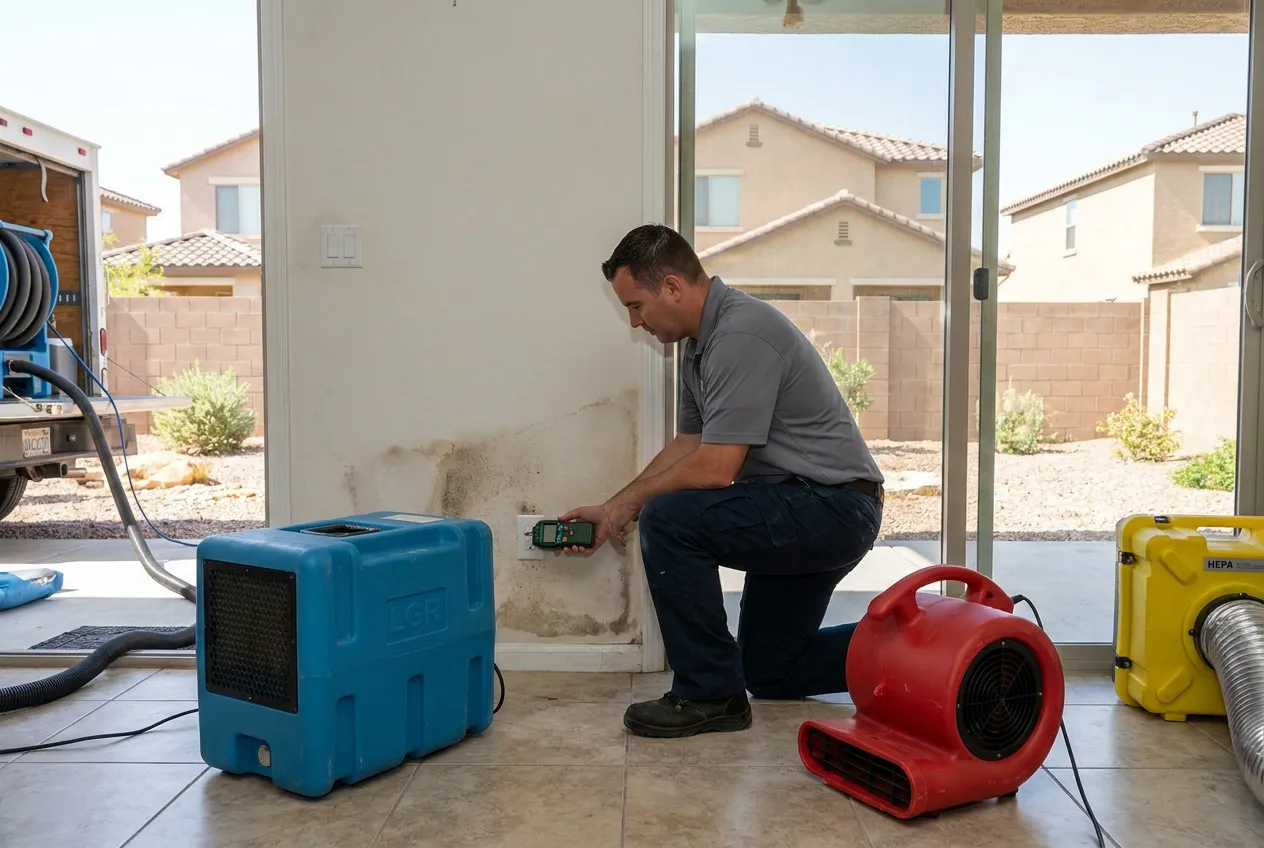
Water Fighters Restoration is Open 24 hours, 7 days. Crews stage as one licensed team, Valley-wide. The response promise is on-site within an hour.
Two housing clocks shape the work
El Mirage was founded in 1937 and incorporated on June 25, 1951. Those are different dates, and neither one describes most of today's housing.
The older core is likely the city's one genuine galvanized-era pocket. The production neighborhoods are mostly copper and early PEX. A smaller 1980s and 1990s slice may include polybutylene, but it should not be inflated into a citywide theme.
This makes the build era useful at the first inspection. It suggests likely materials and failure points. It does not replace looking at the pipe, valve, appliance, and water path in front of the technician.
The nearby Peoria restoration page and Surprise restoration page cover different West Valley development patterns. El Mirage needs its own clock.
The original core can carry galvanized-pipe problems
Galvanized supply pipe corrodes from the inside. The opening narrows as mineral buildup and corrosion accumulate. Pressure may decline before the thinned wall finally leaks.
In El Mirage, that story belongs to the older self-built core. It should not be applied to the post-2000 subdivisions.
Early clues can include slowly falling pressure, rusty water after a fixture sits, or a hot side that runs weaker than the cold. Those clues do not locate a leak. They justify a closer look at the system.
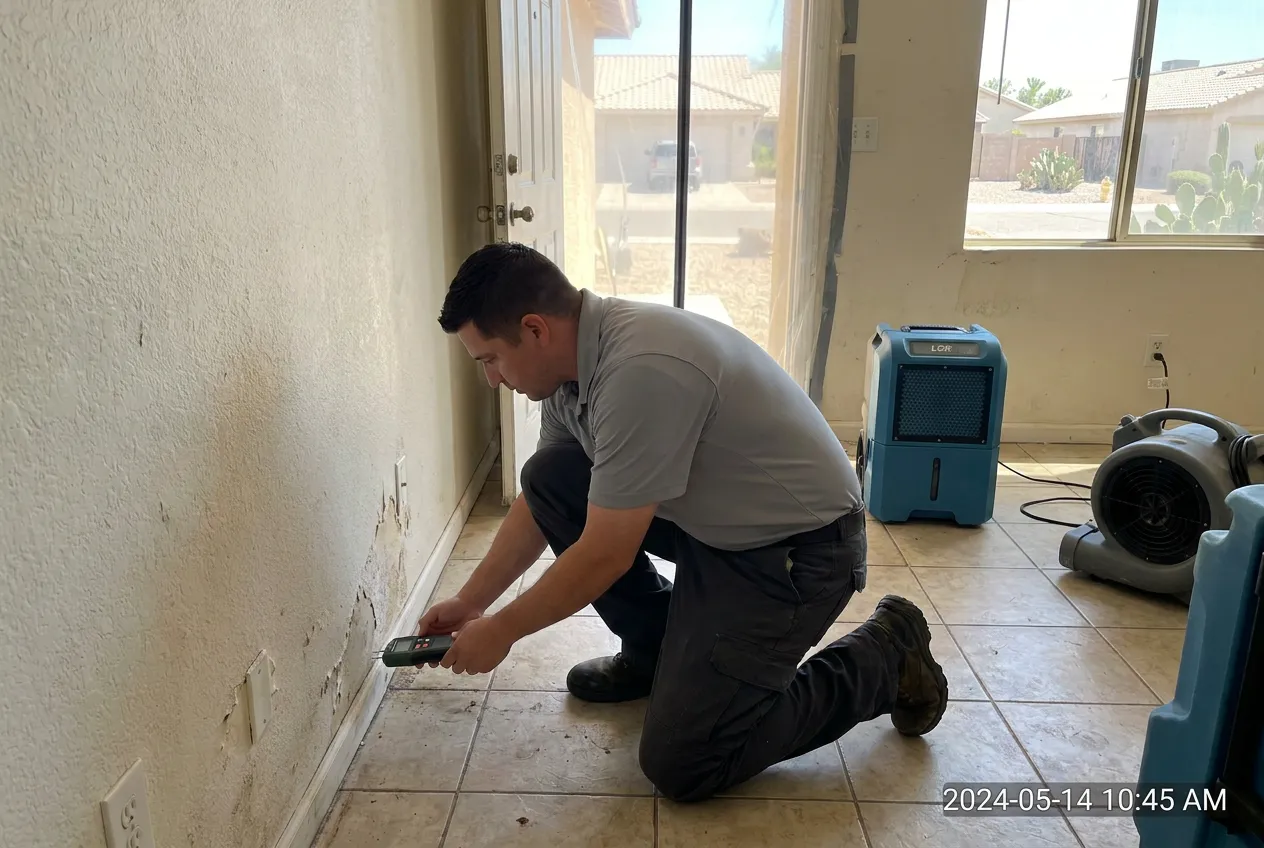
Once a break occurs, water can travel through walls, under cabinets, and across flooring. A dark line at the baseboard may be several feet from the actual opening.
The 2000s subdivisions have a shared component age
Arizona Brisas, Sundial, and Rancho El Mirage reflect conventional production building on small lots. They were not built as master-planned communities.
Many homes in this group share similar installation periods for copper or early PEX, appliance connections, shutoff valves, and water heaters. That produces the same broad component-clock issue seen in other fast-growth communities.
A water heater does not have to burst dramatically. A slow tank leak can wet a garage wall, seep beneath stored items, and reach the room on the other side. The water-heater flooding guide explains the hidden paths around the tank and platform.
Production homes can also share continuous flooring across several rooms. Water released in a laundry or kitchen may move under that flooring before the surface shows a clear boundary.
The Agua Fria is usually dry, not harmless
The Agua Fria is dammed upstream at Lake Pleasant and remains dry much of the year. It can still carry storm releases and runoff.
The Dysart Drain is the county flood-control channel through the area. Neither feature supports an invented story about constant water beside the city. Their importance appears during storm movement.
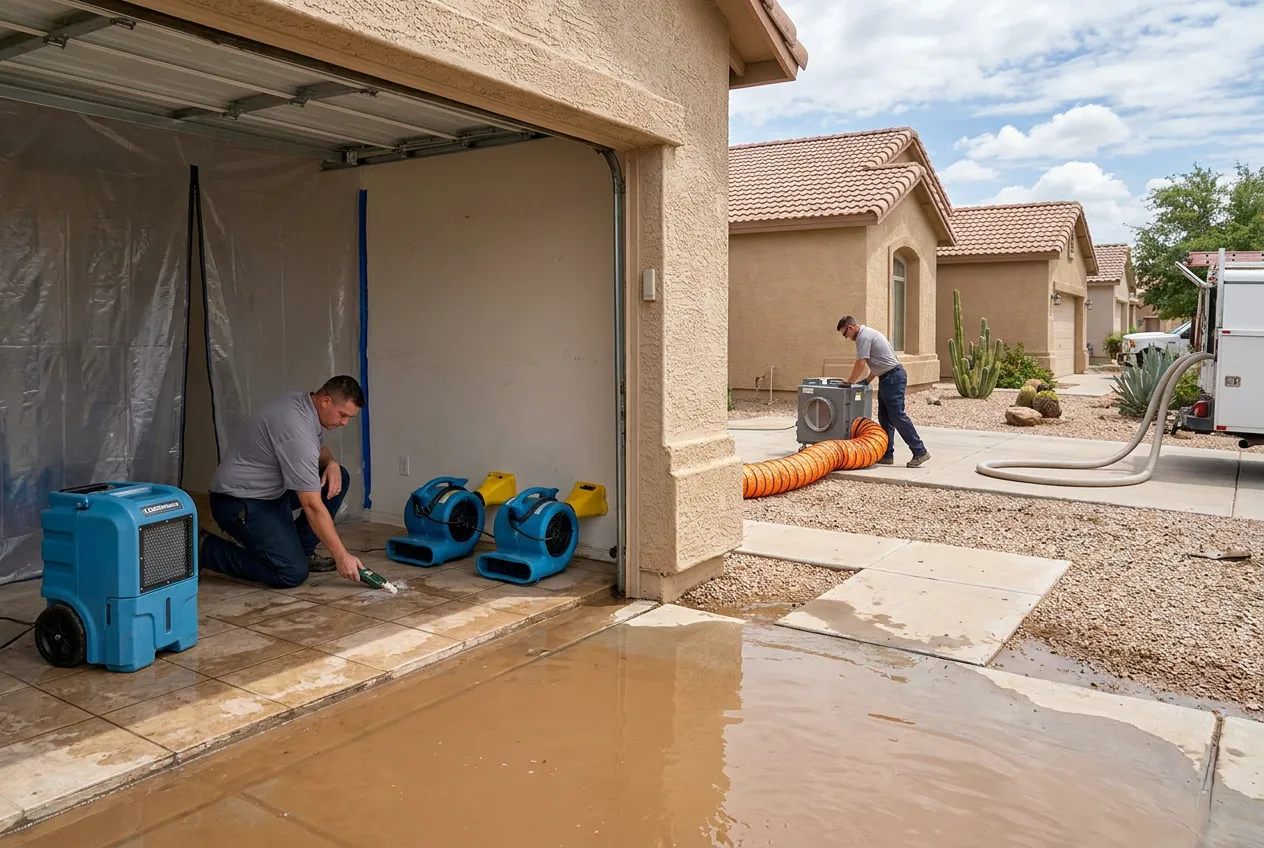
Water entering a structure from outside is Category 3. That includes runoff crossing a lot, doorway, wall opening, or garage threshold.
Professionals contain affected areas, remove porous material when conditions require it, clean remaining surfaces, and dry from measured readings. The monsoon flood guide explains how desert water can move through channels and streets after a storm.
City systems serve local homes
El Mirage municipal water comes from nine city groundwater wells. Homes are on city water and sewer.
This is not an SRP or CAP water story. It is not a private-well or septic pattern. Flood irrigation is not part of the local loss profile described here.
A sewer or drain backup remains Category 3 regardless of the municipal source. The distinction is between the potable system and contaminated wastewater, not between neighborhoods.
Luke Air Force Base sits south of the city. Roughly 60% of El Mirage lies under noise or accident-potential zones connected to the base.
Pueblo El Mirage is the exception, not the city
Pueblo El Mirage is a gated 55+ RV and golf resort with 378 RV sites. It is the city's one clear snowbird pocket.
El Mirage as a whole is younger and family-heavy. A restoration plan should not treat seasonal vacancy as the defining citywide pattern.
Inside Pueblo El Mirage, gate access and an absent owner may still shape the first call.
The Sun City restoration page covers the retirement community across the river. It should not be used to describe El Mirage.
The restoration plan starts with the correct era
The first visit identifies the source, contamination class, affected rooms, and likely concealed path. Moisture mapping then separates visibly wet finishes from assemblies that only look dry.
In the old core, that may mean tracing a galvanized-line loss through older walls. In a 2000s home, it may mean checking continuous flooring, cabinet bases, or the wall beside a water heater.
One team does mitigation and rebuild. Drywall, trim, cabinets, and flooring can remain within the same documented project when removal is necessary.
Water Fighters Restoration is IICRC Certified 70192944 · AZ ROC 324471 · ROC 324468 · EPA Lead-Safe Certified Firm · Licensed, Bonded & Insured.
Common Questions
How does the original El Mirage core differ from the post-2000 subdivisions?
The original core is probably the city's one galvanized-era pocket, while most newer subdivisions use copper or early PEX. The likely failure points and concealed water paths therefore change with the house's build era.
Is El Mirage mainly a retirement community?
No. El Mirage is a younger, family-heavy city. Pueblo El Mirage is a gated 55+ RV and golf resort, but it is one seasonal pocket rather than the character of the whole city.
Does the Agua Fria stay dry all year?
No. It is dry much of the year because it is dammed upstream, but it can carry storm releases and runoff. Any outside water entering a structure is Category 3.
Are El Mirage homes served by private wells and septic systems?
No. Municipal water comes from nine city groundwater wells, and homes are on city water and sewer. A sewer or drain backup is still Category 3 and needs a contaminated-water response.
Is polybutylene common throughout El Mirage?
No. It may appear in the smaller 1980s and 1990s housing slice, but it is not the main citywide pipe story. Material should be confirmed at the property instead of inferred from the city name.