
Flood Cleanup in Peoria
Published September 1, 2026 · Last reviewed September 1, 2026 · Water Fighters Restoration
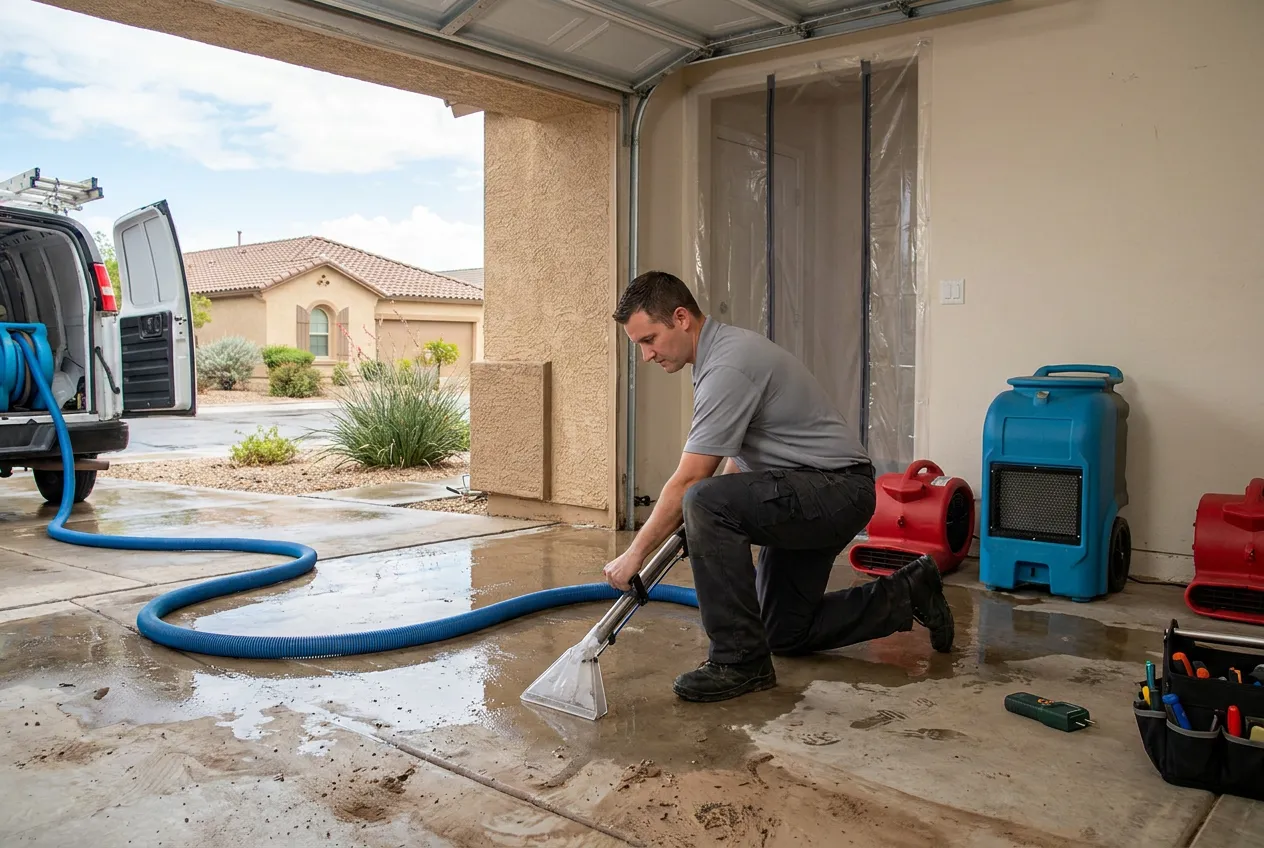
Water is over the garage lip and moving toward the hallway. The first job is not guessing how far it went. It is stopping exposure and getting safe access.
If the flow has ended and the problem is now damaged floors, walls, or cabinets, use the Peoria water damage restoration page. This page is for standing water and active flood cleanup.
What to do in the first hour in Peoria
- Stay out of water near electricity. Do not step into water touching outlets, appliances, cords, or the service panel. Shut off power only from a dry, safely reached disconnect.
- Stop a supply-water source when it is safe. Close the fixture valve or main shutoff for a broken line. Do not enter runoff to reach a valve.
- Keep people and pets out. Water that crossed the ground, entered from a wash, or backed up from a drain is Category 3.
- Photograph the route from dry ground. Capture the doorway, visible water line, affected rooms, and source area without wading through the loss.
- Call for extraction. Water Fighters Restoration is Open 24 hours, 7 days at (602) 884-5325. The response promise is on-site within an hour.
Skunk Creek and New River set Peoria's drainage map
Peoria's flood map is not one broad blue patch. It follows channels that collect water from different parts of the north and west Valley.
Skunk Creek enters Peoria from the east near Loop 101 and meets New River inside the city. New River then continues toward the Agua Fria near Peoria's western side. Those corridors are usually dry or quiet enough to fade into the background. A concentrated storm changes them quickly.
The August 2014 storm showed the difference between a dry wash and an inactive one. Skunk Creek flooded Interstate 17 upstream in north Phoenix while rapid rises hit the New River and Cave Creek areas — the same channels that continue downstream through Peoria. The lesson is practical: rain over the upstream watershed can matter even when little has fallen over the house.
Homes near a channel are not the only ones that take water. A street can become the last short channel when inlets are overwhelmed. Runoff then follows curb lines, low driveways, side yards, and garage thresholds. Retention areas may be doing their job while a nearby lot still has a local grading problem.
The monsoon flood guide explains how a short desert storm can create a much longer water path. The emergency flood cleanup hub covers the Valley-wide response.
North Peoria adds foothill runoff
Farther north, the pattern changes from the flatter developed grid to foothill drainage. Water comes off open slopes, enters natural washes, and reaches crossings or subdivision channels below.
Engineered basins and channels reduce risk. They do not make every driveway or wall opening higher than the water around it. Sediment, landscape rock, and plant debris can also change a small drainage path during one storm.
Look for the first point where water crossed the building line. It may be a garage seal, a patio door, a wall penetration, or a low stucco edge. A muddy fan on the concrete often points back toward the route.
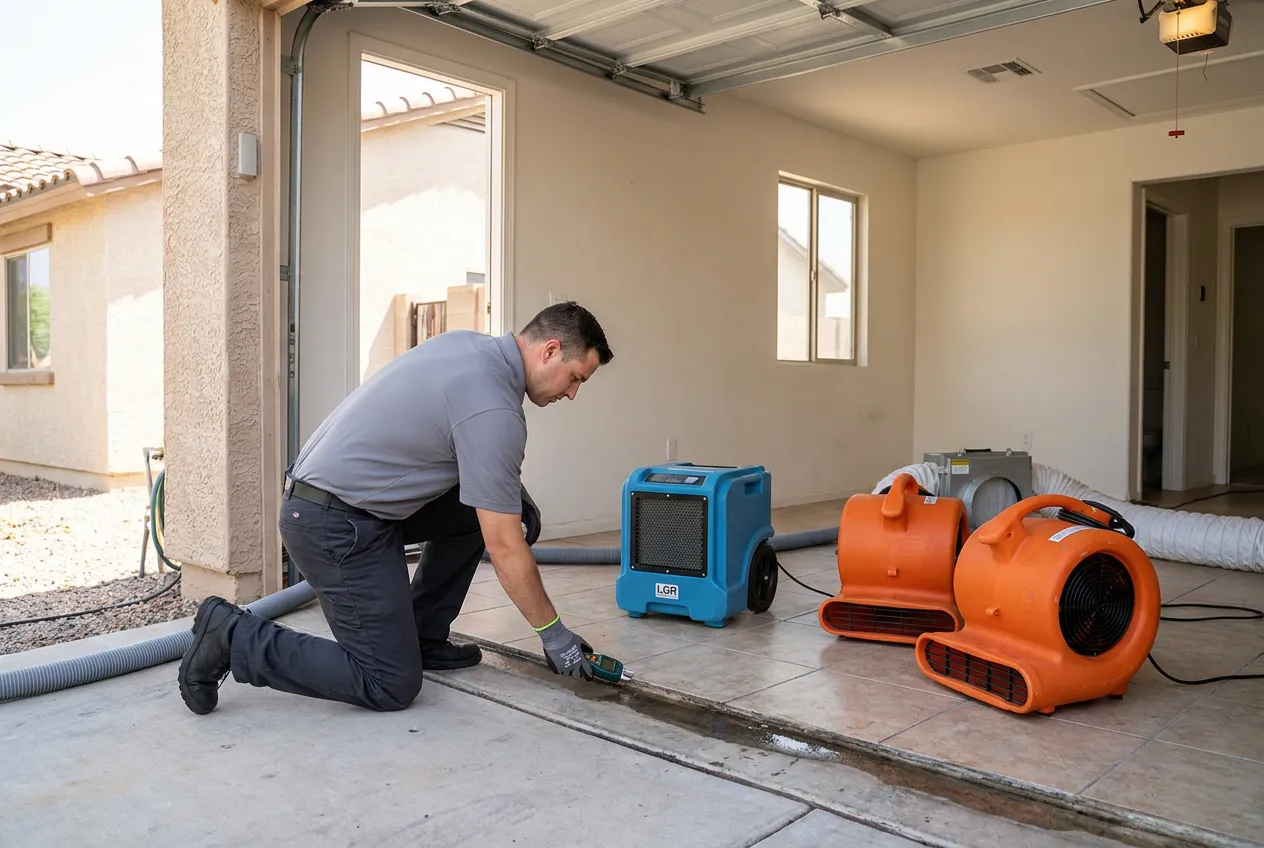
Getting the water out without losing the hidden edge
Outside water is Category 3. Extraction therefore begins with controlled access, appropriate protective measures, and separation of affected areas. Porous materials are evaluated by contamination, saturation, and whether they can be cleaned.
The visible puddle is only the starting boundary. Technicians check wall bases, cabinet toe kicks, flooring seams, and adjoining rooms. Water beneath plank flooring or inside an insulated wall can remain after the concrete looks dry.
Extraction removes bulk water. Air movement and dehumidification handle what remains in the assembly. Moisture readings establish the drying goal and show when equipment can come out.
One team does mitigation and rebuild. If drywall, trim, cabinets, or flooring require removal, the repair scope can stay with the same documented project. The deeper process is covered on the water damage restoration service page.
Water Fighters Restoration is IICRC Certified 70192944 · AZ ROC 324471 · ROC 324468 · EPA Lead-Safe Certified Firm · Licensed, Bonded & Insured.
The insurance distinction starts with the water path
Rain entering through storm damage and surface water crossing the ground are not classified the same way by insurance. Most homeowners policies exclude flood losses, so document the source, entry point, and water line with the claim guide and coverage guide.
Common Questions
Does Skunk Creek have to overflow for a Peoria house to flood?
No. Local street ponding and lot runoff can reach a house without a channel leaving its banks. The water line at the threshold and the upstream drainage route usually tell more than the nearest wash alone.
Can runoff reach Peoria after the hardest rain has moved away?
Yes. Skunk Creek and New River collect water from upstream areas, so flow can rise after rain at the property has eased. Do not use a clearing sky as the signal to enter standing water.
What does a muddy line across a Peoria garage threshold show?
It records the height and direction of outdoor runoff at the building opening. Photograph the line before cleaning because it can connect the street or wash route to the indoor moisture map.
Why can north Peoria runoff carry more rock than central street flooding?
Foothill flow can collect loose desert soil and stone before it reaches developed drainage. Central street water usually follows a shorter paved route, though both remain Category 3 indoors.