
Water Damage Restoration in San Tan Valley, AZ
Published September 1, 2026 · Last reviewed September 1, 2026 · Water Fighters Restoration
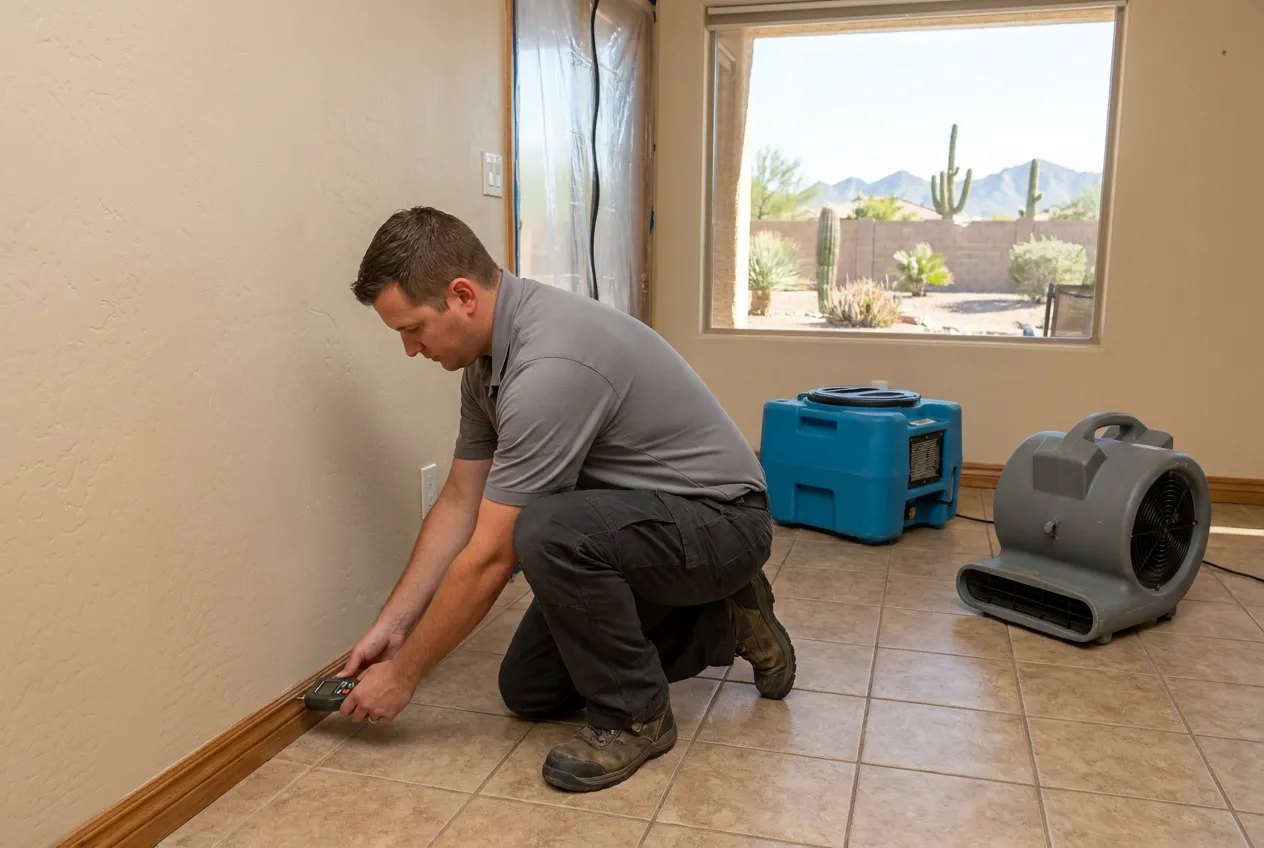
San Tan Valley became a town on July 1, 2026. Its housing did not become new again that day.
Roughly 91% of local homes were built after 2000. The median build year is about 2007. That gives the town a distinct water-damage pattern. Large groups of homes reached similar component ages together.
Builder-grade supply lines, copper and PEX runs, shutoff valves, and water heaters do not fail on a town calendar. They age by installation era. In San Tan Valley, much of that era is shared.
Water Fighters Restoration is Open 24 hours, 7 days. Crews stage as one licensed team, Valley-wide. The response promise is on-site within an hour.
The newest town has one broad housing clock
Voters approved incorporation on August 5, 2025. The legal change took effect the following July, making San Tan Valley Arizona's 92nd municipality. Earlier attempts in 2004 and 2010 had been blocked under a law that has since been repealed.
The town had 99,894 residents at the 2020 census. Johnson Ranch started the master-planned pattern in the mid-1990s. San Tan Heights, Skyline Ranch, and Copper Basin followed.
That growth produced neighborhoods with similar plumbing ages. A water heater installed near the original build may now be well into its service life. A small fitting can also release enough water to cross several rooms before anyone finds it.
The important question is not whether the house looks modern. It is where the water traveled.
Tile may look dry while moisture remains at cabinet bases. Carpet pad can hold water after the surface stops feeling wet. A slab-side supply leak may show up as warm flooring, a faint hiss, or a damp wall several feet from the break.
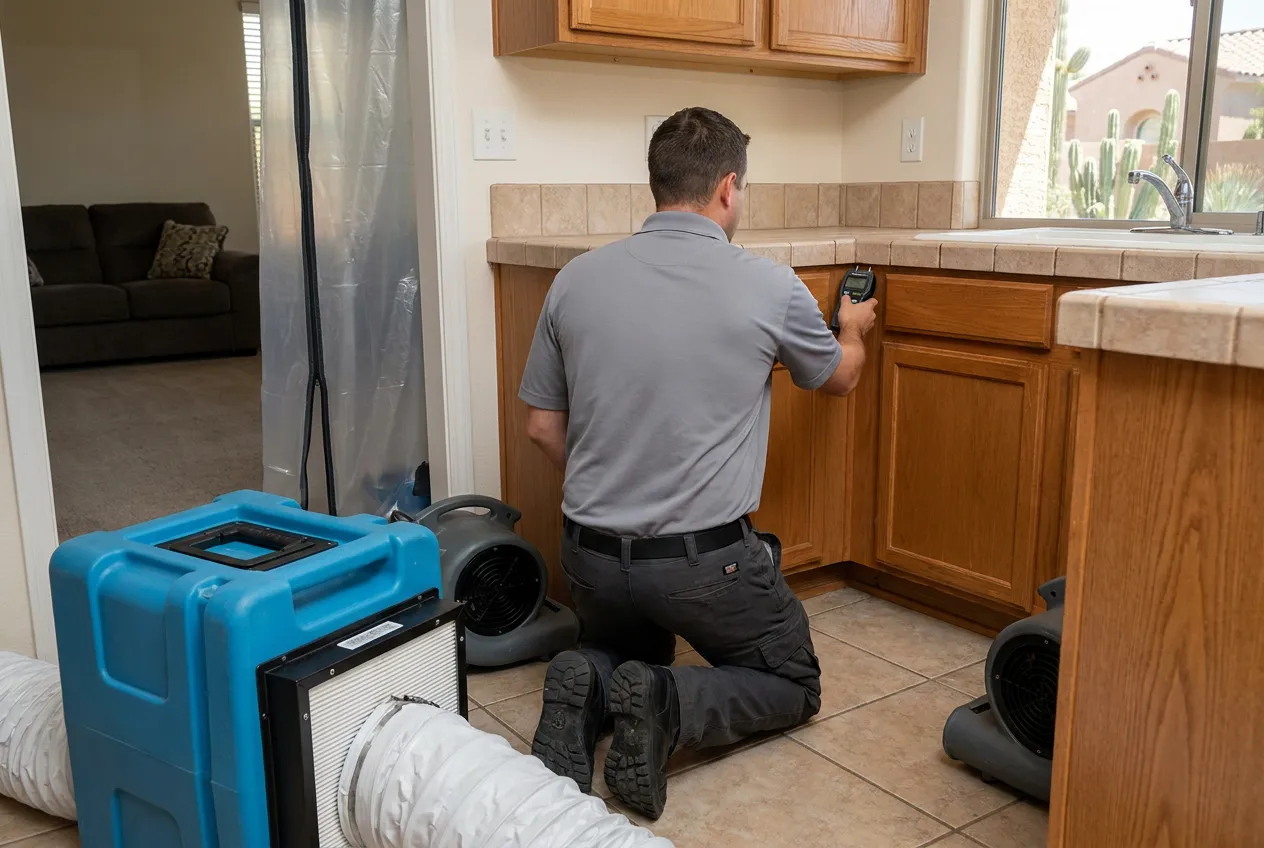
For a deeper look at one common local source, see the water-heater flooding guide. Slab-adjacent moisture may require a different investigation than a failed appliance line.
A Queen Creek mailing label does not settle the location
The name San Tan Valley dates only to 2009. Before that, homes commonly carried Queen Creek or Florence mailing addresses. ZIP codes 85140, 85143, and 85144 still create confusion.
San Tan Valley is entirely in Pinal County. It was never part of the town of Queen Creek.
That distinction matters when a homeowner reports a loss, especially when an insurer, property manager, or family member is reading the address from another state. The service location should be confirmed by the property itself, not only the mailing label.
The nearby Queen Creek restoration page covers the neighboring town. The Gilbert restoration page covers a separate East Valley housing pattern.
Queen Creek Wash and foothill runoff change storm losses
Queen Creek Wash crosses the north side of San Tan Valley. It is a dry wash, not a river. It is also the area's only federally mapped floodplain.
Storm runoff from the San Tan Mountains can cross the community. A Pinal County drainage study identified 222 homes and businesses at direct flood risk.
Outside water that enters a structure is Category 3. That remains true when the water looks like ordinary rainwater. It may carry soil, organic material, roadway residue, and other contaminants picked up before entry.
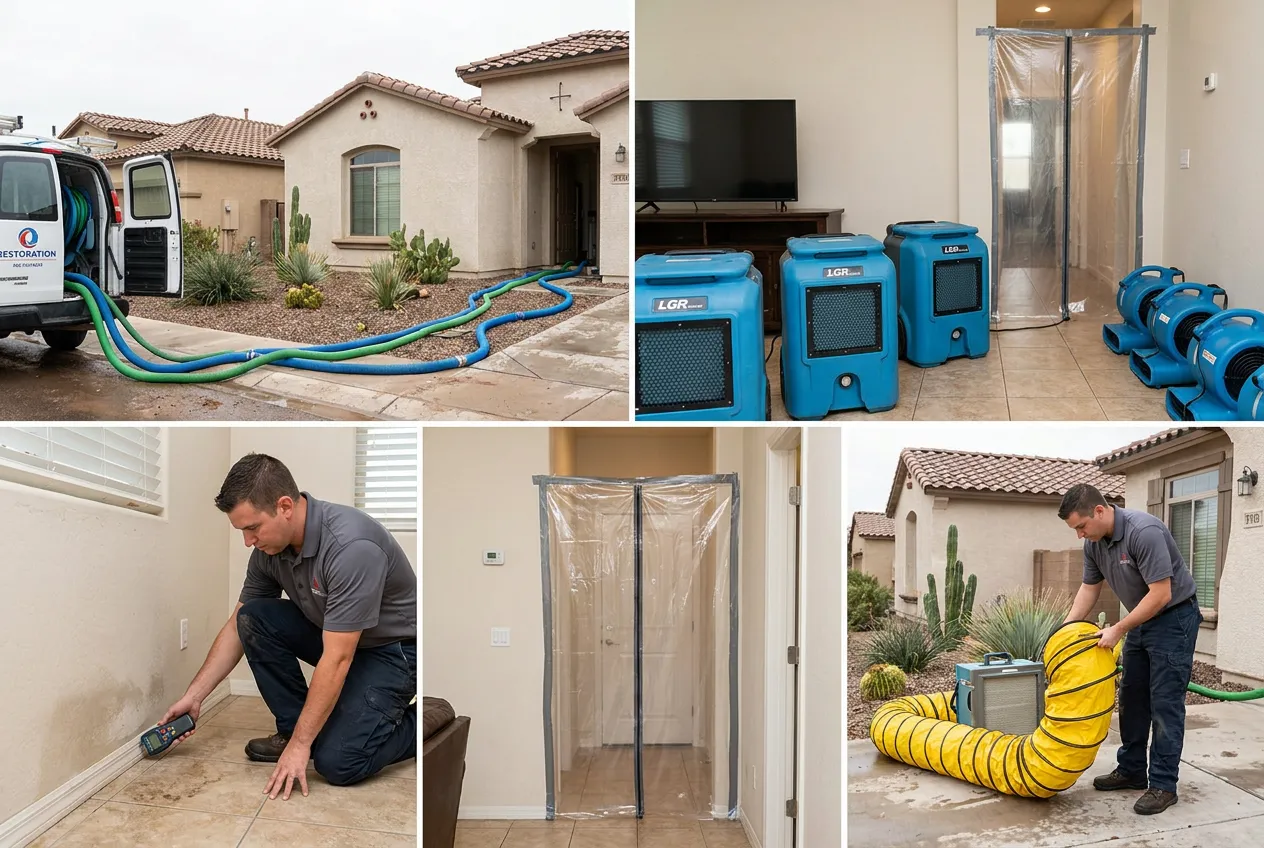
Professional work starts with controlled access, removal of affected porous material when required, cleaning, and a drying plan built around measured conditions. It does not start by placing fans in a contaminated room.
The storm-damage restoration page explains the broader response. The monsoon flood guide covers the way desert runoff moves before it reaches a wall or doorway.
The sewer history is part of the local risk picture
San Tan Valley's growth also put pressure on water and sewer systems. Johnson Utilities developed a record of sewer overflows, summer water shortages, and odors. The Arizona Corporation Commission later transferred system operations to EPCOR, which acquired the utility in December 2020.
That history does not mean every backup has the same cause. A loss may begin at a building drain, a fixture, a private line, or farther downstream.
Any water from a sewer or drain backup is Category 3. People and pets should stay out of affected areas. Professionals establish containment, remove unsalvageable porous materials, clean remaining surfaces, and verify drying.
The sewage cleanup service covers that process in more detail.
Mitigation and rebuild stay with one team
The first job is to stop damage. That may mean coordinating a plumber, isolating an appliance, extracting standing water, or protecting an unaffected room.
The next job is measurement. Technicians map moisture across flooring, drywall, cabinets, and adjoining rooms. Materials are opened only where the evidence supports it. Drying equipment is placed to address the wet assembly, not the most visible stain.
One team does mitigation and rebuild. That matters when baseboards, drywall, cabinets, or flooring must be removed.
What happens after the call
The conversation should establish whether water is still moving and where it began. It should also identify affected rooms and any outside-water or drain source.
A technician then inspects hidden paths. Moisture readings create the starting record. Standing water is extracted where conditions allow. Containment is added when contamination or demolition requires it.
Drying is monitored rather than guessed. Equipment changes as materials respond. When removal is necessary, the rebuild scope follows the documented loss.
Water Fighters Restoration is IICRC Certified 70192944 · AZ ROC 324471 · ROC 324468 · EPA Lead-Safe Certified Firm · Licensed, Bonded & Insured.
Common Questions
Does a Queen Creek mailing address mean the home is outside San Tan Valley?
No. Mailing labels and ZIP codes can still show Queen Creek or Florence even when the property is in San Tan Valley. The town is entirely in Pinal County and was never part of Queen Creek, so the physical property location should guide service and documentation.
Why can water-heater failures cluster in San Tan Valley neighborhoods?
Many homes were built during the same post-2000 growth period, so original components can reach similar ages together. Roughly 91% of the housing stock is post-2000, a shared clock detailed in the water-heater flooding guide.
Is Queen Creek Wash a river that stays wet?
No. Queen Creek Wash is a dry wash that carries runoff during storm conditions. Water entering a home from the wash or any outside route is Category 3 and requires a contaminated-water response.
Does San Tan Valley's sewer history identify the cause of a current backup?
No. A present backup may begin at a fixture, building drain, private line, or farther downstream, so the source still has to be traced. Any sewer or drain backup is Category 3, as explained on the sewage cleanup page.
Are galvanized and polybutylene the main pipe risks in San Tan Valley?
No. The housing stock is generally too new for those materials to define the town. The stronger local pattern is shared aging among builder-grade components, copper, PEX, and water heaters in post-2000 homes.