
Landlord and Tenant Water Damage in Arizona: What the Act Says
Published October 8, 2026 · Last reviewed October 8, 2026 · Water Fighters Restoration
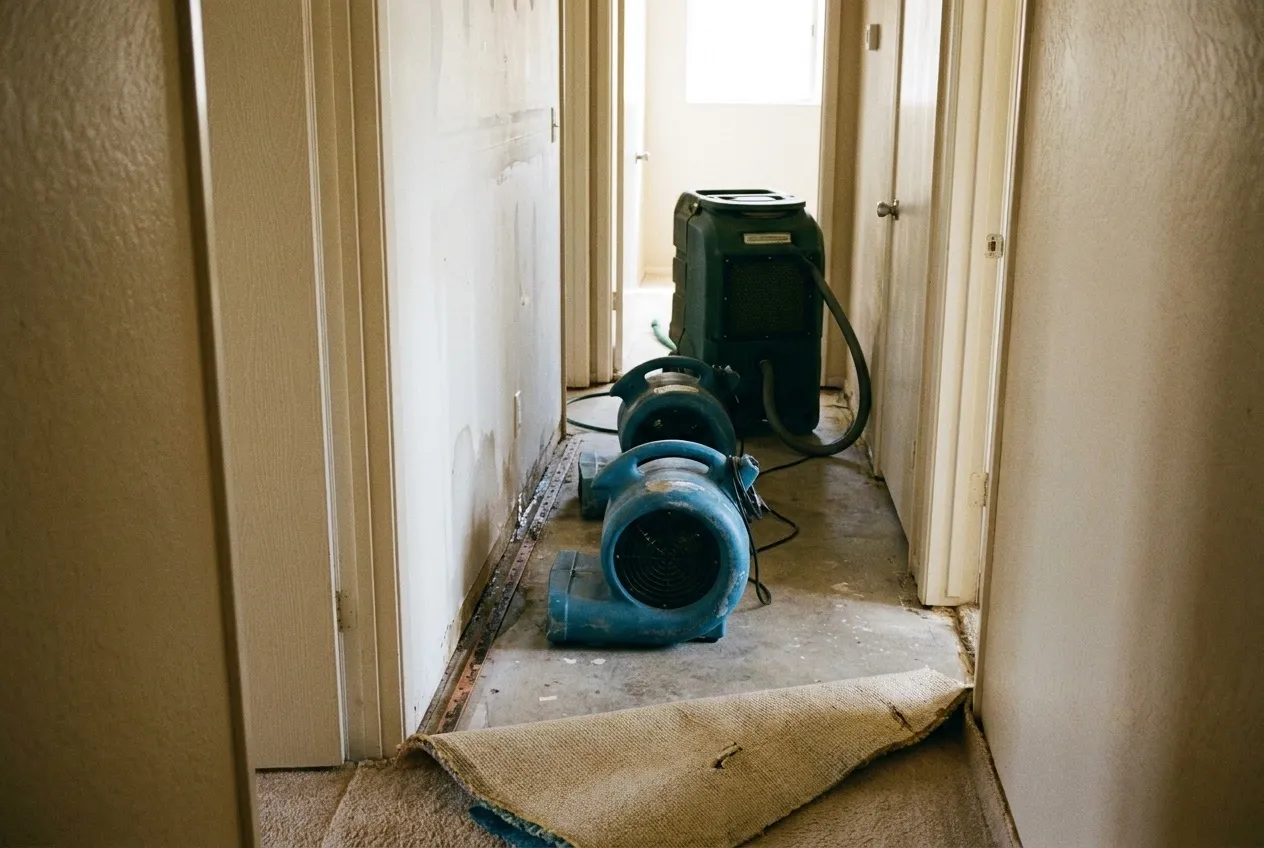
The hallway carpet gives under your sock along one wall, and the baseboard there has gone dark at the seam. You rent, so the water is only the first question. The second is whose problem this is.
Arizona's Residential Landlord and Tenant Act doesn't name a winner. It gives each side duties and ties most tenant remedies to a notice step. This page quotes the statute and isn't legal advice; disputes belong with an Arizona attorney or legal aid.
The act "shall apply to the rental of dwelling units" (A.R.S. 33-1304). Its exclusions (33-1308) include transient hotel stays, a condo owner living in their own unit, and public housing under title 36, chapter 12 or federal law. An arrangement set up to avoid the act isn't excluded. A tenant renting a condo from its owner isn't excluded, and the association's side is on the HOA and condo page.
What the statute puts on the landlord
Section 33-1324(A) says the landlord shall "Make all repairs and do whatever is necessary to put and keep the premises in a fit and habitable condition." It also requires the landlord to "Maintain in good and safe working order and condition" the plumbing, cooling and other facilities it supplies or must supply. And it says to "Supply running water and reasonable amounts of hot water at all times," with stated exceptions.
A lease can shift some work to the tenant, but only in writing, in good faith and "supported by adequate consideration." It can't shift work "necessary to cure noncompliance" with the code and fit-and-habitable duties (33-1324(C)–(D)).
What the statute puts on the tenant
Section 33-1341 says the tenant shall use plumbing "in a reasonable manner" and shall "Not deliberately or negligently destroy, deface, damage, impair or remove any part of the premises." The duty that matters on day one is to "Promptly notify the landlord in writing" of anything that needs repair.
What to do, in order
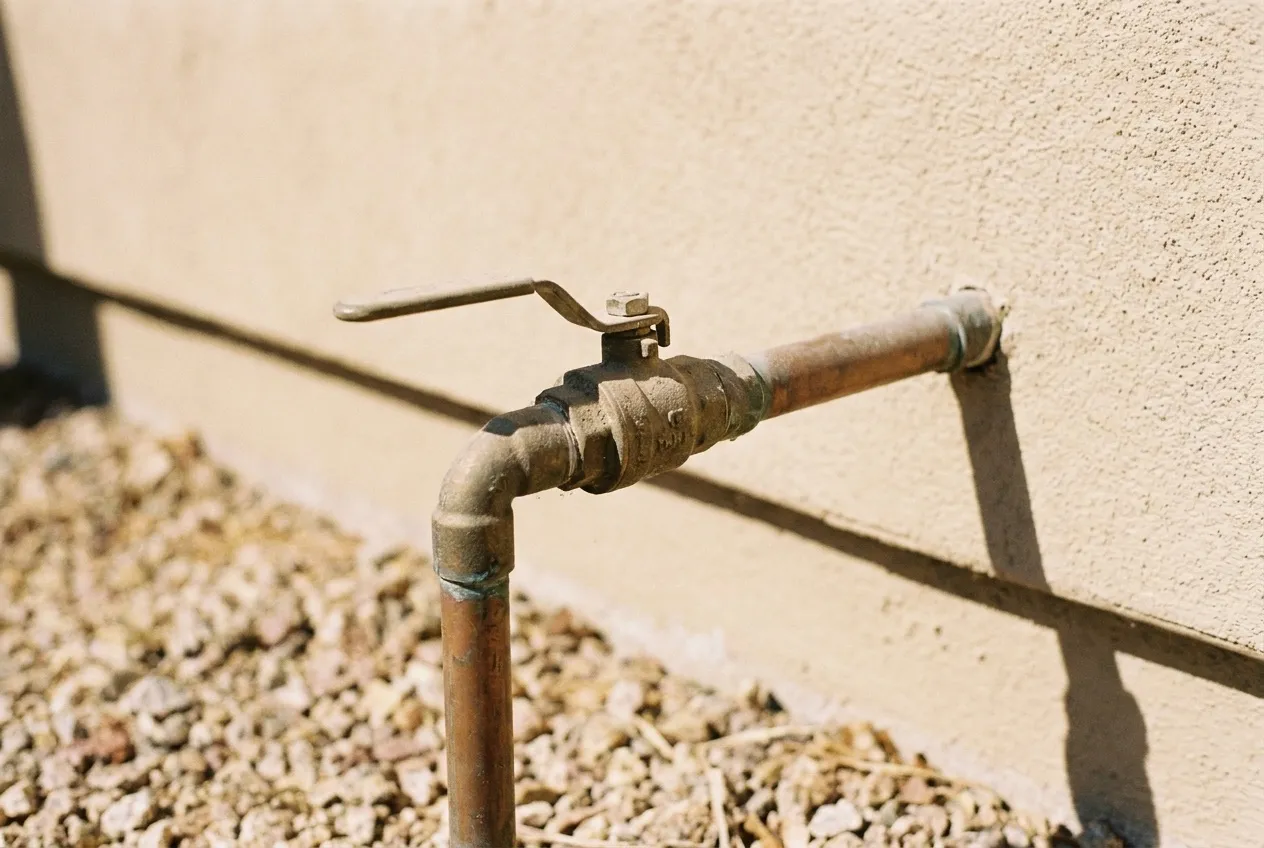
- Stop the water if you safely can. In a house, close the valve where the line enters the home and leave the curb meter box to your water provider. In an apartment, call management and use the fixture or unit valve if you know where it is.
- Notify the landlord in writing the day you find the water, at the contact for "notices and demands" disclosed at move-in (33-1322), and keep a dated copy. Whether a text counts is an attorney question.
- Allow access. The tenant "shall not unreasonably withhold consent" to entry to "make necessary or agreed repairs," and a written repair request counts as permission to enter for that purpose (33-1343(A)–(B)). The apartment water damage page covers entry from the manager's side.
- Photograph the unit and your belongings, and call your renters carrier about contents.
- If repairs stall, each remedy has its own notice step: written notice under 33-1361 and 33-1363, "reasonable notice" under 33-1364, and written notice after vacating under 33-1366. Talk to an attorney before choosing one.
The Maryvale page answers who renters call first.
What gets opened up and dried
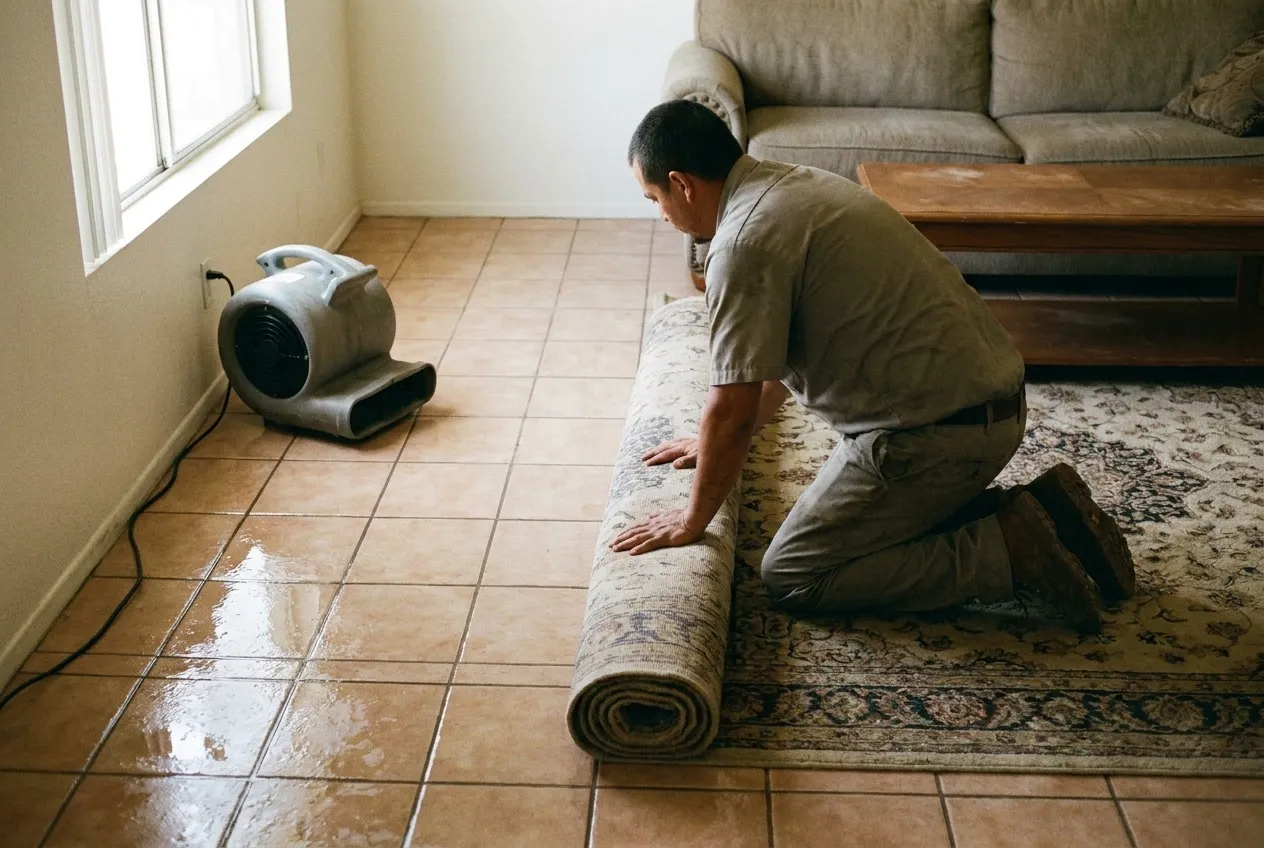
A rental dries like any house. Water is extracted, readings go past the visible stain, and wet pad and wall bottoms come out when readings call for it. Air movers and dehumidifiers run until readings reach the dry standard. A sewer or drain backup, or storm water from outside, is Category 3, and in practice the porous materials it soaked are removed rather than dried.
Building repairs sit with the landlord's duties, with exceptions when the tenant caused the damage. Belongings are the tenant's, and the contents restoration page explains how wet ones are handled. For owners and managers, Water Fighters does the drying and the rebuild as one licensed team.
What insurance usually looks at
The Insurance Information Institute says a landlord's policy "won't replace your personal possessions or pay for your living expenses while the building is being repaired." Renters coverage protects belongings from "water and other disasters listed in the policy," but "Floods and earthquakes are not covered." The coverage guide splits who pays in a rental, and the claim guide covers lodging.
Mold, and preventing the next leak
No section of the act contains the word "mold," though it has a bedbug section (33-1319). The Environmental Law Institute's March 2024 state mold-law database lists no Arizona landlord mold-disclosure statute. The fit-and-habitable duty is still in Arizona's act; it just doesn't name mold. A musty unit is a moisture question first; the mold inspection page covers how it gets checked.
EPA's advice to renters runs through notice: "Report all plumbing leaks and moisture problems immediately to your building owner, manager, or superintendent."
Where to take a question or a dispute
The Arizona Department of Housing posts the act but says it "does not regulate the Arizona Residential Landlord and Tenant Act or resolve landlord and tenant issues." That leaves an attorney or legal aid, such as Community Legal Services, a non-profit law firm. In Phoenix, the City's Landlord and Tenant Program offers free educational counseling at (602) 262-7210, the City's line. It says it does not provide legal advice.
Common Questions
Can I hold back rent until the landlord fixes the water damage?
The act says a tenant "may not withhold rent for any reason not authorized by this chapter" (33-1368(B)). Its authorized routes include a five-day written notice for health-and-safety noncompliance (33-1361) and minor-defect self-help after written notice (33-1363). If the landlord "deliberately or negligently fails to supply" running water or essential services, 33-1364 calls for "reasonable notice." Talk to an attorney before choosing a route.
Can I hire someone to fix it and take the cost out of my rent?
The act's route is a narrow section, "Self-help for minor defects" (33-1363), which starts with written notice of the intent to fix it at the landlord's expense. If the landlord doesn't comply "within ten days or as promptly thereafter as conditions require in case of emergency," the tenant may have a licensed contractor do the work. The tenant submits an itemized statement and lien waiver, and the deduction is capped. The section isn't available for a condition the tenant caused, or one that isn't a fit-and-habitable breach, a duty the statute puts on the landlord (33-1324(A)(2)). Whether a repair fits is an attorney question.
Water damage made the rental unlivable. Can I end the lease?
The act has a section for damage "by fire or casualty to an extent that enjoyment of the dwelling unit is substantially impaired" (33-1366). Under it, the tenant may "Immediately vacate the premises and notify the landlord in writing within fourteen days thereafter" of the intent to terminate. If staying is lawful, the tenant may vacate only the unusable part, with rent reduced in proportion to the drop in fair rental value. The act doesn't define "casualty," so whether a leak fits is an attorney question. Separately, 33-1361's five-day notice can't be used for a condition the tenant caused (33-1361(A)(2)).
I rent, and the overflow was my fault. What changes?
The termination notice in 33-1361 and the remedies in 33-1363 and 33-1364 aren't available for a condition the tenant caused. The landlord may recover "all quantifiable damage caused by the tenant to the premises" (33-1368(C)). The deposit can go toward damages from the tenant's noncompliance, subject to the landlord's duty to mitigate (33-1321(D)). The Insurance Information Institute describes renters liability coverage as covering "property damage that you or your family members cause to other people." Whether that reaches the unit you rent depends on the policy, and standard policy forms exclude rented property except for fire, smoke or explosion. Ask your carrier, and report the water in writing anyway.
Can my landlord retaliate because I reported the leak?
The act says a landlord "may not retaliate" by raising rent, cutting services, or bringing or threatening an action for possession (33-1381). The trigger is a complaint to the landlord about a 33-1324 violation, or to a code-enforcement agency. In a case by or against the tenant, a complaint within six months creates a presumption of retaliation. It "does not arise if the tenant made the complaint after notice of termination of the rental agreement." The landlord may still sue for possession if the code violation was "caused primarily by lack of reasonable care by the tenant," household or guests. The same holds if "The tenant is in default in rent." Ask an attorney or legal aid how that applies.